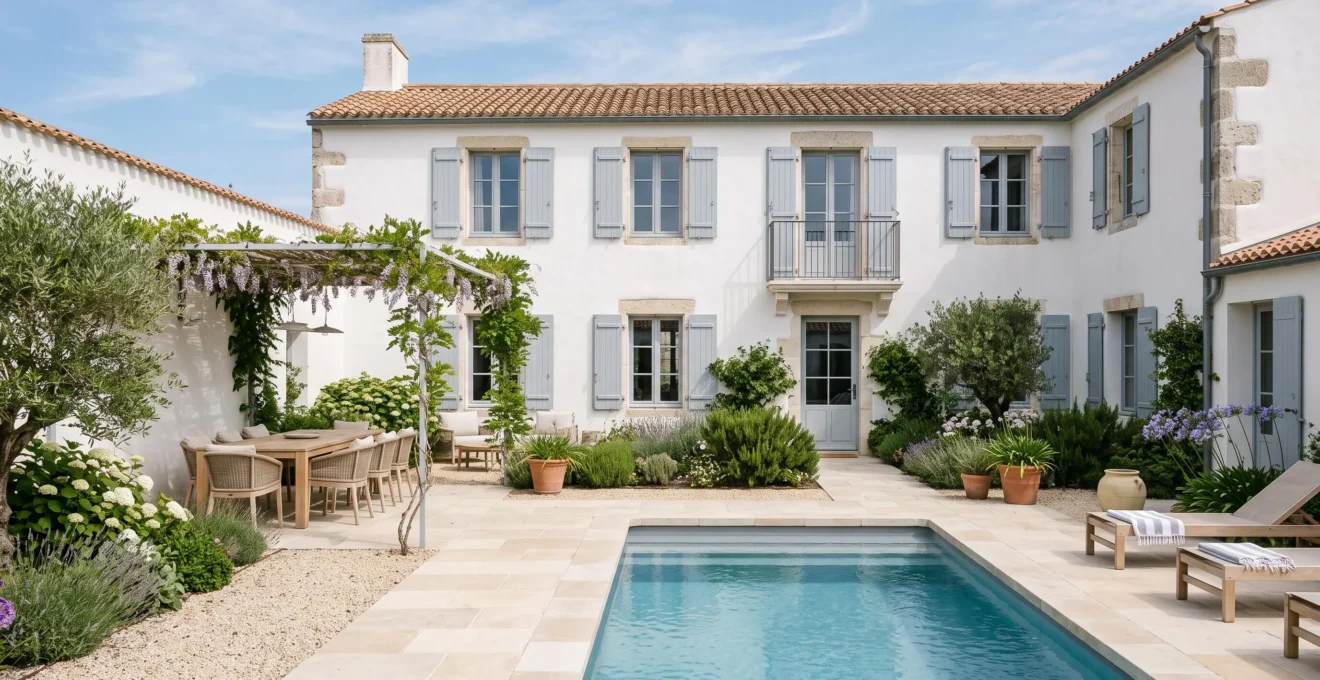
For a luxury villa holiday on Île de Ré, start with the village that matches your plans. Le Bois-Plage-en-Ré and La Couarde-sur-Mer suit beach-focused stays, while Saint-Martin-de-Ré and La Flotte appeal to visitors who enjoy harbours, restaurants and village life. For quieter surroundings close to nature, consider Les Portes-en-Ré or Loix.
The right villa also depends on its exact location, bedroom layout, outdoor privacy, pool facilities and booking conditions. Comparing these details consistently will help you find accommodation that suits your group rather than relying on a luxury label or attractive photographs.
Which Île de Ré village is right for your villa stay?
Île de Ré has ten villages, each offering a different combination of beaches, heritage, markets and natural scenery. Rather than searching for a universally best location, consider what you would like to do most days: visit a beach, explore a harbour, cycle through quieter landscapes or enjoy village amenities.
| Village or area | Best fit | What to verify |
|---|---|---|
| Le Bois-Plage-en-Ré / La Couarde-sur-Mer | Beach-focused and family holidays | Exact beach route, pool facilities and sleeping layout |
| Saint-Martin-de-Ré / La Flotte | Harbour atmosphere, shops and village life | Access to restaurants, property privacy and parking |
| Les Portes-en-Ré / Loix | Natural landscapes and a quieter setting | Distance to everyday facilities and actual access routes |
| Ars-en-Ré / Saint-Clément-des-Baleines | Village character and western coastal scenery | Practical distances, beach access and seasonal preferences |
| Sainte-Marie-de-Ré / Rivedoux-Plage | Traditional village atmosphere or mainland access | Road access, outdoor space and proximity to planned activities |
For beach-focused holidays, Le Bois-Plage-en-Ré and La Couarde-sur-Mer are practical starting points, but they offer slightly different attractions. Le Bois-Plage-en-Ré combines a seaside setting with a summer market and family-oriented recreation. La Couarde-sur-Mer also offers beaches and sporting activities, with a central island position that may suit travellers planning outings in different directions. Neither village name guarantees that an individual villa is a short walk from the beach.
For harbours, restaurants and village life, choose between the distinctive atmospheres of La Flotte and Saint-Martin-de-Ré. La Flotte is known for its harbour and traditional-style market, making it appealing for relaxed village outings. Saint-Martin-de-Ré combines historic fortifications, shops and lively terraces. If evening tranquillity matters as much as proximity to restaurants, examine the property’s precise street and neighbouring surroundings.
For nature and tranquillity, Loix offers a setting shaped by salt marshes and peaceful village surroundings. Les Portes-en-Ré is associated with dunes, pine forests, beaches and protected natural landscapes. Both may appeal to travellers who prefer outdoor exploration to a busy harbour atmosphere, although everyday shopping and travel arrangements deserve particular attention.
Other villages merit consideration. Ars-en-Ré offers picturesque streets and a market, while Saint-Clément-des-Baleines is associated with the island’s western coastal scenery and lighthouse. Sainte-Marie-de-Ré has a traditional rural character, and Rivedoux-Plage offers a location close to the bridge connecting the island with the mainland.
The island tourist office’s official village guide describes the distinct landscapes and attractions of all ten villages. Use these geographical differences to narrow your shortlist, then verify the precise location of each property.
The island’s maritime heritage, salt marshes and traditional settlements also help explain its varied holiday atmosphere. Travellers can discover Île de Ré through a broader introduction to its geography and heritage before settling on their preferred surroundings.
What should you look for in a luxury villa?
Holiday accommodation on Île de Ré ranges from traditional village houses to contemporary villas with outdoor facilities. Luxury is not a guarantee of a particular standard of privacy, bedroom configuration or service. Even where a property advertises a star classification, check the classification and assess the actual accommodation against your group’s requirements.
Begin with the sleeping arrangements. A five-bedroom property is not necessarily suitable for five couples if some bedrooms have smaller beds or inconvenient bathroom access. Confirm bed sizes, the number and location of bathrooms, maximum occupancy and whether the layout provides enough personal space.
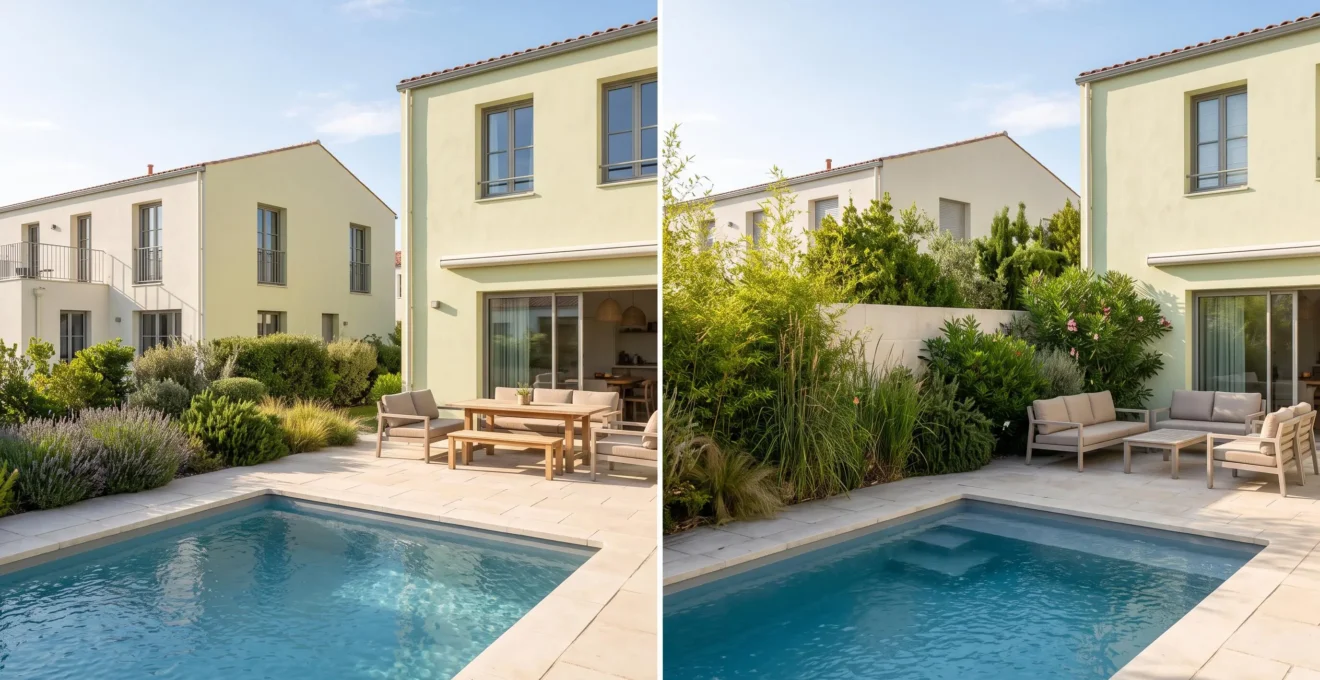
Look beyond the appearance of outdoor space. A sheltered terrace may be useful for meals when the weather is breezy, while a garden with several seating areas can make group holidays more comfortable. Inspect photographs from different angles. A private garden does not necessarily mean the seating or pool terrace is hidden from neighbouring windows.
Examine swimming pool details carefully. Establish whether the pool is exclusively for your party, whether heating is available for your travel dates and what safety arrangements are provided. Check access, depth and suitability for children where relevant. The presence of a pool in photographs does not establish these characteristics.
Luxury villa details worth confirming
- Exclusive-use areas and the actual degree of outdoor privacy.
- Bedroom sizes, bed configurations, bathrooms and maximum occupancy.
- Whether a pool is private, heated, accessible and suitable for the group.
- Usable outdoor dining, shade and kitchen facilities.
- Parking, Wi-Fi, accessibility and any optional services included in writing.
Housekeeping, linen changes and additional guest services should be assessed individually. A luxury description does not establish that hotel-style services are included. For a longer family stay, practical details such as laundry facilities and sufficient kitchen equipment may be more valuable than decorative features.
How to compare villa rentals fairly
Once you have selected your preferred villages, compare individual villas using consistent criteria. A property with more bedrooms or a larger pool is not automatically the better choice if it requires inconvenient journeys or fails to meet the group’s essential requirements.
Start with conditions that cannot easily be compromised: travel dates, authorised occupancy, sleeping arrangements and accessibility. Then compare comfort features such as outdoor dining, pool facilities, kitchen equipment and optional services. Treat photographs as evidence of appearance, while relying on detailed descriptions and written confirmation for essential facilities.
- Set your travel dates, party size and non-negotiable facilities before comparing listings.
- Choose two or three villages that suit the activities you have planned.
- Check precise property locations and assess amenities against identical criteria.
- Compare the complete booking terms and identify charges, deposits and cancellation conditions.
Verify practical location rather than just the village name. Check the route from the villa to the beach, market or restaurants you intend to visit. Consider whether walking or cycling is realistic for your group, whether parking is available and whether the surrounding streets are likely to offer the atmosphere you want. A desirable commune name alone does not establish convenient access.
Different groups also need different layouts. Families may prioritise safe movement between indoor and outdoor spaces. Several couples may value bedroom privacy and sufficient bathrooms more than one large living area. Anyone with reduced mobility should request specific access details, including entrances and internal circulation, instead of accepting a vague description of easy access.
Compare the complete cost for identical dates and guest numbers. Include any cleaning charge, linen fee, intermediary charge and tourist tax where applicable. Treat a refundable security deposit separately from the final accommodation cost, but account for the additional money that may need to be available during the booking.
To make a final choice, compare three suitable properties side by side. First, eliminate any villa that fails a non-negotiable requirement, such as sufficient beds or necessary step-free access. Next, compare the remaining options on their actual routes, included facilities and complete costs. Only then use desirable extras, such as additional outdoor seating or optional housekeeping, to break a tie. An attractive premium feature should not compensate for a requirement the property cannot meet.
What to check before booking a villa in France
For furnished tourist rentals between private individuals, France’s French holiday rental rules require a written rental contract covering information such as the property, rental period, charges, payment conditions and cancellation arrangements. The guidance provides a practical reference for checking documentation, but its specific legal provisions should not automatically be applied to every agency or booking-platform transaction.
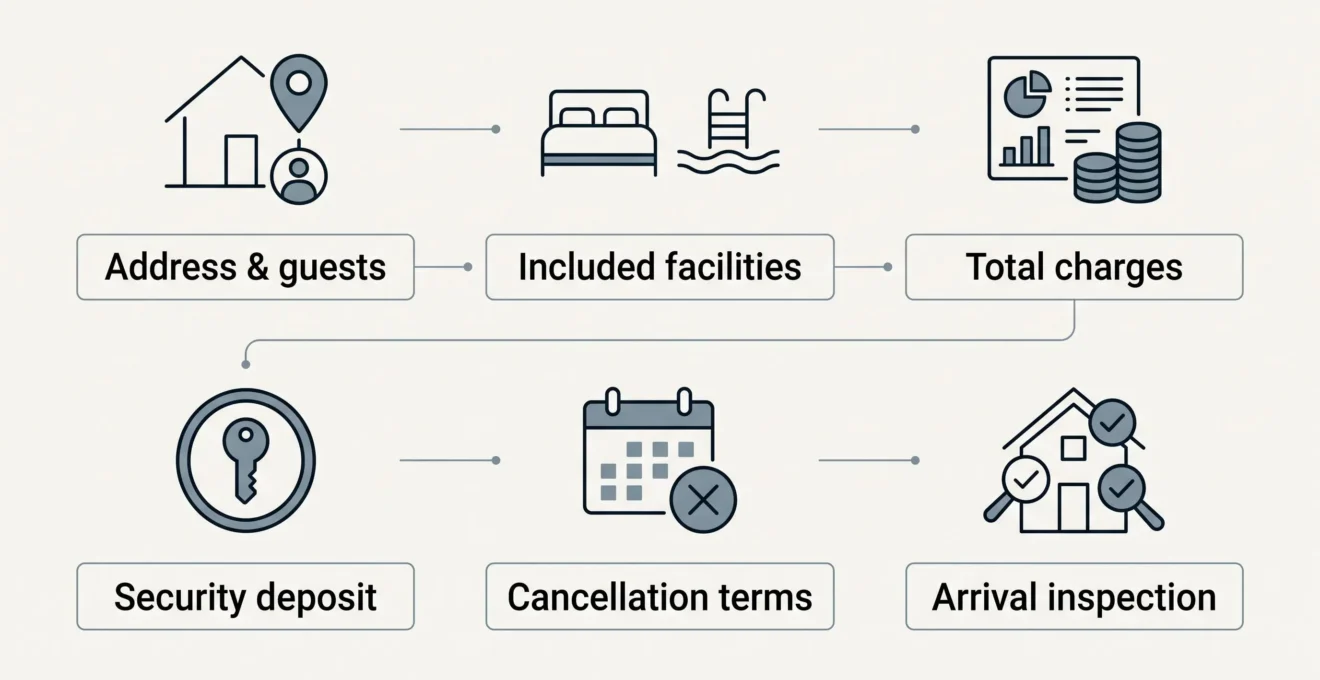
Before making a payment, match the property description and booking details to the accommodation you selected. The written information should allow you to identify the address, permitted occupancy, included facilities and financial commitments. This is particularly important when booking from overseas, where resolving discrepancies after arrival may be inconvenient.
- Confirm the exact address, rental dates and authorised occupancy.
- Check the written description of rooms, equipment and included services.
- Identify the full rental price, separate charges and any tourist tax.
- Review payment instalments and any security deposit.
- Read the cancellation conditions, including the status of any advance payment.
- Agree how the property condition and equipment will be checked on arrival and departure.
Understand the difference between arrhes and acompte. Under the French private-rental guidance, where the contract does not specify cancellation conditions, a traveller cancelling a reservation involving arrhes may lose that advance payment. With an acompte, the traveller may remain liable for the full rental price. The guidance recognises exceptions, including force majeure and, for an acompte, situations where the accommodation has been re-let. The applicable contract and circumstances therefore matter; neither payment type should be treated as a universal cancellation guarantee.
A security deposit serves a different purpose from an advance payment towards the rental price. It may cover certain damage or contractual charges. Confirm the amount, method of collection, return conditions and circumstances for deductions. The cited French guidance recommends arrival and departure inspections, without making them universally mandatory in its private-rental context. Recording the condition of the property can help prevent disputes over the deposit.
Choosing the right Île de Ré villa
The most suitable villa brings together three decisions: the village atmosphere you prefer, the property features your group actually needs and booking conditions you understand. Choose the location first, rule out properties that fail essential requirements, and compare the remaining options on comfort, practical access and complete cost before committing.
Once your villa and village are settled, plan the experiences that will shape your days. These activities on Île de Ré cover seaside recreation, village exploration and cycling.