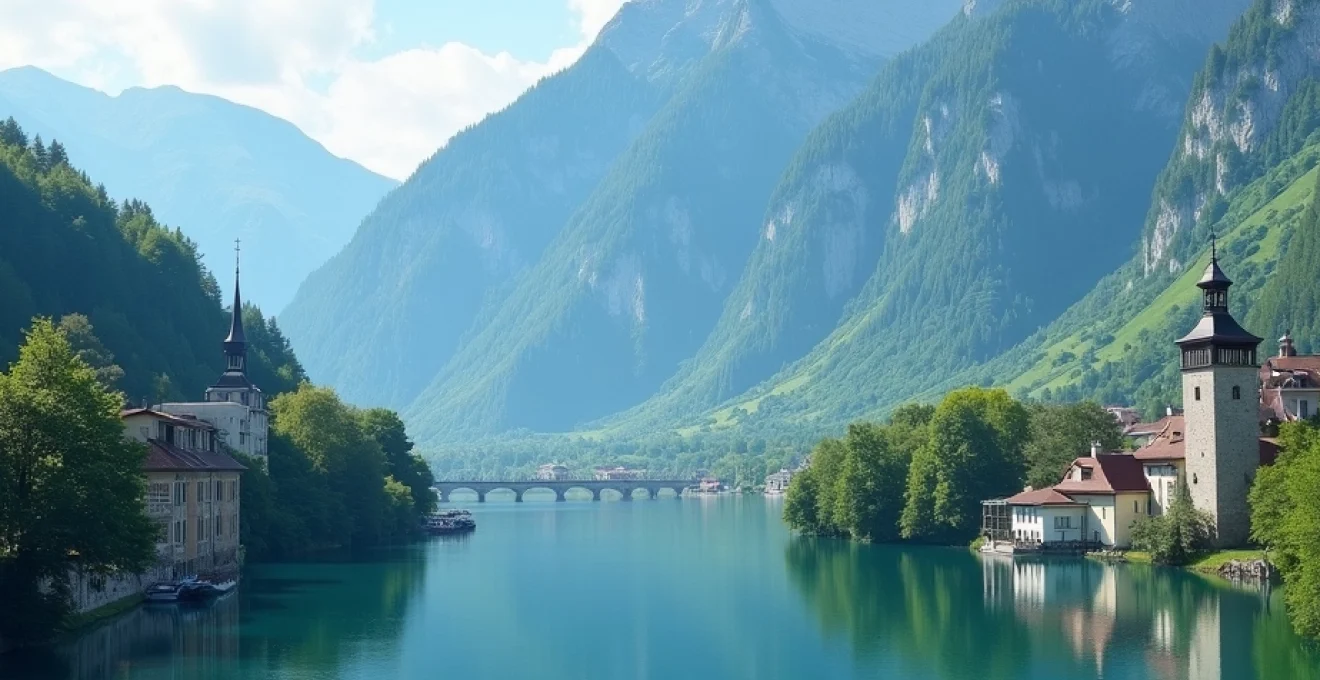
Nestled between the towering peaks of the Alps and the azure waters of the Adriatic Sea, Slovenia emerges as one of Europe’s most compelling yet overlooked travel destinations. This compact nation, roughly the size of Wales with only two million inhabitants, punches well above its weight in terms of natural beauty, cultural richness, and tourism infrastructure. Despite boasting everything from emerald rivers and pristine lakes to medieval castles and world-class wine regions, Slovenia remains refreshingly free from the crowds that plague many of its more famous neighbours.
What makes Slovenia particularly remarkable is its extraordinary diversity packed into such a manageable area. You can ski in the Julian Alps in the morning, sample award-winning wines in rolling vineyard country by afternoon, and watch the sunset over the Mediterranean coastline by evening. This geographical blessing, combined with the country’s commitment to sustainable tourism and authentic cultural experiences, positions Slovenia as the perfect antidote to overtourism whilst delivering experiences that rival Europe’s most celebrated destinations.
Slovenia’s alpine tourism infrastructure and accessibility from major european hubs
Slovenia’s strategic location at the crossroads of Central Europe makes it remarkably accessible from major European cities, yet this convenience hasn’t translated into overwhelming tourist numbers. The country’s modern transportation infrastructure ensures that reaching this Alpine gem requires minimal effort whilst maintaining its authentic character.
Ljubljana jože pučnik airport connectivity and Low-Cost carrier networks
Ljubljana Jože Pučnik Airport serves as Slovenia’s primary international gateway, located just 26 kilometres northwest of the capital. The airport has undergone significant modernisation in recent years, now handling over 1.8 million passengers annually. Budget carriers like easyJet, Wizz Air, and Transavia operate regular services connecting Ljubljana to major European hubs including London, Paris, Frankfurt, and Amsterdam.
The airport’s compact size actually works in travellers’ favour, with immigration and baggage claim processes typically taking under 20 minutes. Direct flights from London take approximately two hours, whilst connections from North American cities usually route through Munich, Frankfurt, or Amsterdam. Car rental facilities are readily available on-site, making the transition from arrival to exploring the country remarkably seamless.
Cross-border rail links via austrian and italian alpine corridors
Slovenia’s rail network integrates seamlessly with the broader European system, offering scenic alternative routes for environmentally conscious travellers. The most popular international connection runs from Vienna to Ljubljana via Graz, a journey that takes approximately six hours whilst passing through stunning Alpine landscapes. This route forms part of the broader Corridore del Brennero, connecting Slovenia to Italy’s high-speed rail network.
From Venice, the journey to Ljubljana takes roughly six hours, with connections available through Trieste. These rail connections prove particularly appealing for travellers seeking to combine Slovenia with broader European itineraries, as the country sits perfectly positioned for multi-destination trips encompassing Austria, Italy, Croatia, and Hungary.
Motorway access through A1 and A2 highways for Self-Drive tourism
Slovenia’s motorway system, centred around the A1 (Šentilj-Koper) and A2 (Karavanke-Obrežje) highways, provides excellent connectivity for self-drive tourism. The entire country can be traversed in under three hours, making it ideal for road trip exploration. The A1 connects the Austrian border in the north to the Adriatic coast, whilst the A2 links the Italian border in the west to the Croatian frontier in the east.
Vignette tolls are required for motorway use, with weekly passes costing €15 for passenger vehicles—remarkably affordable compared to neighbouring countries. The road infrastructure maintains high standards throughout, with clear signage in multiple languages and well-maintained rest areas featuring local food specialities.
Seasonal charter flight operations to portorož airport
Portorož Airport, located on Slovenia’s brief but beautiful coastline, operates seasonal charter flights primarily during summer months. This smaller facility caters mainly to leisure travellers seeking direct access to Slovenia’s coastal region, the Karst wine country, and the famous Lipica stud farm. The airport’s proximity to both the Italian border and Croatian peninsula makes it an attractive option for multi-country coastal tours.
Charter operations typically run from May through September, with flights originating from Germany, Austria, and Scandinavian countries. The airport’s intimate scale means processing times are minimal, whilst the coastal location provides immediate access to Slovenia’s Mediterranean influences.
Julian alps adventure tourism portfolio and UNESCO triglav national park
The Julian Alps represent Slovenia’s crown jewel for outdoor enthusiasts, encompassing Triglav National Park—the country’s sole national park and a UNESCO biosphere reserve. This pristine Alpine wilderness covers 838 square kilometres of rugged peaks, glacial valleys, and crystalline lakes, offering adventure activities that rival those found in the more famous Alpine regions of Switzerland or Austria.
Via ferrata routes in kranjska gora and bovec valley systems
Slovenia has emerged as a via ferrata destination of international calibre, with over 30 established routes ranging from beginner-friendly introductions to expert-level challenges. The Kranjska Gora area features several accessible routes, including the popular Mojstrana via ferrata, which provides spectacular views of Mount Triglav whilst remaining suitable for families with older children.
The Bovec Valley system presents more challenging options, with the Kanin massif offering Europe’s highest via ferrata at 2,200 metres elevation. These iron-way routes utilise steel cables, ladders, and bridges to guide climbers through otherwise inaccessible mountain terrain. Professional guiding services are readily available, with equipment rental and instruction provided for newcomers to this distinctly Alpine pursuit.
What distinguishes Slovenia’s via ferrata network is the integration with broader hiking trail systems, allowing multi-day adventures combining traditional trekking with technical climbing sections. The infrastructure maintains excellent safety standards whilst preserving the natural environment through careful route planning and seasonal access restrictions.
Soča river whitewater rafting classifications and emerald trail networks
The Soča River, renowned for its distinctive emerald colour, offers Slovenia’s premier whitewater rafting experiences. The river system provides grade II to IV rapids, suitable for both novice rafters and experienced paddlers seeking adrenaline-pumping challenges. The most popular section runs from Bovec to Kobarid, covering 10 kilometres of varied terrain including gentle float sections and technical rapid sequences.
Professional outfitters operate throughout the Soča Valley, providing comprehensive safety equipment and expert guides fluent in multiple languages. The rafting season extends from April through October, with spring snowmelt creating the most challenging conditions and late summer offering more family-friendly water levels.
The Emerald Trail network parallels the river system, creating opportunities for multi-activity adventures. These well-marked hiking paths connect historical sites from World War I, traditional Alpine villages, and viewpoints overlooking the dramatic Soča gorges. Trail infrastructure includes suspension bridges, viewing platforms, and interpretive signage explaining the region’s geological and cultural significance.
Mount triglav summit ascent routes and alpine hut accommodation
Mount Triglav, Slovenia’s highest peak at 2,864 metres, holds profound cultural significance as the symbol appearing on the national flag and coat of arms. The mountain offers multiple ascent routes catering to different experience levels, with the traditional path from Pokljuka plateau requiring good fitness but no technical climbing skills. More challenging approaches include the north face routes demanding mountaineering experience and proper equipment.
The Alpine hut system supporting Triglav ascents exemplifies Slovenia’s commitment to sustainable mountain tourism. Facilities like Kredarica Hut (2,515m) and Planika Hut (2,401m) provide accommodation, meals, and emergency services whilst maintaining minimal environmental impact. These refuges operate on renewable energy systems and implement strict waste management protocols.
Climbing Triglav remains a rite of passage for many Slovenians, with the tradition stating that you’re not truly Slovenian until you’ve stood on its summit.
The climbing season typically runs from June through September, with July and August offering the most stable weather conditions. Professional mountain guides are available for all skill levels, whilst detailed route information and current conditions are maintained through the Slovenian Alpine Association’s comprehensive online resources.
Lake bled vintgar gorge geological formations and walkway infrastructure
Vintgar Gorge, located four kilometres from Lake Bled, showcases remarkable geological formations carved by the Radovna River over millennia. The gorge system stretches 1.6 kilometres, featuring vertical walls reaching 50 metres in height and a series of pools, rapids, and waterfalls culminating in the spectacular 13-metre Šum waterfall.
The wooden walkway infrastructure, reconstructed in 2016 using sustainable materials, allows visitors to experience the gorge’s natural beauty without environmental damage. The pathway follows the river’s natural contours, incorporating viewing platforms at strategic locations for photography and nature observation. Safety railings and non-slip surfaces ensure accessibility for visitors of varying mobility levels.
The gorge’s microclimate supports unique plant communities, including rare Alpine flowers and moss species thriving in the constant moisture. Educational signage throughout the walkway explains geological processes, local ecology, and the gorge’s discovery in 1891 by Jakob Žumer, mayor of nearby Gorje.
Karst cave systems and škocjan UNESCO world heritage speleological sites
Slovenia’s Karst region, which gave its name to this distinctive landscape type found worldwide, contains over 11,000 registered caves within a country smaller than most European cities. This underground realm represents one of Europe’s most significant speleological treasures, with the Škocjan Caves achieving UNESCO World Heritage status for their exceptional universal value.
Postojna cave railway system and olm salamander conservation programmes
Postojna Cave operates Europe’s only double-track cave railway, a remarkable engineering achievement dating to 1872. The electric train system carries visitors 3.7 kilometres through the cave’s initial chambers, accessing formations that would otherwise require hours of walking through challenging terrain. This 150-year-old infrastructure continues operating with modern safety standards whilst preserving its historical character.
The cave system serves as home to the olm (Proteus anguinus), Europe’s largest cave-dwelling vertebrate and a species found nowhere else on Earth. These extraordinary amphibians can live over 100 years, survive without food for decades, and represent a crucial link in understanding evolutionary biology. Postojna’s Biospeleological Station conducts cutting-edge research into olm behaviour, reproduction, and conservation.
Conservation programmes at Postojna have successfully bred olms in captivity for the first time in human history , with baby olms hatching in 2016 creating international scientific excitement. Visitors can observe these remarkable creatures in specially designed aquariums that replicate their natural cave environment whilst supporting ongoing research efforts.
Predjama castle integrated cave fortress architecture
Predjama Castle represents a unique architectural achievement, built directly into a cave mouth 123 metres above the valley floor. This Renaissance fortress, dating to the 16th century, integrates natural rock formations with human construction to create an impregnable defensive position. The castle’s location within the cave system provided natural climate control, water sources, and escape routes during sieges.
The castle’s most famous resident, Erazem Lueger, utilised the cave connections to resist a year-long siege in the 15th century. Secret passages through the cave system allowed supplies to reach the defenders whilst remaining completely hidden from attacking forces. Modern visitors can explore these same passages, now safely illuminated and equipped with protective barriers.
Archaeological investigations continue revealing new chambers and passages within the cave system, suggesting the full extent of this underground fortress remains unknown. The integration of natural and human-made structures demonstrates medieval engineering sophistication whilst creating one of Europe’s most photogenic castle settings.
Lipica stud farm lipizzaner horse breeding heritage
Lipica Stud Farm, established in 1580, represents the original home of the Lipizzaner horse breed, renowned for performances at Vienna’s Spanish Riding School. The facility continues operating as a working stud farm whilst offering visitors insight into four centuries of equestrian tradition. The breeding programme maintains genetic lines dating back to the farm’s foundation, preserving bloodlines that might otherwise disappear.
The stud farm’s location in the Karst landscape provides ideal conditions for horse breeding, with limestone-rich pastures contributing to the strong bone structure characteristic of Lipizzaner horses. Visitors can observe training sessions, breeding activities, and classical dressage demonstrations whilst learning about the breed’s fascinating history through Habsburg court culture.
The farm’s survival through numerous wars, political upheavals, and border changes demonstrates the resilience of this cultural institution. During World War II, horses were evacuated to Austria to prevent their capture, whilst post-war boundary changes left the original stud farm in newly formed Yugoslavia rather than Austria or Italy.
Vipava valley wine terroir classification and autochthonous grape varieties
The Vipava Valley wine region benefits from a unique microclimate created by the meeting of Alpine and Mediterranean influences. The notorious Bora wind, reaching speeds of 200 kilometres per hour, naturally concentrates grape sugars whilst preventing fungal diseases, creating ideal conditions for premium wine production. This natural phenomenon eliminates the need for chemical treatments, supporting organic viticulture practices.
The region specialises in autochthonous grape varieties found nowhere else in the world, including Zelen, Pinela, and Klarnica for whites, and Refošk for reds. These indigenous varietals developed over centuries to thrive in local soil and climate conditions, producing wines with distinctive mineral characteristics derived from the limestone and flysch geological formations.
Vipava Valley producers are pioneering natural winemaking techniques that honour both grape variety authenticity and terroir expression without international influence.
The valley’s 70 registered wine producers range from small family operations to larger commercial ventures, with many offering cellar tours and tastings in historical buildings dating to the Austro-Hungarian period. The region’s wine tourism infrastructure includes dedicated cycling routes connecting wineries, traditional restaurants serving local cuisine pairings, and accommodation options ranging from farm stays to boutique hotels.
Thermal spa wellness tourism and pannonian basin geothermal resources
Slovenia’s position at the edge of the Pannonian Basin provides access to extensive geothermal resources, supporting a wellness tourism industry that dates back to Roman times. The country operates 15 natural thermal spas, each utilising mineral-rich waters with specific therapeutic properties for different health conditions. These facilities combine traditional balneotherapy treatments with modern wellness concepts, creating destination spas that attract health-conscious travellers from across Europe.
Rogaška Slatina represents Slovenia’s most prestigious spa destination, famous for Donat Mg water containing the world’s highest natural magnesium concentration. The spa town’s Belle Époque architecture creates an elegant backdrop for wellness treatments, whilst the natural spring water supports programmes addressing digestive health, stress reduction, and detoxification. Clinical studies validate the therapeutic benefits of Rogaška’s mineral waters, providing scientific credibility to traditional spa treatments.
Terme Olimia integrates thermal pools with adventure wellness concepts, featuring forest therapy trails, salt rooms utilising Sečovlje salt, and cryotherapy chambers. The facility’s Wellness Orhidelia spans 3,000 square metres, incorporating tropical gardens, meditation spaces, and treatment rooms offering both Western and Eastern healing modalities. The spa’s commitment to sustainable practices includes geothermal energy heating, organic garden produce for spa cuisine, and zero-waste water treatment systems.
The Dolenjska region’s thermal spas specialise in medical tourism, with Terme Krka operating rehabilitation programmes for cardiovascular conditions, rheumatic diseases, and post-surgical recovery. These medical spa facilities work directly with international insurance providers and maintain accreditation with European health tourism organisations. The combination of qualified medical staff, proven therapeutic waters, and significantly lower costs compared to Western European medical facilities makes Slovenia increasingly attractive for health tourism.
Moravske Toplice, Slovenia’s oldest spa dating to 1581, offers treatments utilising black thermal mud with proven anti-inflammatory properties. The facility combines historical authenticity with modern amenities, featuring original Roman foundations alongside contemporary treatment facilities. The spa’s location in the Pannonian plains provides easy access from Budapest and Vienna, making it popular with Austrian and Hungarian visitors seeking wellness weekends.
Ljubljana cultural quarter and jože plečnik architectural legacy
Ljubljana’s compact historic centre showcases the architectural genius of Jože Plečnik, whose early 20th-century interventions transformed the city into a harmonious blend of classical and modernist elements. UNESCO recognition
for its architectural heritage came in 2021, recognising Plečnik’s Works as a World Heritage Site. This designation acknowledges not just individual buildings, but an entire urban design philosophy that prioritised human-scale development and cultural continuity.
The Central Market, perhaps Plečnik’s most celebrated intervention, demonstrates his ability to blend functionality with artistic vision. The riverside colonnade creates a seamless transition between urban commerce and natural waterway, whilst the covered market halls utilise classical proportions adapted for modern retail needs. The market’s limestone columns and copper-covered roofs weather beautifully in Ljubljana’s continental climate, developing patinas that enhance their architectural character over time.
Plečnik’s Triple Bridge represents innovative urban planning disguised as classical architecture. By adding two pedestrian bridges to the existing 19th-century stone span, he created a unique traffic solution that prioritises pedestrians whilst maintaining visual harmony with the baroque city centre. The bridge’s balustrades feature Plečnik’s signature lamp designs, which illuminate the Ljubljanica River with warm light whilst creating distinctive silhouettes against Ljubljana Castle’s hilltop position.
The National and University Library stands as Plečnik’s masterwork, combining Venetian palazzo influences with Slavic architectural traditions. The building’s distinctive brick and stone facade creates dramatic interplay between light and shadow, whilst the reading rooms’ proportions inspire contemplation and scholarly pursuit. The library’s entrance staircase, carved from black marble, guides visitors through a carefully orchestrated spatial experience from urban street to temple of learning.
Žale Cemetery showcases Plečnik’s sensitivity to landscape and memorial architecture. The complex includes a crematorium, ceremonial halls, and arcaded walkways that transform mourning into architectural pilgrimage. The cemetery’s cypress-lined avenues and classical pavilions create Mediterranean atmosphere in Central European setting, whilst respecting both Catholic and secular burial traditions. This project demonstrates how thoughtful design can elevate even utilitarian infrastructure into spaces of beauty and reflection.
Plečnik’s Ljubljana represents Europe’s most cohesive example of early 20th-century urban planning, where individual architectural interventions combine to create unified civic identity.
The Ljubljanica River embankments feature Plečnik’s signature concrete balustrades and poplar plantings, creating continuous riverside promenades that connect different city districts. These interventions demonstrate sustainable urban design principles decades before such concepts gained mainstream acceptance. The embankments incorporate flood control systems disguised as architectural features, whilst providing recreational spaces for residents and visitors alike.
Adriatic coastal tourism development along piran peninsula and secovlje saltworks
Slovenia’s 46-kilometre Adriatic coastline punches far above its weight in terms of cultural significance and tourism appeal. Despite its brevity, this coastal strip encompasses medieval Venetian architecture, active salt production dating to the 13th century, and some of Europe’s most important wetland ecosystems. The region’s development strategy prioritises cultural preservation and sustainable tourism over mass market appeal, creating authentic Mediterranean experiences increasingly rare elsewhere along the Adriatic.
Piran represents the crown jewel of Slovenia’s coastal heritage, with its Venetian Gothic architecture preserved virtually unchanged since the Republic of Venice’s golden age. The town’s compact peninsula setting means cars are prohibited within the historic centre, creating pedestrian-friendly exploration opportunities. Tartini Square, named after the baroque composer Giuseppe Tartini who was born here, serves as the town’s focal point with its distinctive oval shape and Venetian-influenced buildings creating perfect proportions.
The Church of St. George, perched on Piran’s highest point, offers panoramic views across the Adriatic to the Italian coast. The church’s detached campanile, modelled on St. Mark’s Basilica in Venice, provides orientation landmark visible from throughout the Istrian peninsula. Climbing the bell tower’s 146 steps rewards visitors with 360-degree vistas encompassing three countries: Slovenia, Italy, and Croatia. The church interior features baroque altarpieces and religious art reflecting the area’s multicultural heritage under Venetian, Austrian, and Yugoslav rule.
Piran’s maritime heritage remains active through the town’s fishing fleet and traditional boat-building workshops. The harbour supports both commercial fishing operations and pleasure craft, whilst maintaining architectural integrity through strict building codes that require new construction to harmonise with existing Venetian styles. Traditional wooden boats called “batana” continue operating from the harbour, offering visitors authentic sailing experiences using vessels constructed with techniques passed down through generations.
The Sečovlje Salt Pans represent one of Europe’s last remaining traditional salt production facilities, operating continuously for over 700 years. This 650-hectare landscape of crystallisation pools, channels, and storage buildings creates unique ecosystem supporting 280 bird species, including significant populations of flamingos, avocets, and black-winged stilts. The salt works demonstrate sustainable resource extraction that enhances rather than degrades environmental biodiversity.
Traditional salt harvesting techniques at Sečovlje rely entirely on solar evaporation and manual labour, producing premium sea salt prized by European gourmets. The salt workers, called “solinarji,” maintain expertise in reading weather patterns, water flow management, and crystal formation timing passed down through family generations. Visitors can observe active salt production during the harvest season (May through September) whilst learning about the delicate balance between commercial productivity and environmental conservation.
Sečovlje’s traditional salt production methods create habitat diversity that supports more bird species than many national parks twice its size.
The Museum of Salt Making, housed in restored 19th-century salt worker dwellings, demonstrates traditional production techniques alongside modern conservation efforts. Interactive exhibits explain how sea water becomes premium table salt whilst supporting wetland ecosystems essential for migratory bird populations. The museum’s location within active salt pans allows visitors to observe production processes whilst minimising disruption to both wildlife and working operations.
Forma Viva, an international sculpture park near Portorož, showcases monumental stone sculptures created during annual symposiums since 1961. Artists from around the world have carved directly into Istrian limestone, creating permanent installations that interact with Mediterranean landscape and maritime atmosphere. The park demonstrates Slovenia’s commitment to contemporary art whilst providing cultural attractions that complement rather than compete with natural coastal beauty.
Portorož resort development represents Slovenia’s approach to sustainable coastal tourism, emphasising wellness facilities and cultural activities over mass entertainment. The town’s spa hotels utilise therapeutic mud from nearby Sečovlje salt pans alongside seawater treatments, creating distinctive wellness offerings unavailable elsewhere in Europe. The combination of mineral-rich thermal springs, therapeutic marine mud, and Mediterranean climate supports medical tourism programmes recognised by European health insurance providers.
The coastal region’s wine production benefits from Mediterranean microclimate and limestone soils similar to neighbouring Istrian peninsulas in Croatia and Italy. Local varieties including Refošk and Malvasia thrive in seaside conditions, producing wines with distinctive mineral characteristics reflecting their maritime terroir. Small family wineries offer tastings in traditional stone cellars, often accompanied by local specialities including Piran salt, olive oil, and fresh seafood reflecting the region’s multicultural culinary heritage.
Slovenian coastal cuisine demonstrates remarkable sophistication despite the region’s small size, blending Italian, Austrian, and Balkan influences with premium local ingredients. Restaurants in Piran and Portorož increasingly feature modern interpretations of traditional recipes, utilising Sečovlje salt, local olive oil, and Adriatic seafood in innovative combinations. The region’s culinary scene attracts food tourism from neighbouring countries, with several establishments earning recognition in international dining guides for their creative use of indigenous ingredients and traditional cooking techniques.