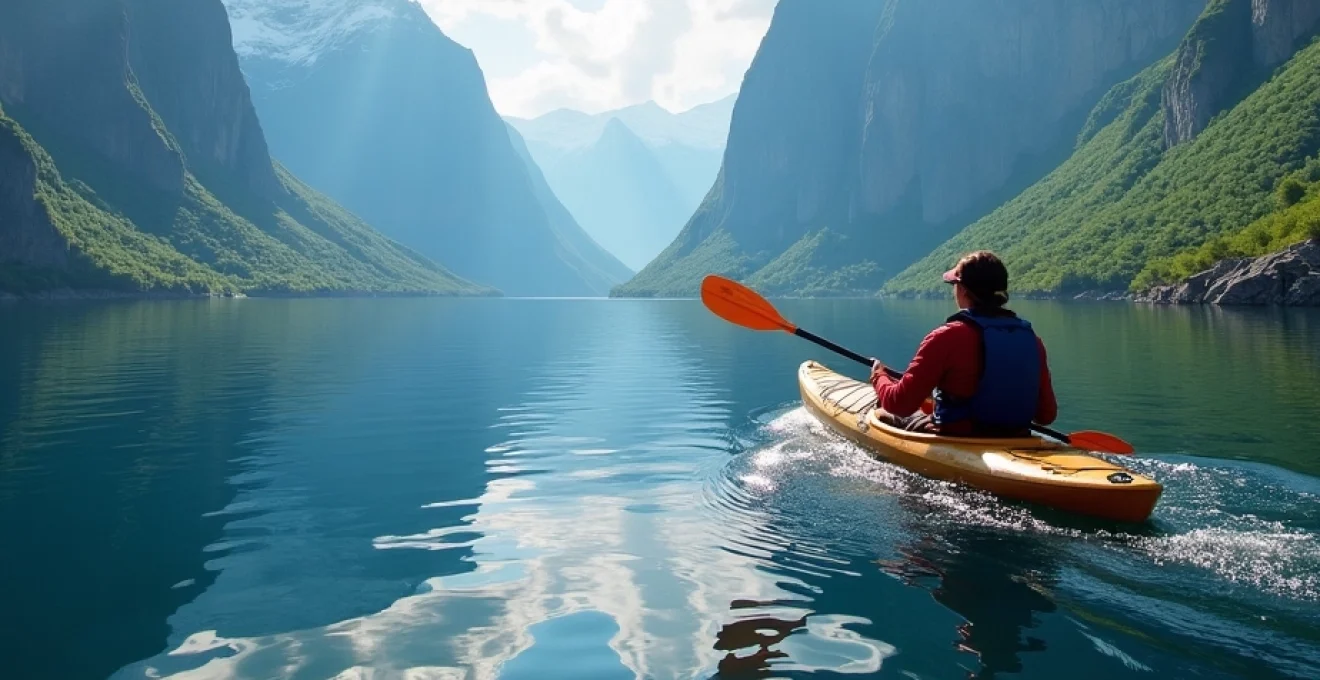
Norway’s dramatic fjordlands represent one of Earth’s most spectacular natural amphitheatres, where towering cliffs plunge thousands of metres into crystalline waters carved by ancient glaciers. These magnificent waterways offer kayakers an intimate portal into landscapes that have inspired countless adventurers and artists throughout history. The serene silence broken only by the gentle splash of your paddle creates a meditative rhythm that connects you directly with this pristine wilderness.
Paddling through these geological masterpieces transforms the ordinary act of kayaking into an extraordinary communion with nature. Each stroke propels you deeper into fjord systems where waterfalls cascade from impossible heights, marine wildlife thrives in protected waters, and the midnight sun bathes everything in ethereal golden light during summer months. The scale and majesty of these environments humble even experienced paddlers, offering perspectives that simply cannot be captured from land-based viewpoints.
Norway’s pristine fjord systems: geirangerfjord and nærøyfjord UNESCO heritage sites
The UNESCO World Heritage designation of Geirangerfjord and Nærøyfjord recognises these waterways as outstanding examples of fjord landscapes shaped by successive ice ages. These pristine environments showcase the raw power of glacial erosion, where ice sheets thousands of metres thick carved deep channels through solid bedrock over millions of years. The resulting landscapes display vertical relief that staggers the imagination, with sheer walls rising directly from sea level to peaks exceeding 1,500 metres.
Kayaking within these protected waters grants access to ecological sanctuaries where traditional farming communities have maintained sustainable practices for over a thousand years. The designation ensures that these fragile environments remain protected from industrial development whilst allowing carefully managed tourism that respects the delicate balance between human activity and natural preservation. This protection extends to the marine ecosystems, creating ideal conditions for wildlife observation and photographic opportunities.
Geirangerfjord’s dramatic waterfalls: seven sisters and suitor cascades
The Seven Sisters waterfall system creates one of Norway’s most photographed natural spectacles, where seven distinct cascades plunge 250 metres down near-vertical cliff faces. Paddling beneath these thundering torrents provides an almost supernatural experience as mist envelops your kayak and the roar of falling water reverberates through the narrow fjord. The Suitor waterfall across the fjord tells an ancient legend of a persistent wooer who drank himself to death whilst trying to win the sisters’ affections.
During spring snowmelt, these waterfalls reach their most dramatic intensity, creating spectacular displays of raw natural power. The force of the falling water generates significant updrafts and wind patterns that experienced kayakers learn to navigate skilfully. Morning paddling sessions often provide the most favourable conditions, as thermal winds typically remain calm before midday heating creates more challenging air currents.
Nærøyfjord’s narrow channel navigation challenges
Nærøyfjord presents kayakers with unique navigation challenges due to its exceptionally narrow profile, measuring just 250 metres at its tightest point whilst maintaining depths exceeding 500 metres. This creates a dramatic corridor effect where towering mountains seem to close overhead, generating distinctive acoustic properties that amplify every sound. The confined space concentrates weather patterns, creating localised wind systems that can change rapidly and require constant vigilance from paddlers.
The narrow confines also concentrate tidal flows, creating stronger currents than found in wider fjord systems. Successful navigation requires understanding these tidal patterns and timing your passage to work with rather than against these natural forces. The rewards for mastering these challenges include access to some of Europe’s most pristine wilderness areas, where ancient farmsteads cling impossibly to steep mountainsides.
Lysefjord’s preikestolen and kjeragbolten geological formations
Lysefjord’s geological attractions extend far beyond its famous hiking destinations, offering kayakers unique perspectives of iconic rock formations like Preikestolen and Kjeragbolten. From water level, these massive granite structures reveal their true scale and the incredible forces that shaped them over geological time. The 604-metre-high Preikestolen cliff face appears even more imposing when viewed from directly below, creating an almost vertigo-inducing sense of scale.
The fjord’s granite walls display fascinating geological storytelling, with visible layers revealing millions of years of Earth’s history. Kayakers can observe how glacial action polished these surfaces to mirror-like smoothness in some areas whilst leaving dramatic scarring and fracture patterns in others. The interplay of light and shadow on these surfaces changes throughout the day, creating constantly evolving photographic opportunities for patient observers.
Hardangerfjord’s fruit blossom seasonal paddling windows
Hardangerfjord transforms into Norway’s most colourful paddling destination during late spring when thousands of fruit trees burst into spectacular bloom. This 179-kilometre fjord system creates unique microclimates that support extensive apple, pear, and cherry orchards, particularly around Ulvik and Lofthus. The contrast between snow-capped peaks and delicate pink blossoms creates surreal beauty that attracts photographers and nature enthusiasts from across the globe.
The optimal paddling window for experiencing this natural phenomenon typically occurs between mid-May and early June, depending on seasonal variations and elevation. During this period, calm morning conditions allow kayakers to glide silently through reflection-perfect waters whilst breathing air perfumed with fruit blossoms. The agricultural heritage of these fjord communities adds cultural richness to the natural spectacle, as traditional farming practices continue to shape the landscape much as they have for centuries.
Advanced sea kayaking techniques for fjord conditions
Mastering fjord kayaking requires developing specialised techniques that address the unique challenges presented by these dramatic environments. Unlike open ocean paddling, fjord conditions combine elements of coastal, alpine, and inland water kayaking into complex scenarios that demand adaptability and precise technique. The confined nature of fjord systems amplifies weather effects whilst creating distinctive tidal patterns and wind behaviours that experienced paddlers learn to read and exploit.
Successful fjord expeditions depend upon understanding how these enclosed waterways concentrate and modify natural forces. Temperature differentials between water and surrounding mountain slopes create localised weather systems that can change rapidly. This environmental complexity rewards paddlers who develop advanced skills in reading water conditions, predicting weather changes, and adapting their techniques to maximise safety whilst enjoying these spectacular environments.
Tidal current navigation and eddy line positioning
Tidal currents in Norwegian fjords behave differently from open coastal areas due to the constrained geography that concentrates water flow into narrow channels. Understanding these patterns becomes crucial for efficient navigation, as working with tidal assistance can reduce paddling effort by up to 40% whilst fighting strong currents can exhaust even experienced kayakers. Eddy line positioning allows skilled paddlers to utilise boundary zones between opposing current flows to maintain position or change direction with minimal energy expenditure.
Professional guides recommend studying tidal charts and timing major passages to coincide with favourable current flows. The narrow profile of most fjords creates predictable eddy formations behind headlands and beneath overhanging cliffs, offering rest areas and strategic positioning opportunities. Learning to recognise surface water patterns that indicate underlying current structures enables more sophisticated route planning and energy conservation during extended expeditions.
Wind shadow management along steep fjord walls
The towering walls characteristic of Norwegian fjords create complex wind shadow patterns that provide both opportunities and hazards for kayakers. These sheltered zones offer respite from strong winds but can also trap paddlers in areas where sudden gusts funnel down mountain faces with little warning. Understanding how thermal heating of rock faces generates updrafts and downdrafts throughout the day enables more strategic route planning and timing decisions.
Experienced paddlers learn to read visual indicators such as water surface patterns, cloud formations, and vegetation movement to predict wind behaviour before entering potentially challenging areas. Morning paddling often provides the most stable conditions before thermal effects intensify, whilst late afternoon sessions may encounter stronger and more variable winds as mountain faces radiate accumulated heat.
Cold water immersion protection and layering systems
Norwegian fjord waters maintain temperatures between 4-12°C throughout most of the year, creating serious cold water immersion risks that require comprehensive protection strategies. Modern layering systems combine base layers of merino wool or synthetic materials with insulating mid-layers and waterproof outer shells to maintain core body temperature during extended exposure. Dry suits provide essential immersion protection whilst allowing sufficient mobility for effective paddling techniques.
Hypothermia prevention extends beyond clothing selection to include nutrition planning, emergency procedures, and group management protocols. Carrying emergency shelter, spare dry clothing, and high-energy foods becomes essential for extended fjord expeditions. Understanding the physiological effects of cold water exposure and recognising early hypothermia symptoms in yourself and others can prevent minor incidents from escalating into serious emergencies.
Professional mountain and sea rescue services emphasise that cold water kills faster than rough weather, making proper thermal protection the highest priority for fjord kayaking safety.
Rock garden manoeuvring through skerries and holms
The complex topography of Norwegian fjords creates extensive rock gardens filled with skerries, holms, and partially submerged obstacles that challenge navigation skills. These areas offer incredible wildlife viewing opportunities and access to hidden coves, but require advanced boat handling techniques to navigate safely. Precise edge control and sweep stroke techniques become essential for threading narrow passages whilst maintaining adequate safety margins.
Reading water patterns around submerged rocks helps identify safe passages and potential hazards before committing to specific routes. The clear waters typical of Norwegian fjords allow skilled paddlers to spot underwater obstacles, but variable lighting conditions and surface reflections can obscure important details. Developing systematic scanning techniques and maintaining conservative approach angles reduces collision risks whilst preserving access to spectacular hidden areas.
Marine wildlife encounters: orcas, seals, and seabirds
Norwegian fjords support remarkably diverse marine ecosystems that bring kayakers into close contact with species ranging from playful harbour seals to magnificent orcas. These protected waterways serve as nursery areas for many species whilst providing year-round habitat for resident populations. The silent approach possible with kayaks allows observations that would be impossible from motorised vessels, creating wildlife encounters of extraordinary intimacy and authenticity.
Seasonal migrations bring additional species through fjord systems, with certain locations becoming reliable viewing areas for specific animals at particular times of year. Orcas follow herring runs through northern fjords during autumn and early winter, whilst various seal species maintain year-round populations throughout the fjord networks. Understanding animal behaviour and maintaining respectful distances ensures both safety and continued wildlife tolerance of human presence.
The acoustic properties of fjords amplify underwater sounds, making it possible to hear whale calls and dolphin communications from considerable distances. This auditory dimension adds richness to wildlife encounters that extends beyond visual observations. Many paddlers report profound emotional responses to hearing whale songs reverberating through fjord waters whilst surrounded by towering mountain walls.
Seabird colonies establish themselves on inaccessible cliff faces throughout the fjord systems, creating spectacular viewing opportunities during nesting seasons. Puffins, guillemots, and various gull species maintain large colonies that fill the air with calls and movement during summer months. The vertical habitat distribution allows kayakers to observe different species at various elevations whilst maintaining safe distances from sensitive nesting areas.
Wildlife biologists emphasise that successful wildlife encounters depend more on patience and respect than on aggressive pursuit, with the most memorable experiences occurring when animals approach kayakers out of natural curiosity.
Midnight sun paddling: extended daylight adventures above arctic circle
Kayaking under the midnight sun creates one of Earth’s most surreal outdoor experiences, where the normal rhythms of day and night dissolve into continuous golden twilight. Above the Arctic Circle, this phenomenon extends from mid-May through late July, offering paddlers unprecedented flexibility in timing expeditions and experiencing these landscapes under constantly changing light conditions. The ethereal quality of midnight sun illumination transforms familiar fjord scenery into otherworldly panoramas that challenge conventional photography and memory.
The extended daylight period fundamentally changes expedition planning, as traditional concepts of dawn and dusk patrol become irrelevant. This freedom allows for more flexible itineraries and the opportunity to paddle during traditionally “night” hours when tourist traffic disappears and wildlife activity often increases. Many experienced polar paddlers consider the 2 AM to 6 AM window to offer the most spectacular lighting conditions and greatest wilderness solitude.
Temperature variations during midnight sun periods remain relatively stable, but humidity and wind patterns still follow diurnal cycles that affect comfort and safety. Understanding these subtle rhythms helps optimise paddling schedules for the most enjoyable conditions. The psychological effects of continuous daylight can disrupt normal sleep patterns, requiring careful attention to rest and nutrition schedules during extended expeditions.
Photography opportunities under midnight sun conditions challenge conventional techniques, as the low-angle light creates extraordinary colour saturation and dramatic shadow patterns throughout the traditional night hours. The golden hour effectively extends for several hours, providing abundant opportunities for capturing spectacular images that would be impossible at lower latitudes. Many professional photographers plan entire expeditions around these unique lighting conditions.
Traditional sami culture and historical viking settlement sites
The fjords of northern Norway preserve extensive evidence of Sami cultural traditions that span thousands of years, offering kayakers opportunities to explore indigenous heritage sites accessible only by water. These traditional siida (seasonal settlements) demonstrate sophisticated adaptations to Arctic conditions that enabled sustainable living in these challenging environments. Archaeological evidence reveals complex trade networks that connected fjord communities with inland reindeer herding groups and coastal fishing settlements.
Many fjord locations contain well-preserved examples of traditional Sami structures including kota (earth lodges), fish drying racks, and ceremonial sites that illustrate the deep cultural connections between indigenous communities and these landscapes. Respectful exploration of these areas provides insights into sustainable living practices that modern environmental movements increasingly recognise as models for climate adaptation and resource management.
Viking settlement sites throughout the fjord regions reveal a different cultural layer, where Norse colonisation created permanent farming communities that persisted for centuries. These archaeological sites often feature runestone inscriptions, burial mounds, and foundation remains of longhouses that demonstrate sophisticated engineering adapted to local conditions. The strategic locations chosen by Viking settlers often coincide with excellent kayaking destinations, combining historical exploration with outstanding paddling opportunities.
Cultural interpretation of these historical sites requires sensitivity to ongoing indigenous rights and contemporary Sami communities who maintain connections to ancestral territories. Many areas remain sacred to Sami peoples, and responsible tourism includes understanding and respecting these cultural boundaries. Engaging with contemporary Sami guides and cultural centres enhances historical understanding whilst supporting indigenous cultural preservation efforts.
Archaeologists estimate that over 10,000 documented cultural sites exist within Norwegian fjord regions, representing continuous human habitation spanning more than 8,000 years of adaptation to Arctic and sub-Arctic conditions.
Essential gear selection for nordic fjord expeditions
Selecting appropriate equipment for Norwegian fjord expeditions requires balancing weight considerations against the comprehensive protection needed for Arctic and sub-Arctic conditions. Unlike temperate kayaking destinations, Nordic fjords demand gear that performs reliably in cold, wet conditions whilst providing adequate safety margins for wilderness environments far from immediate rescue services. Modern equipment manufacturers increasingly recognise these specific requirements, developing specialised products that address the unique challenges of polar paddling.
Kayak selection for fjord conditions prioritises stability, storage capacity, and seaworthiness over speed and manoeuvrability. Sea kayaks with lengths between 16-18 feet provide optimal combinations of tracking ability, storage space, and stability needed for multi-day expeditions carrying comprehensive gear loads. Skeg or rudder systems become essential for maintaining course in the variable wind conditions typical of fjord environments.
Safety equipment requirements exceed standard coastal kayaking recommendations due to the remote nature of most fjord destinations and the serious consequences of equipment failure or injury. VHF radios, satellite communication devices, and comprehensive first aid supplies become essential rather than optional equipment. Emergency shelter, spare paddles, and repair kits must accommodate scenarios where immediate rescue may be impossible due to weather or logistical constraints.
Clothing systems for Nordic kayaking emphasise layering flexibility and rapid drying capabilities over maximum warmth, as activity levels and weather conditions change frequently throughout expedition days. Base layers of merino wool or high-performance synthetics provide insulation when wet whilst wicking moisture during high-output periods. Mid-layers should compress efficiently for storage whilst providing substantial insulation when needed. Outer shell systems must balance waterproof protection with breathability to prevent internal moisture accumulation.
- Dry suits with waterproof zippers and reinforced high-wear areas provide essential immersion protection
- Pogies or waterproof paddling gloves maintain hand dexterity whilst protecting against cold water contact
- Neoprene boots with aggressive tread patterns ensure secure footing on wet rocks
High-quality headlamps with extended battery life provide hands-free illumination for early morning launches or equipment management during extended daylight periods. Red light settings preserve night vision whilst white light modes offer task-specific illumination for detailed work.
Navigation equipment should include both electronic and paper backup systems, as GPS devices can fail in extreme cold conditions. Waterproof chart cases protect paper charts whilst allowing easy reference during challenging conditions. Compass bearing techniques become essential skills when electronic navigation fails, particularly in areas where magnetic declination significantly affects accuracy.
Food storage and preparation equipment must accommodate extended expeditions without refrigeration whilst providing adequate nutrition for high-energy paddling days. Lightweight camping stoves with wind-resistant designs ensure reliable meal preparation in challenging conditions. Bear-proof food containers become mandatory in many Norwegian wilderness areas, requiring careful planning to balance protection requirements with weight constraints.
Expedition leaders emphasise that successful Nordic kayaking depends more on comprehensive preparation and quality equipment than on individual paddling skill, as equipment failure in these remote environments can quickly escalate into life-threatening situations.
Camera protection requires specialised waterproof housing systems that maintain full functionality whilst protecting expensive equipment from salt spray and immersion. Professional photographers often carry multiple backup systems and extra batteries, as cold conditions dramatically reduce battery performance. Memory card storage systems should include multiple backup options, as losing photographs from once-in-a-lifetime wildlife encounters represents one of the most disappointing expedition failures.
Personal flotation devices must meet stringent cold-water requirements whilst allowing full range of motion for effective paddling techniques. Many experienced Arctic paddlers prefer models with integrated rescue whistles, reflective panels, and attachment points for emergency equipment. The psychological comfort of wearing properly fitted safety equipment allows paddlers to focus on enjoying these spectacular environments rather than worrying about potential hazards.