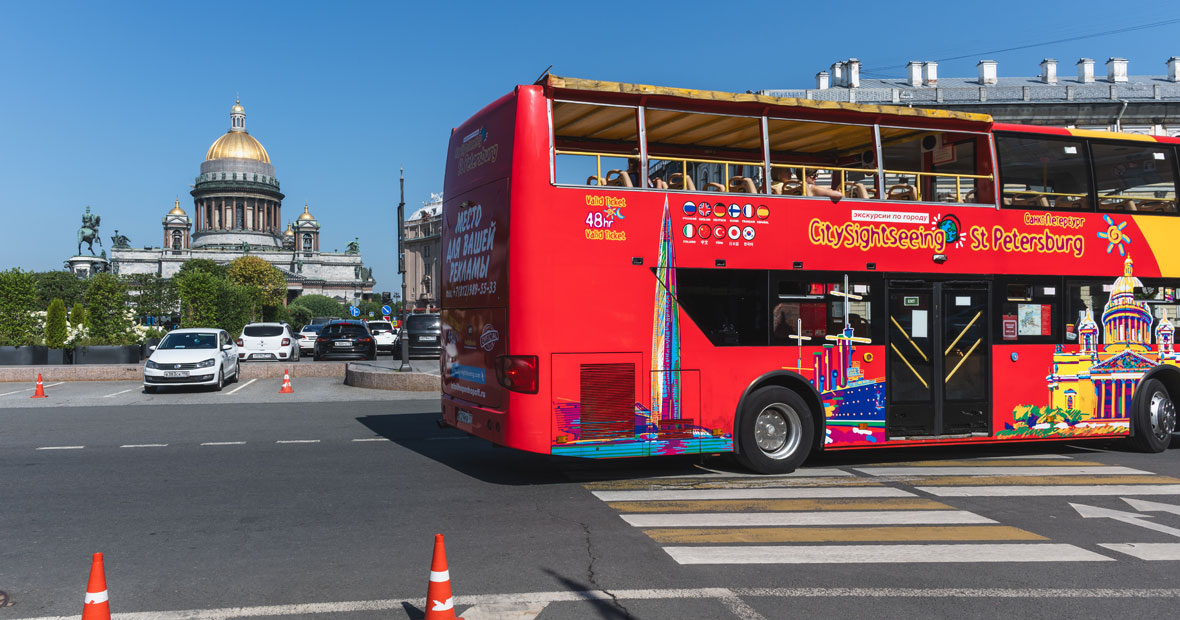
The open-top double-decker bus has become synonymous with tourist districts across major European cities. Yet behind the familiar red exteriors and multilingual audio guides lies a transportation evolution that challenges conventional wisdom about sustainable travel and urban exploration.
Traditional assumptions position tour buses as environmental villains and authentic experience barriers. The reality proves more nuanced. Modern hop-on hop-off networks represent sophisticated urban mobility solutions that address multiple contemporary travel challenges simultaneously. Operators like Tootbus have transformed basic sightseeing routes into integrated multi-modal systems combining digital intelligence, environmental efficiency, and flexible discovery frameworks.
This transformation reflects a broader paradox in urban tourism infrastructure. The same commercial vehicles once criticized as pollution contributors now emerge as unexpected sustainability pioneers, leveraging passenger consolidation, route optimization, and electric fleet transitions to reduce per-capita emissions below private alternatives.
The following analysis examines how hop-on hop-off services evolved beyond simple transportation to become essential components of efficient, sustainable, and satisfying European city exploration.
Smart European Sightseeing in 4 Key Points
- Shared tour buses generate significantly lower carbon emissions per passenger compared to private vehicle alternatives
- AI-powered routing and real-time traffic integration optimize visitor flow and reduce urban congestion
- Purpose-built infrastructure protects tourist pedestrians in high-traffic districts
- Structured flexibility frameworks enhance travel satisfaction by balancing spontaneity with efficient planning
The Environmental Paradox: How Shared Sightseeing Actually Reduces Urban Emissions
The relationship between tourism and climate impact reveals uncomfortable truths. Global travel generates substantial greenhouse gas emissions, with transport modes representing the primary contributor to this footprint. Recent scientific analysis demonstrates that tourism accounts for 8.8% of global emissions in 2019, with transport driving the majority of this environmental cost.
Within this broader context, the modal choice travelers make carries significant consequences. Private vehicles, rental cars, and individual taxi trips fragment passenger loads across numerous units, each burning fuel independently. Consolidated transport alternatives present a mathematically superior approach to moving tourists through dense urban environments.
| Transport Mode | CO2 per Passenger Mile | Relative Impact |
|---|---|---|
| Private Car | High | Highest |
| Tour Bus | Low | Well behind cars |
| Train | Lowest | Most sustainable |
The consolidation principle operates simply: fifty passengers traveling together in a single vehicle consume dramatically less fuel and generate fewer emissions than those same fifty passengers distributed across twenty-five rental cars. This mathematical reality drives policy decisions across European capitals increasingly focused on sustainable tourism transitions.
Electric fleet adoption accelerates this environmental advantage further. Modern tour operators invest heavily in battery-electric and hybrid-electric double-deckers, particularly in cities with strict low-emission zone requirements. These vehicles eliminate tailpipe emissions entirely while maintaining the passenger consolidation benefits inherent to shared transport models.
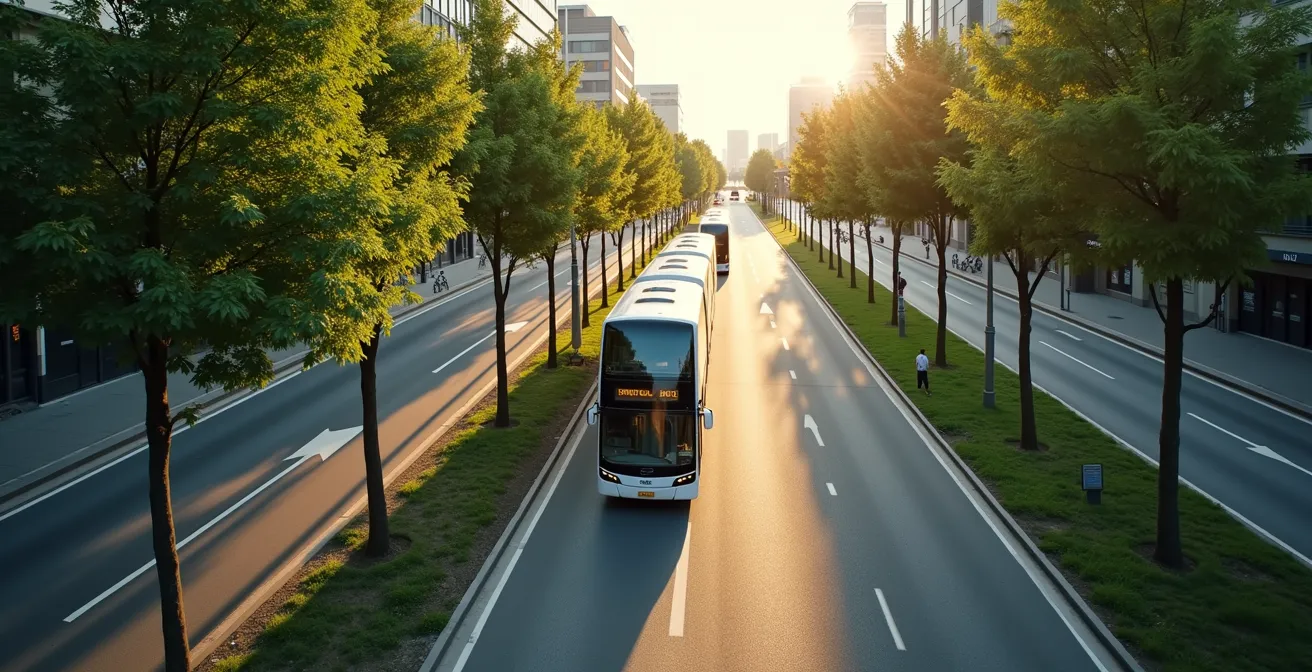
Urban greenery integration and dedicated transit lanes create synergistic environmental benefits. Tree-lined boulevards reduce urban heat island effects while separated bus corridors prevent the stop-start driving patterns that increase fuel consumption. The result transforms sightseeing infrastructure into multi-functional sustainability assets rather than pure tourism amenities.
European Cities Carbon Reduction Strategies
European cities implementing sustainable tourism practices demonstrate measurable progress in reducing travel-related emissions. Analysis from the European Commission’s transition pathways shows each dollar of tourism spending generated 1.02 kg of greenhouse gas emissions in 2019, with transport driving much of this footprint. Municipal initiatives now focus on modal shift from private to shared transport, recognizing that visitor behavior changes deliver faster emissions reductions than incremental efficiency improvements alone.
The paradox becomes clear: commercial tour buses, despite their association with mass tourism, function as practical carbon reduction tools when compared against the counterfactual of dispersed private vehicle use. This doesn’t position them as optimal sustainability solutions—active transport and rail systems claim that distinction—but establishes their role as pragmatic harm reduction mechanisms within existing urban infrastructure constraints.
Digital Revolution: AI-Powered Routes and Real-Time City Intelligence
The transformation of traditional fixed-route services into dynamic mobility platforms represents perhaps the most significant operational evolution in urban sightseeing. Early hop-on hop-off systems operated on rigid schedules with predetermined stops, offering convenience through predictability but lacking responsiveness to changing urban conditions.
Contemporary platforms integrate multiple data streams to optimize routing decisions in real time. Traffic flow sensors, special event calendars, weather forecasts, and historical demand patterns feed algorithms that adjust departure frequencies, recommend optimal boarding locations, and suggest alternative routes during disruptions. This intelligence layer converts static infrastructure into adaptive systems capable of responding to the chaotic variability inherent in major tourist destinations.
Mobile applications extend this intelligence directly to travelers, providing live vehicle tracking, capacity indicators, and estimated arrival times. The psychological impact of this transparency proves substantial—research in passenger satisfaction consistently identifies uncertainty as a primary source of transit frustration, while real-time information provision measurably reduces perceived wait times even when actual durations remain unchanged.
European urban nodes are transforming into dynamic hubs of digital transportation solutions that enhance efficiency, sustainability, and user experience through ITS implementation and multi-modal traffic management systems.
– European Commission Transport, Connecting Europe Days 2024
Integration with broader urban mobility ecosystems amplifies these benefits. When hop-on hop-off services connect with metro systems, bike-share networks, and pedestrian wayfinding platforms, travelers gain access to comprehensive multi-modal journeys that explore cities more efficiently than any single transport mode alone could achieve.
Audio guide evolution deserves particular attention. Traditional recorded narration in eight languages has given way to geolocation-triggered content, augmented reality overlays, and personalized recommendation engines that learn individual preferences over time. A family traveling with children receives different points of interest than solo architectural photography enthusiasts, despite riding the same physical route.
These technological layers create value beyond mere convenience. They represent fundamental shifts in how visitors navigate unfamiliar environments, reducing cognitive load and decision fatigue while expanding the practical range of exploration accessible to travelers with varying levels of independence and local knowledge.
Safety by Design: Infrastructure Changes That Protect Tourist Pedestrians
Visitor populations exhibit distinctly different behavioral patterns than local residents, creating unique safety challenges in high-traffic tourist districts. Unfamiliarity with traffic flow norms, distraction from navigation and photography, and varied cultural expectations around right-of-way create elevated collision risks at precisely the locations where pedestrian volumes reach their highest concentrations.
Urban planners increasingly recognize these patterns and implement targeted infrastructure modifications around major tourist routes. Expanded pedestrian crossing intervals account for slower walking speeds and larger group sizes. Tactile paving systems assist visually impaired visitors navigating unfamiliar streetscapes. Protected waiting areas separate queuing tourists from active traffic lanes at popular boarding locations.
The implementation of these safety features reflects evidence-based design principles. Traffic engineers analyze historical incident data to identify high-risk intersections, then test interventions through pilot programs before permanent installation. This methodical approach ensures modifications actually reduce collision frequencies rather than simply creating the appearance of safety without measurable benefit.
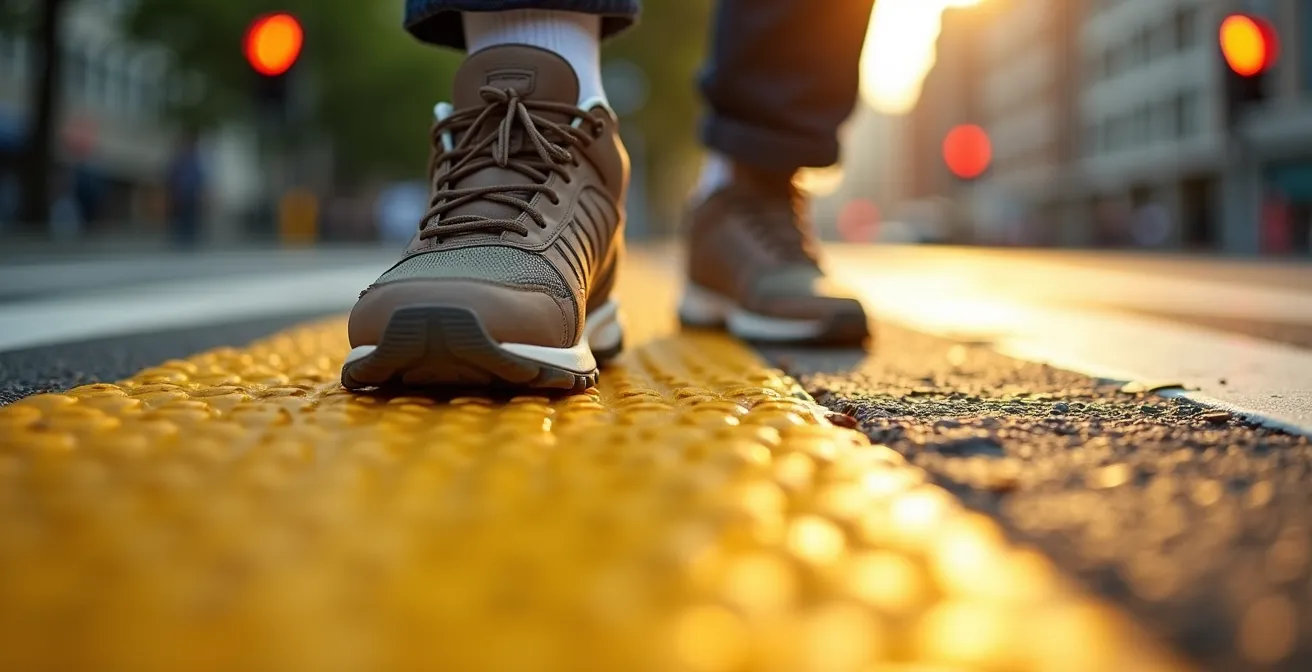
The textured surface treatments visible in modern crosswalks serve multiple protective functions simultaneously. The distinctive yellow dome pattern provides tactile feedback to cane users, while the color contrast assists those with reduced visual acuity. These universal design principles benefit all pedestrians by creating clear spatial boundaries between movement zones and vehicle spaces, reducing ambiguity about where crossing should occur.
Tour bus design itself incorporates numerous passenger protection features beyond standard transit vehicles. Lower entry steps with handrails accommodate varying mobility levels. Automated announcements remind passengers to remain seated during motion. Some operators implement maximum capacity limits below theoretical seating numbers to prevent overcrowding that could compromise stability during turns.
The cumulative effect of these infrastructure and vehicle modifications creates measurably safer environments for tourist pedestrians. While precise attribution remains challenging—overall traffic calming and reduced vehicle speeds contribute alongside specific interventions—the directional trend toward enhanced protection standards reflects growing recognition that visitor safety represents both an ethical obligation and a practical tourism industry requirement.
Key Takeaways
- Shared tour buses reduce per-passenger carbon emissions significantly below private vehicle alternatives through passenger consolidation and electric fleet adoption
- Real-time digital intelligence transforms static routes into responsive systems that optimize efficiency and reduce traveler uncertainty
- Evidence-based infrastructure modifications around tourist routes measurably improve pedestrian safety through universal design principles
- Structured flexibility frameworks balance spontaneous discovery with efficient planning, enhancing overall travel satisfaction
The Psychology of Discovery: Why Structured Freedom Enhances Travel Satisfaction
The tension between structured itineraries and spontaneous exploration represents a fundamental challenge in travel planning. Rigid schedules maximize efficiency but eliminate serendipity. Completely unstructured wandering preserves spontaneity but often results in missed highlights, wasted time, and decision paralysis when confronted with overwhelming options in unfamiliar cities.
Hop-on hop-off systems occupy a strategic middle ground between these extremes. The predetermined route provides a scaffolding structure that ensures exposure to major landmarks without requiring extensive pre-trip research. The flexible boarding and alighting mechanism preserves autonomy, allowing travelers to extend time at compelling locations or skip attractions that fail to engage their specific interests.
This structured freedom framework addresses a psychological phenomenon well-documented in choice architecture research: excessive options create anxiety rather than satisfaction. When confronted with dozens of possible museums, neighborhoods, and restaurants, many travelers experience decision fatigue that paradoxically reduces enjoyment. A curated route functions as beneficial constraint, narrowing choices to a manageable set while maintaining sufficient flexibility to accommodate individual preferences.
The impact on travel satisfaction proves measurable. Visitors using hop-on hop-off services consistently report higher confidence levels navigating unfamiliar cities, reduced stress about missing important sites, and greater willingness to explore beyond immediate hotel vicinities. These psychological benefits translate into more positive overall destination perceptions and increased likelihood of recommendation to others.
First-time visitors to major European capitals particularly benefit from this structured approach. The learning curve for metro systems, the complexity of neighborhood layouts, and the sheer density of potential attractions can overwhelm travelers unfamiliar with large urban environments. A hop-on hop-off route provides an orienting framework—a mental map of how districts relate spatially and culturally—that facilitates more confident independent exploration on subsequent days.
For multi-city European itineraries, this orientation function compounds across destinations. Travelers who successfully navigate Paris using a structured bus tour approach Rome with greater confidence, having internalized strategies for rapid urban familiarization. The ability to plan your European route effectively depends partly on this accumulated experiential knowledge of how to efficiently decode unfamiliar cities.
The satisfaction paradox resolves clearly: constraints, when thoughtfully designed, enhance rather than diminish perceived freedom. Hop-on hop-off systems succeed not despite their structure, but because their particular balance of guidance and autonomy matches the psychological needs of travelers navigating the inherent uncertainties of unfamiliar environments.
Frequently Asked Questions on City Sightseeing
What drives tourist satisfaction in European cities?
The combination of digital innovation, sustainable practices, and improved connectivity creates enhanced visitor experiences across major destinations. Structured flexibility frameworks that balance efficient planning with spontaneous discovery particularly enhance satisfaction by reducing decision fatigue while preserving autonomy.
How do hop-on hop-off buses compare environmentally to other tourist transport options?
Shared tour buses generate significantly lower carbon emissions per passenger compared to private rental cars or individual taxi trips due to passenger consolidation. While trains remain the most sustainable option, modern electric tour buses represent practical harm reduction mechanisms within existing urban infrastructure, particularly when compared against the counterfactual of dispersed private vehicle use.
What makes digital route optimization important for city tours?
Real-time traffic integration, demand forecasting, and live capacity indicators transform static routes into responsive systems that reduce wait times and optimize visitor flow. Mobile applications providing live vehicle tracking and estimated arrivals measurably reduce perceived wait times and traveler anxiety, while multi-modal integration with metro and bike-share systems enables comprehensive urban exploration beyond single transport modes.
How does infrastructure design protect tourist pedestrians specifically?
High-traffic tourist districts implement targeted safety modifications including extended crossing intervals for slower group movements, tactile paving for visually impaired navigation, and protected waiting areas separating queues from active traffic lanes. These evidence-based interventions address the elevated collision risks created by visitor unfamiliarity with local traffic patterns and navigation distraction.