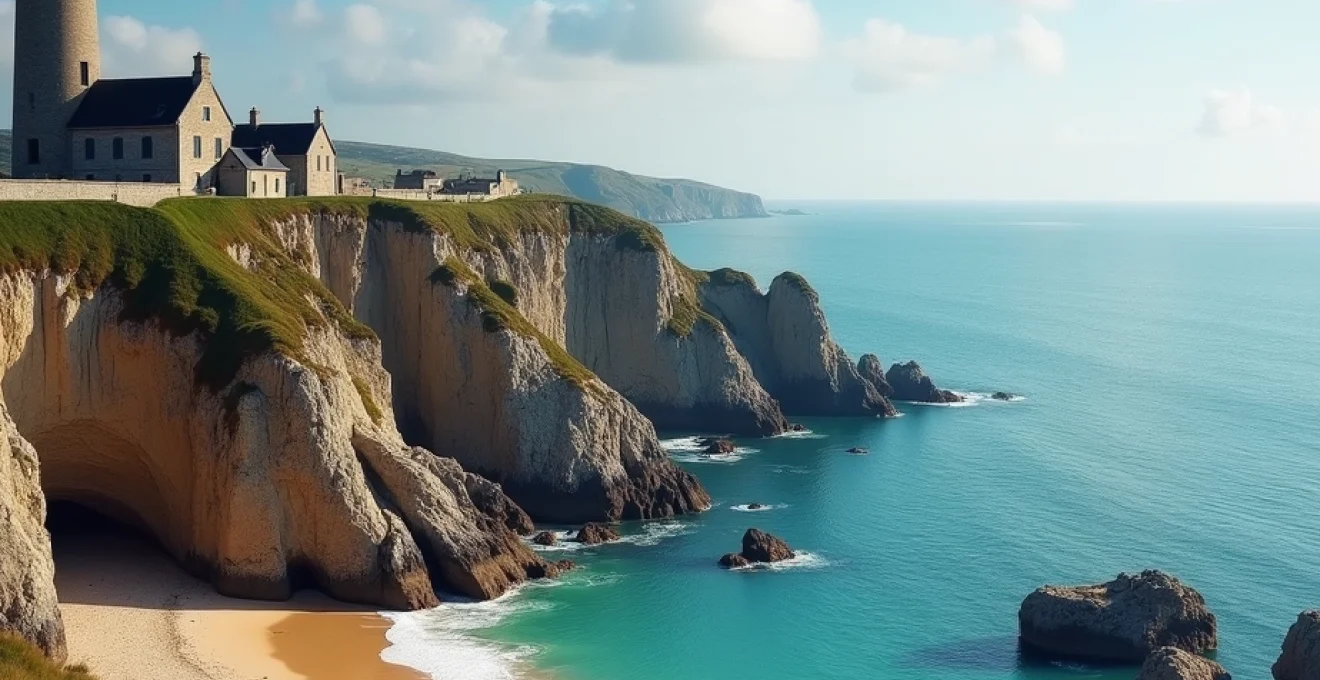
Brittany stands as a remarkable testament to France’s diverse cultural landscape, where ancient Celtic traditions merge seamlessly with dramatic Atlantic coastlines. This northwestern peninsula, known locally as Breizh , extends into the ocean like a weathered finger pointing towards the New World, its 2,700 kilometres of rugged shoreline bearing witness to millennia of maritime heritage. Unlike the manicured beaches of the French Riviera or the wine-soaked valleys of Burgundy, Brittany offers something altogether more raw and authentic—a region where fishing boats still follow tidal rhythms established centuries ago, where megalithic stones predate Stonehenge, and where the Breton language echoes the ancient Celtic tongues of Wales and Ireland.
The region’s authenticity stems from its unique position as both geographically and culturally distinct from the rest of France. Here, pink granite cliffs rise from emerald seas, medieval walled cities overlook bustling fishing ports, and traditional festivals celebrate customs that stretch back to the early medieval period. This is a landscape shaped by elemental forces—wind, salt spray, and granite—where human settlements have adapted to work with, rather than against, the powerful Atlantic environment.
Maritime heritage and coastal geology of brittany’s rugged shoreline
Brittany’s coastline represents one of Europe’s most geologically diverse and culturally significant maritime landscapes. The peninsula’s position at the western edge of the European continental shelf has created a complex interplay between ancient rock formations and modern oceanic forces, resulting in a shoreline that varies dramatically from sheltered river estuaries to exposed headlands facing the full force of Atlantic storms.
Granite cliff formations along the côte de granit rose
The Pink Granite Coast stretches for thirty kilometres between Plestin-les-Grèves and Perros-Guirec, showcasing some of the world’s most spectacular examples of granite rose formations. These remarkable geological structures formed approximately 300 million years ago during the Hercynian orogeny, when magma intrusions cooled slowly beneath the earth’s surface, creating the distinctive coarse-grained granite that characterises the region. The characteristic pink colouration results from high concentrations of potassium feldspar minerals, which give the rock its warm, salmon-hued appearance that intensifies dramatically during sunrise and sunset.
Millions of years of selective weathering have sculpted these granite masses into fantastical shapes that local imagination has named after familiar objects—Napoleon’s hat, sleeping giants, and various animals. The erosional process, known as spheroidal weathering , occurs when chemical weathering attacks the corners and edges of rectangular granite blocks more aggressively than the faces, gradually rounding them into the distinctive boulder formations visible today. These formations continue to evolve, with ongoing marine erosion gradually undermining cliff bases and creating the dramatic overhangs and isolated rock stacks that punctuate the coastline.
Tidal phenomena at Mont-Saint-Michel bay and rance estuary
The Bay of Mont-Saint-Michel experiences some of Europe’s most extreme tidal variations, with ranges reaching up to 15 metres during spring tides. This extraordinary phenomenon results from the bay’s funnel-shaped configuration, which amplifies incoming tidal waves as they narrow towards the shore. The incoming tide, locally known as la barre , can advance across the flat sandy expanses at speeds approaching that of a galloping horse, creating a wall of water that has fascinated observers for centuries.
The Rance Estuary presents a different but equally remarkable tidal environment, where the world’s first successful tidal power station has operated since 1966. The facility harnesses the twice-daily flow of approximately 184 million cubic metres of seawater, generating enough renewable energy to power 240,000 homes annually. The estuary’s unique characteristics—including a tidal range of up to 13.5 metres and the natural amplification provided by its narrowing channel—create ideal conditions for tidal energy generation while maintaining the delicate ecological balance that supports diverse marine and bird populations.
Traditional fishing ports of concarneau and douarnenez
Concarneau ranks as France’s third-largest fishing port, with its fleet specialising in tuna fishing using traditional pole-and-line methods that minimise environmental impact. The port’s Ville Close , a fortified island connected to the mainland by a stone bridge, represents one of Europe’s finest examples of maritime military architecture. Within its granite walls, narrow cobblestone streets house traditional conserveries where local artisans continue time-honoured methods of preserving fish and shellfish.
Douarnenez has built its reputation around sardine fishing, with the port’s distinctive penn sardin boats designed specifically for this pursuit. These traditional vessels, typically 12-15 metres in length, feature distinctive red sails and shallow drafts that allow them to work close to shore where sardine shoals congregate. The port’s maritime museum preserves over 200 traditional boats, representing the largest collection of working maritime heritage vessels in France. Modern fishing operations continue alongside these traditional methods, with local fishermen maintaining sustainable quotas and seasonal restrictions that have preserved fish stocks for future generations.
Lighthouse architecture from phare d’eckmühl to la jument
The Phare d’Eckmühl at Penmarc’h exemplifies 19th-century lighthouse engineering, rising 65 metres above sea level with its distinctive octagonal granite tower crowned by a cast-iron lantern room. Completed in 1897, this structure represents the culmination of French lighthouse design, incorporating lessons learned from decades of coastal illumination projects. Its first-order Fresnel lens system, comprising 1,825 individual glass prisms, can project a beam visible for 54 kilometres in clear conditions.
La Jument lighthouse presents a more dramatic example of maritime architecture, standing isolated on a wave-swept rock 300 metres from the Île de Sein. This 47-metre tower, completed in 1911 after seven years of challenging construction, endures some of Europe’s most severe marine conditions. During winter storms, waves regularly overtop the structure, creating the spectacular photographs that have made it one of France’s most recognisable lighthouses. The lighthouse’s automated systems, upgraded in 1991, continue to guide vessels through the treacherous Raz de Sein passage, where strong currents and scattered reefs have claimed hundreds of vessels over the centuries.
Celtic cultural identity and breton language preservation
Brittany’s Celtic identity distinguishes it from all other French regions, creating a cultural landscape more closely aligned with Ireland, Scotland, and Wales than with neighbouring French territories. This distinct heritage traces its origins to the 5th and 6th centuries, when Celtic-speaking migrants from southwestern Britain established settlements in Armorica, bringing with them languages, customs, and artistic traditions that continue to flourish today.
Fest-noz traditional music festivals and bagpipe heritage
The fest-noz tradition, recognised by UNESCO as an Intangible Cultural Heritage of Humanity, represents the living heart of Breton musical culture. These evening gatherings centre around collective dancing to traditional melodies played on distinctive Breton instruments, particularly the bombarde (a double-reed woodwind) and various types of bagpipes including the binioù kozh and the larger binioù bras . The music follows complex modal structures inherited from medieval Celtic traditions, with many melodies tracing their origins to pre-Christian ritual songs.
Modern fest-noz events attract participants from across Brittany and beyond, with some festivals drawing over 4,000 dancers to single events. The dances themselves—including the gavotte , an dro , and plinn —require no formal training, allowing newcomers to join the circular chains and spirals that form spontaneously throughout the evening. Professional musicians often blend traditional instruments with contemporary additions, creating innovative arrangements that maintain the essential rhythmic and melodic characteristics of authentic Breton music while appealing to younger generations.
Breton language revival through diwan immersion schools
The Diwan school network has emerged as the primary vehicle for Breton language transmission, operating 45 schools across the region with approximately 4,000 students receiving education entirely through the medium of Breton. These institutions follow the French national curriculum while conducting all instruction in Breton, creating bilingual speakers who achieve academic results consistently above regional averages. The immersion totale methodology proves particularly effective for children from non-Breton-speaking families, who typically achieve native-level fluency by age eight.
Current estimates suggest between 200,000 and 250,000 people retain some competency in Breton, though fewer than 20,000 use it as their primary language. The language exists in four main dialectal groups—Leoneg, Tregerieg, Kernewek, and Gwenedeg—each preserving distinct vocabulary and pronunciation patterns developed over centuries of geographical isolation. Digital initiatives have expanded Breton’s presence online, with social media platforms, smartphone applications, and streaming services now offering content in the language, helping to normalise its use among younger speakers.
Stone circle archaeology at carnac megalithic complex
The Carnac megalithic sites contain over 3,000 prehistoric standing stones arranged in complex alignments that stretch across four square kilometres of the Morbihan countryside. These monuments, dating from approximately 4500 to 2000 BCE, predate Stonehenge by nearly a millennium and represent the world’s largest concentration of megalithic architecture. Recent archaeological investigations using ground-penetrating radar have revealed previously unknown stone structures buried beneath centuries of soil accumulation, suggesting the original complex may have contained twice as many monuments as currently visible.
The three main alignment groups—Ménec, Kermario, and Kerlescan—demonstrate sophisticated understanding of astronomical cycles and geometric principles. Computer analysis of stone positioning reveals correlations with lunar cycles, seasonal solstices, and stellar movements, suggesting the monuments served as complex calendrical systems for Neolithic agricultural communities. The largest stones, some weighing over 50 tonnes, required coordinated efforts by hundreds of workers and sophisticated understanding of leverage and transportation techniques that challenge assumptions about prehistoric technological capabilities.
Traditional costume craftsmanship and coiffe headdress techniques
Breton traditional costume varies significantly between regions, with over 100 distinct styles documented across the peninsula. The most recognisable element, the coiffe lace headdress, requires exceptional needlework skills passed down through generations of women artisans. Each region developed characteristic coiffe styles—from the tall cylindrical forms of Pont-l’Abbé to the wide, wing-like structures of Bigouden—that immediately identified the wearer’s geographical and social origins.
Contemporary costume preservation efforts focus on maintaining traditional construction techniques while adapting designs for modern wearers. Master craftswomen continue to teach dentelle aux fuseaux (bobbin lace) techniques in workshops across the region, with some coiffes requiring over 200 hours of skilled handwork to complete. The intricate pleating, embroidery, and lace application methods represent sophisticated textile arts that rival the finest European courtly fashions of their era. Modern festivals and cultural events provide opportunities for these garments to be worn in appropriate contexts, ensuring that the skills required for their creation and maintenance remain active within Breton communities.
Artisanal food production and Terroir-Based gastronomy
Brittany’s culinary identity emerges from the marriage of Atlantic abundance and agricultural excellence, creating a gastronomic tradition that emphasises quality ingredients prepared with time-tested techniques. The region’s position between land and sea provides access to exceptional seafood while its mild, humid climate supports diverse agricultural production, from ancient apple varieties to heritage vegetable crops that have shaped Breton cuisine for centuries.
Oyster cultivation methods in cancale and belon river systems
Cancale’s oyster beds extend across 450 hectares of intertidal zones where the interaction between freshwater springs and saltwater creates optimal conditions for Crassostrea gigas cultivation. The town’s ostréiculteurs employ traditional élevage en poches methods, placing juvenile oysters in mesh bags suspended from metal tables that allow tidal exposure twice daily. This alternating immersion and air exposure strengthens the oysters’ shells while concentrating their flavour, producing specimens prized throughout France for their mineral complexity and firm texture.
The Belon River system produces the renowned Belon plates , native European flat oysters ( Ostrea edulis ) that develop their characteristic metallic finish from the river’s unique combination of marine and freshwater influences. These oysters require three to four years to reach market size, compared to eighteen months for Pacific oysters, but command premium prices for their intense, copper-tinged flavour. Traditional cultivation methods involve moving oysters between different sections of the river as they mature, allowing them to develop the complex taste profile that has made Belon oysters synonymous with gastronomic excellence.
Artisanal cider production using pomme à cidre varieties
Breton cider production centres around indigenous apple varieties specifically developed for fermentation rather than fresh consumption. Traditional orchards cultivate over 20 heritage varieties including Douce Moen , Guillevic , and Kermerrien , each contributing distinct tannin levels and aromatic compounds to the finished product. The classification system divides apples into four categories—sweet, bittersweet, sharp, and bittersharp—with master cider makers blending different varieties to achieve desired flavour profiles ranging from bone-dry brut to naturally sweet doux .
Modern artisanal producers continue traditional méthode ancestrale fermentation, which relies entirely on natural yeasts present on apple skins rather than commercial yeast additions. This process requires careful temperature control and multiple racking stages to achieve the delicate balance between alcohol content (typically 4-6%) and residual sweetness that characterises authentic Breton cider. Many producers also create pommeau , a fortified aperitif combining fresh apple juice with lambig (Breton apple brandy), aged in oak barrels for a minimum of 14 months to develop its complex caramel and spice notes.
Traditional Butter-Making techniques in Pont-Aven region
The Pont-Aven region produces some of France’s finest salted butter using traditional barattage techniques that emphasise slow churning and hand-working methods. Local dairy cooperatives source cream exclusively from Breton cows grazing on salt-enriched pastures near the coast, where maritime influences create grass with higher mineral content than inland areas. The distinctive beurre demi-sel incorporates fleur de sel hand-harvested from Guérande salt marshes, with salt crystals added during the final working stage to create the characteristic granular texture and complex salinity.
Traditional butter production involves culturing cream with specific bacterial strains that develop the tangy, slightly nutty flavour profile associated with Breton butter. The churning process, performed in small batches using wooden equipment, requires precise timing to achieve optimal fat content (minimum 82%) while maintaining the smooth, spreadable texture that distinguishes artisanal butter from industrial products. Many producers continue to shape butter using traditional wooden mottes (butter paddles) that imprint decorative patterns while removing excess moisture, creating the dense, golden blocks sold in regional markets and specialty food stores throughout France.
Kouign-amann pastry heritage and local bakery traditions
The kouign-amann , literally “butter cake” in Breton, originated in Douarnenez during the 1860s as a method for using excess butter and bread dough. This labour-intensive pastry requires multiple lamination stages, similar to croissant production, where layers of salted butter are folded into yeasted dough through a precise sequence of rolling and folding operations. The traditional recipe calls for equal weights of flour, butter, and sugar, creating an exceptionally rich pastry that caramelises during baking to form a crispy exterior surrounding tender, flaky layers.
Authentic kouign-amann production demands specific timing and temperature controls that many bakers guard as trade secrets passed down through generations. The dough must rest between folding stages to allow gluten development while preventing butter from melting, requiring careful coordination between preparation and baking schedules. Regional
variations in shape and baking methods create distinct local traditions, with some areas preferring individual-sized portions while others make larger cakes designed for sharing. Master bakers continue to compete in annual competitions throughout Brittany, where judges evaluate texture, lamination quality, and the balance between buttery richness and caramelised sweetness that defines exceptional kouign-amann.
Medieval architecture and religious pilgrimage routes
Brittany’s medieval architectural heritage represents one of Europe’s most complete collections of ecclesiastical and secular buildings from the 11th through 16th centuries. The region’s relative prosperity during the late medieval period, combined with its position as an independent duchy until 1532, enabled the construction of numerous churches, chapels, and fortified structures that remain largely intact today. These buildings demonstrate the evolution of architectural styles from Romanesque simplicity through Gothic complexity to Renaissance refinement, often incorporating distinctly Breton decorative elements that reflect the region’s Celtic cultural identity.
The Tro Breizh pilgrimage circuit connects seven cathedral cities dedicated to the founding saints of Brittany, creating a spiritual journey that spans approximately 600 kilometres across the peninsula. This medieval route, comparable to the Camino de Santiago, leads pilgrims through Saint-Pol-de-Léon, Tréguier, Saint-Brieuc, Saint-Malo, Dol-de-Bretagne, Vannes, and Quimper, each housing remarkable examples of religious architecture. The circuit includes over 200 parish churches featuring distinctive Breton elements such as elaborate calvaires (stone calvary sculptures), ornate rood screens, and painted wooden ceilings that showcase the region’s unique artistic traditions.
Fortified churches throughout Brittany demonstrate the region’s turbulent medieval history, when religious buildings required defensive capabilities during periods of conflict with neighbouring territories and Viking raids. The Cathedral of Saint-Malo exemplifies this defensive ecclesiastical architecture, with its massive granite walls and fortress-like appearance reflecting the city’s strategic maritime position. Similarly, the walled town of Concarneau preserves its complete medieval fortification system, including ramparts, gates, and towers that protected both religious and secular communities from seaborne attacks.
Distinctive Breton architectural features include the use of local granite in construction, creating buildings that harmonise with the natural landscape while demonstrating exceptional durability. Many churches feature elaborate south porches designed to provide shelter during outdoor religious ceremonies, reflecting the importance of communal worship in medieval Breton society. The region’s master stonemasons developed sophisticated carving techniques that produced intricate decorative elements, from geometric patterns derived from Celtic traditions to realistic representations of local flora and fauna that celebrate Brittany’s natural environment.
Sustainable tourism practices in protected coastal areas
Brittany has emerged as a pioneer in sustainable coastal tourism, implementing comprehensive conservation strategies that balance environmental protection with economic development across its extensive shoreline. The region’s approach emphasises the preservation of natural habitats while providing visitors with authentic experiences that support local communities and traditional industries. This model demonstrates how coastal regions can maintain their ecological integrity while accommodating the tourism necessary for economic vitality.
The Parc Naturel Régional d’Armorique covers 125,000 hectares of Brittany’s most sensitive coastal and inland environments, implementing strict visitor management protocols that limit access during breeding seasons and regulate activities in vulnerable ecosystems. Within the park, designated walking trails follow sustainable routing that minimises soil erosion and vegetation damage while providing access to spectacular viewpoints and wildlife observation areas. Educational programmes conducted in partnership with local schools and tourism operators ensure that visitors understand their environmental responsibilities and the ecological significance of the areas they explore.
Marine protected areas around the Sept-Îles archipelago and the Iroise Sea demonstrate innovative approaches to coastal conservation that support both wildlife protection and sustainable fishing practices. These zones employ seasonal restrictions on recreational boating and diving activities during critical periods for seabird nesting and marine mammal breeding. Local fishing communities collaborate with conservation authorities to implement sustainable harvesting quotas that maintain fish populations while preserving traditional livelihoods, creating a model for community-based marine resource management.
Accommodation providers throughout Brittany increasingly adopt eco-certification standards that emphasise local sourcing, energy efficiency, and waste reduction. Many establishments partner with regional food producers to offer guests authentic culinary experiences while supporting traditional agriculture and aquaculture. The Gîtes Panda network, certified by WWF France, provides accommodation in natural areas that meets strict environmental criteria while offering guided activities that educate visitors about local ecosystems and conservation challenges.
Transportation initiatives focus on reducing the environmental impact of tourism through improved public transit connections and cycling infrastructure development. The region has invested heavily in electric bus services linking coastal towns and train stations, while an extensive network of dedicated cycling paths allows visitors to explore the coastline without relying on private vehicles. Ferry services to offshore islands operate on schedules designed to minimise disturbance to marine wildlife while providing efficient access for visitors seeking authentic island experiences.
Community-based tourism initiatives ensure that the economic benefits of sustainable travel reach local populations while preserving traditional ways of life. Artisan workshops, traditional fishing demonstrations, and cultural festivals provide income opportunities for local residents while offering visitors genuine insights into Breton heritage. These programmes emphasise small-group experiences that reduce environmental impact while creating meaningful connections between visitors and the communities they encounter, fostering long-term appreciation for Brittany’s unique coastal culture.