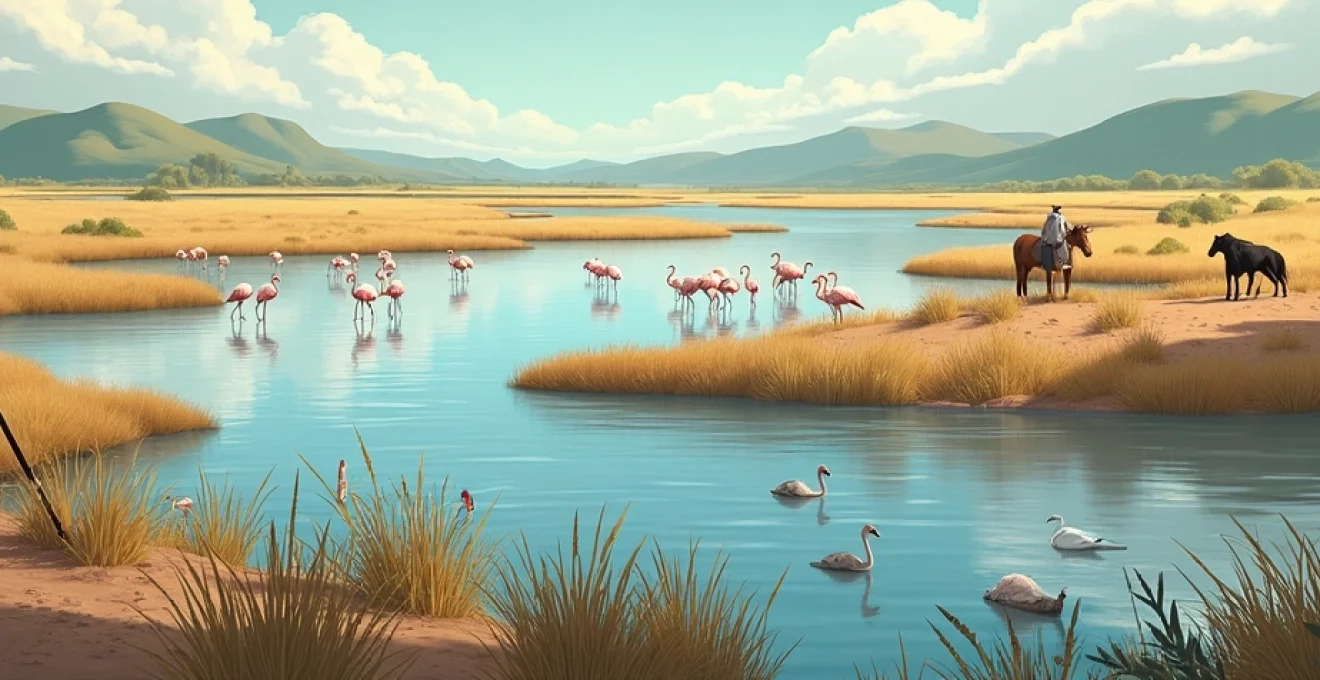
The Camargue stands as Europe’s most significant wetland ecosystem, where the mighty Rhône River meets the Mediterranean Sea to create an extraordinary mosaic of habitats teeming with life. This vast delta encompasses over 85,000 hectares of pristine marshlands, salt lagoons, and grasslands that support some of the continent’s most spectacular wildlife populations. From the iconic pink flamingo colonies that paint the horizon in vibrant hues to the legendary white horses galloping across endless plains, the Camargue offers nature enthusiasts an unparalleled opportunity to witness biodiversity at its finest. The region’s unique position as a critical migration corridor attracts hundreds of bird species throughout the year, making it a paradise for ornithologists and wildlife photographers alike.
Parc naturel régional de camargue: core wildlife habitats and endemic species
The Parc Naturel Régional de Camargue serves as the protective umbrella for this remarkable ecosystem, encompassing diverse habitats that support an extraordinary array of wildlife. Established in 1970, this regional park manages the delicate balance between conservation and sustainable tourism, ensuring that visitors can experience the Camargue’s natural wonders while preserving its ecological integrity. The park’s management zones include strictly protected areas alongside accessible regions where wildlife observation activities take place under carefully controlled conditions.
The park’s diverse landscape features include freshwater marshes dominated by extensive reed beds, saline lagoons that shimmer under the Mediterranean sun, and traditional grazing lands where centuries-old pastoral practices continue to shape the environment. These varied habitats create ecological niches that support endemic species found nowhere else in Europe, making the Camargue a living laboratory for studying wetland ecology and conservation biology.
Flamingo colonies at étang de fangassier and breeding behaviour patterns
The Étang de Fangassier represents one of Europe’s most important flamingo breeding sites, hosting between 8,000 and 13,000 pairs during peak breeding seasons. These magnificent birds construct their distinctive mud-cone nests on carefully selected islands within the lagoon, where predator access remains limited and water salinity levels provide optimal feeding conditions. The breeding cycle begins in March when elaborate courtship displays transform the lagoon into a spectacular theatre of synchronized dancing and vocalizations.
Flamingo feeding behaviour demonstrates remarkable adaptation to the Camargue’s unique environment, with birds filtering algae, small crustaceans, and other microorganisms through their specialized beaks. The pink coloration that makes these birds so iconic derives from carotenoid pigments present in their diet, particularly from brine shrimp and blue-green algae. Observation of feeding flocks reveals fascinating social hierarchies and territorial behaviours that researchers continue to study for insights into avian ecology.
Camargue horse herds in méjanes and traditional manade management
The Méjanes area showcases the Camargue’s most celebrated residents – the hardy white horses that have roamed these wetlands for over 2,000 years. These semi-feral herds live under traditional manade management systems, where skilled horsemen called gardians oversee their welfare while allowing them to maintain their natural behaviours. The horses’ remarkable adaptation to wetland conditions includes webbed hooves that provide stability on marshy ground and salt tolerance that enables them to thrive in environments where other breeds would struggle.
Breeding programs within the manades focus on preserving the genetic integrity of Camargue horses while maintaining their distinctive characteristics, including their grey coloration that whitens with age and their compact, muscular build. These horses play essential roles in traditional cattle herding and participate in local festivals that celebrate Camargue culture. Visitors can observe these magnificent animals during guided tours that explain the symbiotic relationship between human tradition and wildlife conservation.
Black bull populations and authentic bouvine encounters
The distinctive black bulls of the Camargue represent another iconic species whose presence shapes both the landscape and local culture. These hardy bovines, known for their agility and intelligence, graze extensively across the park’s grasslands, their hoofprints creating microhabitats that benefit numerous smaller species. The bulls’ grazing patterns maintain the open character of Camargue meadows, preventing scrubland encroachment that would alter the ecosystem’s fundamental structure.
Traditional bull management involves seasonal movements between different grazing areas, allowing vegetation recovery while providing varied nutrition throughout the year. The bulls’ role extends beyond ecological functions to include participation in bloodless bullfighting traditions that form an integral part of regional cultural identity. These events, known as courses camarguaises , demonstrate the remarkable athleticism and intelligence that have made Camargue bulls legendary throughout southern France.
Avian migration corridors through Salin-de-Giraud wetlands
The wetlands surrounding Salin-de-Giraud function as critical stopover points along the East Atlantic Flyway, one of Europe’s most important bird migration routes. During spring and autumn migrations, these areas host spectacular concentrations of waterfowl, waders, and raptors that rely on the Camargue’s rich feeding opportunities to fuel their journeys between breeding and wintering grounds. Peak migration periods transform the landscape into a dynamic showcase of avian diversity, with new species arriving daily as weather patterns influence movement timing.
Salt production activities in the Salin-de-Giraud area create artificial lagoons with varying salinity levels that attract different bird species according to their feeding preferences. Shallow evaporation ponds support high concentrations of invertebrates that provide essential protein sources for migrating shorebirds, while deeper basins offer refuge for diving ducks and grebes. The industrial salt harvesting process, surprisingly, enhances rather than diminishes the area’s value for wildlife conservation.
Réserve nationale de camargue: protected ecosystem zones and research stations
The Réserve Nationale de Camargue encompasses the park’s most pristine and scientifically valuable areas, where access limitations ensure minimal human disturbance to sensitive wildlife populations. This 13,117-hectare reserve operates under strict protection protocols that prioritize scientific research and species conservation while providing carefully managed opportunities for wildlife observation. The reserve’s zoning system designates core areas for exclusive scientific use alongside buffer zones where guided educational activities take place under controlled conditions.
Research activities within the reserve contribute significantly to understanding wetland ecology, climate change impacts, and conservation strategies that benefit similar ecosystems worldwide. Long-term monitoring programs track population trends for key species, document habitat changes, and assess the effectiveness of management interventions. These scientific endeavours provide the knowledge base necessary for adaptive management strategies that respond to emerging challenges such as sea-level rise and changing precipitation patterns.
La capelière nature centre and ornithological monitoring programs
La Capelière serves as the reserve’s primary visitor centre and research facility, offering comprehensive introduction to Camargue ecology through interactive exhibits and educational programs. The centre’s 1.5-kilometre nature trail provides accessible wildlife viewing opportunities while demonstrating different habitat types and their associated species. Professional naturalists lead specialized tours that focus on bird identification, behaviour observation, and conservation challenges facing wetland ecosystems.
The monitoring programs based at La Capelière contribute to European-wide databases tracking bird population trends, breeding success rates, and migration patterns. Ringing stations operated by certified ornithologists provide valuable data on individual bird movements, longevity, and habitat use patterns. Visitors can often observe these research activities in progress, gaining insights into the scientific methods used to understand and protect Camargue wildlife.
Salin-de-badon observatory points for raptor species identification
The Salin-de-Badon area features strategically positioned observation hides that provide excellent viewing opportunities for the Camargue’s impressive raptor populations. These purpose-built structures allow visitors to observe hunting behaviours, territorial displays, and nesting activities without disturbing sensitive bird species. The area’s diverse habitat mosaic attracts both resident raptors such as marsh harriers and seasonal visitors including various eagles, kites, and falcons.
Raptor watching at Salin-de-Badon requires patience and knowledge of species identification features, as many birds appear only briefly during hunting sorties or territorial patrols. Expert guides enhance the experience by sharing detailed knowledge of flight patterns, habitat preferences, and behavioural cues that help distinguish between similar species. The 4.5-kilometre trail system provides multiple vantage points that maximize chances of significant raptor encounters throughout different times of day.
Digue à la mer coastal strip and marine ecosystem interface
The Digue à la Mer represents the fascinating transition zone where freshwater wetlands meet Mediterranean marine environments, creating unique ecological conditions that support specialized plant and animal communities. This coastal strip features active sand dune systems, salt-resistant vegetation, and tidal pools that harbour marine species at the northern limits of their range. The dynamic nature of this environment means that habitat conditions change seasonally and even daily with tidal movements and weather patterns.
Coastal birdlife includes species rarely seen elsewhere in the Camargue, such as sandwich terns, little terns, and occasional vagrant seabirds blown inland during storms. The beach areas provide nesting sites for Kentish plovers, whose ground-level nests require careful protection from human disturbance. Specialized coastal ecology tours reveal the adaptations that enable plants and animals to thrive in this challenging environment where salt spray, shifting sands, and temperature extremes test survival strategies.
Restricted access zones and scientific wildlife study areas
Certain areas within the reserve remain completely closed to public access, serving as reference sites for scientific research and critical refuge areas for the most sensitive species. These zones experience no human disturbance beyond essential scientific activities, allowing researchers to study natural ecological processes without anthropogenic influences. The undisturbed conditions in these areas provide baseline data for comparison with managed habitats and help scientists understand the long-term effects of various conservation interventions.
Wildlife populations in restricted zones often exhibit different behaviours and breeding success rates compared to areas with regular human presence, providing valuable insights into disturbance impacts on sensitive species. Access to research data from these areas requires special permissions and contributes to peer-reviewed scientific publications that influence conservation policies across Europe. The existence of these protected cores ensures that the Camargue’s most vulnerable species maintain secure breeding and feeding areas regardless of tourism pressures.
Pont de gau ornithological park: structured wildlife observation facilities
The Pont de Gau Ornithological Park offers visitors an expertly designed introduction to Camargue birdlife through carefully managed observation facilities that guarantee wildlife encounters while minimizing environmental impact. This 60-hectare park features meticulously maintained trails, strategically positioned viewing platforms, and rehabilitation facilities that provide close-range observation opportunities impossible in completely wild settings. The park’s educational mission focuses on species identification, behaviour interpretation, and conservation awareness that enhances visitors’ subsequent experiences in natural Camargue habitats.
Professional management at Pont de Gau ensures optimal viewing conditions throughout the year, with feeding programs that attract diverse bird species to designated observation areas. The park’s network of freshwater lagoons, reed beds, and grassland areas replicates natural Camargue habitats while providing controlled conditions that allow detailed observation of feeding behaviours, social interactions, and breeding activities. Species regularly visible include flamingos, herons, ibises, and various waterfowl that have become accustomed to human presence without losing their natural behaviours.
The park’s rehabilitation centre treats injured wildlife from across the Camargue region, offering visitors insights into conservation challenges facing local species. Educational programs explain the causes of wildlife injuries, from vehicle collisions to power line strikes, while demonstrating successful treatment and release protocols. This combination of recreation and education makes Pont de Gau an essential starting point for visitors seeking to understand and appreciate Camargue wildlife conservation efforts.
The Pont de Gau experience transforms casual nature observers into passionate wildlife advocates through direct encounters with remarkable Camargue species in carefully managed settings that respect both animal welfare and visitor education needs.
Étang de vaccarès and satellite lagoons: wetland ecosystem diversity
The massive Étang de Vaccarès lagoon system forms the ecological heart of the Camargue, encompassing over 6,500 hectares of brackish water that supports the region’s most diverse wildlife populations. This vast lagoon complex includes numerous satellite water bodies with varying salinity levels, depths, and vegetation characteristics that create microhabitats supporting specialized species communities. The lagoon’s size and complexity mean that different areas provide optimal conditions for different species throughout seasonal cycles, making comprehensive exploration rewarding for dedicated wildlife enthusiasts.
Salinity gradients within the lagoon system create distinct ecological zones, from nearly freshwater areas near river inputs to hypersaline sections that support specialized halophytic vegetation and salt-tolerant invertebrates. These gradients shift seasonally with rainfall patterns, river flow variations, and evaporation rates, creating dynamic conditions that require adaptive management strategies. Understanding these environmental variations helps visitors target specific areas for particular wildlife viewing opportunities and appreciate the complex ecological processes that maintain the Camargue’s biodiversity.
The lagoon’s extensive reed beds provide critical nesting habitat for numerous bird species, from tiny reed warblers to magnificent purple herons. These emergent vegetation zones also support mammalian species including beavers, which have successfully recolonized the Camargue after local extinction, and introduced coypu that have established stable populations. The interplay between native and introduced species creates ongoing management challenges that illustrate the complexity of modern conservation efforts in human-modified landscapes.
Aquatic invertebrate communities within Étang de Vaccarès support the entire food web, from filter-feeding flamingos to piscivorous birds and fish populations that sustain local fishing activities. Seasonal abundance patterns for key invertebrate species influence wildlife distribution throughout the lagoon system, with concentrated feeding areas shifting according to prey availability. These dynamic relationships demonstrate the intricate ecological connections that make the Camargue’s wetland ecosystem so resilient yet vulnerable to environmental changes.
Saintes-maries-de-la-mer coastal zones: marine wildlife and seabird colonies
The coastal waters and beaches near Saintes-Maries-de-la-Mer support marine wildlife communities that complement the Camargue’s freshwater and brackish species, creating comprehensive biodiversity that spans multiple ecosystem types. Mediterranean marine conditions support fish species that attract diving birds, marine mammals that occasionally venture close to shore, and specialized coastal plant communities adapted to salt spray and sandy substrates. The interface between terrestrial and marine environments creates unique observation opportunities for species that utilize both habitat types.
Seabird populations near Saintes-Maries-de-la-Mer include both resident species and seasonal visitors that follow Mediterranean migration routes or winter in the region’s relatively mild coastal climate. Yellow-legged gulls maintain year-round populations along the beaches, while tern species arrive during breeding seasons to establish colonies on offshore islands and isolated beach sections. Storm-driven vagrant seabirds occasionally appear during autumn and winter months, providing exciting opportunities for experienced birders to record rare species far from their normal ranges.
The town’s position at the mouth of the Petit Rhône creates nutrient-rich coastal waters that support productive marine ecosystems extending well offshore. Fish populations in these waters attract not only seabirds but also marine mammals including dolphins and occasionally larger cetaceans that follow prey concentrations. Boat-based wildlife tours operate from the harbor, offering opportunities to observe marine life that remains invisible from shore-based vantage points.
Beach ecology near Saintes-Maries-de-la-Mer demonstrates remarkable adaptations to harsh coastal conditions, with specialized plant communities that stabilize sand dunes and provide habitat for insects, reptiles, and ground-nesting birds. The fragile nature of these coastal ecosystems requires careful visitor management to prevent trampling damage to vegetation and disturbance to nesting birds during critical breeding periods. Educational signage and designated pathways help protect sensitive areas while maintaining access for wildlife observation and appreciation.
Coastal wildlife near Saintes-Maries-de-la-Mer represents the remarkable diversity that emerges where Mediterranean marine environments meet the unique freshwater and brackish habitats of the Camargue delta system.
Specialized wildlife photography hides and professional observation equipment
Professional wildlife photography in the Camargue requires specialized knowledge of animal behaviour patterns, optimal lighting conditions, and strategic positioning that minimizes disturbance while maximizing image quality. Purpose-built photography hides located throughout the reserve system provide concealment that allows extended observation periods necessary for capturing natural behaviours and rare species interactions. These facilities incorporate features such as adjustable apertures for different lens configurations, weatherproofing for equipment protection, and comfortable seating for extended sessions.
The Camargue’s unique lighting conditions, influenced by water reflections, salt haze, and Mediterranean atmospheric conditions, create both opportunities and challenges for wildlife photographers. Golden hour lighting enhances the ethereal quality of
flamingo formations against dawn and dusk skies while presenting technical challenges during midday hours when harsh sunlight creates extreme contrast ratios. Professional photographers often schedule sessions around tidal patterns and feeding times that bring wildlife closer to observation points, requiring advance planning and local knowledge of animal behaviour patterns.
Equipment recommendations for Camargue wildlife photography include telephoto lenses ranging from 400mm to 800mm for maintaining appropriate distances from sensitive species, particularly during breeding seasons when disturbance can have serious consequences. Waterproof housing and lens protection become essential given the region’s exposure to wind-blown salt spray and sudden weather changes that characterize Mediterranean coastal environments. Tripod stability systems prove crucial for sharp images during windy conditions that prevail throughout much of the year.
Photography hide reservation systems operate through the park management offices, with advance booking recommended especially during peak migration periods when demand for prime locations exceeds availability. Professional guides familiar with species behaviour patterns and optimal photographic conditions can significantly enhance success rates for wildlife photographers seeking specific shots or rare species encounters. These experts understand the subtle environmental cues that indicate wildlife activity patterns and can position photographers for maximum success while maintaining ethical wildlife observation standards.
Post-processing considerations for Camargue wildlife images often involve managing the unique color palettes created by salt-laden atmospheres and reflected light from extensive water surfaces. The region’s distinctive pink, white, and blue color combinations require careful calibration to maintain natural appearance while capturing the ethereal quality that makes Camargue imagery so recognizable. Digital workflow optimization becomes particularly important when processing large numbers of images from extended photography sessions in this remarkably productive environment.
The Camargue’s combination of accessible wildlife populations, dramatic lighting conditions, and diverse habitats creates unparalleled opportunities for photographers seeking to document European wetland biodiversity while contributing to conservation awareness through powerful visual storytelling.