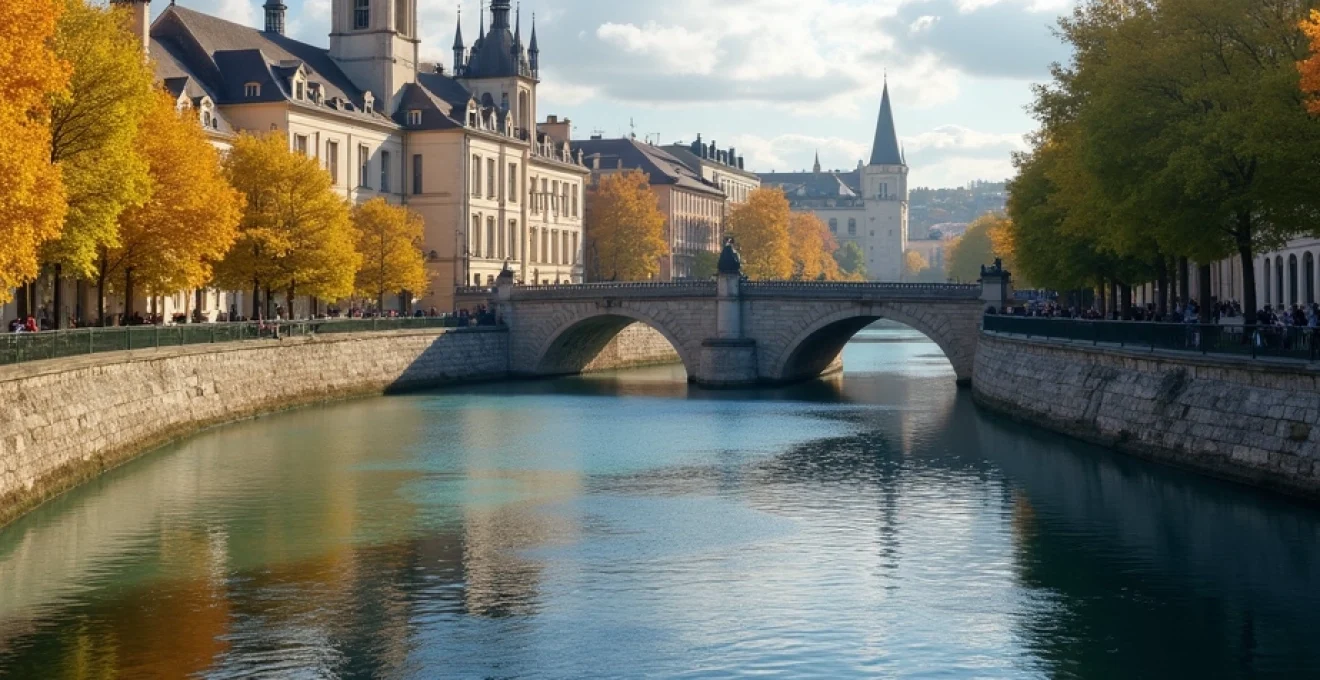
Toulouse, France’s captivating “Pink City,” beckons travellers with its distinctive terracotta brick architecture and remarkable blend of historical grandeur and cutting-edge innovation. This southwestern French metropolis, home to approximately 1.5 million residents, stands as Europe’s aerospace capital whilst maintaining its medieval charm through centuries-old cobblestone streets and magnificent Gothic structures. The city’s unique rose-hued buildings, crafted from local brick, create an enchanting atmosphere that transforms throughout the day as sunlight dances across the facades.
Beyond its architectural splendour, Toulouse pulses with youthful energy thanks to its 150,000 university students, creating a dynamic cultural scene that seamlessly merges tradition with modernity. From world-renowned aerospace facilities to UNESCO World Heritage sites, from vibrant food markets to contemporary art galleries, Toulouse offers an extraordinary array of experiences that satisfy every type of traveller seeking authentic French culture.
Architectural marvels and UNESCO heritage sites in toulouse
Toulouse’s architectural landscape tells the story of nearly two millennia of continuous habitation, from its Roman origins as Tolosa to its current status as a thriving modern metropolis. The city’s distinctive pink brick construction, a result of local clay deposits, creates a unified aesthetic that has earned it the moniker “La Ville Rose.” This unique building material not only provides visual cohesion but also reflects the region’s geological heritage and traditional craftsmanship techniques passed down through generations.
Basilique Saint-Sernin romanesque architecture and pilgrimage route
The Basilique Saint-Sernin stands as the largest Romanesque church in France and represents one of the most significant stops along the historic Camino de Santiago pilgrimage route. This UNESCO World Heritage site, dedicated to Toulouse’s first Christian martyr, Saint Saturnin, showcases exceptional 11th and 12th-century architectural mastery with its imposing 65-metre octagonal bell tower dominating the city skyline. The basilica’s interior houses an impressive collection of religious relics and remarkable sculptures that demonstrate the artistic sophistication of medieval craftsmen.
Visitors can explore the church’s magnificent ambulatory, which features intricate carved capitals and beautiful frescoes that have survived nearly a millennium. The basilica’s acoustics make it a popular venue for classical concerts, adding another layer to its cultural significance beyond its religious importance.
Capitole de toulouse neoclassical façade and salle des illustres
The Place du Capitole serves as Toulouse’s beating heart, anchored by the majestic Capitole building whose neoclassical façade, constructed in 1750, exemplifies 18th-century architectural elegance. This remarkable structure houses both the city council chambers and the prestigious Théâtre du Capitole, renowned throughout Europe for its exceptional opera and ballet performances. The building’s pink brick and white stone façade creates a stunning visual contrast that perfectly embodies Toulouse’s architectural character.
Inside the Capitole, the Salle des Illustres presents a spectacular 60-metre-long gallery adorned with 19th-century baroque paintings, stuccos, and frescos that chronicle Toulouse’s rich history. This grand hall, designated as a Historical Monument in 1994, rivals the greatest palatial galleries of Europe and offers free admission to visitors seeking to immerse themselves in the city’s artistic heritage.
Couvent des jacobins gothic brick construction and palm tree vaulting
The Couvent des Jacobins represents the pinnacle of Southern Gothic architecture, constructed during the 13th century by the Dominican order. This remarkable complex showcases the innovative use of brick in Gothic construction, a technique that became characteristic of the Toulouse region. The convent’s church features the famous “Palm Tree” column, an architectural marvel where 22 ribs of the vaulted roof spread out like palm fronds, creating one of the most photographed architectural details in France.
The peaceful cloisters, with their elegant arcades and central garden, provide a tranquil retreat from the bustling city streets. The convent also serves as the final resting place of Saint Thomas Aquinas, making it both an architectural treasure and an important pilgrimage destination. Regular exhibitions and concerts held within the complex demonstrate how historic spaces can continue to serve contemporary cultural purposes.
Hôtel d’assézat renaissance palace and bemberg foundation
The Hôtel d’Assézat, designed by renowned architect Nicolas Bachelier in the mid-16th century, stands as the finest example of Renaissance architecture in Toulouse. This magnificent palace, built for wealthy pastel merchant Pierre d’Assézat, showcases the extraordinary wealth generated by the pastel trade that brought prosperity to Toulouse during the Renaissance period. The building’s elegant courtyard, accessible free of charge, features perfectly proportioned arcades and decorative elements that influenced architectural styles throughout the region.
Today, the Hôtel d’Assézat houses the prestigious Bemberg Foundation, which displays an exceptional collection spanning five centuries of European art. The foundation’s chrono-thematic layout includes works from the 15th century through World War II, featuring paintings, sculptures, and decorative arts that demonstrate the evolution of artistic styles and techniques across different periods.
Aerospace industry excellence at cité de l’espace and airbus facilities
Toulouse’s reputation as Europe’s aerospace capital stems from its concentration of cutting-edge aviation and space technology companies, making it an essential destination for anyone interested in humanity’s quest to conquer the skies and explore the cosmos. The city hosts the headquarters of Airbus, the European Space Agency’s technical centre, and numerous other aerospace companies that collectively employ tens of thousands of skilled professionals. This aerospace cluster has transformed Toulouse into a global centre of innovation, where visitors can witness firsthand the technologies that shape the future of flight and space exploration.
Airbus A380 final assembly line tours and manufacturing process
The Airbus factory tours offer an unprecedented glimpse into the manufacturing process of the world’s largest passenger aircraft, the A380, alongside other commercial aircraft models. These guided visits take you through the massive assembly halls where skilled technicians piece together aircraft components shipped from across Europe. The sheer scale of the operation becomes apparent as you observe the careful choreography required to assemble these engineering marvels, from initial fuselage assembly to final systems integration.
Visitors witness the meticulous attention to detail required in aerospace manufacturing, where tolerances measured in millimetres can mean the difference between success and failure. The tour guides, often former Airbus employees, provide fascinating insights into the challenges of modern aircraft production and the innovative solutions developed to overcome them.
Cité de l’espace planetarium and ariane 5 rocket exhibition
The Cité de l’Espace transforms complex space science concepts into engaging, interactive experiences suitable for visitors of all ages. The facility’s centrepiece, a full-scale Ariane 5 rocket replica, demonstrates the impressive engineering required to launch satellites and spacecraft into orbit. The planetarium offers immersive journeys through the solar system and beyond, using cutting-edge projection technology to create realistic space exploration experiences.
Interactive exhibits allow visitors to experience simulated space missions, understand satellite technology, and explore the challenges of living in space. The Mir space station replica provides authentic insights into astronaut life aboard orbiting laboratories, complete with living quarters, research facilities, and life support systems that sustain human presence in the harsh environment of space.
SPOT satellite observation deck and space station replica
The SPOT satellite exhibition showcases France’s significant contributions to Earth observation technology, demonstrating how satellites monitor climate change, natural disasters, and environmental conditions across the globe. Visitors can interact with real satellite imagery and learn about the sophisticated sensors and communication systems that enable continuous monitoring of our planet from space.
The space station replica offers hands-on experiences that simulate the challenges astronauts face during extended missions, from conducting scientific experiments in microgravity to maintaining complex life support systems. These interactive displays help visitors appreciate the extraordinary technical achievements required to sustain human life in space and conduct meaningful scientific research beyond Earth’s atmosphere.
Aéroscopia museum concorde and super guppy aircraft collection
Aéroscopia houses an impressive collection of legendary aircraft that shaped aviation history, including the supersonic Concorde and the distinctive Super Guppy cargo aircraft. The museum’s Concorde, one of only twenty ever built, allows visitors to explore the passenger cabin and learn about the technological breakthrough that briefly made routine supersonic passenger travel a reality.
The Super Guppy, originally designed to transport oversized aircraft components, demonstrates the ingenious solutions developed to support modern aerospace manufacturing. These massive cargo aircraft continue to play crucial roles in transporting spacecraft components and other oversized cargo that conventional aircraft cannot accommodate.
Culinary gastronomy and regional specialities exploration
Toulouse’s culinary landscape reflects its position at the crossroads of French and Spanish influences, creating a distinctive gastronomic identity that celebrates both traditional southwestern French cuisine and innovative contemporary cooking techniques. The city’s markets, restaurants, and food shops showcase exceptional regional ingredients, from the famous Toulouse sausage to world-renowned Roquefort cheese, alongside excellent wines from nearby appellations like Gaillac and Fronton that perfectly complement local flavours.
The signature dish cassoulet exemplifies Toulouse’s culinary heritage, combining white beans with duck confit, Toulouse sausage, and various meats in a slow-cooked stew that has nourished locals for centuries. This hearty dish represents more than mere sustenance; it embodies the region’s agricultural traditions and the French philosophy of transforming simple ingredients into extraordinary culinary experiences through patience, technique, and respect for seasonal produce.
Local food markets, particularly the historic Marché Victor Hugo, provide immersive experiences where visitors can interact with passionate vendors who maintain traditional production methods passed down through generations. These markets offer opportunities to discover regional specialities like violet-flavoured sweets, artisanal cheeses aged in local caves, and charcuterie prepared using time-honoured techniques that reflect centuries of culinary evolution.
Contemporary Toulouse restaurants increasingly emphasise farm-to-table approaches, sourcing ingredients from local producers who maintain sustainable farming practices. This commitment to local sourcing not only ensures exceptional freshness and flavour but also supports the regional economy and preserves traditional agricultural knowledge that might otherwise disappear in our increasingly globalised food system.
Garonne river navigation and canal du midi waterways
The Garonne River and Canal du Midi waterway system transforms Toulouse into a remarkable inland port city, connecting the Atlantic Ocean with the Mediterranean Sea through an engineering marvel that revolutionised 17th-century European commerce. These waterways continue to serve as vital transportation corridors whilst providing exceptional recreational opportunities for visitors seeking to explore Toulouse from unique aquatic perspectives that reveal architectural treasures and natural landscapes invisible from street level.
Canal du Midi boat excursions offer leisurely journeys through tree-lined waterways where plane trees create natural tunnels that filter sunlight into dancing patterns on the water surface. These UNESCO World Heritage waterways feature original 17th-century engineering elements, including historic locks, aqueducts, and bridges that demonstrate the sophisticated hydraulic engineering knowledge possessed by Pierre-Paul Riquet, the canal’s visionary designer who overcame seemingly impossible topographical challenges.
River cruises along the Garonne provide different perspectives on Toulouse’s pink brick architecture, allowing photographers to capture dramatic reflections of historic buildings in the gently flowing water. The riverbanks feature carefully maintained walking and cycling paths that connect various parks and green spaces, creating linear corridors of natural beauty that enhance urban livability while preserving important wildlife habitats within the metropolitan area.
Seasonal boat services adapt to changing water levels and weather conditions, offering year-round opportunities to experience these waterways despite occasional variations in scheduling. Spring and summer months provide optimal conditions for outdoor deck seating, whilst heated cabin cruises during cooler months allow comfortable exploration regardless of weather conditions, ensuring that waterway experiences remain accessible throughout the tourist season.
Contemporary art districts and cultural quarter immersion
Toulouse’s contemporary art scene thrives in converted industrial spaces and purpose-built galleries that showcase both established international artists and emerging local talents, creating dynamic cultural quarters that reflect the city’s commitment to supporting creative expression. These artistic districts demonstrate how urban renewal projects can preserve architectural heritage whilst adapting historic structures for contemporary cultural uses, breathing new life into formerly abandoned industrial areas.
Les abattoirs contemporary art museum and slaughterhouse architecture
Les Abattoirs occupies a striking converted slaughterhouse in the Saint-Cyprien neighbourhood, transforming utilitarian industrial architecture into a sophisticated contemporary art venue that hosts rotating exhibitions featuring prominent modern and contemporary artists. The museum’s industrial aesthetic provides dramatic backdrops for artworks that explore themes ranging from social commentary to abstract expression, creating dialogues between artistic content and architectural context.
The museum’s proximity to Jardin Raymond VI allows visitors to combine cultural immersion with outdoor relaxation, creating comprehensive experiences that balance intellectual stimulation with peaceful natural settings. Regular exhibition rotations ensure that repeat visitors encounter fresh artistic perspectives, whilst the museum’s commitment to showcasing diverse artistic voices reflects Toulouse’s multicultural character and openness to international creative influences.
Fondation espace écureuil rotating exhibitions and photography
The Fondation Espace Écureuil specialises in photographic exhibitions that document social changes, artistic movements, and cultural evolution through carefully curated displays that encourage viewers to consider photography’s role as both artistic medium and historical documentation. These exhibitions often feature works by internationally recognised photographers alongside emerging talents, creating intergenerational dialogues that demonstrate photography’s continuing relevance in contemporary culture.
The foundation’s commitment to educational programming includes workshops, lectures, and guided tours that help visitors develop more sophisticated understanding of photographic techniques and artistic concepts. These educational initiatives make contemporary art more accessible to diverse audiences whilst supporting the development of local artistic communities through professional development opportunities and networking events.
Prairie des filtres outdoor sculpture park and riverside installation
Prairie des Filtres combines natural landscapes with outdoor sculpture installations that create unique artistic experiences in parkland settings along the Garonne River. This approach to public art demonstrates how creative works can enhance natural environments whilst making art accessible to broader audiences who might not typically visit traditional gallery spaces.
The park’s seasonal programming includes temporary installations, outdoor concerts, and cultural events that activate these green spaces throughout the year. Summer months bring particular vitality with events like Toulouse Plages, which transforms sections of the park into beach-like recreational areas complete with sand, sports facilities, and entertainment programmes that celebrate outdoor leisure culture.
Musée des augustins medieval and renaissance fine arts collection
The Musée des Augustins houses exceptional collections of medieval and Renaissance art within a beautifully preserved 14th-century Augustinian convent, creating atmospheric settings where historic artworks find perfect architectural companions. The museum’s Gothic cloisters, considered among France’s most beautiful, provide contemplative spaces where visitors can appreciate the spiritual and artistic sensibilities that shaped European culture during these formative periods.
Current renovation projects aim to expand exhibition spaces whilst preserving the building’s historic character, demonstrating contemporary approaches to museum design that balance preservation requirements with modern display standards. These improvements will enhance visitor experiences whilst ensuring that this architectural treasure continues to serve educational and cultural functions for future generations.
Nightlife entertainment and pink city After-Dark scene
Toulouse’s after-dark entertainment scene reflects its youthful university population and cosmopolitan character, offering diverse nightlife options that range from intimate wine bars showcasing regional vintages to energetic nightclubs featuring international DJs and live music venues that support both local bands and touring artists. The city’s compact historic centre concentrates many entertainment venues within easy walking distance, creating vibrant nightlife districts where visitors can experience multiple venues during single evening adventures.
The Carmes neighbourhood emerges as a particular nightlife hotspot, featuring numerous bars, restaurants, and live music venues that cater to diverse tastes and budgets. Evening markets and pop-up food vendors create dynamic street scenes where social interactions blend seamlessly with culinary exploration, whilst historic squares provide outdoor gathering spaces where locals and visitors mingle under the soft glow of street lighting that emphasises the pink brick architecture’s romantic qualities.
Wine culture plays a central role in Toulouse’s evening entertainment, with specialised wine bars offering curated selections of regional vintages alongside international varieties that allow patrons to develop sophisticated palates through guided tastings and educational programmes. Many establishments feature knowledgeable staff who share insights about local wine production, grape varieties, and food pairings that enhance appreciation for the region’s viticultural heritage.
Live music venues support diverse genres from traditional French chanson to contemporary electronic music, whilst seasonal outdoor festivals and concerts activate public spaces throughout the warmer months. These events demonstrate Toulouse’s commitment to supporting cultural programming that enriches community life whilst attracting visitors who seek authentic local entertainment experiences rather than standardised tourist attractions.