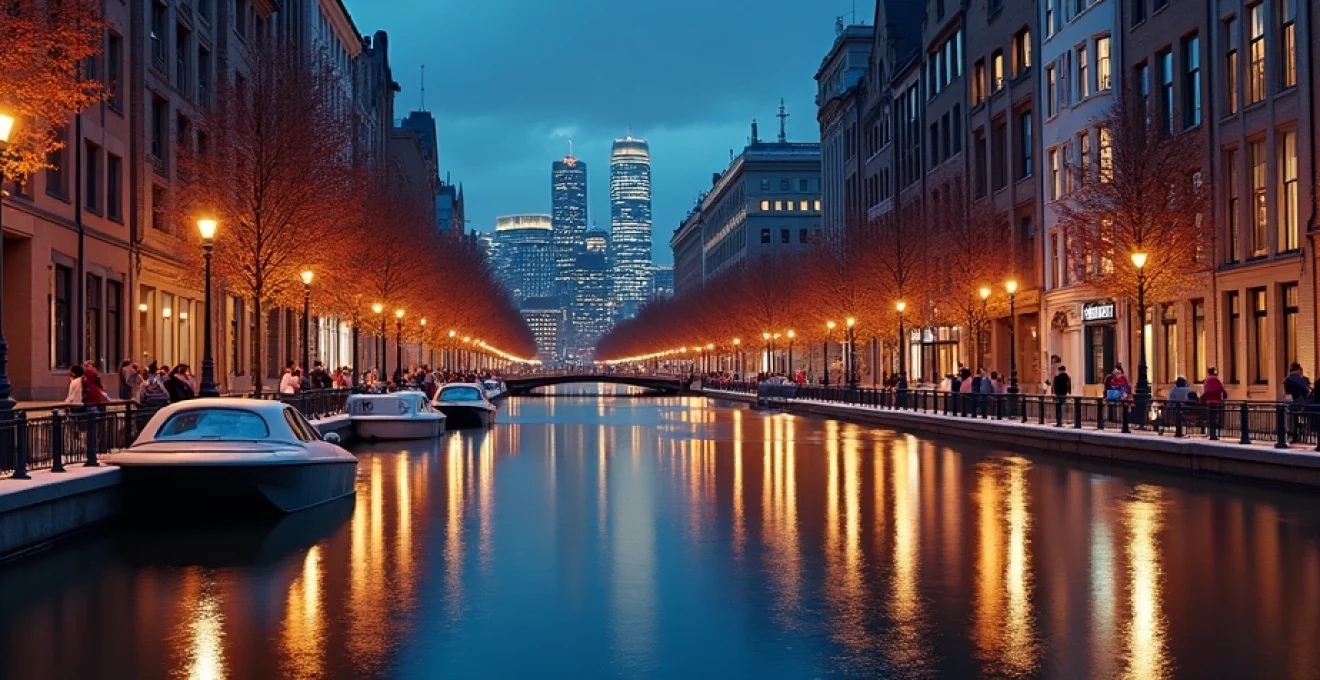
Montréal stands as Canada’s undisputed cultural capital, where centuries of French heritage blend seamlessly with contemporary artistic innovation. This vibrant metropolis offers culture enthusiasts an extraordinary tapestry of experiences, from cutting-edge digital art installations to traditional Québécois theatre productions. The city’s unique bilingual identity creates a distinctive cultural landscape that sets it apart from any other North American destination.
Whether you’re drawn to avant-garde performance art, classical symphonies, or immersive multimedia experiences, Montréal delivers cultural richness at every turn. The city’s commitment to preserving its heritage while embracing modern artistic expression creates an environment where culture lovers can explore everything from 18th-century architecture to virtual reality showcases. Each neighbourhood tells its own cultural story, making every visit a journey through different artistic movements and creative communities.
Immersive museum experiences and contemporary art galleries
Montréal’s contemporary art scene pushes boundaries through innovative museum experiences that challenge traditional exhibition formats. The city’s galleries and museums have embraced digital technology while maintaining their commitment to showcasing exceptional artistic talent. These venues serve as cultural laboratories where visitors can engage with art in completely new ways.
Musée d’art contemporain de montréal’s digital installation exhibitions
The Musée d’Art Contemporain de Montréal has revolutionised the museum experience through its groundbreaking digital installation exhibitions. These immersive environments transform entire gallery spaces into interactive artworks where visitors become part of the creative process. Recent exhibitions have featured responsive light installations that react to movement, creating unique experiences for each visitor.
The museum’s commitment to digital innovation extends beyond temporary exhibitions to its permanent collection display methods. Interactive screens provide multilingual context about artworks, whilst augmented reality features allow visitors to see how pieces were created. This technological integration enhances rather than replaces the traditional museum experience, making contemporary art more accessible to diverse audiences.
Fonderie darling’s industrial heritage preservation programming
Fonderie Darling exemplifies Montréal’s approach to adaptive cultural reuse through its transformation of a former foundry into a contemporary arts centre. This industrial heritage site maintains its original architectural character whilst housing cutting-edge exhibitions and artist residencies. The contrast between the building’s industrial past and its current artistic function creates a compelling dialogue about urban transformation.
The centre’s programming focuses on emerging artists and experimental works that might not find space in traditional galleries. Artist-in-residence programmes provide crucial support for creative development, whilst public exhibitions showcase the results of these collaborations. The building’s high ceilings and exposed brick walls create dramatic backdrops for large-scale installations and performance pieces.
Centre phi’s interactive media art and virtual reality showcases
Centre Phi has established itself as a pioneering venue for interactive media art and virtual reality experiences in Montréal. The centre’s commitment to technological innovation in artistic expression has made it a destination for both artists and technology enthusiasts. Regular programming includes VR installations, interactive digital art, and multimedia performances that blur the boundaries between different artistic disciplines.
The venue’s approach to virtual reality goes beyond entertainment to explore how this technology can create meaningful artistic experiences. Collaborative projects with international artists have resulted in VR experiences that address social issues, historical events, and philosophical questions. These exhibitions demonstrate how emerging technologies can serve as powerful tools for artistic expression and cultural commentary.
Galerie de l’UQAM’s Avant-Garde canadian artist retrospectives
Galerie de l’UQAM serves as a crucial platform for avant-garde Canadian artists , offering comprehensive retrospectives that contextualise contemporary work within broader artistic movements. The gallery’s academic connections provide access to extensive research resources, resulting in exhibitions that offer deeper understanding of artistic processes and cultural influences. This scholarly approach makes complex contemporary art more accessible to general audiences.
The gallery’s commitment to Canadian artists has resulted in important retrospectives that have later toured nationally and internationally. These exhibitions often feature artists whose work challenges conventional artistic boundaries, introducing visitors to experimental techniques and unconventional materials. The gallery’s catalogue publications serve as important scholarly resources that extend the impact of exhibitions beyond their physical presentation.
Francophone theatre and performance arts venues
Montréal’s francophone theatre scene represents one of the most vibrant theatrical communities in North America, offering everything from classical repertoire to experimental performance art. These venues preserve Québécois cultural identity whilst embracing international influences and contemporary themes. The city’s theatre community has produced influential directors, playwrights, and performers who have gained recognition far beyond Québec’s borders.
Théâtre du nouveau monde’s classical québécois repertoire productions
Théâtre du Nouveau Monde stands as the cornerstone of classical Québécois theatre , maintaining a repertoire that spans from traditional works to contemporary interpretations of classic texts. The theatre’s commitment to French-language productions preserves important cultural heritage whilst making these works accessible to new generations. Productions often feature innovative staging that brings fresh perspectives to familiar stories.
The theatre’s educational programming extends its cultural impact through workshops, school partnerships, and community outreach initiatives. These programmes ensure that Québécois theatrical traditions continue to evolve rather than simply being preserved as historical artifacts. Young actors and directors regularly participate in productions, creating mentorship opportunities that strengthen the theatre community.
Usine c’s multidisciplinary contemporary performance programming
Usine C has earned recognition for its multidisciplinary approach to contemporary performance, combining theatre, dance, music, and visual arts in innovative productions. The venue’s programming consistently challenges audience expectations about what constitutes theatrical performance. Recent seasons have featured productions that incorporate live music composition, interactive digital elements, and audience participation components.
The theatre’s commitment to collaboration with international artists brings global perspectives to Montréal’s cultural scene. Co-productions with companies from Europe, Asia, and other parts of North America create cultural exchanges that enrich both local artists and audiences. These partnerships often result in touring productions that carry Montréal’s artistic vision to international stages.
Monument-national’s heritage theatre architecture and cultural programming
Monument-National combines heritage preservation with contemporary cultural programming in a venue that has served Montréal’s artistic community for over a century. The building’s ornate interior provides an elegant setting for performances that range from classical music concerts to contemporary dance productions. Recent restoration work has enhanced the venue’s acoustics whilst preserving its historical character.
The theatre’s programming strategy balances respect for its historical significance with commitment to contemporary artistic expression. Regular programming includes both tribute performances that honour the venue’s history and innovative works that push artistic boundaries. This approach ensures that the theatre remains relevant to contemporary audiences whilst maintaining its role as a cultural landmark.
Théâtre de Quat’Sous’s experimental drama and new playwright development
Théâtre de Quat’Sous focuses on experimental drama and the development of new theatrical voices, providing crucial support for emerging playwrights and directors. The theatre’s intimate setting creates perfect conditions for experimental works that might not translate effectively to larger venues. Regular programming includes workshop productions, staged readings, and fully developed premieres of new works.
The theatre’s playwright development programmes have launched numerous successful careers whilst contributing to the evolution of Québécois dramatic literature. Mentorship opportunities connect experienced practitioners with emerging talents, creating collaborative relationships that often extend beyond individual productions. These programmes ensure that Montréal’s theatrical community continues to generate fresh perspectives and innovative approaches to dramatic storytelling.
Historic architecture and cultural heritage sites
Montréal’s historic architecture tells the story of cultural evolution through centuries of development, preservation, and adaptive reuse. The city’s approach to heritage conservation demonstrates how historical buildings can continue serving cultural functions whilst maintaining their architectural integrity. From colonial-era structures to 19th-century industrial buildings, these sites offer insights into the cultural forces that shaped the city.
Old Montréal represents the most concentrated collection of historical architecture in North America, with buildings dating from the 17th century onwards. The cobblestone streets and limestone facades create an atmospheric setting for cultural activities that range from gallery exhibitions to outdoor performances. Walking through these historic quarters provides cultural education that extends far beyond formal museum experiences.
The Notre-Dame Basilica stands as perhaps the most spectacular example of religious architecture serving continuing cultural functions. Beyond its role as an active place of worship, the basilica hosts concerts that take advantage of its exceptional acoustics and dramatic interior spaces. The building’s stained glass windows and carved woodwork create visual experiences that complement musical performances, demonstrating how historical architecture can enhance contemporary cultural programming.
Château Ramezay offers insight into colonial-era domestic architecture whilst housing exhibitions that explore Montréal’s cultural development. The building’s period rooms provide context for understanding how cultural practices evolved within domestic spaces, whilst temporary exhibitions address contemporary themes through historical perspectives. This combination of architectural preservation and dynamic programming demonstrates effective approaches to heritage site management.
The Old Port’s warehouse buildings exemplify successful adaptive reuse projects that transform industrial heritage into cultural venues. These spaces maintain their architectural character whilst accommodating contemporary needs for flexible exhibition and performance spaces. The contrast between original industrial features and modern cultural programming creates compelling environments for artistic expression and cultural engagement.
The preservation of historic architecture serves not just as protection of the past, but as foundation for future cultural development and artistic innovation.
Underground city cultural circuit and place des arts complex
Montréal’s underground city represents one of the world’s most extensive pedestrian networks, connecting major cultural venues through climate-controlled pathways that enable year-round cultural engagement. This subterranean cultural circuit transforms the winter cultural experience by ensuring that weather never becomes a barrier to artistic participation. The network’s integration with the metro system makes cultural venues accessible from across the metropolitan area.
RÉSO underground network’s integrated cultural pathway design
The RÉSO network’s integrated design philosophy extends beyond simple pedestrian circulation to create cultural experiences within the pathway system itself. Regular art installations transform utilitarian spaces into galleries, whilst performance areas accommodate impromptu cultural events. This approach ensures that cultural engagement begins before visitors reach their intended destinations.
The network’s wayfinding system incorporates cultural information, directing users to nearby galleries, theatres, and performance spaces. Interactive maps highlight current exhibitions and performances, encouraging spontaneous cultural discoveries. This integration of cultural promotion with transportation infrastructure demonstrates innovative approaches to urban cultural planning that other cities worldwide have begun emulating.
Orchestre symphonique de montréal’s maison symphonique acoustics
The Maison Symphonique’s acoustic design represents a pinnacle of performance hall engineering, creating optimal listening conditions for orchestral music whilst accommodating diverse programming needs. The hall’s adjustable acoustic features allow fine-tuning for different musical styles and ensemble sizes. Recent technological upgrades have enhanced the venue’s capabilities whilst maintaining the warm, intimate atmosphere that musicians and audiences appreciate.
The Orchestre Symphonique de Montréal’s programming strategy maximises the hall’s acoustic advantages through diverse seasons that showcase both classical repertoire and contemporary compositions. Collaborative projects with international orchestras demonstrate the venue’s technical capabilities whilst educational programmes introduce young audiences to orchestral music in this exceptional acoustic environment.
Opéra de montréal’s salle Wilfrid-Pelletier productions
Salle Wilfrid-Pelletier serves as the home venue for Opéra de Montréal’s ambitious programming, which balances traditional operatic repertoire with contemporary works and innovative staging approaches. The hall’s technical capabilities support elaborate productions that incorporate advanced lighting, projection, and stage machinery. Recent seasons have featured both beloved classics and world premieres that push the boundaries of operatic expression.
The opera company’s commitment to making opera accessible includes subtitling in both French and English, pre-performance talks, and educational programmes that demystify operatic conventions for new audiences. These initiatives have contributed to growing attendance figures and increased engagement from younger demographics who might otherwise find opera intimidating or irrelevant.
Musée d’art contemporain’s place des arts integration strategy
The Musée d’Art Contemporain’s physical integration with the Place des Arts complex creates unique opportunities for cross-disciplinary programming that combines visual arts with performing arts. Collaborative projects regularly feature exhibitions that complement musical or theatrical programming, creating comprehensive cultural experiences that engage multiple artistic sensibilities simultaneously.
The museum’s strategy includes late-night programming that takes advantage of evening performance schedules, allowing visitors to combine gallery visits with concerts or theatre performances. This approach maximises the cultural district’s potential whilst creating convenient opportunities for cultural engagement that fit diverse schedules and interests.
Plateau Mont-Royal’s bohemian cultural ecosystem
Plateau Mont-Royal functions as Montréal’s primary bohemian neighbourhood, where grassroots cultural activities flourish alongside established institutions. The area’s affordable rents have historically attracted artists, musicians, and writers, creating a concentration of creative energy that manifests in galleries, music venues, independent bookshores, and performance spaces. This organic cultural development has produced an authentic artistic community that continues attracting both creators and culture enthusiasts.
The neighbourhood’s café culture serves as an informal cultural institution, providing gathering places where artistic collaboration occurs naturally. Many cafés regularly host art exhibitions, poetry readings, and acoustic music performances that blur the boundaries between social and cultural spaces. These venues often discover emerging talents who later achieve recognition in more formal cultural settings, demonstrating the importance of informal cultural infrastructure.
Independent galleries throughout the Plateau showcase experimental works and emerging artists who might not yet be ready for major museum exhibitions. These spaces often operate on volunteer labour and community support, creating alternative cultural economies that prioritise artistic expression over commercial success. The galleries frequently collaborate on group exhibitions and cultural events that strengthen the neighbourhood’s artistic community.
Street art and murals transform the Plateau’s urban landscape into an outdoor gallery that changes continuously as new works appear and others fade. The neighbourhood’s tolerance for artistic expression has created conditions where street art flourishes legally and illegally, providing opportunities for artists to develop their skills and gain public exposure. Walking tours specifically focused on street art have emerged to help visitors understand this dynamic aspect of the neighbourhood’s cultural character.
Music venues ranging from intimate clubs to informal house concert spaces provide platforms for local musicians whilst attracting touring acts that value the neighbourhood’s authentic artistic atmosphere. These venues often prioritise artistic quality over commercial success, creating programming that introduces audiences to innovative music they might not encounter elsewhere. The concentration of music venues within walking distance creates opportunities for venue-hopping that can turn single evenings into comprehensive musical explorations.
The Plateau’s cultural ecosystem demonstrates how neighbourhood-level artistic communities can generate cultural vitality that enriches entire cities whilst maintaining authenticity and accessibility.
Festival programming and seasonal cultural events calendar
Montréal’s festival programming transforms the city into a year-round cultural destination, with major events that attract international attention whilst countless smaller festivals serve local communities and niche interests. The city’s festival calendar includes over 100 annual events, ranging from massive outdoor celebrations to intimate showcase festivals for emerging artists. This programming density ensures that visitors can encounter exceptional cultural experiences regardless of when they visit the city.
The Festival International de Jazz de Montréal stands as the world’s largest jazz festival, attracting over two million visitors annually through programming that includes both legendary performers and emerging talents. The festival’s free outdoor programming makes world-class jazz accessible to everyone, whilst ticketed indoor concerts provide intimate listening experiences in venues throughout downtown Montréal. The festival’s economic impact exceeds $100 million annually, demonstrating how cultural programming can generate significant economic benefits whilst enriching cultural life.
Just for Laughs represents another internationally significant festival that has established Montréal as a comedy capital. The festival’s programming includes stand-up comedy, sketch comedy, and comedic theatre in both French and English, reflecting the city’s bilingual character. Industry showcases during the festival have launched numerous comedy careers, whilst public programming introduces audiences to comedy styles from around the world.
The Festival TransAmériques focuses on contemporary dance and theatre, presenting innovative works that often make their North American debuts in Montréal. The festival’s programming strategy emphasises artistic risk-taking and cultural exchange, regularly featuring collaborations between artists from different continents. These productions often address contemporary social and political issues through artistic expression, making the festival relevant to audiences seeking both entertainment and intellectual engagement.
Seasonal programming adapts to Montréal’s climate, with summer festivals taking advantage of pleasant weather for outdoor events whilst winter programming moves indoors and often celebrates cold-weather activities. The Nuit Blanche festival transforms the city into a 24-hour cultural playground, with museums, galleries, and performance spaces offering special programming throughout one night each year. This approach demonstrates how cities can use special events to encourage cultural engagement and showcase their artistic communities.
Neighbourhood festivals throughout the city celebrate local cultural communities whilst contributing to the broader festival
identity, offering insights into the diverse communities that contribute to Montréal’s cultural richness. These events often provide access to cultural traditions that might otherwise remain within specific community boundaries, creating opportunities for cross-cultural understanding and appreciation.
The city’s winter festival programming demonstrates remarkable creativity in transforming challenging weather conditions into cultural opportunities. Montréal en Lumière celebrates winter through illuminated art installations, outdoor performances, and culinary events that embrace rather than simply endure the cold season. Ice sculpture competitions, snow removal celebrations, and outdoor skating events with live music create uniquely Canadian cultural experiences that showcase the city’s resilience and creativity.
Music festivals throughout the year span every conceivable genre, from classical and jazz to electronic and world music. The Festival International Nuits d’Afrique brings African and Caribbean music to venues throughout the city, whilst Osheaga attracts major international rock and pop acts to Parc Jean-Drapeau. These festivals often feature discovery stages that introduce audiences to emerging artists, contributing to career development whilst expanding musical horizons for festival-goers.
Film festivals including the Festival du Nouveau Cinéma and the Montréal World Film Festival showcase international cinema whilst supporting local filmmaking communities. These events often include industry components that facilitate networking and collaboration between filmmakers, distributors, and cultural institutions. Screening venues throughout the city participate in festival programming, creating temporary cultural circuits that connect neighbourhoods through shared cinematic experiences.
Cultural programming extends beyond formal festivals to include regular seasonal events that maintain community engagement throughout the year. Museum nights, gallery walks, and neighbourhood cultural tours create ongoing opportunities for cultural exploration that don’t depend on major festival infrastructure. These smaller-scale events often provide more intimate cultural experiences that allow deeper engagement with artists and cultural institutions.
Montréal’s festival culture transforms the city into a living laboratory where cultural innovation meets public engagement, creating experiences that define the city’s identity whilst attracting global attention to its artistic communities.
The festival calendar’s strategic spacing ensures that cultural energy remains high throughout the year whilst allowing individual events to capture appropriate attention and resources. Summer festivals take advantage of pleasant weather and tourist seasons, whilst winter events provide cultural warmth during challenging months. Spring and autumn programming often focuses on indoor venues and emerging artists, creating year-round opportunities for cultural discovery and artistic development that make Montréal a truly comprehensive cultural destination.