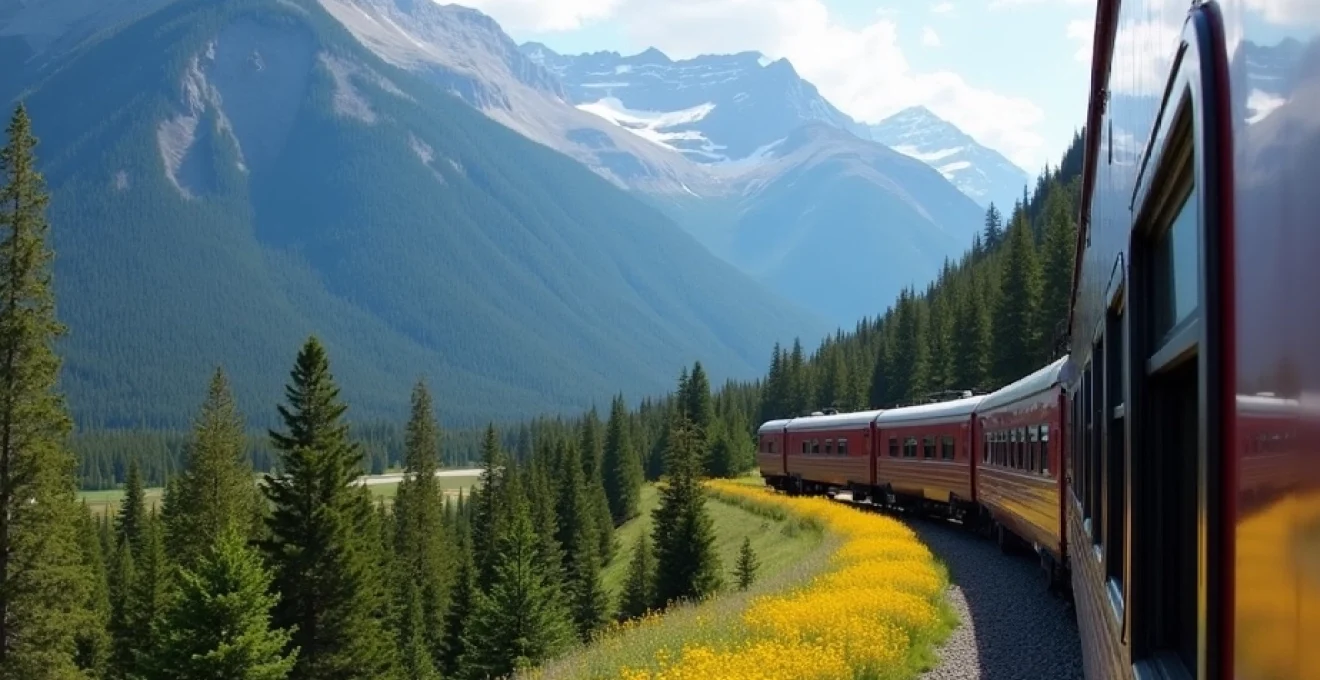
Canada’s vast wilderness and diverse landscapes create some of the world’s most spectacular railway journeys, offering travellers an unparalleled opportunity to witness the country’s natural magnificence from the comfort of a train carriage. From the towering peaks of the Rocky Mountains to the rugged coastlines of the Maritime provinces, these rail routes traverse territories that would otherwise remain inaccessible to most visitors. The rhythmic clatter of wheels on steel rails becomes the soundtrack to an adventure through pristine forests, sweeping prairies, and dramatic river valleys that define the Canadian experience.
Railway travel in Canada represents more than mere transportation; it embodies a connection to the nation’s rich heritage whilst providing extraordinary access to remote wilderness areas. Modern rail services combine luxurious amenities with panoramic viewing opportunities, ensuring that passengers can appreciate every moment of their journey through Canada’s most breathtaking regions. Whether seeking wildlife photography opportunities, cultural immersion, or simply the therapeutic rhythm of long-distance rail travel, these routes deliver experiences that linger in memory long after the final station announcement.
Rocky mountaineer: premium rail experience through british columbia and alberta
The Rocky Mountaineer stands as Canada’s premier luxury train service, offering daylight-only journeys through the most spectacular mountain scenery in North America. This award-winning railway operates multiple routes connecting Vancouver with destinations including Banff, Calgary, and Jasper, ensuring passengers witness every magnificent vista during optimal lighting conditions. The service operates seasonally from April through October, when weather conditions provide the clearest mountain views and most comfortable travel experiences.
Four distinct routes comprise the Rocky Mountaineer network: First Passage to the West connects Vancouver to Banff and Calgary, Journey Through the Clouds links Vancouver to Jasper, Rainforest to Gold Rush travels from Vancouver to Jasper via Whistler and Quesnel, and The Coastal Passage runs from Vancouver to Seattle. Each route showcases different aspects of British Columbia and Alberta’s diverse geography, from coastal rainforests to alpine meadows and glacial valleys.
Goldleaf service features and Bi-Level dome car architecture
The signature GoldLeaf service represents the pinnacle of Canadian rail luxury, featuring custom-designed bi-level dome cars that maximise viewing opportunities through floor-to-ceiling windows. The upper level provides 360-degree panoramic views through a glass-domed ceiling, whilst the lower level houses an elegant dining room where passengers enjoy regionally-inspired cuisine prepared by onboard chefs. These specially constructed carriages ensure that weather conditions never obstruct the viewing experience, as passengers remain comfortably enclosed whilst maintaining unobstructed sightlines.
Each GoldLeaf car accommodates a maximum of 72 passengers, ensuring intimate and personalised service throughout the journey. Onboard hosts provide detailed commentary about the passing landscape, sharing insights about local geology, wildlife, and cultural history that enhance appreciation of the scenery. The service includes gourmet meals featuring locally-sourced ingredients, premium beverages, and exclusive access to outdoor viewing platforms at selected stations.
Fraser canyon and thompson river valley geographic highlights
The Fraser Canyon segment represents one of the most geologically dramatic portions of any Canadian rail journey, where the railway threads through narrow gorges carved by centuries of river erosion. Hell’s Gate, the narrowest point of the Fraser River, demonstrates the raw power of nature as torrential waters surge through a 34-metre-wide channel between towering rock walls. The railway engineering required to navigate this challenging terrain represents a triumph of 19th-century construction techniques, with sections carved directly into cliff faces hundreds of metres above the churning river.
Thompson River Valley showcases a completely different landscape character, where arid grasslands and sagebrush create an almost desert-like environment contrasting sharply with the lush coastal forests near Vancouver. This region’s unique microclimate supports diverse wildlife populations, including bighorn sheep, black bears, and numerous bird species that passengers frequently observe from the train windows. The valley’s geological formations reveal layers of sedimentary rock deposited over millions of years, creating a natural timeline visible from the railway corridor.
Kamloops to vancouver coastal mountain traverse
The westbound journey from Kamloops to Vancouver presents a remarkable transition from interior plateau landscapes to coastal mountain ranges, demonstrating British Columbia’s incredible geographic diversity within a single day’s travel. As the train descends from the Thompson Plateau, passengers witness dramatic elevation changes that create distinct ecological zones, each supporting different plant and animal communities. The route passes through multiple climatic regions, from semi-arid grasslands to temperate rainforests, showcasing Canada’s environmental complexity.
Approaching the Lower Mainland, the Coastal Mountains rise majestically above the Fraser Valley, their snow-capped peaks providing a stunning backdrop to agricultural lands and suburban communities. The final approach to Vancouver reveals glimpses of the Pacific Ocean and the city’s impressive skyline, creating a satisfying conclusion to the mountain wilderness experience. This transition from wilderness to urban environment demonstrates the remarkable proximity of untouched natural areas to major Canadian population centres.
Jasper national park wildlife corridors and observation points
Jasper National Park encompasses some of Canada’s most pristine wilderness areas, and the railway corridor through this UNESCO World Heritage Site provides exceptional opportunities for wildlife observation. The train route follows the Athabasca River valley, a natural wildlife corridor that supports populations of elk, deer, black bears, grizzly bears, and occasionally wolves and mountain goats. Early morning and evening departures offer the highest probability of wildlife encounters, as many species are most active during these cooler periods.
Mount Robson, the highest peak in the Canadian Rockies at 3,954 metres, dominates the skyline as trains approach the Alberta-British Columbia border. This massive pyramid-shaped mountain often creates its own weather systems, and passengers frequently witness cloud formations and precipitation patterns that demonstrate the mountain’s influence on local climate. The surrounding Mount Robson Provincial Park protects old-growth forests and alpine environments that remain largely unchanged since the last ice age, providing glimpses of Canada’s primordial landscape.
VIA rail’s the canadian: transcontinental journey from toronto to vancouver
The Canadian represents one of the world’s last great transcontinental passenger train services, covering 4,466 kilometres during its four-day, three-night journey between Toronto and Vancouver. This iconic service operates twice weekly in each direction year-round, providing travellers with an authentic cross-country Canadian experience that encompasses six time zones and eight provincial boundaries. The route follows the original Canadian Pacific Railway corridor through northern Ontario, across the Prairie provinces, and through the Rocky Mountains, offering a comprehensive survey of Canada’s diverse geography and cultural landscapes.
Operational since 1955 , The Canadian maintains much of its original character whilst incorporating modern amenities and safety features that ensure comfortable long-distance travel. The train typically consists of 15-20 stainless steel cars, including sleeper accommodations, dining cars, and the iconic observation domes that have become synonymous with Canadian rail travel. During peak summer months, additional cars accommodate increased passenger demand whilst maintaining the intimate atmosphere that distinguishes this service from conventional transportation options.
Sleeper plus class accommodations and onboard amenities
Sleeper Plus class provides comfortable private accommodations featuring convertible seating that transforms into upper and lower berths during evening hours. Each cabin includes fresh linens, towels, and basic amenities, whilst shared shower facilities maintain cleanliness standards throughout the journey. The cabins’ compact but efficient design maximises storage space and ensures privacy whilst maintaining easy access to common areas where passengers gather for meals and socialisation.
The dining car experience represents a highlight of transcontinental travel, featuring regionally-inspired cuisine prepared fresh onboard using Canadian ingredients. Meals are served on china place settings with proper silverware, creating an elegant atmosphere reminiscent of golden-age rail travel. The communal dining arrangement encourages interaction among passengers from diverse backgrounds, often resulting in lasting friendships formed over shared meals and scenic conversations.
Canadian shield wilderness through northern ontario
The Canadian Shield section through northern Ontario presents some of Canada’s most pristine and remote wilderness areas, where the train travels for hundreds of kilometres without encountering significant human settlement. This ancient geological formation, consisting of Precambrian rock formations over 2.5 billion years old, creates a landscape of countless lakes, dense boreal forests, and granite outcroppings that define the Canadian wilderness experience. The railway corridor provides access to regions that remain largely inaccessible by road, offering passengers glimpses of untouched ecosystems.
Wildlife observation opportunities abound throughout this section, with frequent sightings of moose, black bears, and various waterfowl species that inhabit the numerous lakes and wetlands. The train often stops at small communities like Sioux Lookout and Hornepayne, providing brief opportunities to experience the isolation and self-reliance that characterise life in Canada’s north. These communities rely heavily on the railway for transportation and supply deliveries, maintaining connections that have existed for over a century.
Prairie provinces agricultural landscape photography opportunities
The Prairie provinces section offers exceptional photography opportunities as the train traverses vast agricultural landscapes that stretch to every horizon. Saskatchewan and Manitoba showcase Canada’s agricultural productivity through endless fields of wheat, canola, and other crops that create geometric patterns across the countryside. The scale of these agricultural operations demonstrates the importance of farming to Canada’s economy whilst providing visual evidence of human adaptation to challenging environmental conditions.
Sunrise and sunset photography becomes particularly rewarding across the prairies, where unobstructed horizons allow dramatic sky compositions that frame the agricultural landscape. Small grain elevators and rural communities punctuate the vast spaces, providing compositional elements that add scale and human interest to landscape photographs. The endless sky creates constantly changing light conditions that challenge and reward photographers willing to adapt their techniques to the unique prairie environment.
Spiral tunnels engineering marvel in yoho national park
The Spiral Tunnels in Yoho National Park represent one of railway engineering’s most ingenious solutions to challenging mountain topography. Constructed in 1909 to reduce the dangerous steep grades of the original Big Hill route, these figure-eight tunnels allow trains to gain elevation gradually whilst maintaining safe operating speeds. The upper tunnel extends 891 metres through Cathedral Mountain, whilst the lower tunnel stretches 777 metres through Mount Ogden, creating a fascinating example of early 20th-century engineering innovation.
Passengers can observe the train’s progression through these tunnels from the observation cars, often seeing the locomotive emerge from one tunnel whilst the rear cars remain in the other, creating a surreal visual experience. The engineering achievement becomes even more impressive when considering that construction occurred using hand tools and explosives, with workers facing extreme weather conditions and dangerous working environments. This section demonstrates how railway construction shaped Canada’s development by making previously inaccessible regions economically viable.
Algoma central railway: agawa canyon wilderness expedition
The Agawa Canyon Tour Train offers one of Ontario’s most popular day-trip rail excursions, departing from Sault Ste. Marie for a journey deep into the rugged wilderness of the Algoma region. This 183-kilometre round trip adventure takes passengers through dense boreal forests, across numerous trestle bridges, and into the spectacular Agawa Canyon, where a two-hour stop allows exploration of hiking trails, waterfalls, and scenic overlooks. The service operates from June through October, with autumn departures particularly popular due to the region’s spectacular fall foliage displays.
The railway follows the route of the former Algoma Central Railway, which served logging and mining operations throughout the 20th century before transitioning to tourist service. The train consists of comfortable coaches with large windows optimised for sightseeing, and onboard commentary provides insights about local history, geology, and wildlife. During the autumn peak season, advance reservations are essential as the spectacular colour displays attract visitors from across North America and beyond.
Agawa Canyon itself represents a geological wonder carved by glacial action and centuries of erosion, creating dramatic cliff faces that rise over 175 metres above the Agawa River. The canyon floor features walking trails that lead to waterfalls, including the impressive Bridal Veil Falls, and scenic lookouts that provide panoramic views of the surrounding wilderness. Wildlife sightings frequently include black bears, moose, and various bird species, whilst the pristine environment demonstrates the resilience of Canadian forest ecosystems.
The autumn transformation of Algoma’s forests creates one of North America’s most spectacular natural displays, with sugar maples, birches, and aspens producing brilliant reds, oranges, and yellows that paint the landscape in vibrant hues.
White pass and yukon route: historic gold rush trail through skagway
The White Pass and Yukon Route preserves one of North America’s most historically significant railways, following the treacherous path taken by thousands of gold seekers during the Klondike Gold Rush of 1898. This narrow-gauge railway climbs from sea level in Skagway, Alaska, to 879 metres at White Pass Summit, covering 32 kilometres of dramatic mountain terrain in just 2.75 hours. The route features steep grades, hairpin curves, and spectacular bridges that demonstrate the determination and engineering skill required to construct a railway through such challenging topography.
Modern passenger service operates vintage parlour cars that maintain the authentic atmosphere of early 20th-century rail travel whilst incorporating necessary safety features and comfort amenities. The journey provides access to regions that remain largely unchanged since gold rush days, including abandoned mining equipment, historic settlements, and pristine wilderness areas. Passengers can choose from various tour options, ranging from round-trip excursions to one-way journeys that connect with bus service to Whitehorse, Yukon Territory.
The railway’s construction represents an extraordinary achievement considering the harsh Arctic conditions, remote location, and limited technology available in 1898. Workers faced temperatures reaching -40°C, constant threats of avalanches and rockslides, and the challenge of transporting materials and equipment to extremely remote locations. The completed railway enabled the development of Yukon Territory’s mining industry whilst providing reliable transportation through one of North America’s most challenging environments.
Wildlife observation opportunities include mountain goats, bears, and various bird species that inhabit the rugged mountain environment. The train passes through multiple climate zones, from coastal temperate rainforests to alpine tundra conditions, demonstrating the dramatic environmental changes that occur with elevation gain. Historical interpretation focuses on the human stories of gold rush participants, many of whom faced extreme hardships in pursuit of wealth that few ultimately achieved.
VIA rail ocean service: maritime provinces coastal journey halifax to montreal
The Ocean represents eastern Canada’s premier passenger rail service, connecting Halifax, Nova Scotia, with Montreal, Quebec, during a 21-hour journey through the heart of Maritime Canada. Operating three times weekly year-round, this service traverses diverse landscapes including coastal plains, river valleys, and forested highlands whilst serving communities throughout New Brunswick, Nova Scotia, and eastern Quebec. The route follows the historic Intercolonial Railway corridor, which played a crucial role in Canadian Confederation by linking the Maritime provinces with central Canada.
The train features comfortable sleeping accommodations, dining service, and observation facilities that maximise passengers’ ability to appreciate the Maritime landscape’s subtle beauty. Unlike the dramatic mountain scenery of western routes, the Ocean showcases gentler but equally compelling coastal and pastoral landscapes that reflect the Maritime provinces’ agricultural and fishing heritage. The service maintains strong connections to local communities, many of which depend on the railway for passenger and freight transportation.
Chaleur bay coastal scenery and miramichi river crossings
The Chaleur Bay section provides spectacular coastal scenery as the train follows the shoreline through northern New Brunswick, offering panoramic views across the bay to Quebec’s Gaspé Peninsula. This sheltered bay creates a unique marine environment that supports diverse fish and bird populations, whilst the surrounding landscape combines coastal forests with agricultural areas that demonstrate successful adaptation to Maritime conditions. The railway corridor provides excellent vantage points for observing fishing boats, seabirds, and the play of light across tidal waters.
Miramichi River crossings represent engineering achievements that span one of New Brunswick’s most significant waterways, renowned for Atlantic salmon fishing and its role in the region’s logging industry. The train crosses multiple tributaries of the Miramichi system, each crossing revealing different aspects of the river’s character from wide tidal sections to narrow forested channels. These waterways supported Indigenous communities for thousands of years before European settlement and continue to play important roles in regional ecology and economy.
New brunswick forest canopy and acadian cultural landmarks
New Brunswick’s extensive forest canopy creates a tunnel-like effect as the train travels through dense stands of spruce, fir, and hardwood trees that dominate the provincial landscape. These forests support the region’s forestry industry whilst providing habitat for numerous wildlife species including deer, black bears, and various bird populations. The seasonal changes create dramatic variations in forest appearance, from spring’s fresh green growth to autumn’s spectacular colour displays and winter’s stark snow-covered beauty.
Acadian cultural landmarks throughout the route reflect the unique French-Canadian heritage of Maritime Canada, including historic churches, traditional architecture, and communities that maintain distinct cultural traditions. The train stops at
several historic Acadian communities including Caraquet and Bathurst, where passengers can observe traditional Maritime architecture and experience the warmth of Acadian hospitality. These communities maintain strong connections to their French colonial heritage through language, cuisine, and cultural celebrations that add depth to the travel experience.
Matapédia valley agricultural terrain and heritage stations
The Matapédia Valley showcases eastern Quebec’s agricultural productivity through rolling farmlands and pastoral landscapes that contrast beautifully with the region’s forested hills. This fertile valley supports dairy farming and mixed agriculture that reflects generations of French-Canadian farming traditions adapted to Maritime climate conditions. The train passes through picturesque rural communities where heritage architecture and traditional farming practices create authentic glimpses of rural Quebec life.
Heritage railway stations throughout the valley preserve architectural elements from the golden age of rail travel, featuring distinctive wooden construction and decorative details that reflect early 20th-century design principles. These stations served as community gathering places and economic centres, facilitating the movement of people and goods that connected remote rural areas with major population centres. Many stations now serve as museums or community centres, maintaining their historical significance whilst adapting to modern needs.
The valley’s agricultural character becomes particularly apparent during harvest seasons, when fields of hay and grain create geometric patterns across the landscape. Local farmers continue traditional practices while incorporating modern sustainable agriculture techniques, demonstrating the evolution of Maritime farming methods. The pastoral tranquillity of this region provides a peaceful contrast to the more dramatic scenery of western Canadian routes, offering contemplative moments that many passengers find deeply restorative.
Seasonal photography techniques and equipment recommendations for canadian rail travel
Canadian rail journeys present unique photographic challenges and opportunities that vary dramatically with seasonal conditions, requiring specific techniques and equipment to capture the diverse landscapes effectively. The moving platform of a train creates technical considerations that differ significantly from stationary landscape photography, whilst the variety of lighting conditions encountered during long-distance journeys demands adaptable camera settings and versatile equipment choices. Understanding these challenges enables photographers to return home with compelling images that accurately represent the majesty of Canadian rail experiences.
Essential equipment for rail photography includes a camera body with excellent high ISO performance for low-light conditions common during early morning and evening hours. A versatile zoom lens covering 24-200mm equivalent focal length provides flexibility for both wide landscape shots and compressed telephoto compositions without requiring frequent lens changes in cramped train environments. A circular polarising filter proves invaluable for managing reflections from train windows whilst enhancing sky contrast and colour saturation in outdoor scenes.
Spring photography requires patience as weather conditions change rapidly, creating dramatic lighting opportunities but also technical challenges. Snow-covered landscapes demand careful exposure metering to prevent underexposure, whilst emerging vegetation provides delicate colour palettes that benefit from subtle contrast adjustments. Timing becomes crucial during spring journeys, as the brief transition between winter and summer creates fleeting photographic opportunities that reward prepared photographers with unique seasonal imagery.
Summer rail photography offers the longest daylight hours and most predictable weather conditions, enabling extensive shooting opportunities throughout extended travel days. The challenge shifts to managing harsh midday lighting and heat haze that can reduce image quality, particularly in prairie regions where atmospheric distortion affects distant subjects. Early morning and evening golden hour periods provide optimal lighting for mountain and forest photography, whilst midday hours work well for architectural subjects and detailed close-up work.
Autumn represents the peak season for Canadian rail photography, when deciduous forests create spectacular colour displays that attract photographers from around the world. The shorter daylight hours require careful planning to maximise shooting opportunities, whilst rapidly changing weather conditions demand flexible technical approaches. Polarising filters become essential for cutting through atmospheric haze and enhancing autumn colours, whilst graduated neutral density filters help balance exposure between bright skies and shadowed forests.
Winter photography presents the greatest technical challenges but also unique reward opportunities as snow-covered landscapes create minimalist compositions impossible to achieve during other seasons. Battery life decreases significantly in cold conditions, requiring backup power sources and careful equipment management to prevent condensation issues when moving between heated train interiors and cold outdoor platforms. The extreme contrast between snow highlights and dark shadows demands precise exposure control, often requiring exposure compensation techniques to maintain detail in both areas.
Camera settings for rail photography should prioritise shutter speeds of 1/250th second or faster to freeze motion and prevent blur caused by train movement. Aperture settings between f/8 and f/11 typically provide optimal lens sharpness whilst maintaining adequate depth of field for landscape subjects. ISO settings must be adjusted according to lighting conditions, with modern cameras capable of producing excellent results at ISO 1600 or higher when necessary for maintaining appropriate shutter speeds.
Composition techniques for rail photography benefit from understanding the unique perspective that train travel provides, often elevated above surrounding terrain and moving through landscapes at consistent speeds. Leading lines created by railway infrastructure, rivers, and valley systems create natural compositional elements that guide viewers through photographic frames. The rhythmic nature of rail travel allows photographers to anticipate and prepare for recurring compositional opportunities, particularly during sections with repetitive landscape features.
Post-processing considerations for rail photography often involve correcting for motion blur, adjusting exposure variations caused by changing lighting conditions, and enhancing colours affected by train window glass. Shooting in RAW format provides maximum flexibility for exposure and colour corrections, whilst focus stacking techniques can extend depth of field in close-up subjects photographed through train windows. The diverse lighting conditions encountered during rail journeys require careful colour temperature adjustments to maintain natural colour reproduction across image sequences.
Weather protection becomes essential during platform stops and outdoor viewing opportunities, requiring weatherproof camera bags and lens covers that provide quick access whilst protecting equipment from precipitation and temperature extremes. Microfibre cleaning cloths prove invaluable for maintaining lens clarity when shooting through train windows, whilst lens hoods help reduce reflections and protect front lens elements from condensation and environmental contamination.