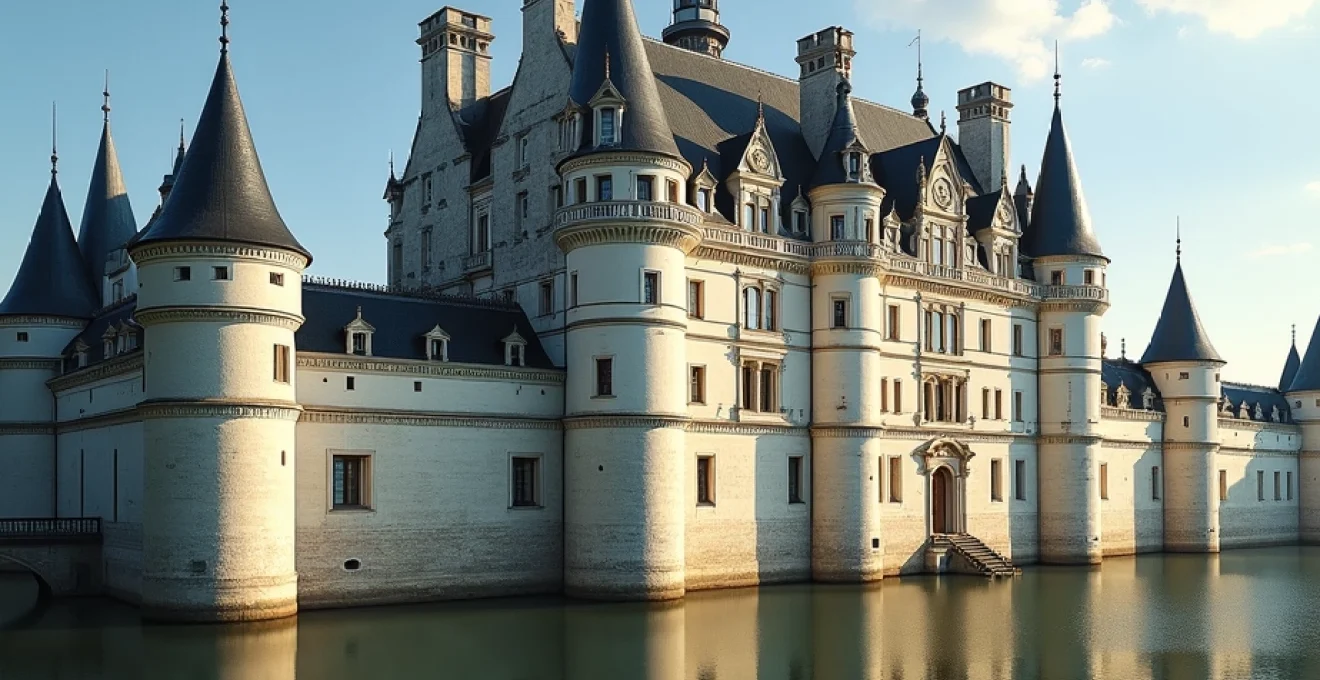
The Loire Valley stands as France’s most prestigious castle region, housing over 300 châteaux that span nearly a millennium of architectural evolution. This UNESCO World Heritage landscape stretches across 280 kilometres of the Loire River and its tributaries, presenting an unparalleled collection of medieval fortresses, Renaissance palaces, and architectural masterpieces. From the imposing towers of Angers to the elegant arches of Chenonceau, each castle tells a distinctive story of French royal history, architectural innovation, and artistic achievement.
These magnificent structures represent more than mere tourist attractions; they embody the cultural DNA of France itself. The châteaux served as power centres where kings forged alliances, artists flourished under royal patronage, and architectural movements transformed European design. Today, they continue to captivate millions of visitors annually, offering immersive experiences into centuries of French civilisation and providing insights into the lives of monarchs, courtiers, and the brilliant architects who created these enduring monuments.
Renaissance architectural masterpieces: château de chambord and château de chenonceau
The Renaissance period transformed the Loire Valley into Europe’s most sophisticated architectural laboratory, where French kings competed to create increasingly magnificent residences. Two châteaux emerge as the undisputed pinnacles of this golden age: Chambord and Chenonceau. These structures represent the perfect fusion of Italian Renaissance innovation with distinctly French architectural sensibilities, creating monuments that continue to inspire architects and artists worldwide.
François i’s architectural vision at château de chambord
Château de Chambord represents the architectural embodiment of François I’s imperial ambitions and his fascination with Italian Renaissance culture. Commissioned in 1519 as a hunting lodge, this massive structure eventually encompassed 440 rooms, 282 fireplaces, and 77 staircases across 5,440 hectares of enclosed parkland. The king’s vision extended far beyond mere functionality; he sought to create a monument that would rival the greatest palaces of Europe whilst establishing France as the continent’s cultural epicentre.
The château’s distinctive French Renaissance style combines traditional medieval French architectural elements with innovative Italian design principles. François I personally supervised many design decisions , insisting on the integration of Italian loggia, classical proportions, and Renaissance decorative elements whilst maintaining the château’s fundamentally French character. This synthesis created an entirely new architectural vocabulary that influenced château design throughout the Loire Valley and beyond.
Italian renaissance influence on chambord’s double revolution staircase
The most celebrated architectural feature of Château de Chambord is its revolutionary double-helix staircase, widely attributed to Leonardo da Vinci’s influence. This engineering marvel consists of two independent spiral staircases that intertwine around a central void, allowing people ascending and descending to see each other without ever meeting. The design demonstrates the Renaissance fascination with mathematical precision, optical illusions, and architectural innovation.
The staircase serves both practical and symbolic functions within the château’s overall design. Practically, it facilitates efficient movement between floors whilst creating dramatic views of the Loire countryside through strategically positioned windows. Symbolically, it represents the duality of power and the complex relationships within the French court. The intertwining spirals have been interpreted as metaphors for the interconnected yet separate spheres of royal authority and noble influence .
Chenonceau’s arched gallery bridge engineering over river cher
Château de Chenonceau presents an entirely different approach to Renaissance innovation, with its famous galerie spanning the River Cher creating one of France’s most photographed architectural achievements. Built between 1556 and 1559, this 60-metre bridge gallery represents a masterpiece of hydraulic engineering and architectural elegance. The structure’s five arches rest on pillars anchored directly into the riverbed, requiring innovative construction techniques to ensure stability against seasonal flooding and current pressure.
The gallery’s design reflects the sophisticated understanding of hydraulic engineering that emerged during the French Renaissance. Engineers calculated water flow patterns, seasonal variations, and structural stress factors to create a bridge that has withstood nearly five centuries of Loire Valley weather. The gallery’s windows and architectural details create constantly changing plays of light and shadow , enhanced by reflections from the water below, demonstrating the Renaissance integration of architecture with natural elements.
Catherine de’ medici’s architectural additions to chenonceau
Catherine de’ Medici’s contributions to Chenonceau extended far beyond the famous gallery, encompassing comprehensive landscape design, interior decoration, and structural modifications that transformed the château into one of Europe’s most sophisticated royal residences. After acquiring the property from Diane de Poitiers in 1559, Catherine commissioned extensive renovations that reflected her Florentine heritage and her understanding of courtly magnificence.
Her architectural programme included the creation of formal French gardens, the installation of elaborate interior decorations, and the development of sophisticated entertaining spaces. Catherine’s vision for Chenonceau emphasised the château’s role as a venue for diplomatic receptions and court celebrations , leading to innovations in room configuration, acoustic design, and circulation patterns that influenced château design throughout France.
Comparative analysis of chambord’s roofline terraces versus chenonceau’s water gardens
The contrasting approaches to integrating architecture with landscape at Chambord and Chenonceau reveal fundamental differences in Renaissance design philosophy. Chambord’s famous roofline terraces create an elevated platform from which visitors can survey the vast hunting grounds whilst appreciating the château’s elaborate skyline of chimneys, dormers, and turrets. This approach emphasises dominance over the landscape, reflecting François I’s imperial ambitions and the medieval tradition of fortified elevated positions.
Conversely, Chenonceau’s water gardens demonstrate a more intimate relationship between architecture and natural elements. The château appears to float above the River Cher, creating reflections and visual effects that change with lighting conditions and seasons. This approach emphasises harmony between built and natural environments , reflecting Renaissance humanist philosophy and the influence of Italian garden design principles. The contrast between these two approaches illustrates the diversity of architectural responses to Loire Valley landscapes during the Renaissance period.
Medieval fortress architecture: château de saumur and château d’angers
The medieval fortifications of the Loire Valley represent some of Europe’s most sophisticated defensive architecture, with Château de Saumur and Château d’Angers exemplifying different approaches to fortress design and strategic positioning. These structures demonstrate the evolution of military architecture from early medieval keeps to complex defensive systems incorporating the latest innovations in siege warfare and artillery defence. Their massive stone walls, strategic positioning, and architectural details reveal the sophisticated military engineering that protected the Loire Valley’s vital trade routes and political centres.
Saumur’s quadrangular keep construction techniques
Château de Saumur’s quadrangular keep represents a masterpiece of 14th-century military engineering, employing advanced construction techniques that ensured both defensive effectiveness and architectural elegance. The keep’s distinctive octagonal towers at each corner create overlapping fields of fire whilst providing additional structural support for the massive curtain walls. Construction utilised local tufa stone, carefully cut and fitted without mortar in critical structural areas, demonstrating the sophisticated masonry skills of Loire Valley craftsmen.
The keep’s internal structure reveals equally sophisticated engineering, with a complex system of vaulted chambers, spiral staircases, and defensive passages carved directly into the stone walls. Each level serves specific defensive functions whilst maintaining liveable spaces for the garrison and noble residents . The integration of residential comfort with military necessity represents the evolution of château design during the late medieval period, when fortresses began transitioning towards the palace-fortresses of the Renaissance.
Angers’ seventeen round towers defensive system
Château d’Angers presents the Loire Valley’s most impressive example of concentric defensive architecture, with its seventeen massive round towers creating an virtually impregnable fortress complex. Built between 1230 and 1240 by Louis IX (Saint Louis), the fortress employs innovative defensive design principles that influenced military architecture throughout medieval Europe. The towers’ distinctive black and white striped appearance results from alternating courses of schist and limestone, creating both aesthetic appeal and structural reinforcement.
The defensive system incorporates multiple layers of protection, including outer earthworks, a wide moat, curtain walls reaching 40 metres in height, and the imposing round towers that provided 360-degree defensive coverage. Each tower operates as an independent defensive unit , allowing the garrison to maintain resistance even if other sections of the fortress were compromised. This modular defensive approach represented cutting-edge military engineering during the 13th century and influenced fortress design throughout the medieval period.
Apocalypse tapestry housing architecture at château d’angers
The architectural modifications required to house the Apocalypse Tapestry at Château d’Angers demonstrate the sophisticated approach to museum design within historic structures. This 104-metre masterpiece, created between 1373 and 1387, required specially designed gallery spaces that balance preservation requirements with visitor accessibility and interpretive presentation. The restoration architects created climate-controlled environments within the medieval walls whilst maintaining the fortress’s historical integrity.
The gallery design employs innovative lighting systems, humidity controls, and security measures seamlessly integrated into the 14th-century architecture. Visitors experience the tapestry’s narrative progression through carefully orchestrated viewing sequences that enhance understanding of the work’s religious and historical significance. This integration of cutting-edge museum technology with medieval architecture represents a model for heritage preservation and cultural presentation in historic castle settings.
Loire river strategic positioning of medieval fortifications
The strategic positioning of Loire Valley fortifications reveals the sophisticated military geography that shaped medieval France’s political development. Castles were positioned to control river crossings, protect vital trade routes, and provide overlapping defensive coverage across the valley’s strategic corridors. Angers commands the confluence of the Maine and Loire rivers, whilst Saumur controls a crucial ford that connected northern and southern France during the medieval period.
These positions reflect careful analysis of terrain, logistics, and communication requirements that enabled effective territorial control. The visual connections between fortifications created a communication network using signal fires and messenger relays that could transmit information across hundreds of kilometres within days. This strategic depth provided the foundation for royal authority in the Loire Valley and contributed to France’s eventual unification under strong central government.
Royal residences and court life: château de blois and château d’amboise
The royal châteaux of Blois and Amboise served as the primary seats of French royal power during the late medieval and early Renaissance periods, witnessing the transformation of France from a collection of feudal territories into a unified kingdom. These residences hosted the most significant events in French history, from royal marriages and diplomatic negotiations to artistic patronage that sparked the French Renaissance. Their architectural evolution reflects changing concepts of royal authority, courtly ceremony, and the integration of Italian Renaissance ideals into French cultural traditions.
François I wing’s spiral staircase Gothic-Renaissance transition
The François I wing at Château de Blois contains one of the most celebrated examples of Gothic-Renaissance architectural transition in European architecture. The wing’s famous external spiral staircase demonstrates the sophisticated synthesis of French Gothic structural traditions with Italian Renaissance decorative principles. Completed between 1515 and 1524, this architectural masterpiece showcases the evolution of royal ceremonial space design during the early 16th century.
The staircase’s innovative design serves both practical and symbolic functions within the château’s complex ceremonial protocols. Its external positioning creates a dramatic architectural focal point whilst facilitating the elaborate court ceremonies that defined royal authority during the Renaissance. The intricate stone carving incorporates François I’s personal emblems, including salamanders and royal monograms , transforming functional architecture into political propaganda that reinforced royal legitimacy and cultural sophistication.
Louis XII’s brick and stone façade architectural elements
The Louis XII wing at Château de Blois represents the transitional period between medieval fortress architecture and Renaissance palace design. Constructed between 1498 and 1503, this wing employs the distinctive combination of red brick and white limestone that became characteristic of early French Renaissance architecture. The façade design demonstrates Louis XII’s efforts to modernise royal residences whilst maintaining traditional French architectural elements that emphasised royal continuity and legitimacy.
The architectural programme incorporates innovative window designs, decorative loggias, and sculptural elements that reflect Italian Renaissance influence whilst maintaining fundamentally French proportions and materials. The wing’s entrance portal features elaborate heraldic decoration celebrating Louis XII’s marriage to Anne of Brittany , demonstrating how Renaissance architecture served diplomatic and dynastic purposes beyond mere aesthetic considerations. This integration of political messaging with architectural innovation established patterns that influenced château design throughout the Loire Valley.
Amboise’s chapel of Saint-Hubert flamboyant gothic features
The Chapel of Saint-Hubert at Château d’Amboise represents the pinnacle of Flamboyant Gothic architecture in the Loire Valley, showcasing the sophisticated decorative techniques that defined late medieval religious architecture. Built between 1491 and 1496, the chapel demonstrates the continuation of Gothic architectural traditions even as Renaissance influences began transforming secular architecture. Its elaborate stone tracery, sculptural programmes, and architectural details represent the technical mastery achieved by French craftsmen during the late 15th century.
The chapel’s most significant feature is its association with Leonardo da Vinci, whose tomb lies beneath the structure’s elaborate vaulting. The building’s design reflects the intersection of French Gothic tradition with Renaissance humanism, creating spaces suitable for both traditional Catholic liturgy and the more personal religious practices favoured by Renaissance intellectuals. The chapel’s intimate scale and sophisticated decoration create an atmosphere of contemplative spirituality that influenced religious architecture throughout the Loire Valley region.
Charles VIII’s italian campaign influence on amboise renovations
Charles VIII’s Italian campaigns (1494-1495) fundamentally transformed French architectural sensibilities, with Château d’Amboise serving as the primary laboratory for integrating Italian Renaissance principles into French palace design. The king returned from Italy with a team of Italian architects, decorators, and garden designers who revolutionised the château’s appearance and established the foundation for the French Renaissance architectural movement.
The renovation programme encompassed comprehensive changes to interior decoration, garden design, and architectural details that reflected Charles VIII’s exposure to Italian palace culture. Italian craftsmen introduced techniques for decorative plasterwork, painted decoration, and garden design that had never been seen in France. These innovations created new standards for royal residence that influenced château design throughout the 16th century , establishing France as a major centre of Renaissance culture and architectural innovation.
Garden design and landscape architecture integration
The gardens of Loire Valley châteaux represent some of Europe’s most sophisticated examples of landscape architecture, demonstrating the evolution of garden design from medieval practical gardens to Renaissance artistic statements and classical French formal gardens. These landscapes integrate architecture with horticulture to create comprehensive artistic environments that enhance the châteaux’s cultural and aesthetic impact. The development of Loire Valley gardens influenced landscape design throughout Europe and established principles that continue to guide contemporary garden architecture.
Château de Villandry exemplifies the pinnacle of French Renaissance garden design, with its elaborate geometric patterns, intricate topiary work, and sophisticated planting schemes that create year-round visual interest. The garden’s design reflects Renaissance mathematical principles applied to landscape architecture, creating patterns that can be fully appreciated only from the château’s upper levels. Each garden compartment tells specific stories through plant selection, colour coordination, and symbolic arrangements that educated Renaissance visitors could interpret as complex cultural narratives.
The integration of water features represents another crucial aspect of Loire Valley garden design, with châteaux like Chenonceau and Azay-le-Rideau employing rivers and constructed water elements to enhance architectural effects. These water gardens create reflections, cooling effects, and acoustic environments that transform the châteaux’s immediate surroundings into comprehensive sensory experiences. The sophisticated engineering required for these water features demonstrates the technical expertise of Renaissance garden designers and their understanding of hydraulic principles.
Contemporary conservation efforts focus on maintaining historical authenticity whilst adapting garden maintenance practices to modern environmental considerations. Organic cultivation methods, heritage plant varieties, and sustainable irrigation systems ensure that these historic gardens continue to flourish whilst respecting their cultural significance. The ongoing restoration of gardens at châteaux like Chambord and Chaumont demonstrates the commitment to preserving these landscapes as integral components of France’s cultural heritage.
Strategic visitor planning for loire valley castle circuit
Effective exploration of Loire Valley châteaux requires strategic planning that balances historical significance, architectural diversity, and practical considerations such as transportation, accommodation, and seasonal factors. The region’s extensive château network offers multiple itinerary options, from intensive weekend circuits focusing on major monuments to leisurely week-long explorations that include lesser-known gems and regional cultural attractions.
Transportation planning represents a crucial factor in château visitation, with the region’s excellent rail network providing access to major châteaux whilst bicycle routes and car rental options enable exploration of more remote locations. The Loire à Vélo cycling network spans over
800 kilometres of designated cycling paths connecting major châteaux and providing a sustainable, immersive way to experience the Loire Valley’s cultural landscape. Regional accommodation options range from luxury château hotels that offer exclusive access to historic properties, to charming bed-and-breakfast establishments in converted manor houses and practical budget options in regional centres.
Seasonal considerations significantly impact château visitation experiences, with spring and autumn offering optimal conditions for garden appreciation whilst avoiding summer’s intensive tourist crowds. Many châteaux modify their opening hours and programming throughout the year, with some closing entirely during winter months whilst others offer special exhibitions and intimate guided tours that provide deeper historical insights. Planning visits around seasonal events such as Renaissance festivals, garden exhibitions, and historical reenactments enhances the cultural experience whilst supporting ongoing conservation efforts.
Digital planning tools and mobile applications provide real-time information about château opening hours, ticket availability, and special programming that enables flexible itinerary adjustment. Advanced booking systems for major châteaux like Chambord and Chenonceau offer skip-the-line access and audio guide rentals that enhance visit quality whilst reducing wait times. Group tour options provide expert guidance and transportation coordination, whilst self-guided visitors benefit from detailed regional maps and suggested routing that maximises historical and architectural diversity.
Conservation challenges and UNESCO world heritage preservation efforts
The preservation of Loire Valley châteaux presents complex challenges that require balancing historical authenticity with contemporary conservation science, tourism management, and climate change adaptation. These monuments face ongoing threats from environmental factors, structural deterioration, and the pressures of mass tourism that demand innovative conservation approaches and substantial financial investment. The UNESCO World Heritage designation provides international recognition and support whilst establishing strict preservation standards that guide restoration decisions and development planning.
Climate change poses increasingly severe threats to château conservation, with more frequent extreme weather events, shifting precipitation patterns, and temperature fluctuations affecting historic building materials and structural integrity. Stone facades suffer from freeze-thaw cycles, whilst timber structures face increased risk from insect damage and fungal decay in changing environmental conditions. Conservation specialists employ advanced monitoring systems and preventive treatments that protect these irreplaceable monuments whilst maintaining their historical authenticity and architectural integrity.
The financial sustainability of château conservation requires diverse funding sources including government support, European Union heritage programmes, private donations, and tourism revenue. Major restoration projects often span decades and cost millions of euros, requiring careful project management and phased implementation that maintains public access whilst ensuring work quality. The restoration of Château de Fontainebleau’s galleries and the ongoing conservation of Chambord’s roofline demonstrate the scale and complexity of contemporary château preservation efforts.
Tourism management represents a critical aspect of preservation strategy, with visitor numbers at major châteaux requiring careful regulation to prevent damage whilst maintaining economic viability. Advanced reservation systems, visitor flow management, and seasonal programming distribute tourist impact whilst ensuring sustainable revenue streams that support ongoing conservation work. Educational programming and interpretive initiatives create deeper visitor engagement that fosters appreciation for conservation efforts and generates support for continued preservation funding.
International collaboration through UNESCO networks, European heritage organisations, and academic institutions facilitates knowledge sharing and technical innovation in conservation methodology. Research programmes focus on developing new materials and techniques for historic building preservation, whilst training programmes ensure that traditional craftsmanship skills continue to be available for restoration projects. The Loire Valley serves as a testing ground for conservation innovations that benefit historic preservation efforts worldwide.
The integration of modern technology with traditional conservation approaches enables more precise monitoring and intervention strategies that extend the lifespan of historic structures. Laser scanning, 3D modelling, and digital documentation create comprehensive records that guide restoration decisions whilst preserving detailed information about original construction techniques and historical modifications. These digital archives serve both immediate conservation needs and long-term research that enhances understanding of medieval and Renaissance building practices.
Community engagement represents an essential component of successful conservation programmes, with local residents, businesses, and cultural organisations contributing to preservation efforts through volunteer programmes, fundraising initiatives, and advocacy support. The economic benefits of château tourism create stakeholder investment in conservation success, whilst educational programmes develop local expertise and pride in cultural heritage. This collaborative approach ensures that Loire Valley châteaux continue to serve as living monuments that contribute to regional identity and economic prosperity whilst preserving France’s architectural legacy for future generations.