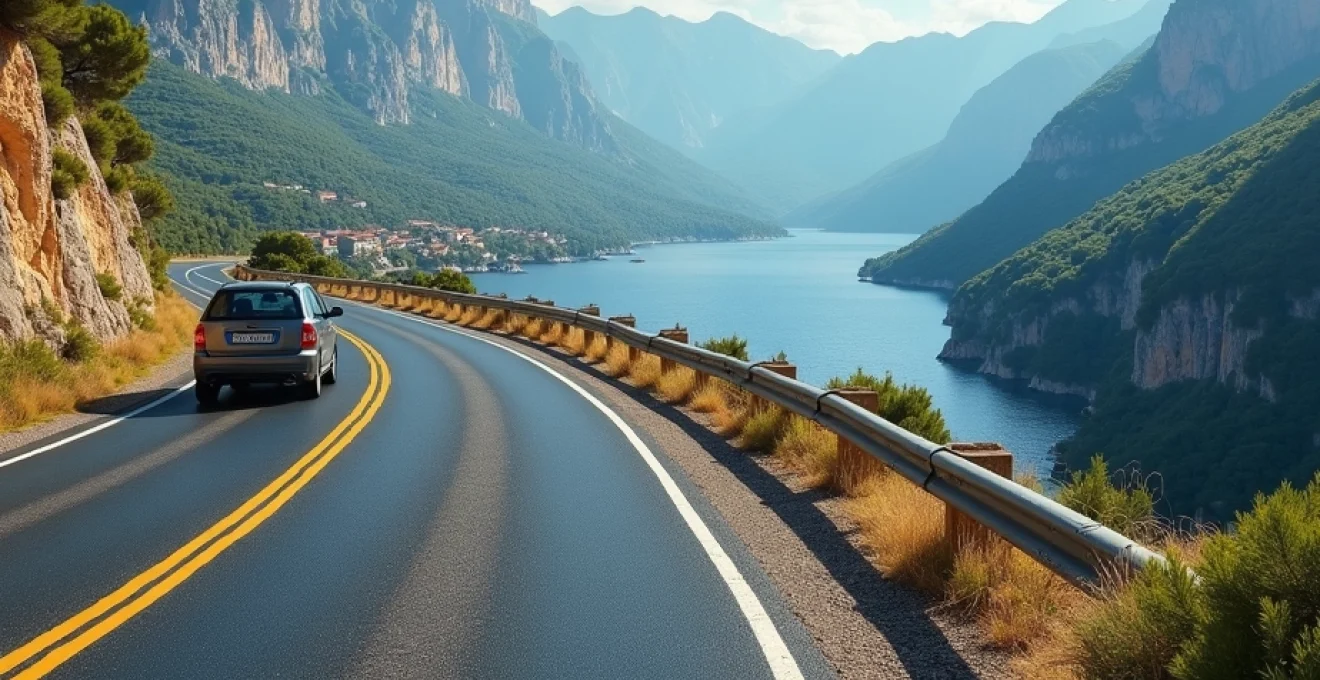
Corsica presents one of Europe’s most challenging and rewarding road-tripping destinations, where dramatic mountain passes intersect with pristine coastal routes across 8,722 square kilometres of Mediterranean wilderness. This French island, positioned between the Italian peninsula and the French Riviera, demands careful preparation and strategic planning to navigate its serpentine roads, extreme elevation changes, and remote terrain safely. From the legendary GR20 hiking trail crossings to the UNESCO-protected Calanques de Piana, Corsica’s infrastructure requires specialised knowledge of vehicle specifications, route timing, and emergency preparedness protocols.
The island’s unique topography, featuring peaks exceeding 2,700 metres alongside coastal roads that plunge directly into the Mediterranean, creates driving conditions unlike anywhere else in Western Europe. Professional rally drivers and automotive journalists consistently rank Corsican roads among the continent’s most technically demanding, combining narrow carriageways, sustained gradients, and unpredictable weather patterns that can transform a leisurely coastal cruise into a high-stakes mountain expedition within minutes.
Essential route planning for corsican mountain passes and coastal roads
Strategic route planning forms the foundation of successful Corsican road-tripping, requiring detailed analysis of elevation profiles, seasonal accessibility, and traffic flow patterns across the island’s diverse terrain. The primary arterial routes – N196, N197, N198, and N193 – connect major population centres, while secondary D-roads provide access to remote villages, hiking trailheads, and hidden beaches that define the authentic Corsican experience. Understanding the relationship between these road classifications becomes crucial when planning multi-day itineraries that balance scenic discovery with practical travel times.
Weather conditions significantly influence route accessibility throughout the year, with mountain passes frequently closing during winter months due to snow accumulation above 1,000 metres elevation. The Col de Vergio, Corsica’s highest road pass at 1,467 metres, typically remains accessible from May through October, while lower elevation coastal routes operate year-round with minimal seasonal restrictions. Micro-climatic variations across the island mean that coastal areas may experience brilliant sunshine while mountain regions endure severe weather conditions simultaneously.
Navigating the D81 calanques de piana to porto scenic circuit
The D81 route through the Calanques de Piana represents one of Europe’s most spectacular coastal drives, carving through red granite formations that rise directly from the Mediterranean to heights exceeding 400 metres. This 25-kilometre circuit requires approximately 90 minutes of driving time during optimal conditions, though frequent stops for photography and sightseeing typically extend journey duration to three hours. The route features 47 documented hairpin turns, with gradient variations ranging from gentle coastal sections to extreme mountain switchbacks exceeding 12% grade.
Vehicle clearance becomes critical along certain sections where overhanging rock formations reduce effective roadway height to 3.2 metres, eliminating larger motorhomes and coaches from safe passage. The narrow carriageway, averaging 4.5 metres width, necessitates careful coordination when meeting oncoming traffic, particularly during summer months when tourist volumes peak. Emergency stopping points appear approximately every 800 metres, though these areas often fill rapidly during peak season, creating additional navigation challenges for drivers.
Conquering col de bavella’s serpentine mountain hairpins
Col de Bavella’s approach roads present Corsica’s most technically demanding driving conditions, featuring 27 consecutive hairpin turns with sustained gradients reaching 14% across a vertical elevation gain of 1,218 metres. The D268 route from Zonza requires specialised engine cooling considerations and brake system preparation to handle the extreme thermal loads generated during extended climbing sequences. Professional automotive testing facilities regularly utilise these roads for brake durability evaluation due to their exceptional thermal challenge characteristics.
Visibility limitations created by dense maritime pine forests and granite outcropping significantly reduce reaction times for oncoming traffic encounters. The route typically experiences morning fog formation between 800-1,200 metres elevation during autumn and spring months, creating hazardous driving conditions that can develop rapidly. Emergency communication proves challenging throughout much of the ascent due to topographical interference with cellular networks, making mechanical reliability absolutely critical for safe passage.
Mastering the cap corse coastal loop via D80 infrastructure
The Cap Corse peninsula’s D80 coastal circuit delivers 120 kilometres of diverse driving challenges, from sea-level coastal sections to mountain crossings exceeding 400 metres elevation. This route showcases Corsica’s geological diversity through distinct terrains including serpentine rock formations, schist mountain slopes, and limestone coastal cliffs that create dramatically different grip levels and handling characteristics. The western coast section between Nonza and Centuri presents particularly challenging conditions with narrow roadways carved directly into cliff faces.
Tidal influences affect certain low-lying coastal sections during exceptional high tide conditions, particularly around Barcaggio and Macinaggio where storm surge can impact roadway drainage. Historical weather data indicates that these areas experience temporary flooding approximately 3-4 times annually during severe weather events. Strategic timing becomes essential for completing the full circuit, with early morning starts recommended to avoid afternoon thermal wind development that can create challenging crosswind conditions along exposed coastal sections.
Strategic timing for col de vergio alpine crossing conditions
Col de Vergio’s 1,467-metre elevation creates unique microclimate conditions that demand precise timing for safe crossing, with temperature variations of up to 15°C between valley approaches and summit conditions. Snow accumulation typically begins in November and persists through April, though exceptional weather years have recorded snow presence as late as June at higher elevations. The pass features automated weather stations that provide real-time condition updates through the Météo-France network, essential information for planning high-altitude crossings.
Morning thermal inversions frequently create fog layers between 1,200-1,400 metres elevation, reducing visibility to less than 50 metres during critical driving sections. These conditions typically dissipate by mid-morning during stable weather patterns, making departure times between 10:00-14:00 optimal for clear passage. Winter crossing attempts require specialised equipment including snow chains and emergency supplies, as weather conditions can deteriorate rapidly with minimal warning.
Vehicle specifications and mechanical preparations for corsican terrain
Corsican road conditions impose exceptional mechanical stress on vehicles through sustained mountain climbing, extreme temperature variations, and challenging surface conditions that exceed typical European touring requirements. Professional automotive engineers recommend comprehensive pre-departure inspections focusing on cooling system capacity, brake component condition, and drivetrain reliability to ensure safe operation across the island’s demanding terrain. The combination of steep gradients, narrow roads, and limited emergency services makes mechanical preparation absolutely critical for successful Corsican road-tripping.
Statistical analysis of breakdown incidents across Corsican routes reveals that cooling system failures account for 34% of mechanical emergencies, followed by brake-related issues at 28% and tire damage at 19%. These failure patterns directly correlate with the island’s challenging topography and climate conditions, highlighting specific areas where preventive maintenance provides maximum safety benefits. Understanding these vulnerability patterns enables targeted preparation that significantly reduces breakdown risks.
Engine cooling system upgrades for mediterranean climate stress
Corsican summer temperatures regularly exceed 35°C in coastal areas while mountain climbing imposes additional thermal loads that can overwhelm standard cooling system capacity. Extended grade climbing, particularly on routes like the D84 through Forêt d’Aïtone, creates sustained high-load conditions that generate exceptional coolant temperatures. Professional fleet operators recommend coolant system capacity verification and thermostat inspection prior to Corsican deployment, ensuring adequate thermal management under extreme conditions.
Radiator obstruction from maritime pine pollen and maquis vegetation represents a significant cooling efficiency concern during spring and summer months. This organic debris accumulates rapidly in coastal and forested areas, reducing airflow by up to 30% within 48 hours of exposure. Regular cleaning intervals of 2-3 days become necessary during peak pollen season to maintain optimal cooling performance. Additional consideration should be given to radiator guard installation for vehicles traversing unpaved sections common in remote areas.
Brake pad compound selection for sustained mountain descents
Mountain descent sequences on routes like Col de Bavella and Col de Vergio impose thermal loads that can exceed 400°C in brake rotor temperatures, well beyond the capability of standard organic brake pad compounds. Professional mountain driving instructors recommend semi-metallic or ceramic brake pad compounds for sustained mountain operation, providing superior fade resistance and thermal stability under extreme conditions. Brake fluid replacement with high-temperature DOT 4 specification becomes essential to prevent vapour lock formation during extended braking sequences.
Descent technique significantly influences brake system longevity, with engine braking through appropriate gear selection reducing brake pad thermal stress by approximately 60% compared to brake-only deceleration methods. Manual transmission vehicles demonstrate superior engine braking capability, though automatic transmission drivers can utilise manual mode selection or grade braking systems where available. Proper descent technique education proves as important as mechanical preparation for brake system preservation.
Tyre pressure calibration for mixed asphalt and gravel surfaces
Corsican road surfaces vary dramatically from smooth asphalt on major routes to rough gravel and crushed stone on secondary access roads leading to remote beaches and hiking areas. This surface diversity requires tire pressure optimisation to balance traction, comfort, and tire longevity across changing conditions. Standard touring tire pressures often prove excessive for gravel surfaces while insufficient for high-speed coastal sections, necessitating pressure adjustment protocols throughout multi-surface journeys.
Professional rally teams operating in Corsican conditions typically reduce tire pressures by 8-12 PSI when transitioning from asphalt to gravel surfaces, improving contact patch area and traction characteristics. However, this reduction must be reversed before returning to high-speed asphalt sections to prevent tire overheating and structural damage. Portable tire pressure monitoring and adjustment equipment becomes essential for managing these transitions safely and efficiently throughout diverse Corsican terrain.
Emergency toolkit assembly for remote maquis region breakdowns
Remote areas of Corsica, particularly within the extensive maquis scrubland regions, offer limited access for emergency services and mechanical assistance. Professional expedition leaders recommend comprehensive emergency toolkits including basic mechanical tools, emergency communication devices, and survival supplies adequate for extended delays in isolated areas. The combination of challenging terrain access and limited local infrastructure makes self-sufficiency preparation crucial for remote area exploration.
Communication equipment proves particularly important given the extensive cellular network dead zones throughout mountainous and remote coastal areas. Satellite communication devices or GPS emergency beacons provide reliable emergency contact capability when cellular service proves unavailable. Professional guides operating in remote Corsican areas typically carry PLB (Personal Locator Beacon) devices as standard equipment due to communication limitations in emergency situations.
Accommodation infrastructure analysis across corsican departments
Corsica’s accommodation infrastructure reflects the island’s seasonal tourism patterns and geographical constraints, with significant capacity variations between coastal resort areas and remote mountain regions. The departments of Haute-Corse and Corse-du-Sud demonstrate markedly different accommodation density patterns, influenced by accessibility, population distribution, and tourism development history. Understanding these regional variations becomes essential for route planning, particularly during peak summer months when accommodation availability becomes severely constrained.
Seasonal accommodation patterns show dramatic fluctuations, with many establishments operating only during the April-October period due to limited winter tourism demand. This seasonal closure pattern particularly affects mountain and remote coastal areas, where year-round accommodation options may be limited to a single facility within 50-kilometre radius. Advanced booking becomes absolutely critical during July and August, when occupancy rates regularly exceed 95% across popular coastal destinations.
The gîtes d’étape system provides essential accommodation infrastructure for hiking and outdoor enthusiasts, offering basic but reliable lodging in strategic locations throughout the island’s interior. These facilities, originally developed to support the GR20 hiking trail network, now serve broader tourism needs with dormitory-style accommodation and basic meal services. Reservation systems vary significantly between facilities, with some accepting online bookings while others operate on a first-come, first-served basis that requires flexible itinerary planning.
Camping infrastructure offers the most flexible accommodation option for road-trippers, with facilities ranging from basic municipal campgrounds to luxury glamping sites with full-service amenities. Municipal campgrounds typically charge €12-18 per night for basic services, while private facilities with swimming pools and restaurant services range €25-45 per night during peak season. Wild camping regulations permit overnight parking in designated areas more than 200 metres from roads and water sources, though enforcement varies significantly by location and season.
Professional travel operators report that flexible accommodation strategies, combining multiple property types and maintaining backup options, prove most successful for managing Corsican seasonal availability challenges.
Gastronomic route mapping through AOC regions and local producers
Corsica’s Protected Designation of Origin (AOC) regions create distinct gastronomic territories that reflect the island’s diverse terroir and traditional production methods. The nine official AOC designations encompass wine regions, charcuterie production areas, and specialty food products that define authentic Corsican cuisine. Strategic route planning through these regions enables systematic exploration of local producers, traditional methods, and seasonal specialities that showcase the island’s unique culinary heritage.
Wine tourism infrastructure has developed significantly across the Patrimonio, Ajaccio, and Figari AOC regions, with many producers offering structured tasting programs and vineyard tours specifically designed for visiting enthusiasts. The Patrimonio region, Corsica’s oldest AOC designation, features 30 certified producers within a compact 15-kilometre radius, making it ideal for concentrated wine discovery. Harvest season timing from late August through October provides optimal vineyard visit conditions with active production observation opportunities.
Charcuterie production represents one of Corsica’s most distinctive gastronomic traditions, with AOC Coppa de Corse , Lonzo de Corse , and Prisuttu de Corse designation protecting traditional curing methods and indigenous pig breeding practices. Artisanal producers throughout the island’s interior offer direct sales and production facility visits, though these typically require advance arrangement and specific appointment scheduling. The autumn period coincides with traditional slaughter season, providing unique insight into historical production methods.
Seasonal product availability significantly influences gastronomic route planning, with specific items like fresh brocciu cheese available only during sheep and goat lactation periods from December through June. Chestnut harvest season in October and November enables participation in traditional flour production and festival celebrations throughout the Castagniccia region. Market timing becomes crucial for experiencing optimal product quality and seasonal speciality availability.
Local producer networks operate through informal recommendation systems rather than centralised booking platforms, requiring direct contact and relationship building for accessing exclusive products and experiences. Many producers maintain limited English language capability, making basic French language skills valuable for meaningful interaction and cultural exchange. Professional culinary tour operators provide structured access to producer networks for visitors seeking comprehensive gastronomic experiences without language barriers.
Advanced navigation technologies for Off-Grid corsican exploration
Corsica’s challenging topography and limited infrastructure create unique navigation requirements that exceed standard automotive GPS capabilities, particularly when exploring remote coastal areas, mountain trails, and traditional village access routes. The island’s cellular network coverage exhibits significant gaps throughout mountainous interior regions and isolated coastal sections, making offline navigation capability absolutely essential for safe exploration. Professional outdoor guides and expedition leaders rely on specialised navigation technologies that combine multiple positioning systems with detailed topographical data.
Satellite constellation availability varies throughout Corsican terrain due to mountain masking effects that can eliminate GPS signals in deep valleys and north-facing slopes. This signal degradation particularly affects areas like the Restonica Valley, Tavignano Gorge, and portions of the Cap Corse peninsula where topographical interference creates extended GPS blackout zones. Understanding these limitation patterns enables strategic route planning that avoids navigation dependency during signal-compromised sections.
IGN topographic map integration with GPS coordinate systems
The Institut Géographique National (IGN) produces the most accurate and detailed topographical maps available for Corsican navigation, with 1:25,000 scale coverage that includes hiking trails, elevation contours, and infrastructure details essential for off-road exploration. Digital IGN map integration with handheld GPS devices provides the most reliable navigation solution for remote area access, combining satellite positioning with comprehensive terrain detail. Professional expedition teams typically utilise IGN map series 4149OT through 4156OT for complete Corsican coverage.
Coordinate system compatibility requires careful attention when combining IGN maps with GPS devices, as the maps utilise the Lambert-93 projection system while most consumer GPS units default to WGS84 coordinates. Conversion errors between coordinate systems can introduce positioning errors exceeding 100 metres, potentially critical when navigating narrow mountain roads or locating specific trailheads. Modern GPS devices typically include coordinate system conversion capability, though manual verification proves essential for critical navigation requirements.
Offline mapping solutions for telecommunications dead zones
Telecommunications infrastructure limitations throughout Corsican interior regions create extensive dead zones where cellular-dependent navigation applications become completely unreliable. These coverage gaps particularly affect the Niolo region, portions of the GR20
corridor, extensive sections of the central mountains, and remote coastal areas between Calvi and Porto where cellular towers cannot penetrate dense terrain. Offline mapping applications like Gaia GPS, AllTrails Pro, and OruxMaps provide comprehensive navigation capability without cellular dependency, utilising pre-downloaded map tiles that include detailed topographical information, trail networks, and point-of-interest data essential for remote exploration.
Professional-grade offline mapping solutions require substantial device storage capacity, with complete Corsican map coverage typically consuming 8-12 gigabytes of data depending on detail level and map layer selection. Battery consumption increases significantly during offline operation due to continuous GPS polling and screen utilisation, making portable power solutions essential for extended navigation sessions. Power bank capacity of 20,000mAh or greater provides adequate backup power for multi-day offline navigation requirements.
Map accuracy verification becomes critical when relying on offline systems, as some applications utilise crowd-sourced data that may contain errors or outdated information. Cross-referencing multiple mapping platforms and maintaining physical IGN backup maps provides redundancy for critical navigation decisions. Professional guides typically utilise primary and secondary navigation systems to ensure continuous positioning capability throughout challenging terrain.
Weather pattern recognition using meteociel corsican forecasting
Météociel provides the most accurate and detailed weather forecasting specifically calibrated for Corsican microclimate conditions, offering altitude-specific predictions essential for mountain route planning. The platform’s unique strength lies in its ability to predict rapid weather changes that characterise Corsican mountain regions, where conditions can shift from clear skies to dangerous thunderstorms within 30-60 minutes. Professional mountain guides and aviation operators rely on Météociel’s hourly forecasting models for critical decision-making regarding route safety and timing.
Altitude-based weather differentiation proves particularly valuable for route planning, as Corsican weather patterns frequently exhibit dramatic variations between sea level and mountain elevations exceeding 1,500 metres. The platform provides specific forecasts for elevation bands, enabling precise assessment of conditions at different points along mountain crossing routes. This granular forecasting capability proves essential for timing Col de Vergio crossings or planning high-altitude hiking activities where weather windows may last only hours.
Wind pattern forecasting through Météociel’s advanced models specifically addresses Corsican coastal conditions including the notorious libeccio and mistral wind systems that can create hazardous driving conditions along exposed coastal sections. These weather systems, originating from North African and European continental influences respectively, can generate sustained winds exceeding 80 km/h with minimal advance warning. Understanding these patterns enables strategic route timing to avoid dangerous crosswind conditions along vulnerable coastal sections like the western Cap Corse circuit.
Legal requirements and documentation for EU vehicle transit
European Union vehicle transit regulations apply comprehensively to Corsican road travel, requiring specific documentation and compliance measures that differ from standard domestic French requirements. Brexit implications have created additional documentation requirements for UK-registered vehicles, necessitating comprehensive insurance coverage verification and potential customs declarations for extended visits. Understanding these legal frameworks prevents costly delays and ensures compliance with evolving EU automotive regulations affecting international visitors.
Vehicle registration documentation must include current MOT certification for UK vehicles, with additional requirements for vehicles exceeding 3.5 tonnes gross vehicle weight. Professional transportation operators recommend maintaining digital copies of all vehicle documentation accessible through secure cloud storage, as physical document loss during extended travel can create significant complications for ferry departure scheduling. Replacement document procedures typically require 5-7 business days when processed through Corsican administrative offices.
Insurance coverage requirements mandate minimum third-party liability coverage of €1.22 million per incident, with additional comprehensive coverage strongly recommended for vehicles traversing challenging Corsican terrain. Specialist European breakdown coverage becomes particularly valuable given the limited local automotive support infrastructure and potential vehicle recovery costs from remote locations. Professional fleet operators typically maintain coverage levels 200-300% above minimum requirements to account for Corsican operational risks.
Environmental zone restrictions do not currently apply within Corsican municipalities, though this regulatory landscape continues evolving throughout European Union territories. Vehicle emission compliance with Euro 6 standards provides maximum flexibility for future regulatory changes, while older vehicles may face increasing restrictions during peak summer months when air quality concerns intensify. Monitoring regulatory developments through official French transport ministry channels ensures continued compliance throughout extended Corsican exploration periods.
Driving licence requirements for EU nationals remain straightforward under current regulations, though post-Brexit UK licence validity requires verification through International Driving Permit procedures for visits exceeding 90 days. Temporary visitor status typically accommodates standard European driving licences for tourism purposes, while extended residence may trigger additional licensing requirements through French administrative procedures. Professional advice proves valuable for complex licensing situations involving extended stays or commercial vehicle operation.