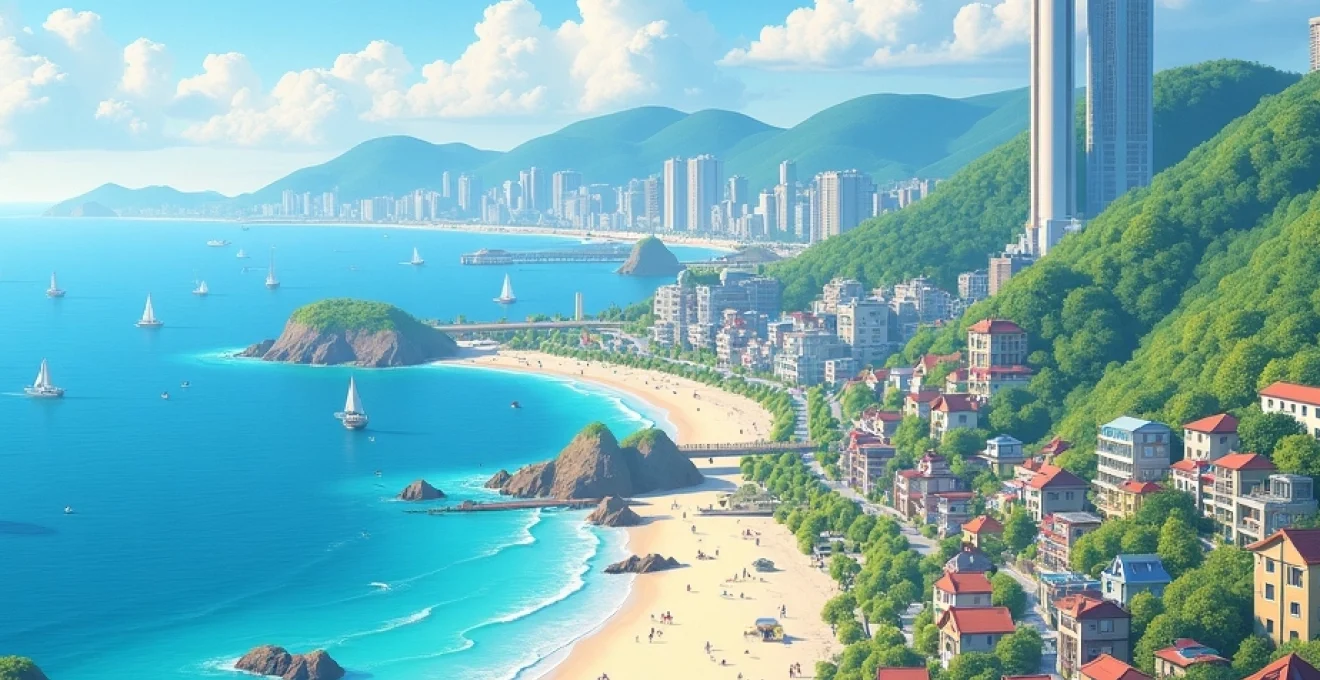
Busan stands as South Korea’s premier coastal destination, offering an extraordinary blend of pristine beaches, cultural landmarks, and maritime adventures that captivate millions of visitors annually. This vibrant port city seamlessly combines modern urban sophistication with traditional Korean heritage, creating an unparalleled coastal experience. From the golden sands of Haeundae to the artistic hillside villages overlooking the sea, Busan’s coastal attractions represent some of Asia’s most diverse and engaging waterfront destinations. The city’s strategic position along the Korean Strait has shaped its identity as a maritime hub, where ancient fishing traditions coexist with cutting-edge marine technology and luxury coastal developments.
Haeundae beach: premium beachfront amenities and marine activity zones
Haeundae Beach represents the pinnacle of Korean coastal luxury, stretching across 1.5 kilometres of meticulously maintained golden sand that attracts over 10 million visitors annually. This world-renowned beach destination offers sophisticated infrastructure that rivals the finest Mediterranean coastal resorts, featuring comprehensive amenities designed to accommodate both leisure travellers and adventure enthusiasts. The beach’s advanced crowd management systems and seasonal safety protocols ensure optimal visitor experiences throughout the year, making it an ideal location for families and solo travellers alike.
Haeundae beach club infrastructure and VIP cabana services
The premium beach club facilities at Haeundae offer exclusive cabana rentals ranging from ₩150,000 to ₩300,000 per day, providing private spaces equipped with refrigeration units, charging stations, and dedicated service staff. These luxury accommodations feature retractable canopies, premium outdoor furniture, and direct beach access paths that eliminate the need to navigate crowded public areas. The VIP zones maintain strict capacity limits, ensuring a serene environment even during peak summer seasons when general beach areas can accommodate up to 120,000 visitors daily.
Gwangalli beach night illumination and gwangan bridge light show schedules
The spectacular nightly illumination of Gwangan Bridge transforms Gwangalli Beach into one of Asia’s most photographed coastal landmarks, with the bridge’s 6,500 LED lights creating dynamic displays visible from distances exceeding 10 kilometres. The synchronised light shows occur every Saturday evening between April and October, featuring 15-minute performances that incorporate music and colour patterns reflecting seasonal themes. Advanced booking systems allow visitors to reserve premium viewing positions along the 1.4-kilometre beachfront, with elevated observation decks providing optimal photography angles for capturing the bridge’s reflection on the water.
Dongbaek island coastal walking trail and APEC naru park observatory
The 1.7-kilometre Dongbaek Island coastal trail offers elevated perspectives of Haeundae’s marine environment, featuring boardwalk sections constructed with sustainable materials that minimise environmental impact. The APEC Naru Park Observatory provides panoramic viewing opportunities across the entire Busan coastal region, equipped with professional-grade telescopes and informational displays detailing marine ecosystems and geological formations. The trail’s accessibility features include gentle gradient ramps and rest stations positioned every 300 metres, making it suitable for visitors with varying mobility levels.
Marine sports equipment rental stations and water safety protocols
Professional marine sports facilities at Haeundae maintain extensive inventories of water sports equipment, including jet skis, parasailing gear, and deep-sea fishing equipment available for hourly or daily rental. The beach’s water safety infrastructure includes 12 permanently stationed lifeguard towers equipped with rapid response watercraft and advanced communication systems connecting directly to Busan’s maritime emergency services. Current monitoring technology provides real-time updates on water conditions, with colour-coded flag systems indicating optimal times for various marine activities throughout the day.
Busan aquarium underground tunnel experience and touch pool interactions
The Busan Aquarium’s 80-metre underwater tunnel creates an immersive marine environment housing over 35,000 specimens representing 250 species native to Korean coastal waters and international marine ecosystems. Interactive touch pools feature carefully curated collections of non-venomous marine life, allowing visitors to safely experience tactile interactions with starfish, sea anemones, and various shellfish species under professional supervision. The facility’s educational programmes include guided tours conducted in multiple languages, providing detailed insights into marine conservation efforts and the unique characteristics of Korea’s coastal biodiversity.
Gamcheon culture village hillside terrain and artistic installations
Perched dramatically on the hillsides overlooking Busan’s western coastline, Gamcheon Culture Village represents one of Korea’s most successful urban regeneration projects, transforming a former refugee settlement into an internationally recognised cultural destination. The village’s unique topographical position creates a amphitheatre-like setting where brightly painted houses cascade down steep slopes , offering spectacular views of the Korea Strait and surrounding mountain ranges. This remarkable community demonstrates how artistic intervention can revitalise urban spaces while preserving cultural heritage and creating sustainable tourism opportunities.
Santorini-inspired architecture and Colour-Coded house numbering system
The village’s architectural transformation draws inspiration from Mediterranean coastal towns, particularly the Greek island of Santorini, with over 400 residential structures painted in vibrant blues, yellows, and pastels that create striking visual contrasts against the natural landscape. The innovative colour-coded numbering system helps visitors navigate the complex network of narrow alleyways and steep staircases, with each residential cluster assigned specific colour schemes that serve both aesthetic and practical wayfinding purposes. This systematic approach to urban design has become a model for similar cultural districts throughout Asia, demonstrating effective methods for balancing tourism development with residential community needs.
Little prince museum rooftop viewing platform and photo zones
The Little Prince Museum’s rooftop viewing platform provides the village’s highest accessible vantage point, offering 360-degree perspectives across Busan’s coastal region and serving as the terminus for the village’s official photography trail. Designated photo zones throughout the museum feature carefully designed backdrops and lighting systems optimised for different times of day, with professional photography equipment available for rental. The museum’s educational exhibits explore themes of cultural transformation and community resilience, connecting the village’s history as a refugee settlement with contemporary artistic expressions and urban planning principles.
Ceramic art workshops and traditional pottery demonstration studios
Professional ceramic workshops within the village offer hands-on experiences in traditional Korean pottery techniques, with master artisans providing instruction in glazing methods and firing processes unique to the Busan region. The demonstration studios feature traditional kilns and contemporary ceramic equipment, allowing visitors to observe the complete pottery creation process from clay preparation to final glazing. Workshop sessions accommodate groups of 8-12 participants, with completed works available for shipping internationally, providing visitors with personalised mementoes of their cultural village experience.
Steep staircase navigation routes and accessibility ramp alternatives
The village’s challenging terrain includes over 200 individual staircases connecting different elevation levels, with the steepest sections rising at gradients exceeding 30 degrees, requiring careful navigation and appropriate footwear. Recently installed accessibility ramp systems provide alternative routes for visitors with mobility challenges, featuring gentle gradients and rest platforms positioned every 50 metres. The comprehensive wayfinding system includes tactile guidance strips, multilingual directional signage, and emergency communication points connected directly to local medical facilities, ensuring safe navigation for all visitors regardless of physical capabilities.
Jagalchi fish market maritime commerce and seafood processing
Jagalchi Fish Market operates as Korea’s largest seafood trading hub, processing over 300 tonnes of fresh marine products daily through sophisticated logistics systems that connect local fishing fleets with national distribution networks. The market’s seven-storey complex houses more than 600 individual vendors specialising in everything from live shellfish to premium sashimi-grade fish, creating a vibrant commercial ecosystem that has functioned continuously for over 70 years. The facility’s modern refrigeration infrastructure and quality control protocols ensure optimal freshness standards while maintaining the traditional market atmosphere that makes Jagalchi a cultural landmark as well as a commercial institution.
The market’s unique position as both a wholesale trading centre and tourist destination creates fascinating opportunities to observe authentic Korean maritime commerce in action. Professional buyers arrive before dawn to select premium catches for high-end restaurants throughout Korea, while later morning hours welcome tourists eager to experience fresh seafood preparation and traditional Korean fish market culture. The market’s upper floors feature restaurants where visitors can enjoy freshly prepared meals using ingredients purchased directly from ground-floor vendors, creating a complete farm-to-table experience adapted to marine environments.
The integration of traditional fish trading practices with modern food safety standards at Jagalchi demonstrates how cultural heritage can be preserved while meeting contemporary commercial requirements and international health regulations.
Educational tours conducted by local fishing industry professionals provide insights into sustainable fishing practices, seasonal catch variations, and the complex supply chains that connect Busan’s fishing fleets with global seafood markets. The market’s digital trading systems now complement traditional negotiation methods, allowing real-time price discovery and inventory management while preserving the personal relationships that have characterised Korean fish trading for generations.
Taejongdae park cliffside geological formations and lighthouse operations
Taejongdae Park encompasses 540,000 square metres of dramatic coastal landscape featuring towering cliffs that rise up to 250 metres above sea level, creating some of Korea’s most spectacular natural viewpoints. The park’s geological significance stems from its unique rock formations, which showcase millions of years of coastal erosion and tectonic activity that have shaped the Korean Peninsula’s southern coastline. These natural monuments provide exceptional opportunities for geological education and scenic photography, while supporting diverse ecosystems that include rare coastal plant species and migratory bird populations.
Danubi train circular route system and boarding station locations
The Danubi Train system operates along a 4.3-kilometre circular route that connects all major viewing points within Taejongdae Park, featuring environmentally friendly electric vehicles designed to minimise impact on the natural landscape. The train’s seven boarding stations are strategically positioned to provide easy access to hiking trails, observation decks, and geological points of interest, with each station equipped with interactive displays explaining local flora, fauna, and geological characteristics. The complete circuit takes approximately 30 minutes, with trains departing every 15 minutes during peak seasons and offering multilingual audio commentary describing the park’s natural and cultural significance.
Observatory deck telescope equipment and oryukdo islands visibility
The main observatory deck features professional astronomical and terrestrial telescopes available for public use, providing detailed views of the Oryukdo Islands located 600 metres offshore. On clear days, visibility extends beyond 50 kilometres, allowing observations of Japanese islands and detailed examination of marine traffic patterns in the Korea Strait. The telescope equipment includes both fixed and portable units, with trained staff available to assist visitors in locating specific landmarks and explaining the significance of visible geological features and maritime navigation points.
Taejongdae lighthouse maritime navigation signal patterns
The historic Taejongdae Lighthouse operates continuously as an active navigation aid for vessels entering Busan Port, featuring a rotating beacon visible from distances exceeding 40 kilometres. The lighthouse’s sophisticated signalling system includes fog horns, radio beacons, and GPS coordination services that assist thousands of commercial and recreational vessels annually. Guided tours of the lighthouse facility provide insights into modern maritime navigation technology and the critical role these installations play in maintaining safe passage through one of Asia’s busiest shipping corridors.
Coastal erosion monitoring points and rock formation photography angles
Scientific monitoring stations throughout the park track coastal erosion rates and geological changes, with data collection points accessible to visitors interested in environmental science and geological processes. Professional photography guides identify optimal angles for capturing the park’s dramatic rock formations, with seasonal lighting conditions creating varying opportunities for landscape photography throughout the year. The monitoring equipment includes seismic sensors and erosion measurement devices that contribute to broader research programmes studying climate change impacts on Korea’s coastal regions.
Songdo beach cable car engineering and skywalk suspension technology
The Songdo Marine Cable Car represents a significant engineering achievement, spanning 1.62 kilometres across Songdo Bay with support towers rising 86 metres above sea level to accommodate large vessel traffic beneath the cable system. This sophisticated aerial transportation system features 39 gondolas equipped with panoramic viewing windows and climate control systems, carrying up to 8 passengers per cabin at speeds reaching 5 metres per second. The cable car’s engineering specifications include advanced wind resistance capabilities and emergency evacuation protocols designed to operate safely in coastal weather conditions, including seasonal typhoons that affect the Korean Peninsula.
The accompanying Songdo Skywalk extends 365 metres from the shoreline, supported by a cantilever design that eliminates the need for underwater support pillars that could disrupt marine ecosystems. The skywalk’s glass-bottom sections provide thrilling perspectives of the ocean below, while its suspension technology allows for natural movement that accommodates tidal variations and wind loads without compromising structural integrity. Advanced materials including marine-grade aluminium and specially treated glass ensure long-term durability in the corrosive coastal environment, while LED lighting systems integrated into the walkway structure create dramatic illumination effects during evening hours.
The combination of cable car and skywalk technologies at Songdo demonstrates how modern engineering can enhance coastal tourism experiences while respecting marine environmental constraints and operational safety requirements.
Yacht marina districts and luxury waterfront accommodation options
Busan’s sophisticated yacht marina infrastructure reflects the city’s evolution into a premier destination for luxury maritime tourism, with world-class facilities designed to accommodate vessels ranging from small recreational boats to superyachts exceeding 100 metres in length. The marina districts integrate seamlessly with upscale residential and commercial developments, creating comprehensive waterfront communities that cater to both permanent residents and international visitors seeking premium coastal experiences . These developments represent significant investments in maritime tourism infrastructure, positioning Busan as a competitive alternative to established yacht destinations throughout the Asia-Pacific region.
Centum city marina berth specifications and yacht charter services
Centum City Marina provides 200 berths with comprehensive specifications accommodating vessels up to 150 metres in length, featuring advanced mooring systems and full electrical hookups supporting both 50Hz and 60Hz power requirements for international vessels. The marina’s charter services maintain a fleet of luxury vessels available for day trips, extended cruises, and special event hosting, with professional crews certified for international waters navigation. Premium services include customs clearance assistance, provisioning coordination, and concierge services that arrange everything from helicopter transfers to exclusive dining experiences aboard chartered vessels.
Paradise hotel casino coastal wing room categories and sea view premiums
The Paradise Hotel Casino’s coastal wing features 384 luxury rooms specifically designed to maximise ocean views, with floor-to-ceiling windows and private balconies oriented to capture both sunrise and sunset perspectives depending on room positioning. Premium suite categories include penthouse accommodations spanning 200 square metres, featuring private terraces, infinity pools, and direct elevator access to the hotel’s private marina facilities. Room rates reflect significant premiums for ocean views, with coastal-facing accommodations commanding 40-60% higher rates than city-view alternatives, particularly during peak tourism seasons and international events hosted in Busan.
Marine city High-Rise residential complex and balcony orientation benefits
Marine City’s residential towers reach heights of up to 85 storeys, creating vertical communities where balcony orientation becomes a critical factor in property values and resident satisfaction. South-facing units capture optimal natural lighting and panoramic sea views, while west-facing balconies provide spectacular sunset viewing opportunities across the Korea Strait. The complex’s architectural design incorporates wind-resistant features and salt-corrosion protection systems essential for high-rise coastal construction, with building management systems that monitor structural integrity and environmental conditions continuously. Residents benefit from exclusive access to private beaches, marina berths, and helicopter landing facilities that enhance the luxury coastal living experience while providing practical transportation alternatives during peak traffic periods.