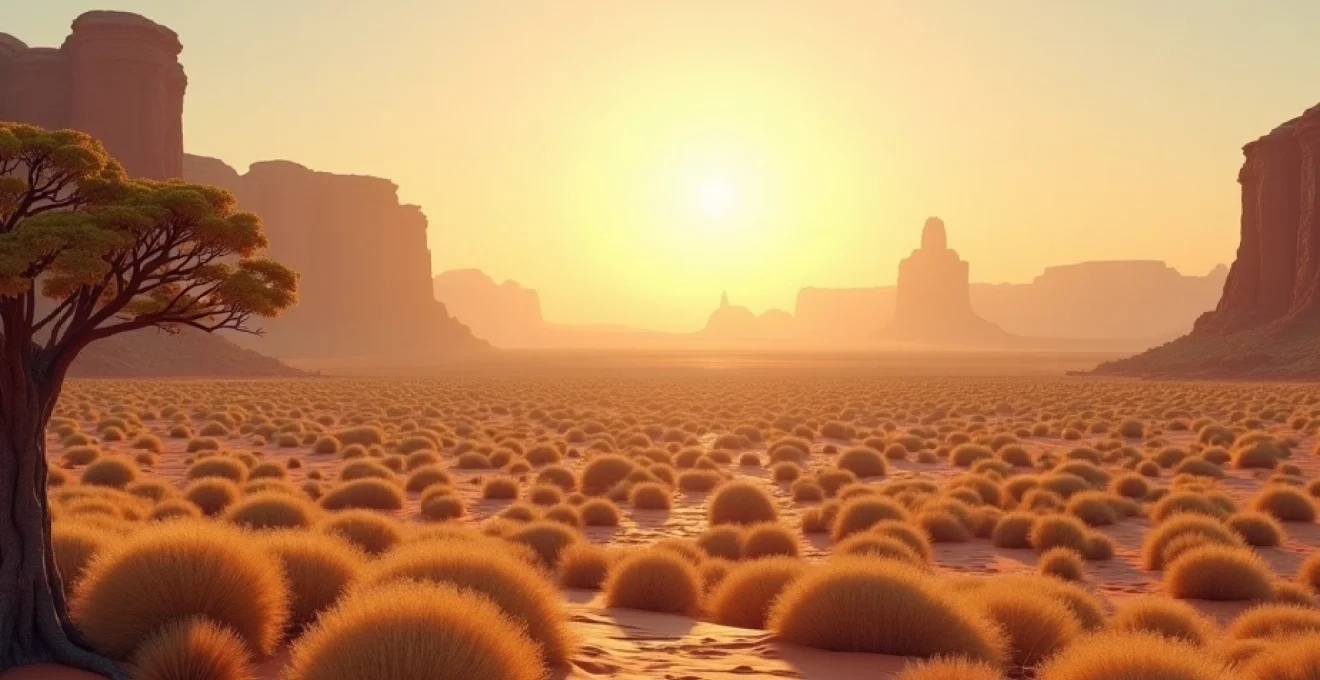
Namibia stands as one of Earth’s most extraordinary geological showcases, where ancient desert systems have evolved over millions of years to create landscapes of unparalleled beauty and scientific significance. From the towering red dunes of Sossusvlei to the haunting expanse of the Skeleton Coast, this southwestern African nation encompasses some of the planet’s most diverse and visually striking arid environments. The convergence of multiple desert ecosystems within a single country creates a natural laboratory where visitors can witness the remarkable adaptations of life to extreme conditions.
These desert landscapes represent far more than scenic backdrops for adventure tourism. They constitute complex ecological systems where endemic species have developed extraordinary survival mechanisms, where geological processes spanning millennia have sculpted terrain of breathtaking diversity, and where ancient human cultures have left their mark through rock art dating back thousands of years. Understanding these interconnected systems reveals the profound relationship between climate, geology, biology, and human history that makes Namibia’s deserts among the most scientifically valuable and visually captivating environments on the planet.
Geological formation and terrain classification of namibian desert systems
Namibia’s desert landscapes represent a complex tapestry of geological processes that span over three billion years of Earth’s history. The foundation of these remarkable environments lies in the interplay between ancient bedrock formations, sedimentary accumulations, and ongoing erosional processes that continue to shape the terrain. Understanding this geological framework provides essential context for appreciating both the visual spectacle and ecological significance of Namibian desert systems.
Namib desert’s precambrian bedrock and sand sea development
The Namib Desert’s geological foundation rests upon some of Earth’s oldest rock formations, with Precambrian basement rocks dating back approximately 2.5 billion years. These ancient granitic and gneissic formations provide the structural backbone upon which younger sedimentary sequences have accumulated. The interaction between this stable cratonic foundation and subsequent geological processes has created the conditions necessary for the development of one of the world’s most extensive sand sea systems.
The development of the Namib’s characteristic sand seas resulted from a complex interplay of tectonic uplift, climate change, and erosional processes. During the Cretaceous period, approximately 130 million years ago, the breakup of Gondwana initiated the formation of the South Atlantic Ocean, establishing the climatic patterns that would eventually give rise to the hyperarid conditions characteristic of the modern Namib. The positioning of the Benguela Current along the coast created the temperature inversions and fog patterns that define much of the desert’s unique ecological character.
Kalahari desert basin sedimentary layers and calcrete formations
The Kalahari Desert system represents a fundamentally different geological environment compared to the coastal Namib, characterised by extensive sedimentary basin fills and distinctive calcrete formations. The Kalahari Basin accumulated sediments over approximately 65 million years, creating a complex stratigraphy that reflects changing climatic conditions throughout the Cenozoic Era. These sedimentary sequences provide valuable insights into past environmental conditions and the evolution of southern African landscapes.
Calcrete formations within the Kalahari system represent one of the most distinctive geological features of this semi-arid environment. These calcium carbonate-cemented horizons form through the repeated dissolution and precipitation of carbonate minerals in groundwater systems. The development of calcrete layers creates impermeable barriers that significantly influence surface hydrology, vegetation patterns, and wildlife distribution throughout the region. Understanding these geological controls helps explain the patchy distribution of water resources and the resulting ecological patterns across the Kalahari landscape.
Sossusvlei pan hydrology and clay accumulation processes
Sossusvlei represents one of Namibia’s most geologically significant features, functioning as a terminal drainage basin where ephemeral rivers deposit fine-grained sediments during rare flooding events. The pan’s distinctive white clay surface results from the accumulation of suspended sediments carried by the Tsauchab River during periodic flood events. These flooding cycles, though infrequent, play a crucial role in maintaining the pan’s unique characteristics and supporting the remarkable vegetation communities that survive in this harsh environment.
The hydrology of the Sossusvlei system demonstrates the profound influence of geological structure on surface water movement in arid environments. Underlying geological formations channel groundwater flow and create the conditions necessary for the formation of these ephemeral lakes. The interaction between surface hydrology and groundwater systems creates microhabitats that support desert-adapted vegetation and provide critical resources for wildlife during drought periods.
Orange river alluvial deposits and diamond concentration zones
The Orange River system has played a fundamental role in shaping Namibia’s desert landscapes through its transport and deposition of sediments over millions of years. The river’s alluvial deposits extend far beyond its current channel, creating extensive terraces and fans that influence both surface hydrology and subsurface water movement throughout the southern desert regions. These depositional systems have created some of Namibia’s most economically significant geological features, including extensive diamond concentration zones.
Diamond concentrations along the Orange River and its ancient terraces represent one of the world’s most significant alluvial diamond deposits. The concentration of these precious minerals results from specific hydraulic conditions that favour the transport and deposition of dense mineral grains. Understanding these geological processes provides insights into both the economic geology of the region and the broader landscape evolution that has shaped Namibia’s desert environments over geological time scales.
Endemic flora adaptation mechanisms in hyperarid environments
Namibia’s desert environments have fostered the evolution of some of the world’s most remarkable plant adaptations to extreme aridity. These evolutionary adaptations represent millions of years of natural selection operating under the constraints of limited water availability, extreme temperatures, and intense solar radiation. The resulting flora demonstrates extraordinary diversity in physiological, morphological, and reproductive strategies that enable survival in conditions that would quickly prove fatal to most plant species.
Welwitschia mirabilis water harvesting through foliar absorption
Welwitschia mirabilis stands as perhaps the most iconic example of plant adaptation to hyperarid conditions, representing a unique evolutionary lineage that has persisted for over 100 million years. This remarkable species demonstrates sophisticated water harvesting mechanisms that enable individual plants to survive for over 1,000 years in environments receiving less than 20 millimetres of annual precipitation. The plant’s distinctive strap-like leaves function as highly efficient fog collectors, utilising specialised surface structures to capture moisture from the coastal fog that characterises much of the Namib Desert.
The foliar absorption mechanisms employed by Welwitschia involve complex interactions between leaf morphology, surface chemistry, and atmospheric conditions. The leaves’ fibrous surface creates numerous nucleation sites where water vapour can condense, while specialised cell structures facilitate rapid water uptake once condensation occurs. This fog-harvesting capability enables the plant to extract sufficient moisture from the atmosphere to maintain metabolic functions even during extended drought periods that can last several years.
Lithops cryptic colouration and CAM photosynthesis strategies
Lithops species, commonly known as living stones, represent one of the most remarkable examples of cryptic adaptation in the plant kingdom. These succulent species have evolved extraordinary morphological and physiological strategies that enable them to blend seamlessly with their rocky surroundings while maintaining efficient photosynthetic function under extreme desert conditions. The combination of visual camouflage and specialised metabolic pathways demonstrates the sophisticated adaptations possible under intense selective pressure.
The CAM (Crassulacean Acid Metabolism) photosynthesis employed by Lithops represents a fundamental adaptation to water-limited environments. This metabolic strategy allows the plants to open their stomata during cooler nighttime hours, minimising water loss while still maintaining carbon fixation for photosynthesis. The temporal separation of gas exchange and light-dependent reactions enables these plants to achieve positive carbon balance while losing minimal water to transpiration, a crucial adaptation for survival in environments where every drop of water represents a precious resource.
Pachypodium namaquanum succulent storage and thermal regulation
Pachypodium namaquanum, known locally as the halfmens or elephant’s trunk, demonstrates sophisticated adaptations for both water storage and thermal regulation in desert environments. This distinctive succulent species combines massive water storage capacity with innovative heat dissipation mechanisms that enable it to maintain optimal physiological function despite extreme temperature fluctuations. The plant’s unique architecture reflects millions of years of evolutionary refinement under the selective pressures of the Succulent Karoo environment.
The thermal regulation strategies employed by Pachypodium involve both passive and active mechanisms for maintaining optimal tissue temperatures. The plant’s thick, succulent stem provides thermal mass that buffers against rapid temperature changes, while the sparse branching pattern and strategic leaf placement minimise heat absorption during the hottest parts of the day. Additionally, the plant’s ability to orient its growth toward cooler, fog-laden coastal areas demonstrates a sophisticated response to microenvironmental gradients that can mean the difference between survival and death in these marginal environments.
Dune morphology and wind pattern analysis at sossusvlei
The dune systems of Sossusvlei represent some of the most spectacular examples of aeolian geomorphology on Earth, with individual dunes reaching heights exceeding 300 metres and displaying complex morphological patterns that reflect the intricate relationship between wind dynamics, sand supply, and topographic constraints. These massive sand accumulations demonstrate the power of atmospheric processes to sculpt landscapes over timescales ranging from hours to millennia, creating dynamic environments that continuously evolve in response to changing meteorological conditions.
The morphological diversity within the Sossusvlei dune field reflects the complex interaction between multiple wind systems and varying sand availability across the landscape. Star dunes , linear dunes, and barchan forms each represent distinct responses to specific wind patterns and sediment supply conditions. The famous red coloration of these dunes results from iron oxide coatings on individual sand grains, with colour intensity indicating the age and exposure history of the sand. Older surfaces display deeper red hues, while recently active areas show lighter tones that reflect more recent sediment movement.
The relationship between wind patterns and dune morphology at Sossusvlei demonstrates the profound influence of atmospheric dynamics on desert landscape evolution, with individual dunes serving as sensitive indicators of both current and historical climate conditions.
Understanding the wind pattern analysis reveals the seasonal and diurnal variations that drive dune migration and morphological change throughout the year. The interaction between large-scale atmospheric circulation patterns and local topographic effects creates complex flow fields that determine where sand accumulates and where erosion occurs. These processes operate at multiple temporal scales, from the daily movement of sand ripples to the centennial-scale migration of entire dune systems across the landscape.
The study of dune morphology also provides insights into the long-term stability and dynamics of these remarkable landforms. While individual dunes may appear static over human timescales, detailed monitoring reveals continuous adjustment to changing wind conditions and sand supply. This dynamic nature makes Sossusvlei an invaluable natural laboratory for understanding aeolian processes and their role in shaping desert landscapes worldwide.
Archaeological significance of twyfelfontein rock art petroglyphs
Twyfelfontein represents one of Africa’s most significant concentrations of prehistoric rock art, containing over 2,500 petroglyphs that span approximately 6,000 years of human occupation and artistic expression. This UNESCO World Heritage Site provides invaluable insights into the lives, beliefs, and environmental relationships of ancient hunter-gatherer societies who inhabited Namibia’s desert regions. The remarkable preservation of these artistic works results from the unique climatic conditions and geological characteristics of the site, which have protected the engravings from the erosional processes that have destroyed similar sites elsewhere.
The petroglyphs at Twyfelfontein display extraordinary diversity in both subject matter and artistic technique, ranging from detailed depictions of local wildlife to abstract geometric patterns whose meanings remain enigmatic. Many of the animal representations show species that no longer inhabit the immediate area, providing evidence of past climatic conditions and ecosystem changes over the millennia. The presence of giraffes, elephants, and rhinoceros in the rock art suggests that the region once supported more diverse wildlife communities under different environmental conditions.
The archaeological significance of these petroglyphs extends beyond their artistic value to include their role as historical documents that record the relationship between humans and their environment over thousands of years. The evolution of artistic styles and subject matter through time provides insights into changing cultural practices, spiritual beliefs, and environmental conditions. Shamanic imagery and hunting scenes suggest complex spiritual relationships with the natural world, while the technical sophistication of many engravings indicates highly developed artistic traditions passed down through generations.
Recent archaeological investigations at Twyfelfontein have employed advanced dating techniques and digital documentation methods to better understand the chronology and cultural context of the site. These studies reveal that the rock art tradition continued well into historical times, with some engravings possibly created after European contact. This temporal continuity demonstrates the enduring importance of the site to local communities and highlights the need for continued conservation efforts to protect this irreplaceable archaeological resource.
Wildlife corridors and Desert-Adapted fauna distribution patterns
Namibia’s desert ecosystems support remarkably diverse wildlife communities despite the apparent harshness of these environments. The distribution patterns of desert-adapted fauna reflect complex interactions between water availability, vegetation communities, topographic features, and seasonal climate variations. Understanding these distribution patterns provides crucial insights for conservation planning and reveals the sophisticated adaptations that enable wildlife to thrive in some of Earth’s most challenging environments.
Oryx gazella thermoregulation and water conservation physiology
The gemsbok or oryx (Oryx gazella) represents one of the most successful large mammal adaptations to desert conditions, demonstrating extraordinary physiological mechanisms for thermoregulation and water conservation. These magnificent antelopes can survive indefinitely without drinking water, obtaining all necessary moisture from their food and through metabolic processes. Their kidney function represents a masterpiece of physiological adaptation, concentrating urine to such an extent that water loss through excretion becomes minimal.
The thermoregulatory strategies employed by oryx involve sophisticated cardiovascular adaptations that allow core body temperature to rise significantly without causing physiological damage. Counter-current heat exchange systems in the nasal passages and blood vessels enable these animals to cool arterial blood supplying the brain while tolerating elevated body temperatures that would prove fatal to most mammals. This physiological flexibility allows oryx to remain active during the heat of the day when other large mammals must seek shelter.
Namibian desert beetle Fog-Harvesting surface microstructures
The Namibian desert beetle (Stenocara gracilipes) has evolved one of nature’s most elegant solutions to water scarcity through specialised surface microstructures that enable efficient fog harvesting. The beetle’s elytra display a complex pattern of hydrophilic and hydrophobic regions that facilitate water collection from the fog that rolls in from the Atlantic Ocean. This remarkable adaptation has inspired biomimetic technologies for water collection in arid regions worldwide.
The surface microstructures responsible for fog harvesting involve nanoscale features that control wetting behaviour and water droplet formation. Hydrophilic regions act as nucleation sites where water vapour condenses, while hydrophobic areas channel collected water toward the beetle’s mouth. This surface engineering at the microscopic level demonstrates the extraordinary precision of evolutionary adaptation and provides a model for developing technological solutions to water scarcity in arid environments.
Hartmann’s mountain zebra migration routes through skeleton coast
Hartmann’s mountain zebra (Equus zebra hartmannae) undertakes one of Africa’s most challenging migrations, traversing the harsh landscapes of the Skeleton Coast in search of seasonal resources. These migration routes represent ancient pathways that have been refined over thousands of years, connecting critical water sources, mineral licks, and seasonal grazing areas across vast expanses of desert terrain. Understanding these movement patterns is essential for conservation planning and reveals the remarkable navigational abilities of these desert-adapted equids.
The migration routes followed by Hartmann’s mountain zebra demonstrate sophisticated spatial memory and environmental assessment capabilities that enable these animals to locate scattered resources across enormous territories. GPS tracking studies have revealed that individual animals can navigate directly to water sources hundreds of kilometres away, suggesting inherited knowledge of landscape features and seasonal resource availability that has been passed down through generations.
Caracal and Black-Backed jackal territorial range mapping
The territorial behaviour of medium-sized predators like caracal (Caracal caracal) and black-backed jackal (Canis mesomelas) in Namibian desert environments reflects adaptations to low prey density and patchy resource distribution. These species maintain much larger territories than their counterparts in more productive ecosystems, with individual home ranges sometimes exceeding several hundred square kilometres. The spatial organisation of these territories reveals the minimum area requirements for viable populations in desert environments.
Recent advances in GPS collar
technology and remote monitoring techniques have revealed the complex social dynamics and resource utilization patterns of these desert carnivores. Caracals demonstrate remarkable flexibility in their hunting strategies, adjusting their behaviour based on prey availability and seasonal resource fluctuations. Their ability to take prey ranging from small rodents to medium-sized antelopes enables them to exploit the diverse but unpredictable food webs characteristic of desert ecosystems.
Black-backed jackals display even greater adaptability in their territorial arrangements, often forming pair bonds that persist across multiple seasons and sharing territorial boundaries with related individuals. The territorial overlap patterns observed in these species reflect the patchy distribution of key resources and the need to maintain access to multiple resource types across vast desert landscapes. Understanding these territorial dynamics provides essential information for predicting how these species might respond to climate change and habitat modifications.
Optimal photography techniques for capturing desert light dynamics
Photographing Namibia’s desert landscapes presents unique challenges and opportunities that require specialized techniques to capture the extraordinary interplay of light, shadow, and colour that defines these environments. The extreme contrasts between brilliant highlights and deep shadows, combined with the constantly changing quality of light throughout the day, demand technical expertise and careful planning to achieve compelling results. Understanding the specific characteristics of desert lighting conditions enables photographers to anticipate and exploit the brief moments when conditions align perfectly for exceptional imagery.
The golden hours in desert environments extend far beyond the typical sunrise and sunset periods experienced in other landscapes, offering extended opportunities for warm, directional lighting that emphasizes texture and form. During these periods, the low-angle sunlight rakes across dune surfaces and rock formations, creating dramatic shadows that reveal the three-dimensional structure of the landscape. The side-lighting conditions that prevail during early morning and late afternoon hours provide the ideal illumination for capturing the rippled patterns on dune surfaces and the weathered textures of ancient rock formations.
Understanding the unique atmospheric conditions of Namibian deserts proves crucial for successful photography, particularly the role of dust and humidity in affecting light quality and colour temperature. The extremely dry air in these environments creates exceptionally clear atmospheric conditions that can result in harsh, contrasty lighting during midday hours. However, this same clarity enables extraordinary visibility and colour saturation during optimal lighting conditions, producing images with remarkable depth and clarity that capture the true essence of these magnificent landscapes.
The key to successful desert photography lies not in fighting the extreme lighting conditions, but in understanding and embracing them to create images that convey the raw power and sublime beauty of these extraordinary environments.
Technical considerations for desert photography include the need for careful exposure management to preserve detail in both shadows and highlights, often requiring graduated neutral density filters or HDR techniques to capture the full dynamic range of the scene. The reflective properties of sand and rock surfaces can create complex lighting situations where traditional exposure metering may prove inadequate. Understanding how different surface materials interact with light enables photographers to predict and compensate for these challenging conditions, resulting in images that accurately represent the visual experience of being in these remarkable landscapes.
The seasonal variations in atmospheric conditions provide different photographic opportunities throughout the year, from the crystal-clear skies of the dry season that enable sharp, high-contrast imagery, to the occasional dust storms and rare weather events that can create dramatic, moody conditions. Photographers who understand these seasonal patterns can plan their visits to coincide with optimal conditions for their specific artistic vision, whether seeking the stark minimalism of clear desert vistas or the dramatic atmosphere of stormy skies over ancient dunes.
Beyond technical considerations, successful desert photography requires an appreciation for the subtle variations in colour and texture that distinguish different desert environments within Namibia. The iron-rich sands of Sossusvlei display warm orange and red tones that intensify during golden hour lighting, while the calcrete formations of the Kalahari present cooler, more neutral tones that require different technical approaches to capture effectively. Developing sensitivity to these subtle differences enables photographers to capture the unique character of each desert environment and create images that truly represent the extraordinary diversity of Namibia’s arid landscapes.