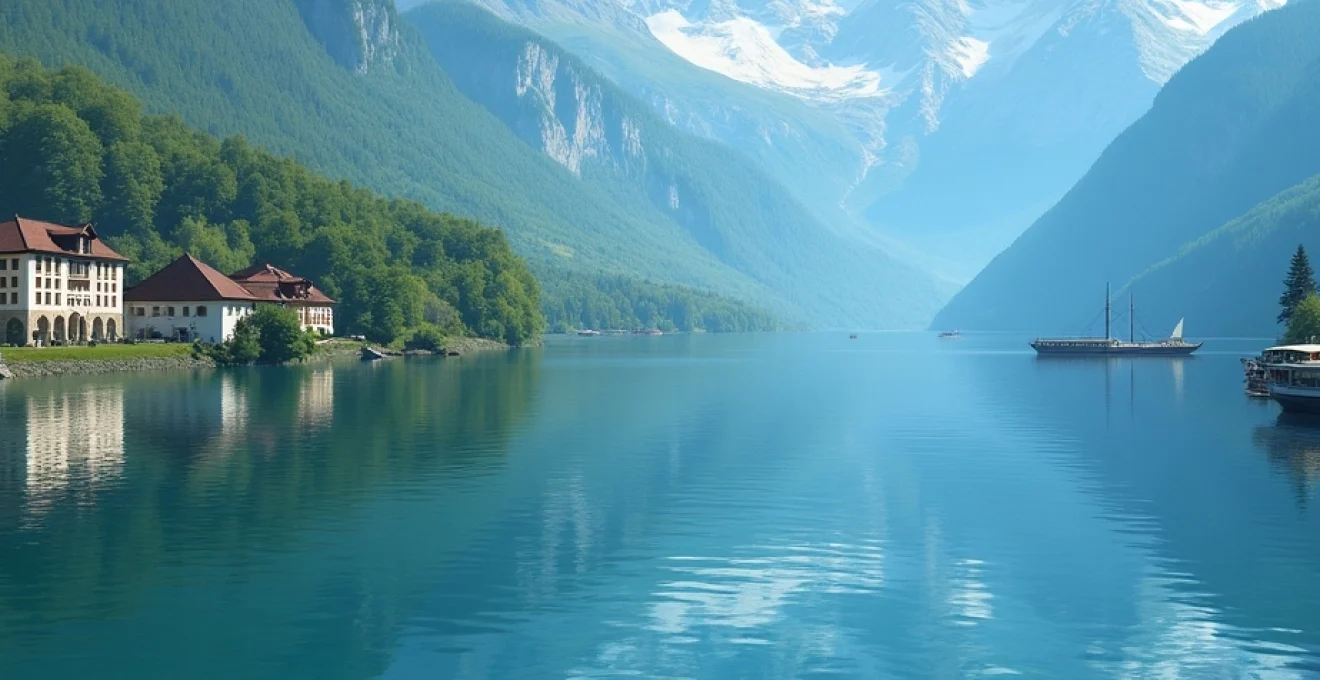
Switzerland’s pristine lake region offers travellers an unparalleled combination of crystal-clear alpine waters, dramatic mountain backdrops, and centuries-old cultural heritage. From the expansive shores of Lake Geneva to the intimate mountain tarns of the Engadin Valley, this remarkable destination encompasses over 1,500 lakes across diverse geographical zones. The intricate transportation network connecting these aquatic gems creates opportunities for seamless multi-modal journeys that showcase the country’s most spectacular scenery.
Planning a comprehensive tour through Switzerland’s lake region requires strategic coordination of railways, steamships, cable cars, and hiking trails. The Swiss Travel Pass system facilitates access to this integrated transportation infrastructure, while seasonal weather patterns significantly influence accessibility to high-alpine destinations. Understanding the nuanced scheduling of various transport modes ensures optimal timing for witnessing the region’s natural splendour at its peak.
Essential route planning through lake geneva and lac léman corridor
The Lake Geneva region serves as Switzerland’s gateway to the Alps, offering a sophisticated blend of cosmopolitan cities, UNESCO World Heritage vineyards, and medieval fortifications. This crescent-shaped body of water, shared between Switzerland and France, provides the foundation for exploring the entire western Swiss lake system. The strategic positioning of major transport hubs around Lake Geneva enables efficient connections to both alpine destinations and international routes.
Geneva’s central railway station functions as the primary distribution point for regional exploration, with direct connections to Lausanne, Montreux, and numerous smaller lakeside communities. The efficient CFF/SBB railway network operates hourly services along the northern shoreline, while complementary boat services provide leisurely alternatives during favourable weather conditions. The integration of these transport modes creates flexible itinerary options accommodating varying timeframes and interests.
Mont-blanc express railway integration for Chamonix-Montreux connection
The Mont-Blanc Express represents one of Europe’s most scenic railway connections, linking the French alpine resort of Chamonix with the Swiss Riviera at Montreux. This cross-border service traverses the dramatic Trient Valley, offering passengers spectacular views of glaciated peaks and traditional mountain villages. The journey requires approximately two hours, including border formalities and a brief transfer at Martigny.
Scheduling considerations for this international service become particularly important during peak summer months when advance reservations are essential. The railway operates reduced frequency during winter periods, with some sections experiencing temporary suspensions due to avalanche risks. Travellers planning extended lake region tours should coordinate Mont-Blanc Express timing with steamship schedules on Lake Geneva to maximise scenic viewing opportunities.
Golden pass line scenic rail service from montreux to interlaken
The Golden Pass Line constitutes Switzerland’s premier scenic railway experience, connecting Lake Geneva with the Bernese Oberland through a spectacular cross-alpine route. This service employs three distinct train types across different gauge systems, requiring strategic transfers at Zweisimmen and Spiez. The panoramic carriages feature enlarged windows and elevated seating positions designed to optimise alpine scenery appreciation.
The complete Montreux-Interlaken journey spans approximately three hours, with scheduled stops at strategic viewpoints overlooking mountain lakes and glaciated summits. During peak tourist seasons, advance booking becomes essential for securing preferred seating arrangements. The service operates year-round, though winter schedules may experience modifications due to weather-related operational constraints in high-altitude sections.
Lavaux UNESCO world heritage vineyard terraces navigation
The Lavaux vineyard terraces stretch along Lake Geneva’s northern shoreline between Lausanne and Montreux, representing over 800 years of viticultural heritage. These meticulously maintained terraces create a unique landscape mosaic integrating agricultural productivity with stunning lake vistas. The region’s UNESCO World Heritage status reflects both its cultural significance and exceptional scenic beauty.
Navigation through the Lavaux region employs multiple transport options, including regional trains, local buses, and dedicated hiking trails. The Lavaux Express tourist train provides guided commentary while traversing the most spectacular sections during summer months. Pedestrian pathways connect individual villages, offering intimate encounters with working vineyards and traditional wine cellars. The optimal visiting period extends from April through October when vineyard activities and weather conditions align favourably.
Chillon castle medieval fortress strategic positioning
Château de Chillon occupies a commanding position on Lake Geneva’s eastern shoreline, representing one of Europe’s best-preserved medieval fortifications. This 13th-century castle utilises a natural rocky outcrop to create an almost impregnable defensive position while controlling historical trade routes through the Alps. The fortress’s strategic importance endured for centuries, serving various noble families and political entities.
Modern access to Chillon Castle employs both railway connections and lake steamship services from Montreux and other regional centres. The short walking distance from Veytaux-Chillon railway station makes the castle easily accessible during standard touring itineraries.
The castle’s position creates some of the most photographed scenes in Switzerland, particularly during golden hour when the medieval towers reflect in the lake’s calm waters.
Advance booking becomes advisable during summer peak periods when visitor numbers can impact touring quality.
Bernese oberland lake circuit transportation infrastructure
The Bernese Oberland encompasses Switzerland’s most dramatic alpine lake scenery, where glaciated peaks rise directly from pristine water surfaces. This region contains numerous interconnected lakes, including Thun, Brienz, and countless smaller mountain tarns accessible through the world’s most sophisticated mountain railway network. The strategic positioning of Interlaken between Lakes Thun and Brienz creates a natural hub for exploring this spectacular alpine environment.
Transportation infrastructure in the Bernese Oberland integrates multiple specialised systems designed to overcome extreme topographical challenges. Rack railways, funicular systems, aerial cableways, and vintage steamships work in coordination to provide access to destinations otherwise unreachable by conventional transport. The Jungfrau region particularly exemplifies this integration, where visitors can transition seamlessly from lake-level steamships to Europe’s highest railway station at over 3,400 metres elevation.
Jungfraujoch railway access via lauterbrunnen valley
The Jungfrau Railway represents the pinnacle of Swiss mountain engineering, ascending from the Lauterbrunnen Valley floor to the Jungfraujoch saddle between the Mönch and Jungfrau peaks. This cogwheel railway traverses through the Eiger’s north face via tunnels carved directly through solid limestone, emerging at intermediate stations offering dramatic glacier views. The complete journey requires approximately two hours each direction, with significant elevation changes affecting passenger comfort.
Access to the Jungfrau Railway typically begins from Interlaken Ost station, requiring connections through either Lauterbrunnen or Grindelwald depending on chosen routing. The service operates year-round despite challenging alpine conditions, though weather can significantly impact visibility at the terminus. Advanced booking becomes essential during peak periods , particularly for first-class accommodation and preferred departure times. The substantial cost of this journey makes timing considerations crucial for maximising investment value.
Lake thun steamship BLS navigation schedule coordination
Lake Thun’s steamship services operate historic paddle-wheel vessels dating from the early 20th century, providing authentic period transportation experiences across the lake’s turquoise waters. The BLS navigation company maintains regular scheduled services connecting Thun, Spiez, and intermediate lakeside communities throughout the operating season. These vessels offer restaurant facilities and panoramic viewing areas designed to showcase the surrounding Bernese Alps.
Coordination between steamship schedules and connecting railway services requires careful planning, particularly when integrating lake cruises with mountain excursions. The vessels operate reduced frequency during shoulder seasons and suspend operations entirely during winter months when lake conditions become unsuitable for safe navigation. Real-time schedule information becomes crucial due to weather-related modifications that can impact predetermined itineraries.
Interlaken Ost-West station transfer optimisation
Interlaken’s dual railway stations reflect the town’s unique position as a transportation convergence point between different railway companies and route systems. Interlaken Ost serves as the primary gateway to mountain destinations including Jungfraujoch, Grindelwald, and Lauterbrunnen, while Interlaken West connects to the broader Swiss railway network via Spiez and Bern. The transfer between these stations requires either a brief train journey or a pleasant 20-minute walk through the town centre.
Optimising transfers between these stations becomes particularly important when coordinating complex multi-modal itineraries involving mountain railways, lake steamships, and long-distance connections. The timing of transfers can significantly impact overall journey efficiency, especially during peak tourist periods when services operate at capacity. Understanding the specific platform assignments and walking distances helps minimise connection stress during time-sensitive transfers.
Grindelwald-first cable car alpine lake overlook access
The Grindelwald-First cable car system provides access to some of the Bernese Oberland’s most spectacular high-alpine lake viewpoints, ascending to 2,168 metres elevation above the Grindelwald valley floor. From the First summit station, visitors can access multiple mountain lakes including Bachalpsee, whose mirror-like surface reflects the iconic Wetterhorn and Schreckhorn peaks. The modern gondola system operates year-round, adapting to seasonal activities from summer hiking to winter skiing.
The cable car journey requires approximately 25 minutes, with intermediate stations at Bort and Grindelwald providing alternative access points for various hiking routes. During summer months, the system experiences peak demand during morning hours when photography conditions are optimal for alpine lake reflection shots.
The First cliff walk suspension bridge offers perhaps the most dramatic alpine lake panorama accessible to non-technical visitors in the entire Swiss Alps.
Weather conditions at elevation can change rapidly, making appropriate clothing preparation essential regardless of valley-level conditions.
Central switzerland four forest cantons lake network
Lake Lucerne, historically known as the Lake of Four Forest Cantons, forms the centrepiece of central Switzerland’s lake system and serves as a crucial transportation hub connecting multiple alpine regions. This irregularly shaped lake extends into four distinct arms, each offering unique scenic characteristics and historical significance. The surrounding mountains include some of Switzerland’s most accessible peaks via cogwheel railways and cable car systems, creating opportunities for dramatic elevated lake views.
The lake’s complex geography necessitates sophisticated navigation planning, as different arms connect to various mountain railway systems and regional centres. Lucerne city functions as the primary hub, while smaller communities like Weggis, Vitznau, and Brunnen provide alternative access points to specific mountain destinations. The integration of vintage paddle steamers with modern motor vessels creates flexible scheduling options accommodating various touring preferences and timeframes.
Mount Pilatus and Mount Rigi represent the two primary mountain destinations accessible from Lake Lucerne, each offering distinct routing options and scenic experiences. The Pilatus route employs the world’s steepest cogwheel railway combined with aerial cableways, while Rigi access utilises Europe’s oldest mountain railway dating from 1871. These mountain excursions can be combined with lake crossings to create circular touring routes maximising scenic variety within single-day itineraries.
The William Tell Express represents a unique tourist product combining Lake Lucerne steamship cruising with the Gotthard panoramic railway through central Switzerland’s dramatic alpine passes. This service operates seasonally between Lucerne and Italian-speaking Ticino, crossing multiple climate zones and offering passengers spectacular views of alpine lakes, glaciated summits, and Mediterranean-influenced landscapes. The complete journey requires a full day but provides unparalleled diversity within Switzerland’s compact geography.
Engadin valley High-Alpine lake system exploration
The Engadin Valley contains Switzerland’s highest concentration of alpine lakes, situated at elevations exceeding 1,800 metres and characterised by exceptional water clarity and dramatic mountain backdrops. This unique ecosystem supports distinct flora and fauna adapted to high-altitude conditions, while the valley’s orientation creates optimal solar exposure for extended seasonal accessibility. The region’s lakes range from substantial bodies like Lake Silvaplana to intimate mountain tarns accessible only through hiking trails.
Transportation infrastructure in the Engadin Valley reflects the challenging topographical conditions, with the Rhaetian Railway providing the primary access route through spectacular engineering achievements including the UNESCO World Heritage Albula and Bernina lines. These narrow-gauge railways traverse multiple mountain passes and offer panoramic carriages designed specifically for scenic appreciation. The Glacier Express represents the most famous routing through this region, connecting Zermatt with St. Moritz via dramatic alpine landscapes.
Lake exploration within the Engadin Valley often requires combination approaches utilising railways, postal bus services, hiking trails, and occasionally mountain lifts to reach elevated viewpoints. The valley’s high elevation means seasonal accessibility becomes crucial, with some lakes remaining partially frozen well into late spring. The optimal visiting period typically extends from June through October, when weather conditions support comfortable outdoor activities and maximum transportation service frequency.
The region’s unique position along historical trade routes between northern Europe and Italy has resulted in distinctive cultural influences evident in local architecture, cuisine, and traditions. This cultural richness enhances the natural beauty of the alpine lakes, creating opportunities for immersive experiences combining outdoor recreation with historical exploration. The presence of luxury resort facilities around major lakes like St. Moritz provides accommodation options ranging from historic grand hotels to contemporary alpine lodges.
Swiss travel pass Multi-Modal transportation strategy
The Swiss Travel Pass system revolutionises lake region exploration by providing unlimited access to the country’s comprehensive public transportation network, including trains, buses, boats, and many mountain railways. This integrated approach eliminates individual ticket purchasing while enabling spontaneous itinerary modifications based on weather conditions or personal interests. The pass system offers various duration options from three days to one month, accommodating different touring styles and timeframes.
Strategic utilisation of the Swiss Travel Pass requires understanding which services are included versus those requiring additional supplements or reservations. Most lake steamships and regional railways are fully covered, while prestigious mountain railways like the Jungfrau route and certain cable car systems may require reduced-price supplements. Advance planning helps maximise the pass’s value by prioritising higher-cost transportation segments during the validity period.
| Pass Duration | Adult Price (CHF) | Included Services | Typical Savings |
|---|---|---|---|
| 3 Days | 232 | All trains, buses, boats | 30-40% |
| 8 Days | 371 | All trains, buses, boats, 50% off mountain railways | 40-50% |
| 15 Days | 452 | All trains, buses, boats, 50% off mountain railways | 50-60% |
| 1 Month | 554 | All trains, buses, boats, 50% off mountain railways | 60-70% |
The pass system particularly benefits lake region exploration due to the frequent integration of multiple transport modes within single-day itineraries. For example, a typical Bernese Oberland excursion might combine intercity trains, local railways, mountain funiculars, and lake steamships, creating substantial cumulative savings compared to individual ticket purchases. The flexibility to change plans without financial penalty encourages exploration of lesser-known destinations that might otherwise be overlooked due to cost considerations.
Seasonal weather patterns and alpine lake accessibility windows
Switzerland’s alpine climate creates distinct seasonal accessibility patterns that significantly influence lake region touring opportunities and transportation schedules. The complex topography generates microclimates where valley-level conditions may differ dramatically from mountain environments just kilometres away. Understanding these patterns enables optimal timing for specific activities and destinations while avoiding periods when weather conditions limit visibility or access.
Spring conditions typically begin emerging in valley locations during March and April, though high-alpine destinations may remain inaccessible until June due to snow cover and avalanche risks. Lake steamship services generally commence operations in April on lower-elevation lakes, while mountain railway services may operate reduced schedules until snow clearing operations are completed. This transitional period offers excellent value for budget-conscious travellers, though weather unpredictability requires flexible planning approaches.
Summer represents peak accessibility for the entire lake region, with all transportation services operating maximum frequency and mountain destinations reaching optimal conditions. July and August provide the most reliable weather for high-alpine lake access, though these months also coincide with maximum tourist density and premium pricing.
The period from late June through early September offers the best compromise between optimal conditions and manageable crowd levels for experiencing Switzerland’s alpine lake region.
This timeframe typically ensures snow-free hiking trails and comfortable temperatures for extended outdoor activities.
Autumn conditions extend the
featuring season extend from mid-September through early October, providing exceptional photographic opportunities as deciduous forests surrounding lower-elevation lakes display brilliant autumn colours. This period coincides with harvest activities in vineyard regions like Lavaux, creating additional cultural experiences alongside natural beauty. Mountain railway services typically maintain full schedules through October, though high-alpine destinations may experience early snow conditions that affect accessibility.
Winter transforms the lake region into a completely different environment, with many high-altitude destinations becoming accessible primarily for winter sports activities. Lake steamship services suspend operations on most routes, while mountain railways adapt to skiing and winter recreation demands. Valley-level destinations around major lakes like Geneva and Lucerne remain accessible year-round, offering indoor cultural attractions and winter festival activities. This seasonal transformation requires completely different planning approaches, focusing on lower-elevation destinations and indoor cultural experiences.
Weather monitoring becomes crucial for successful lake region touring, as alpine conditions can change rapidly and significantly impact transportation schedules. Modern weather forecasting services provide detailed mountain-specific predictions, though visitors should always prepare for conditions more severe than valley-level forecasts suggest. The MeteoSwiss national weather service offers specialised mountain weather information including avalanche bulletins and high-altitude wind conditions that affect cable car operations. Real-time weather updates help optimise daily activity planning and ensure safety during outdoor excursions.
Elevation considerations play a crucial role in accessibility planning, as destinations above 2,000 metres may experience snow conditions even during summer months. Temperature drops approximately 6.5 degrees Celsius per 1,000 metres of elevation gain, meaning comfortable valley conditions can translate to near-freezing temperatures at popular mountain destinations. Understanding these elevation effects helps travellers pack appropriate clothing and set realistic expectations for high-alpine lake visits throughout the touring season.