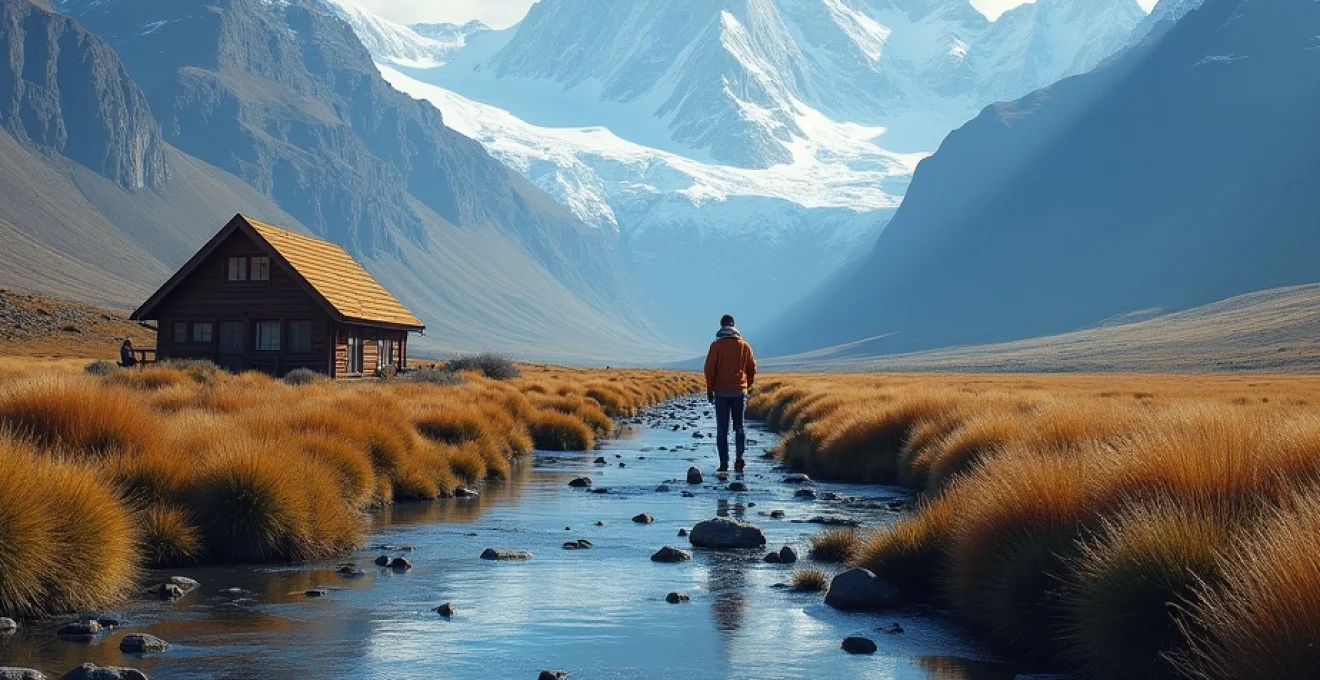
Patagonia stands as one of Earth’s last great wildernesses, where towering granite spires pierce endless skies and ancient glaciers carve through pristine valleys. This vast region, stretching across southern Chile and Argentina, offers intrepid travellers an unparalleled opportunity to experience nature at its most raw and spectacular. From the iconic Torres del Paine to the remote fjords of Tierra del Fuego, every corner of Patagonia promises adventure that will challenge your limits and reward your spirit.
Planning an expedition to these remote landscapes requires meticulous preparation, extensive logistical coordination, and a deep understanding of the region’s unique challenges. The sheer scale of Patagonia – covering over one million square kilometres – means that successful exploration demands careful consideration of weather patterns, transportation networks, and emergency protocols. Whether you’re planning a multi-week trekking expedition or a shorter wildlife observation tour, the key to unlocking Patagonia’s treasures lies in thorough advance planning.
Essential Pre-Departure logistics for patagonian wilderness expeditions
Successful Patagonian adventures begin months before departure, with comprehensive preparation addressing everything from documentation requirements to equipment procurement. The region’s extreme remoteness and unpredictable weather conditions make advance planning not just advisable but absolutely essential for expedition safety and success.
Visa requirements and border crossing protocols between chile and argentina
Most Western passport holders can enter both Chile and Argentina without advance visas, receiving tourist stamps valid for 90 days upon arrival. However, crossing between these countries requires specific documentation procedures that vary depending on your chosen routes. When travelling by road between the nations, you’ll encounter multiple border crossing points, each with distinct operating hours and processing requirements.
The most commonly used crossings include Paso Cardenal Samoré near Bariloche, Paso Huemules near El Calafate, and the remote Paso Río Don Guillermo accessing Torres del Paine. Border officials may request proof of onward travel, accommodation bookings, or financial means, particularly during peak season when crossings experience heavy traffic. Always carry multiple copies of your passport, as border guards occasionally retain documents temporarily during processing.
For those planning extended expeditions exceeding 90 days, visa extensions can be obtained from immigration offices in major cities like Punta Arenas or El Calafate. The process typically takes 2-3 business days and costs approximately $100 USD equivalent in local currency.
Weather pattern analysis and seasonal timing strategies
Patagonia’s notorious weather systems create some of the planet’s most challenging expedition conditions, with wind speeds regularly exceeding 100 kilometres per hour and temperature fluctuations spanning 30 degrees Celsius within single days. The optimal expedition window runs from October through April, corresponding to the Southern Hemisphere’s spring and summer seasons.
December through February represents peak season, offering the most stable weather patterns but also the highest accommodation costs and trail congestion.
Shoulder seasons provide excellent alternatives for experienced adventurers. November offers spectacular spring conditions with fewer crowds, while March delivers autumn’s golden hues before winter’s arrival. April through September brings harsh winter conditions that close most high-altitude routes, though this period offers unique opportunities for ice climbing and glacier exploration near coastal areas.
Wind patterns follow predictable cycles, with westerly storms typically lasting 2-3 days followed by brief calm periods. Professional expedition planners recommend building flexibility into itineraries, allowing extra days for weather delays that frequently ground flights and close mountain passes.
Equipment procurement for Sub-Antarctic climate conditions
Patagonia’s extreme weather demands equipment capable of withstanding sub-Antarctic conditions, even during summer months. Base layer systems should include merino wool or synthetic materials that retain insulation when wet, as precipitation can occur without warning across all seasons.
Essential gear includes four-season mountaineering tents rated for winds exceeding 80 kilometres per hour, sleeping bags rated to -10°C minimum, and waterproof shell systems with sealed seams. Footwear requirements vary by activity but should always include waterproof hiking boots with ankle support plus gaiters for river crossings and loose scree.
Many specialised items prove difficult to source locally, particularly larger sizes or specific technical specifications. Electronics require special consideration due to extreme temperature fluctuations and high humidity levels near glacial areas. Solar charging systems and battery banks provide essential power for navigation devices and emergency communications in areas lacking electrical infrastructure.
International flight routing through santiago and buenos aires gateways
Santiago and Buenos Aires serve as primary international gateways for Patagonian expeditions, each offering distinct advantages depending on your planned routing. Santiago provides more efficient access to Chilean Patagonia’s western regions, including Torres del Paine and the Carretera Austral, while Buenos Aires offers superior connections to Argentina’s eastern Patagonian destinations.
Domestic flight networks from these hubs reach most major Patagonian centres, though booking flexibility remains limited due to capacity constraints and seasonal schedule variations. Flight cancellations occur frequently due to weather conditions, particularly affecting smaller airports like El Calafate and Punta Arenas.
Alternative routing strategies might include flying into one country and departing from the other, maximising overland exploration opportunities while minimising backtracking. This approach requires careful coordination of visa requirements and potential additional costs for one-way international tickets.
Transportation networks and access points across patagonian terrain
Patagonia’s transportation infrastructure reflects the region’s challenging geography, with vast distances between settlements connected by a sparse network of roads, ferry services, and small aircraft operations. Understanding these transportation options and their limitations forms a crucial foundation for expedition planning, as your choice of access methods will significantly influence your route options and timeline flexibility.
Ruta 40 navigation and vehicle rental considerations in argentina
Argentina’s legendary Ruta 40 stretches over 5,000 kilometres from north to south, with its Patagonian section offering some of South America’s most spectacular driving experiences. This route connects major destinations like Bariloche, El Calafate, and El Chaltén while traversing landscapes that shift dramatically from lake-dotted foothills to windswept steppes.
Vehicle rental in Patagonia requires careful consideration of terrain demands and insurance coverage. Standard passenger vehicles suffice for main highways, but gravel roads approaching many national parks necessitate higher-clearance vehicles with reinforced tyres. Unlimited kilometre policies prove essential given the vast distances between fuel stations and accommodation options.
International driving permits remain mandatory for most rental companies, while cross-border travel requires specific authorisation and additional insurance coverage. Fuel availability becomes increasingly sparse in remote sections, with stations sometimes closed unexpectedly or experiencing supply shortages during peak season.
Carretera austral road conditions and fuel station mapping
Chile’s Carretera Austral represents one of the world’s most remote highway systems, connecting Puerto Montt in the north to Villa O’Higgins in the south through over 1,200 kilometres of largely unpaved mountain roads. This route provides access to pristine national parks and remote communities otherwise unreachable by conventional transportation.
Road conditions vary dramatically with weather and season, ranging from smooth gravel in dry conditions to challenging mud and washouts during rainy periods. Recent infrastructure improvements have paved significant sections, though many stretches remain gravel with steep gradients and blind corners requiring cautious navigation.
Fuel stations operate sporadically along the Carretera Austral, with distances exceeding 200 kilometres between reliable refuelling opportunities. Emergency fuel supplies and detailed station mapping become essential planning elements, particularly for vehicles with limited range or high fuel consumption.
Ferry services through strait of magellan and beagle channel
Ferry networks provide essential transportation links across Patagonia’s complex waterway systems, particularly around Tierra del Fuego and the Chilean fjords. The Strait of Magellan crossing near Punta Arenas operates year-round with regular passenger and vehicle services, though weather conditions can cause delays or cancellations.
Advance reservations prove essential during peak season, as ferry capacity limitations can strand travellers for days when services reach capacity.
Longer ferry routes through the Chilean fjords offer unique expedition opportunities, connecting Puerto Montt with Puerto Natales via a multi-day coastal voyage. These services operate seasonal schedules with limited cabin availability, requiring bookings months in advance for popular departure dates.
Smaller ferry crossings at locations like Río Baker and Lago General Carrera provide essential links along the Carretera Austral, though these services operate limited schedules subject to weather and seasonal variations.
Charter flight options to remote estancias and research stations
Charter aviation services unlock access to Patagonia’s most remote locations, from isolated estancias deep in the interior to research stations near major ice fields. These flights typically operate from regional hubs like El Calafate, Punta Arenas, or Puerto Natales using small aircraft capable of landing on short grass strips.
Weather dependency significantly affects charter operations, with pilots requiring specific visibility and wind conditions for safe mountain flying. Flexible scheduling becomes essential when incorporating charter flights into expedition planning, as delays of several days commonly occur during unstable weather periods.
Costs for charter services vary widely based on distance, aircraft type, and seasonal demand, ranging from $200-500 USD per person for short transfers to over $2,000 USD per person for remote glacier access flights.
Accommodation infrastructure in patagonia’s wilderness zones
Patagonia’s accommodation landscape reflects the region’s remote character, ranging from luxury eco-lodges to basic mountain refuges and designated camping areas. Understanding available lodging options and their booking requirements proves crucial for expedition planning, as accommodation scarcity during peak season can severely limit itinerary flexibility.
Mountain refuges scattered throughout major trekking areas like Torres del Paine and around Mount Fitz Roy provide essential shelter for multi-day expeditions. These facilities typically offer dormitory-style accommodation with basic meals, though advance reservations remain mandatory during peak season. Refuge booking systems open on specific dates each year, often filling completely within hours for popular trekking routes.
Estancia stays offer unique cultural immersion opportunities while providing comfortable accommodation in remote areas. Working cattle and sheep ranches throughout Patagonia welcome visitors for overnight stays, meals, and participation in traditional gaucho activities. These experiences provide insights into regional culture while supporting local communities economically.
Wild camping remains legal in many areas outside national parks, though campsite selection requires knowledge of private property boundaries and environmental regulations. Leave No Trace principles become especially important in pristine wilderness areas where human impact can persist for decades in the harsh climate conditions.
Urban accommodation in gateway towns like El Calafate, Puerto Natales, and El Chaltén ranges from backpacker hostels to luxury hotels, though availability tightens significantly during peak season. Many establishments close completely during winter months, further limiting options for off-season travel.
Technical route planning through torres del paine and los glaciares
The crown jewels of Patagonian adventure lie within the world-renowned national parks of Torres del Paine and Los Glaciares, each offering distinct challenges and rewards for expedition planning. These protected areas contain some of South America’s most spectacular landscapes while maintaining strict regulations designed to preserve their pristine character for future generations.
W circuit trail logistics and refugio booking systems
The W Circuit in Torres del Paine represents one of Patagonia’s most popular trekking routes, requiring sophisticated logistical coordination due to its complex booking system and limited infrastructure. This five-day trek connects the park’s three major valleys through a series of day hikes linking mountain refuges and designated camping areas.
Booking accommodations along the W Circuit requires navigating two separate reservation systems managed by different concession companies. Advanced planning becomes essential as popular dates fill months ahead of departure, particularly during peak season from December through February.
Trail logistics involve careful weight management and resupply planning, as refuge meals prove expensive while camping requires carrying all food and equipment. Weather contingency planning remains crucial, with high winds regularly forcing trail closures and refuge evacuations during severe storm systems.
Navigation along established trails presents minimal technical challenges, though weather conditions can reduce visibility to mere metres during storm events. GPS devices and detailed topographic maps provide essential backup navigation tools when weather obscures traditional landmarks.
Fitz roy base camp approaches via el chaltén
Mount Fitz Roy’s dramatic spires dominate the landscape around El Chaltén, offering multiple approach routes to established base camps that serve as staging areas for technical climbing attempts or scenic day hikes. The most popular approach follows the Laguna de los Tres trail, ascending gradually through diverse ecosystems before reaching spectacular viewpoints.
Trail conditions vary significantly with season and recent weather patterns, ranging from well-maintained paths during dry periods to challenging mud and stream crossings following heavy precipitation. Early morning departures prove essential for avoiding afternoon wind storms that regularly develop around the Fitz Roy massif.
Base camp facilities remain minimal, consisting of designated camping areas with basic toilet facilities but no potable water or shelter. Climbers and trekkers must carry all necessary supplies while adhering to strict environmental regulations designed to minimise human impact in this pristine wilderness area.
Alternative approach routes like the Laguna Torre trail offer different perspectives on the Fitz Roy group while distributing visitor pressure across multiple access points. These routes typically require similar preparation and equipment considerations but may offer better weather windows depending on prevailing wind directions.
Perito moreno glacier access points and ice trekking permits
Perito Moreno Glacier stands among Patagonia’s most accessible ice formations, offering multiple viewing and exploration opportunities from established infrastructure managed by Argentina’s national park system. Standard viewing platforms provide spectacular glacier perspectives without requiring special permits or technical equipment.
Ice trekking opportunities range from short walks on glacier margins to full-day expeditions exploring crevasse systems and ice formations deep within the glacier complex. Professional guide services remain mandatory for all on-ice activities, with operators providing specialised equipment including crampons, ice axes, and safety harnesses.
Glacier conditions change constantly due to ice movement and calving events, requiring flexible planning and acceptance that specific routes may become inaccessible due to safety concerns.
Advance reservations prove essential for ice trekking activities, particularly during peak season when tour capacity limitations can result in multi-day waiting periods. Alternative glacier access points like Spegazzini or Upsala glaciers offer similar experiences with potentially better availability for last-minute bookings.
Peninsula valdés wildlife observation corridor planning
Peninsula Valdés creates a unique wildlife observation corridor along Argentina’s Atlantic coast, supporting massive concentrations of marine mammals during specific seasonal windows. Planning wildlife viewing expeditions requires careful timing coordination with animal migration patterns and breeding cycles.
Southern right whale observations peak from June through December, when these magnificent mammals gather in protected bays for mating and calving activities. Shore-based viewing provides excellent opportunities without requiring boat tours, though vessel excursions offer closer encounters and better photographic opportunities.
Elephant seal colonies reach maximum activity during September and October breeding seasons, while penguin colonies maintain presence from September through March with peak numbers typically occurring in December and January. Each species requires different approach strategies and viewing distances to minimise disturbance to natural behaviours.
Accommodation options on Peninsula Valdés remain limited to a few estancias and small lodges, making advance reservations essential for multi-day wildlife observation expeditions. Day trip options from Puerto Madryn provide alternative access though with reduced flexibility for optimal wildlife encounter timing.
Risk assessment and emergency protocols for remote patagonian travel
Patagonia’s extreme remoteness and harsh environmental conditions create unique safety challenges that require comprehensive risk assessment and emergency protocol development. Unlike more developed destinations where rescue services remain readily available, Patagonian expeditions often operate days or weeks from professional medical assistance, making self-reliance and preventive planning absolutely essential for expedition safety.
Weather-related emergencies represent the most common serious threats to Patagonian expeditions, with sudden temperature drops, extreme winds, and flash flooding creating potentially life-threatening conditions within minutes. Emergency shelter systems must be accessible at all times during outdoor activities, including lightweight bivouac equipment capable of protecting against hurricane-force winds and sub-freezing temperatures.
Communication planning becomes critical in areas
where cellular networks remain nonexistent or unreliable. Satellite communication devices like emergency beacons or two-way satellite messengers provide essential lifelines, though these systems require clear sky access that may be compromised in deep valleys or dense forest environments. Professional expedition leaders recommend carrying multiple communication methods and testing all devices before departure to ensure functionality in extreme conditions.
Medical emergencies in remote Patagonian locations demand advanced first aid capabilities and evacuation planning protocols. Expedition members should possess wilderness first aid certification at minimum, with longer expeditions requiring at least one person with wilderness first responder or emergency medical technician training. Comprehensive medical kits must address everything from minor cuts and altitude sickness to hypothermia treatment and traumatic injury stabilisation.
Evacuation insurance becomes non-negotiable for Patagonian expeditions, as helicopter rescues from remote locations can cost $20,000-50,000 USD depending on weather conditions and accessibility. Many standard travel insurance policies exclude coverage for mountaineering activities or remote area rescues, requiring specialised adventure travel insurance policies that specifically cover high-risk outdoor activities.
River crossings present particularly dangerous hazards throughout Patagonia, where glacial melt and unpredictable rainfall can transform gentle streams into raging torrents within hours.
Navigation redundancy protocols should include multiple GPS devices with fresh batteries, detailed topographic maps in waterproof cases, and traditional compass navigation skills. Patagonia’s extreme magnetic declination can affect compass readings significantly, requiring local magnetic variation adjustments that vary across different regions of the peninsula.
Budget allocation and cost management for extended patagonian expeditions
Patagonian expedition costs reflect the region’s remoteness and limited infrastructure, with expenses typically ranging from $150-400 USD per person per day depending on accommodation choices, transportation methods, and activity selections. Understanding cost structures and implementing effective budget management strategies enables more adventurous expeditions while controlling overall expenses.
Accommodation represents the largest single expense category for most Patagonian expeditions, particularly in popular destinations like Torres del Paine where refuge prices can exceed $100 USD per night including basic meals. Strategic camping selections reduce accommodation costs dramatically, though camping requires significant equipment investment and increased logistical complexity.
Transportation costs vary enormously based on routing choices and timing flexibility. Rental vehicles provide maximum flexibility but require substantial upfront deposits plus comprehensive insurance coverage for cross-border travel. Bus networks offer more economical alternatives though with reduced schedule flexibility and limited access to remote trailheads.
Food provisioning strategies significantly impact overall expedition budgets, with restaurant meals in tourist areas commanding premium prices while self-catering requires advance planning and equipment weight considerations. Bulk food purchases in gateway cities like Punta Arenas or El Calafate provide substantial savings over purchasing supplies at remote locations where selection remains limited and prices inflated.
Activity and permit fees add substantial costs to Patagonian expeditions, with national park entrance fees, guided tour costs, and specialised equipment rentals quickly accumulating. Group discounts often apply for larger expeditions, making cost-sharing arrangements attractive for budget-conscious adventurers willing to coordinate with other travellers.
Currency exchange considerations become crucial given Argentina’s complex monetary situation and Chile’s stronger peso. US dollar cash provides the most reliable exchange medium throughout Patagonia, though carrying large amounts of cash creates security concerns in urban areas. ATM availability remains sporadic outside major towns, requiring advance cash planning for extended expeditions.
Emergency fund allocation should constitute at least 20-30% of total expedition budgets, accounting for weather delays, equipment replacements, and unexpected transportation costs. Flight cancellations and accommodation extensions due to weather conditions represent common budget overruns that can double expedition costs without adequate contingency planning.
Seasonal timing significantly affects cost structures, with peak season rates from December through February commanding 50-100% premiums over shoulder season prices. November and March offer optimal cost-weather balance for budget-conscious expeditions, providing reasonable weather conditions while avoiding peak season price inflation.
Equipment rental versus purchase decisions require careful analysis based on expedition length and future travel plans. Local rental options exist for specialised items like mountaineering gear and camping equipment, though quality and availability vary significantly between locations. International shipping of personal equipment to gateway cities can provide cost-effective alternatives for extended expeditions requiring specific gear configurations.
Insurance costs often represent overlooked budget categories that become essential for Patagonian expeditions. Comprehensive adventure travel insurance, equipment coverage, and evacuation insurance can add $200-500 USD to expedition costs but provide crucial financial protection against potentially devastating emergency expenses.