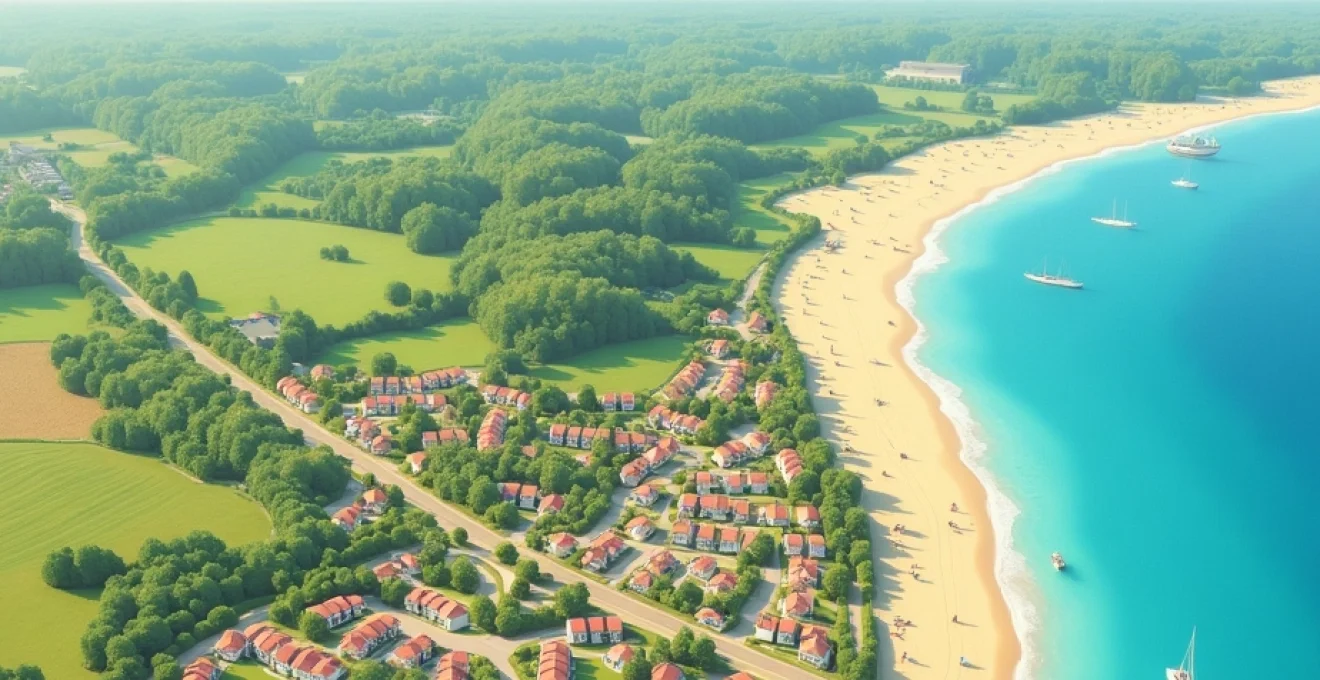
Nestled off France’s Atlantic coast, Île de Ré presents a captivating blend of pristine beaches, historic fortifications, and cycling paths that wind through salt marshes and vineyards. This charming island, connected to the mainland by the impressive Pont de Ré, attracts over two million visitors annually seeking an authentic French coastal experience. Choosing the right campsite on this UNESCO World Heritage site can transform your holiday from ordinary to extraordinary, as each of the island’s ten communes offers distinct advantages depending on your preferences for terrain, amenities, and accessibility to attractions.
The decision-making process involves balancing numerous factors, from microclimate variations and seasonal booking patterns to proximity to cycling infrastructure and maritime activities. Understanding these elements enables informed choices that align with your holiday objectives, whether you’re seeking family-friendly facilities, romantic retreats, or adventure-focused accommodations.
Geographical zones and terrain analysis across île de ré’s ten communes
Île de Ré’s distinctive geography creates four distinct camping zones, each offering unique advantages and characteristics that influence the overall holiday experience. The island’s 30-kilometre length and varying width of 5 kilometres provide diverse landscapes, from wild coastal dunes to protected agricultural areas. Understanding these geographical nuances proves essential when selecting accommodation that matches your preferred holiday style.
Northern coastline campsites: Ars-en-Ré to la flotte maritime exposure
The northern coastline represents the island’s most dramatic maritime environment, where Atlantic swells meet rugged shorelines. Campsites in Ars-en-Ré and Les Portes-en-Ré benefit from spectacular ocean views but experience stronger winds, particularly beneficial for windsurfing and kitesurfing enthusiasts. The terrain here features natural windbreaks formed by tamarix hedges and pine groves, creating sheltered microzones within otherwise exposed locations.
La Flotte’s positioning offers a compromise between maritime exposure and protection, with its harbour providing calmer waters for families with young children. The commune’s campsites typically feature sandy soil ideal for tent pegs, while benefiting from the village’s proximity to shops, restaurants, and the ferry connections to nearby islands. Wind patterns along this stretch favour afternoon breezes that naturally cool camping areas during summer peak temperatures.
Central agricultural belt: Sainte-Marie-de-Ré and le Bois-Plage inland options
The central communes present a markedly different camping environment, characterised by agricultural landscapes and reduced maritime influence. Sainte-Marie-de-Ré’s inland position provides natural protection from coastal winds while maintaining easy access to both northern and southern shores via the island’s comprehensive cycling network. These locations typically offer larger pitch sizes and more established vegetation, creating natural privacy between accommodations.
Le Bois-Plage serves as the island’s demographic centre, where campsites benefit from superior infrastructure and proximity to essential services. The terrain here features a mixture of sandy and clay soils, providing excellent drainage during occasional Atlantic storms while supporting mature tree coverage that creates natural cooling during summer months. Microclimate conditions in this zone often register temperatures 2-3 degrees cooler than coastal areas during peak summer periods.
Southern coastal strip: Rivedoux-Plage to Saint-Clément seaside positioning
The southern coastline provides the island’s most accessible camping options, with Rivedoux-Plage serving as the first commune encountered when crossing the Pont de Ré. This positioning offers practical advantages for arrivals and departures while providing immediate access to expansive sandy beaches. The terrain along this strip features gentle gradients and established coastal vegetation that provides natural windbreaks without obstructing sea views.
Saint-Clément-des-Baleines, positioned at the island’s western extremity, offers the most dramatic coastal camping experience. Home to the famous Phare des Baleines lighthouse, this area provides access to both wild Atlantic beaches and the protected waters of the Fier d’Ars nature reserve. Campsites here experience the most pronounced tidal variations, creating diverse beach environments throughout each day.
Eastern peninsula: la Couarde-sur-Mer sheltered bay advantages
La Couarde-sur-Mer’s unique geographical position creates a naturally sheltered camping environment within a bay formation that moderates both wind and wave action. This location proves particularly attractive for families with young children, as the protected waters remain calm even during periods of Atlantic storm activity. The terrain features fine sandy beaches that transition gradually into the surrounding pine forests.
The commune’s campsites benefit from morning sun exposure while receiving natural afternoon shade from established maritime pine groves. Geological conditions here support excellent drainage and provide stable foundations for both traditional camping pitches and permanent accommodation structures. The sheltered position also creates ideal conditions for water sports requiring calmer conditions, such as paddleboarding and kayaking.
Campsite classification systems and accommodation standards on île de ré
France’s rigorous campsite classification system ensures consistent quality standards across Île de Ré’s 32 registered camping establishments. The star rating system, administered by Atout France, evaluates facilities based on 174 criteria covering accommodation quality, sanitary facilities, services, and recreational amenities. Understanding these classifications enables informed decisions about expected comfort levels and available services at different price points.
Étoiles de france star rating criteria for island camping facilities
The Étoiles de France system rates campsites from one to five stars, with specific requirements becoming increasingly stringent at higher levels. Three-star establishments on Île de Ré must provide individual sanitary facilities for every six pitches, while four-star sites require heated sanitary blocks and reception services available minimum 12 hours daily. Five-star campsites, representing the island’s premium offerings, mandate concierge services, spa facilities, and accommodation units meeting hotel-standard specifications.
Quality assessment covers pitch dimensions, with two-star sites requiring minimum 80 square metres per standard pitch, increasing to 120 square metres for five-star establishments. Sanitary facility standards progress from basic shared facilities at one-star level to private bathroom suites in premium mobile home accommodations at five-star sites. The classification also evaluates accessibility provisions, environmental management practices, and staff multilingual capabilities.
Municipal campsite specifications: camping de la plage vs private establishments
Municipal campsites on Île de Ré operate under different regulatory frameworks compared to private establishments, often providing more affordable options with basic but adequate facilities. These sites typically focus on providing excellent value for money while maintaining environmental sustainability practices. Municipal operations generally feature larger pitch allocations and more flexible booking policies, particularly beneficial for last-minute reservations during shoulder seasons.
Private establishments tend to offer enhanced services and amenities, justified by higher pricing structures but delivering superior comfort levels. The distinction becomes particularly apparent in areas such as entertainment programming, dining options, and recreational facilities. Investment capabilities of private operators enable more frequent facility upgrades and innovative accommodation options, while municipal sites focus on maintaining accessible pricing for diverse visitor demographics.
Glamping infrastructure: safari tents and mobile home pitch dimensions
The glamping sector on Île de Ré has experienced significant growth, with establishments offering safari tents, wooden cabins, and luxury mobile homes that eliminate traditional camping preparation requirements. Safari tent accommodations typically feature 25-35 square metre interiors with separate sleeping and living areas, while premium wooden cabins extend to 45-60 square metres with private terraces and enhanced insulation for year-round occupancy.
Mobile home villages represent the most popular glamping option, with units ranging from compact 20 square metre models to luxury 80 square metre family accommodations. Infrastructure requirements for these installations include hard-standing foundations, individual electrical connections, and private parking areas. Many sites now offer semi-integrated outdoor living spaces with covered terraces and outdoor kitchenettes that extend usable accommodation areas significantly.
Naturist camping protocols at CHM montamer naturist resort
Île de Ré’s naturist camping facility operates under specific protocols that ensure comfortable experiences for both newcomers and experienced naturist holidaymakers. The resort maintains designated areas for different activities, with clothing-optional zones clearly demarcated from areas where clothing remains mandatory, such as dining facilities and reception areas. Accommodation options include both traditional pitches and rental accommodations designed with enhanced privacy considerations.
The facility’s positioning near the Couny naturist beach provides direct access to designated swimming and sunbathing areas. Resort protocols emphasise respect, hygiene, and environmental responsibility, with specific guidelines covering photography, appropriate behaviour, and facility usage. The establishment maintains high cleanliness standards and provides orientation services for first-time visitors to ensure comfortable integration into the naturist community environment.
Seasonal booking algorithms and peak period demand forecasting
Campsite booking patterns on Île de Ré follow predictable seasonal trends influenced by French school holidays, weather patterns, and regional festival calendars. Advanced booking algorithms now analyse historical data, weather forecasting, and economic indicators to optimise availability and pricing strategies. Understanding these patterns enables strategic booking timing that can result in significant cost savings while securing preferred accommodation types.
Peak demand occurs during the July-August period, when campsite occupancy rates regularly exceed 95% across the island. Secondary peaks coincide with Easter holidays and October half-term breaks, when mild weather and reduced crowds attract discerning holidaymakers. Dynamic pricing systems implemented by major campsite chains adjust rates based on demand forecasting, with price variations of up to 300% between peak and off-season periods for identical accommodations.
Early booking incentives typically offer 15-25% discounts for reservations confirmed before January 31st, while last-minute availability rarely occurs during peak seasons. The algorithms also factor in event-driven demand, such as the annual Fête de la Musique and various sailing regattas that create localised booking spikes. Cancellation patterns show increased flexibility during uncertain economic periods, with some establishments implementing flexible booking policies to maintain reservation confidence.
Statistical analysis reveals that booking 4-6 months in advance provides optimal balance between selection availability and promotional pricing opportunities across all accommodation categories on Île de Ré.
Transportation logistics and pont de ré bridge access strategies
The Pont de Ré serves as the island’s sole vehicular access point, creating specific logistical considerations for campsite selection and arrival planning. This 2.9-kilometre toll bridge experiences significant congestion during peak travel periods, with weekend changeover days generating queues that can extend waiting times to over two hours. Strategic arrival timing and alternative transportation methods can dramatically improve the initial holiday experience.
Toll charges vary seasonally, ranging from €9 for standard vehicles during off-peak periods to €16 during summer months. Annual passes provide economic benefits for visitors planning multiple trips, while residents and frequent visitors can access reduced-rate options. Traffic flow analysis indicates optimal crossing times occur before 8 AM or after 7 PM on changeover days, with mid-week arrivals experiencing minimal delays regardless of time.
Public transportation alternatives include direct bus services from La Rochelle to various island communes, eliminating bridge delays and parking concerns. Many campsites now offer bicycle rental services that enable car-free exploration of the island’s 110 kilometres of dedicated cycling paths. Parking availability varies significantly between campsites, with some establishments charging additional fees for vehicle storage while others include parking in basic pitch prices.
Ferry connections from several island ports provide access to neighbouring islands and mainland destinations without requiring bridge transit. These services prove particularly valuable for day excursions to Île d’Aix or Oléron, while reducing vehicle dependency during the stay. Some premium campsites offer shuttle services to ferry terminals and major beaches, further reducing transportation complexities.
Microclimate assessment and weather pattern impact on campsite selection
Île de Ré’s maritime climate creates diverse microclimates across the island that significantly influence camping comfort levels and activity possibilities. Understanding these variations enables optimal campsite selection based on specific weather preferences and seasonal timing. The island’s relatively flat topography amplifies coastal influences while creating subtle but important variations in temperature, humidity, and wind exposure across different zones.
Atlantic ocean influence on temperature regulation across different zones
The surrounding Atlantic Ocean creates a natural temperature regulation system that moderates both summer heat and winter cold across the island. Coastal campsites experience the most pronounced oceanic influence, with summer temperatures rarely exceeding 28°C even during continental heatwaves. Thermal regulation effects become less pronounced in inland areas, where temperatures can vary by 3-5 degrees compared to coastal locations during extreme weather events.
Sea breezes typically develop during afternoon periods, providing natural cooling that enhances comfort levels in camping areas. This phenomenon proves most beneficial at campsites positioned to capture prevailing southwesterly winds while remaining protected from stronger northwesterly gales. Evening temperature drops occur more gradually near the coast, extending comfortable outdoor activity periods well into summer evenings.
Prevailing westerly wind patterns and natural windbreak positioning
Understanding wind patterns across Île de Ré proves crucial for campsite selection, as exposure levels dramatically affect comfort during various seasonal conditions. Prevailing westerly winds provide beneficial cooling during summer months but can create challenging conditions for tent camping during autumn and spring periods. Natural windbreak positioning utilising established vegetation, dune formations, and built structures significantly influences pitch-level comfort.
Campsites on the island’s eastern shores typically experience reduced wind exposure while maintaining access to maritime influences. The most sheltered locations occur in bay areas and behind established pine groves, where mature vegetation creates effective wind barriers without completely blocking airflow. Strategic pitch selection within individual campsites can provide additional protection by utilising natural features and permanent structures.
Salt marsh humidity levels in fier d’ars nature reserve proximity
The extensive salt marsh systems surrounding the Fier d’Ars nature reserve create distinct humidity patterns that influence camping comfort in nearby establishments. These wetland areas generate increased morning humidity levels that can affect drying conditions for camping equipment and laundry. Humidity variations become most pronounced during calm weather periods when air circulation remains minimal.
However, salt marsh proximity offers significant compensatory benefits, including enhanced wildlife observation opportunities and spectacular sunrise/sunset viewing conditions. The unique ecosystem creates natural insect control through bird activity while providing educational opportunities for families interested in environmental exploration. Many visitors consider the slight humidity increase acceptable given the exceptional natural environment access these locations provide.
Vineyard microclimate effects in Saint-Martin-de-Ré hinterland
The established vineyard areas surrounding Saint-Martin-de-Ré create localised microclimate conditions that benefit nearby camping establishments. Vineyard cultivation requires specific environmental conditions that often align with enhanced camping comfort, including good drainage, moderate wind exposure, and optimal sun orientation. Agricultural landscape influences typically result in slightly warmer daytime temperatures and more stable evening conditions.
These areas also benefit from reduced humidity levels compared to coastal zones, creating favourable conditions for outdoor dining and evening activities. The vineyard landscape provides attractive visual environments while offering opportunities for wine tasting and cultural experiences that enhance the overall holiday experience. Seasonal variations in vineyard activity create different atmospheric conditions throughout the year, from vibrant growing seasons to peaceful dormant periods.
Meteorological data demonstrates that campsites positioned within 2 kilometres of established vineyards experience 15-20% fewer days with problematic humidity levels compared to purely coastal locations.
Proximity calculations to UNESCO world heritage fortifications and cycling infrastructure
The strategic positioning of your chosen campsite relative to Île de Ré’s UNESCO World Heritage fortifications and cycling infrastructure significantly impacts your ability to explore the island’s cultural and recreational offerings efficiently. Saint-Martin-de-Ré’s Vauban fortifications, designated as World Heritage sites in 2008, represent the island’s most significant historical attraction and serve as central reference points for navigation and activity planning.
Distance calculations from various campsites to key fortification sites reveal important accessibility patterns. Establishments within 3 kilometres of Saint-Martin-de-Ré provide walking access to the historic citadel and harbour area, while locations beyond 5 kilometres typically require cycling or vehicle transport. Cycling infrastructure quality varies significantly across different routes, with dedicated cycle paths providing safer and more enjoyable access compared to shared road sections.
The island’s comprehensive cycling network connects all major campsites to the fortification sites through well-maintained paths that accommodate various skill levels and bicycle types. Premium routes feature dedicated cycling bridges, underground passages, and separated lanes that eliminate interaction
with vehicle traffic during peak periods.
The fortification access routes also connect to secondary historical sites including the Abbaye des Châteliers ruins and various Martello towers distributed across the island. Route planning algorithms integrated into modern cycling apps now calculate optimal touring circuits that combine multiple heritage sites with scenic coastal sections, maximising cultural exposure while minimising travel time and effort.
Campsite proximity to cycle rental facilities varies considerably, with some establishments offering on-site bicycle services while others require transport to nearby rental centres. Premium campsites increasingly provide electric bicycle options that extend touring range and reduce physical demands, particularly beneficial for exploring the island’s more distant fortification sites. The average cycling time from centrally located campsites to all major heritage sites remains under 45 minutes, making comprehensive historical exploration feasible regardless of accommodation choice.
| Fortification Site | Average Distance from Major Campsites | Cycling Time | Difficulty Level |
|---|---|---|---|
| Saint-Martin-de-Ré Citadel | 2-8 kilometres | 15-35 minutes | Easy |
| La Flotte Fortifications | 3-12 kilometres | 20-45 minutes | Easy-Moderate |
| Abbaye des Châteliers | 5-15 kilometres | 25-50 minutes | Moderate |
| Phare des Baleines | 8-20 kilometres | 30-60 minutes | Moderate |
The cycling infrastructure quality directly correlates with heritage site accessibility, as major routes receive priority maintenance and feature enhanced signage systems. Digital integration through QR codes at key intersections provides multilingual information about nearby historical sites, while GPS-enabled audio guides offer contextual commentary during cycling tours. These technological enhancements significantly improve the educational value of heritage site visits while reducing navigation challenges for international visitors.
Strategic campsite selection within 5 kilometres of Saint-Martin-de-Ré provides optimal access to 80% of the island’s UNESCO World Heritage fortifications through high-quality cycling infrastructure.
Advanced booking considerations should account for heritage site seasonal variations, as some fortifications offer extended opening hours during peak periods while maintaining restricted access during winter months. The combination of campsite location, cycling infrastructure access, and heritage site operational schedules creates complex optimisation scenarios that reward careful planning with enhanced cultural experiences and reduced transportation stress throughout your Île de Ré holiday.