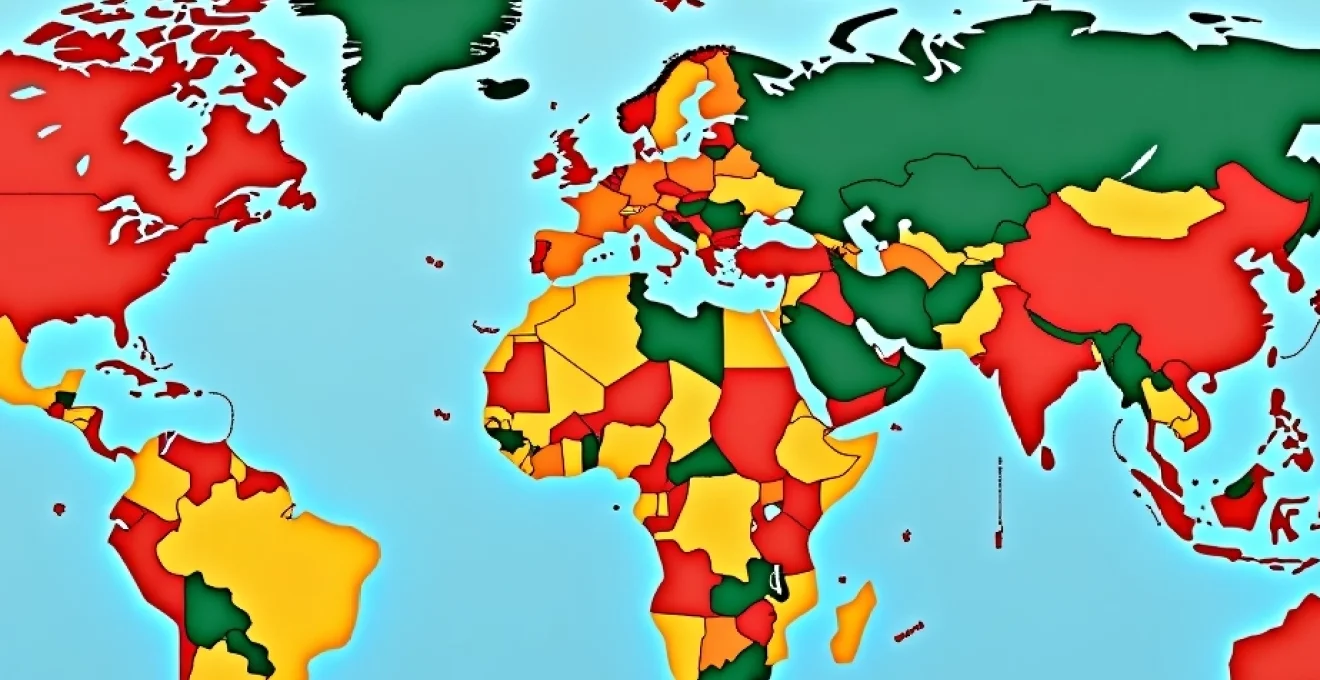
International travel has become increasingly accessible, yet staying connected whilst abroad remains a significant challenge for millions of travellers worldwide. Traditional roaming charges can transform a modest holiday budget into a financial nightmare, with bills often reaching hundreds of pounds for just a few days of basic mobile usage. International prepaid SIM cards have emerged as a sophisticated solution, offering travellers unprecedented control over their communication costs whilst maintaining reliable connectivity across multiple countries.
These innovative mobile solutions represent a fundamental shift in how we approach international communications. Rather than relying on expensive home network roaming agreements, international prepaid SIM cards leverage strategic partnerships with local operators worldwide, providing access to domestic rates and eliminating the uncertainty of variable roaming charges. For business travellers, digital nomads, and holidaymakers alike, these cards offer the perfect balance between cost control and communication reliability.
Understanding international prepaid SIM card technology and network compatibility
The foundation of international prepaid SIM card functionality lies in sophisticated network technology that enables seamless connectivity across diverse mobile infrastructures. Modern international SIM cards utilise advanced programming to store multiple network profiles, allowing automatic connection to the strongest available signal in any given location. This technology represents a significant advancement from traditional single-network SIM cards, which are restricted to their home operator’s coverage area.
GSM, CDMA, and LTE band frequency requirements for global roaming
Global mobile networks operate on different frequency bands, making compatibility a crucial consideration for international travellers. GSM networks, predominantly used across Europe, Asia, and Africa, operate on 900MHz and 1800MHz frequencies, whilst North American networks typically utilise 850MHz and 1900MHz bands. International prepaid SIM cards must support multiple frequency bands to ensure compatibility across different regions, with modern cards supporting up to 20 different LTE bands for comprehensive global coverage.
The transition from 3G to 4G and now 5G networks has introduced additional complexity in frequency management. LTE Band 1 (2100MHz) provides widespread coverage across Europe and Asia, whilst Band 4 (1700/2100MHz) is essential for North American connectivity. International SIM card providers carefully select devices and partnerships that support the broadest range of frequency bands, ensuring users maintain connectivity regardless of their destination’s primary network infrastructure.
Multi-imsi technology in vodafone and orange international SIM solutions
Multi-IMSI (International Mobile Subscriber Identity) technology represents one of the most significant innovations in international mobile communications. This sophisticated system allows a single SIM card to store multiple subscriber identities, each associated with different network operators worldwide. When you travel to a new country, your international SIM automatically selects the most appropriate IMSI profile, effectively making your device appear as a local subscriber to that country’s networks.
Vodafone’s international SIM solutions utilise this technology to provide seamless switching between their global partner networks, whilst Orange has developed similar capabilities through their extensive European network infrastructure. This approach eliminates the traditional roaming process, where calls and data must route through your home network, instead enabling direct local network access at significantly reduced costs.
Esim integration with apple iphone and samsung galaxy devices
The emergence of eSIM (embedded SIM) technology has revolutionised international mobile communications, particularly for premium smartphone users. Apple iPhone models from the iPhone XS onwards support dual eSIM functionality, allowing users to maintain their primary number whilst adding international connectivity through a secondary eSIM profile. Samsung Galaxy devices, including the S20 series and newer models, offer similar capabilities with enhanced management interfaces.
eSIM activation typically occurs through QR code scanning , eliminating the need for physical SIM card exchanges. This digital approach provides unprecedented convenience for frequent travellers, enabling instant activation and switching between multiple international profiles. The technology also supports temporary profile storage, allowing users to pre-configure connectivity for multiple destinations before departure.
Network partnership agreements between truphone, GigSky, and local operators
The effectiveness of international prepaid SIM cards depends heavily on strategic partnerships between global providers and local network operators. Truphone has established comprehensive agreements with over 300 mobile operators worldwide, creating a seamless network of connectivity options. These partnerships enable preferential rate structures and priority network access, ensuring international SIM users receive service quality comparable to local subscribers.
GigSky’s partnership model focuses on premium network access, particularly for data services. Their agreements with Tier 1 operators in major business destinations ensure consistent high-speed connectivity for professional users. These partnerships often include dedicated bandwidth allocations and quality-of-service guarantees, addressing the specific needs of business travellers who require reliable connectivity for critical communications and video conferencing applications.
Cost structure analysis of international prepaid SIM cards versus traditional roaming
The financial advantages of international prepaid SIM cards become apparent when examining detailed cost structures compared to traditional roaming services. Standard UK mobile operators typically charge between £5-15 per day for international roaming, with additional per-megabyte charges that can quickly accumulate. These costs compound significantly during extended trips, potentially reaching hundreds of pounds for moderate usage patterns.
International prepaid SIM cards operate on entirely different pricing models, offering transparent rate structures without daily access fees or connection charges. Most providers charge between £0.10-0.50 per minute for international calls and £5-20 per gigabyte for data, depending on the destination country. This pricing transparency allows travellers to accurately budget their communication expenses and avoid the bill shock commonly associated with traditional roaming services.
Data rate comparisons: three mobile vs EE international roaming charges
Three Mobile’s “Go Roam” service offers seemingly attractive international data access, but detailed analysis reveals significant limitations and potential cost traps. Whilst the service provides “free” roaming in designated countries, fair usage policies restrict data consumption to 12GB per month for European destinations and just 5GB for worldwide destinations. Exceeding these limits results in charges of £3 per 100MB, creating substantial unexpected costs for heavy data users.
EE’s international roaming structure follows a more traditional approach, charging £2.47 per day for European access and up to £7.36 per day for worldwide coverage. These daily fees apply regardless of actual usage, meaning even minimal connectivity for emergency purposes incurs full daily charges. A two-week European holiday using EE’s roaming service costs approximately £34.58 in daily access fees alone , before considering additional charges for excess usage beyond included allowances.
Voice call tariffs in High-Cost destinations including switzerland and japan
Switzerland and Japan represent particularly expensive destinations for traditional roaming services, with major UK operators charging premium rates for voice connectivity. Standard roaming rates to Switzerland typically range from £1.20-2.50 per minute for outgoing calls, whilst incoming calls often incur charges of £0.50-1.20 per minute. Japan presents similar cost challenges, with additional complexity arising from limited network compatibility and higher infrastructure costs.
International prepaid SIM cards dramatically reduce these costs through local rate access. Swiss mobile networks offer local calling rates of approximately £0.15-0.25 per minute, representing savings of 80-90% compared to UK roaming charges. Japanese networks provide similar advantages, with local rates enabling extensive voice communication at fractions of traditional roaming costs.
SMS pricing models for business communications in emerging markets
Business communications in emerging markets present unique challenges due to variable network infrastructure and regulatory requirements. Traditional SMS roaming charges to destinations such as India, Brazil, and South Africa typically range from £0.35-0.75 per message, with delivery reliability often compromised by network congestion and routing inefficiencies. These costs become prohibitive for businesses requiring regular communication with local partners, suppliers, or customers.
International prepaid SIM cards address these challenges through local network access, reducing SMS costs to £0.05-0.15 per message whilst improving delivery reliability. Many international SIM providers also offer business-grade messaging services, including delivery confirmations and priority routing, ensuring critical communications reach their intended recipients promptly and reliably.
Hidden fees and connection charges in airalo and nomad SIM packages
Popular eSIM providers like Airalo and Nomad have gained significant market traction through aggressive pricing strategies, but careful examination reveals various hidden costs and limitations. Airalo’s advertised rates often exclude activation fees, which can add £2-5 to each country package. Additionally, their “unlimited” data plans frequently include fair usage policies that throttle speeds after initial consumption limits, effectively creating tiered service levels without transparent disclosure.
Nomad’s pricing structure incorporates connection charges that apply to each new country activation, ranging from £1-3 per destination. These charges compound quickly for multi-country travellers, potentially doubling the effective cost of connectivity. Both providers also implement expiration policies that can result in unused credit forfeiture, creating additional hidden costs for occasional users.
Regional coverage optimisation for specific travel destinations
Regional coverage optimisation requires careful consideration of destination-specific network characteristics and operator partnerships. European travel benefits from extensive network harmonisation through EU regulations, enabling seamless connectivity across 27 member states with consistent service quality. However, significant variations exist between urban and rural coverage, particularly in mountainous regions of Austria, Switzerland, and Norway, where network density decreases substantially outside major population centres.
Asian markets present more complex coverage challenges due to diverse regulatory environments and varying infrastructure development levels. Countries like Singapore and South Korea offer world-class network coverage with extensive 5G deployment, whilst destinations such as Indonesia and the Philippines maintain significant coverage gaps in rural and remote areas. Selecting the appropriate international SIM provider requires detailed analysis of their specific partner networks in each intended destination .
American coverage spans a vast geographical area with significant variations in network quality and technology deployment. Whilst major metropolitan areas enjoy comprehensive 4G and 5G coverage, rural regions often rely on legacy 3G infrastructure with limited data speeds. International SIM providers typically partner with multiple operators in each country to maximise coverage, but understanding these partnerships becomes crucial for travellers venturing beyond major cities.
African destinations require particularly careful consideration due to rapidly evolving network infrastructures and varying service quality standards. Countries like South Africa and Kenya offer excellent urban coverage with competitive international SIM compatibility, whilst destinations such as Chad and Central African Republic maintain limited network availability with higher connectivity costs. The continent’s diverse regulatory environment also impacts SIM card registration requirements and activation procedures.
The key to successful international connectivity lies in matching your specific travel patterns and communication needs with the appropriate SIM card technology and regional coverage optimisation strategy.
Activation procedures and technical setup requirements
Modern international prepaid SIM activation procedures have evolved significantly from the complex manual configuration processes of earlier generations. Contemporary activation typically involves automated network discovery and configuration, reducing setup time from hours to minutes. However, successful activation requires careful attention to device compatibility, network settings, and account verification procedures that vary significantly between providers and destination countries.
Physical SIM card activation begins with device unlocking verification, as locked devices cannot access alternative network providers. Most international SIM cards include detailed activation instructions with country-specific Access Point Name (APN) settings, though modern cards increasingly utilise Over-The-Air (OTA) programming to automatically configure these parameters. The activation process typically requires SMS verification or online account registration, creating a digital trail for subsequent account management and top-up services.
eSIM activation represents the pinnacle of convenience in international mobile connectivity , requiring only QR code scanning and network confirmation. This process eliminates physical SIM handling whilst enabling instant activation from any location with internet connectivity. However, eSIM activation requires compatible devices and can present challenges for users unfamiliar with digital SIM management interfaces, particularly when switching between multiple profiles or managing concurrent domestic and international services.
Technical setup requirements extend beyond initial activation to include ongoing account management and service optimisation. Many international SIM cards offer companion mobile applications that enable real-time usage monitoring, automatic top-ups, and country-specific rate information. These applications often include troubleshooting tools and customer support interfaces, providing comprehensive self-service capabilities for technical issues and account queries.
Network compatibility testing becomes crucial for users with older devices or those travelling to destinations with limited frequency band support. Most international SIM providers offer online compatibility checkers that analyse device specifications against destination network requirements, identifying potential connectivity issues before travel commences. This proactive approach prevents connectivity disappointments and enables alternative planning when device limitations are discovered.
Security protocols and data protection in international mobile communications
International mobile communications face elevated security risks due to diverse regulatory environments and varying network security standards. Traditional roaming services route communications through home network infrastructure, maintaining familiar security protocols and encryption standards. International prepaid SIM cards, however, rely on local network security implementations that may not align with home country standards, creating potential vulnerabilities for sensitive communications.
Modern international SIM cards implement advanced encryption protocols including 256-bit AES encryption for data transmission and secure authentication procedures for network access. Leading providers utilise Hardware Security Modules (HSMs) to protect subscriber credentials and ensure secure key management across their global network partnerships. These measures provide enterprise-grade security suitable for business communications whilst maintaining user privacy for personal applications.
Data protection regulations vary significantly across international jurisdictions, creating complex compliance requirements for international SIM providers. European destinations benefit from GDPR protections that ensure comprehensive data privacy rights, whilst other regions may offer limited regulatory protections for personal information. International SIM users must understand these varying protection levels and implement additional security measures when travelling to destinations with weaker privacy frameworks.
VPN integration becomes particularly important for international SIM users requiring enhanced security , as local network routing may expose communications to unwanted surveillance or interception. Many business-focused international SIM providers offer integrated VPN services or partnerships with established VPN providers, creating secure communication tunnels that protect sensitive data regardless of local network security implementations.
Understanding the security implications of international mobile communications enables informed decisions about appropriate protection measures for different travel destinations and communication requirements.
Authentication security for international SIM cards relies on multi-factor verification systems that combine traditional PIN protection with biometric authentication where supported by user devices. Advanced providers implement SIM card binding technologies that associate specific cards with individual devices, preventing unauthorised usage if cards are lost or stolen. These security measures provide comprehensive protection whilst maintaining user convenience for legitimate access requirements.
Performance benchmarking and speed testing across global networks
Performance benchmarking for international prepaid SIM cards requires comprehensive testing across diverse network conditions and geographical locations. Independent speed testing reveals significant variations in data performance between different international SIM providers, even when utilising identical local network infrastructure. These variations often result from traffic prioritisation agreements, Quality of Service (QoS) implementations, and bandwidth allocation policies that favour local subscribers over international users.
Leading international SIM providers achieve download speeds of 20-50 Mbps in major urban areas with 4G coverage, whilst budget alternatives may experience throttling that limits speeds to 5-10 Mbps regardless of local network capabilities. Upload speeds typically range from 30-70% of download performance, with significant variations based on network congestion and time-of-day usage patterns. These performance characteristics directly impact user experience for data-intensive applications such as video calling, streaming services, and cloud-based productivity tools.
Latency performance represents a critical factor for real-time communications, with international SIM cards typically achieving 50-150ms ping times depending on local network infrastructure and routing efficiency. Premium providers often implement edge computing partnerships that reduce latency through localised content delivery and optimised routing protocols. These improvements become particularly noticeable for voice-over-IP services and video conferencing applications that require consistent low-latency connectivity.
Network reliability testing reveals substantial differences in connection stability between international SIM providers and destinations. Urban areas typically maintain 95-99% network availability, whilst rural and remote locations may experience significantly reduced reliability. Comprehensive performance testing across multiple destinations and usage scenarios provides essential insights for selecting appropriate international SIM solutions that meet specific travel and communication requirements.
Real-world performance often differs substantially from laboratory testing conditions due to network congestion, weather conditions, and local infrastructure limitations. International business travellers require consistent performance for critical communications, making provider selection based on verified performance data essential for maintaining productivity during international assignments. Consumer travellers may accept reduced performance in exchange for cost savings, but understanding these trade-offs enables informed decision-making for different travel scenarios.