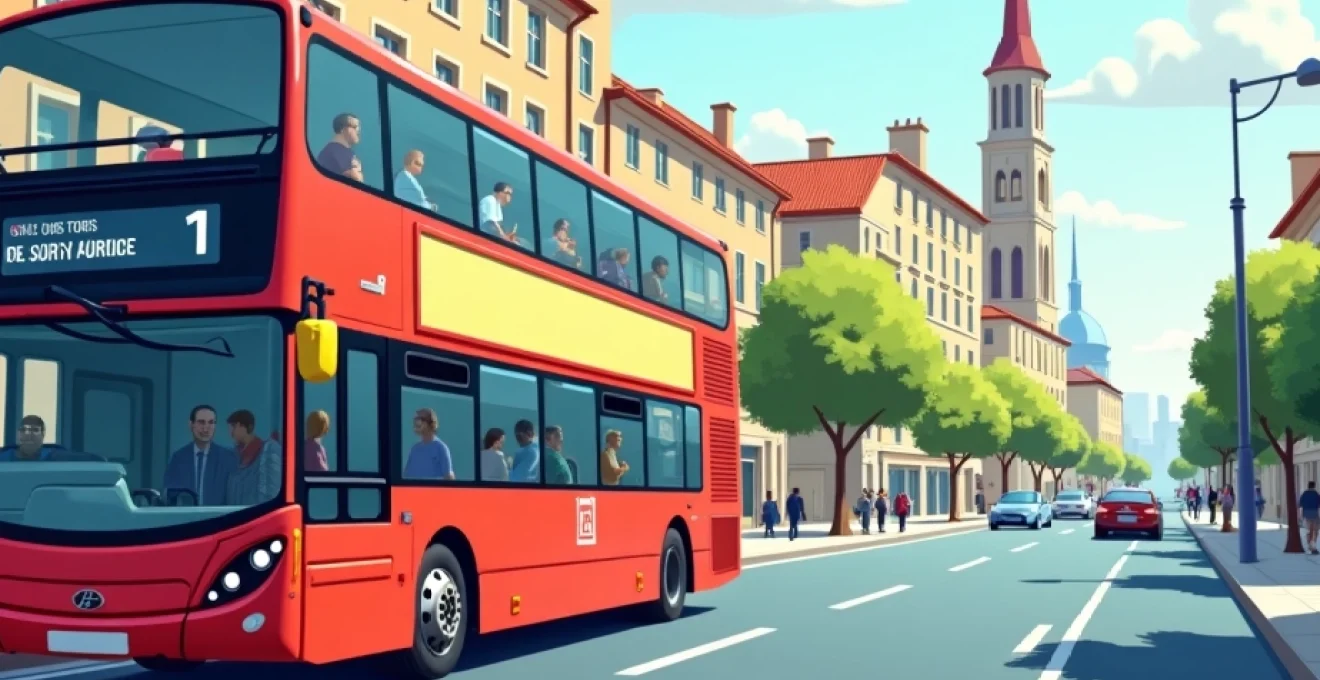
Urban exploration has evolved dramatically in recent years, with travellers increasingly seeking efficient methods to maximise their sightseeing experiences within limited timeframes. The modern hop on hop off bus system represents a sophisticated approach to city tourism, combining strategic route planning with flexible scheduling to deliver comprehensive urban discovery experiences. These services have transformed from simple tourist buses into complex transportation networks that leverage advanced technology and data analytics to optimise visitor journeys.
The efficiency of hop on hop off tours stems from their ability to eliminate the common challenges associated with independent city exploration: navigation confusion, time wastage between attractions, and the overwhelming nature of large metropolitan areas. By providing structured yet flexible itineraries, these services enable visitors to experience a city’s highlights whilst maintaining personal autonomy over their schedule and interests.
Strategic route planning and Multi-Stop itinerary optimisation
The foundation of efficient hop on hop off services lies in their meticulous route planning methodology. Modern operators utilise sophisticated algorithms that analyse tourist flow patterns, attraction popularity ratings, and visitor feedback data to create optimal touring circuits. This data-driven approach ensures that routes capture the highest concentration of must-see destinations whilst minimising travel time between stops.
Real-time GPS tracking and dynamic route adjustments
Contemporary hop on hop off operators employ advanced GPS tracking systems that monitor bus locations in real-time, enabling dynamic route adjustments based on traffic conditions and passenger demand. These systems integrate with city traffic management networks to identify the most efficient pathways, automatically rerouting vehicles around congestion hotspots. The technology allows operators to maintain schedule reliability whilst adapting to unpredictable urban conditions such as road closures, special events, or unexpected traffic patterns.
Real-time tracking also enables more accurate arrival predictions for passengers waiting at stops, reducing uncertainty and improving the overall user experience. Mobile applications connected to these tracking systems provide live updates, allowing tourists to plan their activities more effectively around bus schedules.
Peak hour traffic analysis and schedule coordination
Successful hop on hop off services conduct comprehensive analysis of urban traffic patterns to optimise their scheduling around peak congestion periods. By studying historical traffic data and collaborating with local transport authorities, operators can adjust departure times and frequency to avoid the worst traffic conditions. This strategic scheduling ensures that tourists can maintain their planned itineraries without being significantly delayed by predictable traffic patterns.
Many operators implement variable frequency models, increasing bus numbers during peak tourist hours whilst reducing services during slower periods. This approach maximises resource efficiency whilst ensuring adequate service availability when demand is highest.
Tourist attraction clustering and proximity mapping
Effective route design involves sophisticated mapping of tourist attractions based on geographical proximity and thematic relevance. Operators group nearby attractions into logical touring clusters, enabling visitors to explore related sites efficiently within walking distance of bus stops. This clustering approach reduces the need for multiple bus journeys between closely located attractions, allowing more time for actual sightseeing.
Advanced proximity mapping considers not only physical distance but also pedestrian accessibility, considering factors such as elevation changes, pedestrian-friendly pathways, and safety considerations. This comprehensive approach ensures that recommended walking routes between clustered attractions are practical for tourists of varying mobility levels.
Transfer point integration with public transport networks
Modern hop on hop off services strategically position stops at key interchange points with local public transportation networks, including underground stations, train terminals, and major bus stops. This integration enables seamless transitions between hop on hop off services and local transport, extending the reach of tourist exploration beyond the designated circuit routes.
Strategic positioning at transport hubs also facilitates connections to airports and accommodation areas, making hop on hop off services more accessible to tourists staying in various parts of the city. This connectivity transforms the service from an isolated tourist activity into an integral component of the broader urban transport ecosystem.
Time-efficient urban navigation through predetermined circuit systems
The predetermined circuit system employed by hop on hop off services represents a masterclass in time-efficient urban navigation. Unlike independent exploration, which often involves backtracking and inefficient route selection, these circuits are designed using advanced optimisation algorithms that minimise travel time whilst maximising attraction coverage. The systematic approach ensures that visitors can experience a comprehensive overview of the city without the time penalties associated with poor navigation decisions.
Circular route design and maximum coverage algorithms
The circular design philosophy behind hop on hop off routes eliminates dead-end journeys and ensures continuous forward momentum throughout the touring experience. Maximum coverage algorithms analyse the spatial distribution of tourist attractions to create routes that provide the highest concentration of sightseeing opportunities per unit of travel time. These mathematical models consider factors such as attraction popularity, visitor dwell times, and geographical constraints to create optimal touring circuits.
Advanced route optimisation also considers the visual appeal of journey segments, prioritising scenic pathways and architecturally interesting streets to enhance the touring experience during travel between stops. This approach transforms transit time from merely functional transport into an integral part of the sightseeing experience.
Frequency-based service models and wait time minimisation
Efficient hop on hop off services implement frequency-based models that minimise passenger wait times through strategic bus deployment. Rather than rigid timetables, these systems focus on maintaining consistent intervals between services, typically ranging from 15 to 30 minutes depending on route length and passenger demand. This approach provides predictable service levels whilst maintaining operational flexibility.
Wait time minimisation strategies include deploying additional vehicles during peak periods and implementing dynamic scheduling that responds to real-time passenger loads. Some operators utilise passenger counting technology to predict demand at various stops, enabling proactive service adjustments before queues develop.
Multi-modal transport integration at key interchange points
Strategic integration with multiple transport modes amplifies the efficiency of hop on hop off services by extending their effective reach. Key interchange points are carefully selected to provide connections with underground rail networks, river services, cable cars, and other tourist-oriented transport options. This integration creates a comprehensive urban mobility network that enables tourists to access attractions beyond the primary bus circuit.
Seamless integration requires coordination with multiple transport providers, standardised ticketing systems, and clear wayfinding signage that guides tourists through transfer processes. The most successful implementations provide unified ticketing that covers multiple transport modes, eliminating the complexity of purchasing separate tickets for different services.
Express lane utilisation and traffic priority systems
Many cities provide dedicated bus lanes or priority systems that enable hop on hop off services to bypass general traffic congestion. Strategic utilisation of these express corridors significantly reduces journey times, particularly during peak traffic periods. Operators work closely with local transport authorities to ensure their routes maximise the use of available priority infrastructure.
Traffic priority systems, including signal prioritisation at intersections, further enhance journey efficiency by reducing delays at traffic lights. These systems detect approaching buses and adjust signal timing to minimise stopping time, contributing to more reliable schedule adherence.
Digital ticketing and contactless boarding technologies
The implementation of digital ticketing systems has revolutionised the efficiency of hop on hop off services by eliminating boarding delays associated with traditional ticket purchasing processes. Contactless payment systems, mobile ticketing applications, and digital validation technologies enable rapid passenger boarding, reducing dwell times at stops and improving overall route efficiency.
Advanced digital systems also provide valuable data on passenger flow patterns, enabling operators to optimise service frequency and route planning based on actual usage data rather than theoretical demand estimates. This data-driven approach continuously improves service efficiency through iterative refinements based on real passenger behaviour.
Comparative analysis of global Hop-On Hop-Off operators
The global hop on hop off industry features several major operators, each bringing distinct operational philosophies and technological approaches to urban tourism. Understanding the comparative strengths and methodologies of these operators provides valuable insights into best practices for efficient city exploration. The variation in service quality and operational efficiency across different operators and cities demonstrates the importance of selecting the most suitable service for specific touring requirements.
City sightseeing london Double-Decker fleet efficiency
City Sightseeing’s London operations exemplify the successful adaptation of traditional double-decker buses for modern tourist applications. Their fleet efficiency stems from the strategic utilisation of London’s extensive bus lane network, enabling consistent journey times despite heavy traffic conditions. The double-decker configuration maximises passenger capacity whilst providing elevated viewing positions that enhance the sightseeing experience.
The company’s route design leverages London’s well-developed transport infrastructure, with stops strategically positioned at major underground stations and transport hubs. This integration enables tourists to combine hop on hop off services with London’s comprehensive public transport network, extending their exploration reach beyond the primary circuit routes. Fleet modernisation includes hybrid and electric vehicles that reduce environmental impact whilst maintaining operational efficiency.
Big bus tours Multi-City network coverage
Big Bus Tours operates one of the most extensive international networks, providing standardised service quality across multiple global destinations. Their multi-city approach enables consistent operational methodologies and shared technological platforms that benefit from economies of scale. The company’s investment in unified mobile applications and booking systems creates seamless experiences for tourists visiting multiple destinations within their network.
Cross-city operational insights enable Big Bus Tours to implement best practices developed in one location across their entire network. This knowledge transfer approach has led to innovations in route optimisation, customer service delivery, and technology integration that benefit operations globally. Their standardised training programmes ensure consistent service quality regardless of location.
Gray line worldwide regional service integration
Gray Line’s approach emphasises regional integration, connecting hop on hop off services with broader touring offerings including day trips, airport transfers, and multi-day packages. This comprehensive service model positions hop on hop off tours as components within larger travel experiences rather than standalone services. The integration provides tourists with seamless transitions between different types of sightseeing activities.
Regional coordination enables Gray Line to offer combined tickets that cover multiple cities and transport modes, appealing to tourists with complex itineraries. Their established relationships with local attraction providers result in enhanced value propositions through bundled offerings and priority access arrangements.
Local operator performance metrics in barcelona and amsterdam
Barcelona and Amsterdam feature strong local operators that compete effectively with international brands through deep local knowledge and specialised service adaptations. Barcelona’s operators excel in managing challenging traffic conditions and integrating with the city’s unique architectural touring requirements, including routes that accommodate visits to Gaudí’s architectural masterpieces.
Amsterdam’s local operators have pioneered innovative multi-modal approaches that combine bus services with canal cruises, creating unique touring experiences that leverage the city’s distinctive geography. Performance metrics demonstrate that local operators often achieve higher customer satisfaction scores through personalised service delivery and intimate knowledge of local conditions, though they may lack the technological sophistication of larger international operators.
Cost-benefit analysis against traditional sightseeing methods
The financial efficiency of hop on hop off tours becomes apparent when compared against alternative sightseeing approaches, particularly in expensive metropolitan areas where individual attraction entry fees, transport costs, and guided tour prices can accumulate rapidly. A comprehensive cost analysis reveals that hop on hop off services often provide superior value proposition through bundled offerings that include transport, commentary, and attraction discounts within a single ticket price.
Traditional sightseeing methods typically involve multiple separate cost components: individual public transport tickets, taxi fares, guided tour fees, and attraction entry charges. These costs can easily exceed £50-100 per day in major cities, whilst hop on hop off services commonly offer 24-48 hour passes for £20-40, including unlimited transport and comprehensive city commentary. The economic advantage becomes more pronounced for tourists planning to visit multiple attractions across different city areas.
Time value considerations further enhance the cost-benefit equation, as independent navigation often results in significant time wastage through poor route planning, getting lost, or waiting for irregular public transport connections. Professional route planning inherent in hop on hop off services translates directly into time savings that can be quantified in additional sightseeing opportunities or reduced holiday stress levels.
The bundled nature of many hop on hop off packages provides additional cost savings through included attraction discounts, priority entry arrangements, and complementary services such as walking tours or boat trips. These value-added components can represent savings of 15-25% compared to purchasing equivalent services independently, making the overall proposition significantly more attractive for cost-conscious tourists.
The strategic advantage of hop on hop off services lies not merely in transportation efficiency, but in their ability to transform complex urban navigation challenges into streamlined, predictable touring experiences that maximise both time utilisation and cost-effectiveness.
Technology integration and mobile app functionality
The digital transformation of hop on hop off services has revolutionised the tourist experience through sophisticated mobile applications that provide real-time information, interactive mapping, and personalised itinerary planning capabilities. Modern applications integrate GPS tracking, augmented reality features, and machine learning algorithms to deliver customised recommendations based on user preferences and available time constraints.
Contemporary mobile platforms offer multilingual audio commentary that synchronises with bus location, providing contextually relevant information about passing landmarks and attractions. Advanced applications include offline functionality, ensuring that tourists can access essential information and maps even in areas with poor mobile connectivity. The integration of social media sharing features enables tourists to document and share their experiences in real-time, contributing to the promotional reach of the services.
Predictive analytics within mobile applications analyse user behaviour patterns to suggest optimal boarding times, recommend attraction combinations, and estimate required visiting durations for popular sites. These intelligent features help tourists maximise their sightseeing efficiency by avoiding crowded periods and identifying less obvious but highly rated attractions along their chosen routes.
The most advanced applications incorporate payment systems, ticket validation, and customer service chatbots that provide immediate assistance for common queries. Integration with city-wide transport applications enables seamless journey planning that combines hop on hop off services with local public transport, creating comprehensive urban mobility solutions for tourists.
Augmented reality features are emerging as significant differentiators, allowing tourists to point their devices at landmarks to receive instant historical information, architectural details, and visitor reviews. This technology transforms passive observation into interactive learning experiences that enhance the educational value of sightseeing activities. Future developments include virtual reconstruction of historical scenes and personalised commentary based on individual interests and cultural backgrounds.
Seasonal adaptability and Weather-Responsive service modifications
The operational efficiency of hop on hop off services depends significantly on their ability to adapt to seasonal variations and weather conditions that affect both tourist demand patterns and service delivery capabilities. Successful operators implement dynamic operational models that adjust service frequency, route modifications, and vehicle configurations based on seasonal requirements and weather forecasts.
Winter operations in northern European cities require heated seating areas, enclosed lower decks, and modified schedules that account for reduced daylight hours and challenging weather conditions. Conversely, summer operations may involve extended service hours, increased ventilation systems, and additional vehicles to accommodate peak tourist seasons. Seasonal route modifications might include alternative indoor attractions during inclement weather or extended routes to seasonal attractions such as Christmas markets or summer festivals.
Weather-responsive service modifications utilise meteorological data integration to proactively adjust operations before adverse conditions impact service quality. Real-time weather monitoring enables operators to deploy enclosed vehicles during unexpected rain, modify routes around flood-prone areas, or implement safety protocols during extreme weather events. These adaptive measures ensure consistent service delivery regardless of environmental challenges.
Advanced operators maintain multiple vehicle configurations within their fleets, enabling rapid deployment of weather-appropriate vehicles based on forecasting data. This flexibility ensures that tourists can continue their sightseeing plans with minimal disruption, maintaining the efficiency advantages of hop on hop off services even during challenging weather conditions.
Seasonal adaptability represents the hallmark of sophisticated hop on hop off operations, where technological integration and operational flexibility combine to deliver consistent touring experiences regardless of external environmental factors.
The integration of climate control systems, weather-protective canopies, and heated seating demonstrates the industry’s commitment to maintaining comfort levels that encourage tourist utilisation throughout the year. This year-round viability significantly enhances the cost-effectiveness of hop on hop off services by providing reliable sightseeing options during traditionally challenging touring periods, ultimately supporting sustained urban tourism economies across all seasons.