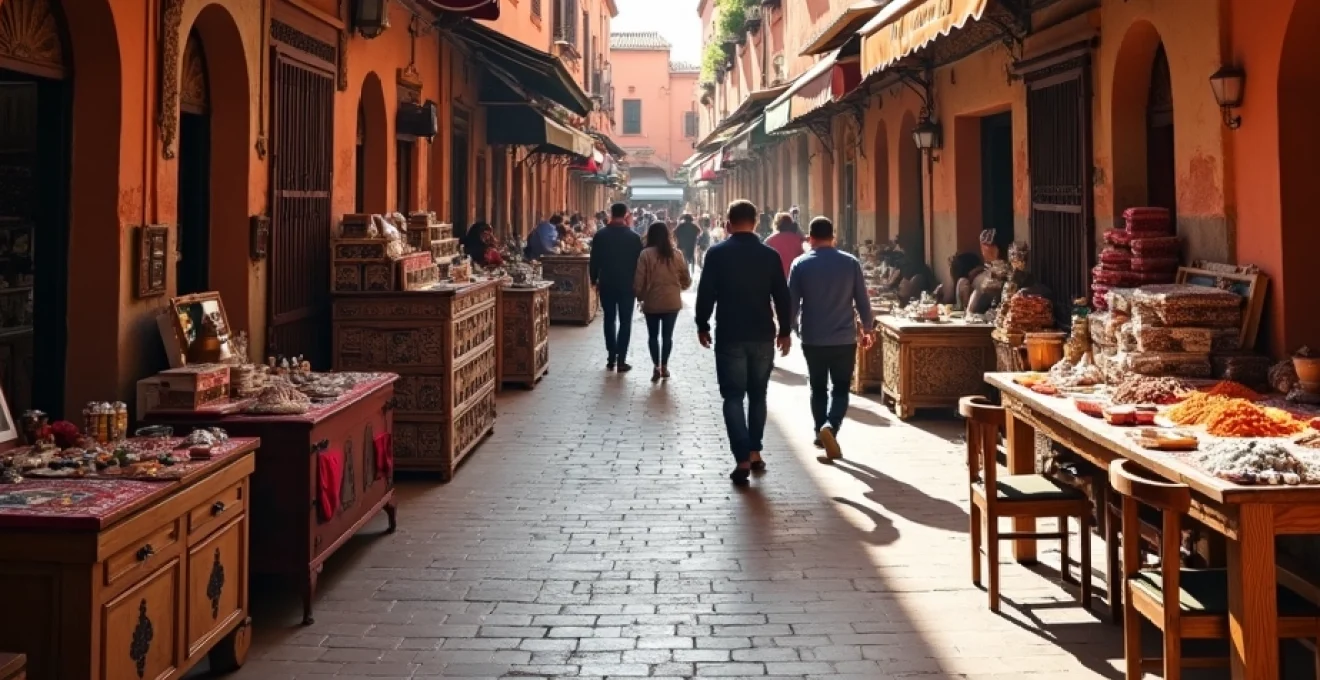
Marrakech’s ancient medina pulsates with the energy of centuries-old trading traditions, where narrow alleyways echo with the rhythmic hammering of metalworkers and the gentle negotiations between merchants and customers. The city’s sprawling souk network represents one of Africa’s most vibrant marketplaces, where authentic Berber craftsmanship meets the bustling commerce that has defined this imperial city since the 11th century. These labyrinthine markets offer far more than tourist trinkets – they provide an authentic window into Morocco’s rich artisanal heritage, where skilled craftsmen continue to employ techniques passed down through generations.
Navigating marrakech’s historic souk network: jemaa el-fnaa to medina quarter
The journey into Marrakech’s souk network begins at the iconic Jemaa el-Fnaa square, a UNESCO World Heritage site that serves as the beating heart of the medina. From this central plaza, three main arteries lead visitors deep into the maze-like network of covered markets, each pathway revealing distinct trading quarters that have maintained their specialised character for over nine centuries. The orientation might seem daunting initially, but understanding the basic layout transforms what could be an overwhelming experience into a fascinating cultural expedition.
Moving north from Jemaa el-Fnaa, the main thoroughfare branches into numerous smaller passages, each leading to specialised craft districts. The souk system operates on a guild-like principle, where artisans practising similar trades cluster together in designated areas. This historical organisation dates back to the Almoravid dynasty, when merchants arriving through the city’s gates would naturally gravitate towards their respective trade communities. The practical benefits of this system remain evident today, as visitors can easily locate specific crafts whilst observing the collaborative nature of traditional Moroccan commerce.
Navigation within the souk network requires patience and a willingness to embrace the unexpected. The narrow passages, some barely wide enough for two people to pass, create an intimate shopping environment where personal connections often develop between craftsmen and customers. Street signs appear sporadically, but local landmarks – such as distinctive archways, water fountains, or prominent workshops – serve as more reliable reference points. The covered sections, topped with wooden slats or stone vaulting, provide welcome shade during the intense midday heat whilst creating dramatic patterns of light and shadow that photographers find irresistible.
Souk semmarine: traditional textile and carpet trading hub
Souk Semmarine forms the primary artery of Marrakech’s market network, stretching from Jemaa el-Fnaa northward towards the Ben Youssef Mosque complex. This covered marketplace specialises in textiles, carpets, and general merchandise, making it an ideal starting point for first-time visitors. The wide central passage accommodates the constant flow of shoppers, donkey carts, and motorbikes that characterise medina life, whilst side passages branch off into smaller, more specialised sections.
The textile selection in Souk Semmarine represents the full spectrum of Moroccan weaving traditions, from geometric Berber patterns to intricate Arabic calligraphy designs. Authentic handwoven carpets hang from shop facades like colourful tapestries, each piece reflecting regional variations in technique and symbolism. The quality varies significantly – some shops stock machine-made reproductions alongside genuine handcrafted pieces, making discerning selection essential for serious collectors.
Souk el-attarine: spice merchants and herbal medicine quarter
The aromatic pathways of Souk el-Attarine assault the senses with pyramidal displays of vibrant spices, dried herbs, and traditional remedies. This quarter maintains its historical role as the perfume and spice centre, where merchants have traded exotic ingredients since the medieval trans-Saharan caravan routes brought treasures from across Africa and beyond. The visual impact of cone-shaped mounds of turmeric, paprika, and saffron creates one of the most photographed scenes in the entire souk network.
Beyond the obvious tourist appeal, Souk el-Attarine serves as a functional marketplace where local households purchase daily cooking ingredients and traditional medicines. Vendors demonstrate extensive knowledge of their products’ culinary and medicinal applications, often providing preparation instructions or usage recommendations. The quarter also houses traditional perfumers who blend custom scents using rose water, orange blossom, and rare essences imported from across the region.
Souk haddadine: metalwork artisans and lantern craftsmen district
The rhythmic percussion of hammers on metal announces your arrival in Souk Haddadine, where blacksmiths and metalworkers continue centuries-old traditions of crafting decorative and functional items. This quarter showcases some of the most skilled artisanship in the entire medina, with workshops producing everything from intricate brass lanterns to hand-forged architectural elements. The working conditions remain largely unchanged from medieval times, with artisans using traditional tools and techniques passed down through family lineages.
The lantern workshops deserve particular attention, as craftsmen demonstrate the complex process of creating Morocco’s signature lighting fixtures. Each lantern begins as a flat sheet of brass or copper, which artisans meticulously cut, shape, and perforate using hand tools. The geometric patterns reflect Islamic artistic principles, with designs often incorporating mathematical precision that creates stunning light patterns when illuminated. Observing this process provides insight into the patience and skill required for traditional metalwork.
Souk chouari: woodworking and cedar furniture specialists
The distinctive aroma of cedar wood permeates Souk Chouari, where master carpenters create furniture, decorative boxes, and architectural elements using timber sourced from the Atlas Mountains. This quarter maintains strong connections to Morocco’s forestry regions, with workshops often displaying raw cedar planks alongside finished products. The woodworking traditions here incorporate both functional furniture-making and decorative carving techniques that achieve remarkable intricacy.
The craftsmanship extends beyond simple carpentry to include marquetry work, where artisans inlay different wood species to create complex patterns and scenes. Mother-of-pearl, bone, and metallic accents often enhance these pieces, resulting in furniture and decorative objects that represent the pinnacle of Moroccan woodworking artistry. The workshop environment allows visitors to observe the entire production process, from initial wood selection through final finishing techniques.
Authentic berber handicraft identification and quality assessment techniques
Distinguishing authentic Berber craftsmanship from mass-produced imitations requires developing a discerning eye for quality indicators, construction techniques, and traditional design elements. The proliferation of tourist-oriented souvenirs has created a marketplace where genuine artisanal pieces coexist with factory-made reproductions, making knowledge of authentication methods essential for serious collectors and cultural enthusiasts. Understanding these distinctions not only ensures value for money but also supports the continuation of traditional craft practices.
Authentic Berber handicrafts exhibit specific characteristics that reflect their cultural origins and production methods. Traditional pieces incorporate symbolic elements that carry meaning within Berber communities, often relating to protection, fertility, or spiritual beliefs. These symbols appear consistently across different craft categories, from carpet patterns to jewellery designs, creating a unified aesthetic vocabulary that spans various media. Machine-made reproductions typically lack this symbolic coherence, instead focusing on visual appeal without cultural authenticity.
The construction quality of authentic pieces reflects the artisan’s training and experience, with hand-crafted items showing subtle irregularities that indicate human involvement in the production process. These variations – slight asymmetries in patterns, minor colour variations, or texture differences – actually enhance rather than detract from the piece’s value, as they provide evidence of traditional production methods. Factory-made items, by contrast, exhibit mechanical precision that lacks the character and individuality of handcrafted work.
Genuine beni ourain carpet authentication methods
Beni Ourain carpets represent perhaps the most internationally recognised form of Berber weaving, with their distinctive geometric patterns and neutral colour palettes attracting collectors worldwide. Authentic pieces originate from specific tribal regions in the Middle Atlas Mountains, where women weave them using wool from their own sheep flocks. The traditional patterns incorporate diamond shapes, lines, and abstract forms that carry specific meanings within Berber culture, often relating to family history or spiritual beliefs.
Authentication begins with examining the wool quality and natural variations in colour. Genuine Beni Ourain carpets use undyed sheep wool, resulting in natural cream and brown tones that vary slightly throughout the piece. The wool feels dense and springy to the touch, with individual fibres showing natural variations in thickness and texture. Machine-spun wool, commonly used in reproductions, appears more uniform and lacks the subtle irregularities that characterise hand-processed fibres.
Hand-hammered brass and copper tadelakt verification
Traditional metalwork authentication requires examining construction techniques, surface treatments, and design execution quality. Hand-hammered pieces display subtle irregularities in surface texture where individual hammer strikes created the final form, whilst machine-made items show uniform surface patterns that lack this organic variation. The weight distribution also differs significantly – handcrafted pieces often feel slightly heavier due to the denser metal structure created by traditional forming techniques.
Tadelakt, the traditional Moroccan lime plaster technique, occasionally appears on metal objects as a protective and decorative coating. Authentic tadelakt exhibits a distinctive smooth, almost soap-like texture that develops through the traditional application process using olive oil soap and polishing stones. Modern synthetic alternatives may appear similar initially but lack the depth and natural variation that characterise genuine tadelakt finishes.
Traditional zellige tilework quality indicators
Zellige tiles represent one of Morocco’s most sophisticated craft traditions, requiring years of training to master the complex cutting and glazing processes. Authentic zellige exhibits subtle variations in colour and surface texture that result from the natural clay composition and traditional firing methods. Each tile shows slight dimensional variations and gentle surface undulations that create the distinctive light-reflecting properties of genuine zellige installations.
The glazing process provides crucial authentication indicators, as traditional zellige uses natural mineral glazes that produce unique colour variations within each batch. These variations create the characteristic depth and luminosity that distinguishes zellige from mass-produced ceramic alternatives. The back surface of authentic tiles often shows evidence of hand-cutting, with slight irregularities that indicate individual artisan involvement in the production process.
Argan oil production source verification standards
Morocco’s argan oil industry has expanded dramatically in recent years, creating both opportunities for rural women’s cooperatives and challenges in maintaining quality standards. Authentic argan oil comes exclusively from trees growing in southwestern Morocco’s designated biosphere reserve, where traditional extraction methods preserve the oil’s beneficial properties. Verification requires understanding both the geographical limitations and the traditional production processes that distinguish genuine argan oil from adulterated or synthetic alternatives.
Authentic argan oil exhibits a distinctive nutty aroma and golden colour that varies slightly depending on whether the kernels were roasted during processing. Cold-pressed cosmetic argan oil appears lighter in colour with a more subtle scent, whilst culinary argan oil displays deeper golden hues and more pronounced nutty characteristics. The consistency should feel smooth but not overly viscous, with the oil absorbing readily into skin without leaving an oily residue.
Thuya wood marquetry craftsmanship evaluation
Thuya wood marquetry represents one of Morocco’s most distinctive woodworking traditions, utilising the unique grain patterns of thuya burl wood combined with contrasting materials to create intricate decorative patterns. Authentic pieces showcase the natural figure of the wood, with artisans carefully selecting and positioning each piece to highlight the material’s inherent beauty. The complexity of traditional marquetry designs requires considerable skill and patience, making genuine pieces valuable both as functional objects and artistic expressions.
Quality evaluation focuses on the precision of the inlay work and the harmony of the overall design composition. Master craftsmen achieve seamless joints between different materials, with each element fitting perfectly without gaps or overlaps. The surface finish should feel smooth and even, with different materials blending into a unified whole. Poor quality reproductions often show visible gaps, uneven surfaces, or obvious adhesive marks that detract from the piece’s aesthetic appeal.
Seasonal market calendar: timing your marrakech craft shopping strategy
Understanding Marrakech’s seasonal rhythms significantly enhances the craft shopping experience, as market dynamics shift throughout the year in response to weather patterns, religious observances, and tourism fluctuations. The optimal shopping periods coincide with moderate weather conditions and local craft production cycles, when artisans complete new work and inventory levels peak before the main tourist seasons. Strategic timing not only ensures better selection but also provides opportunities for more leisurely shopping experiences without the crowds that characterise peak periods.
Spring months from March through May offer ideal conditions for souk exploration, with comfortable temperatures and longer daylight hours creating pleasant shopping environments. This period also corresponds with post-Ramadan celebrations, when many artisans unveil new collections created during the contemplative fasting month. The increased social activity following religious observances creates a festive atmosphere throughout the medina, with craft workshops operating at full capacity and vendors more inclined toward extended negotiations and cultural exchanges.
Autumn presents another excellent shopping window, particularly from September through November, when summer heat subsides and local craft production resumes full intensity after the slower summer months. This period coincides with harvest seasons in rural areas, when many part-time craftspeople return to their workshops with renewed energy and fresh materials. The moderate temperatures encourage longer browsing sessions, whilst the approaching winter months motivate vendors to clear inventory through more flexible pricing strategies.
Religious calendar considerations significantly impact shopping experiences, particularly during Ramadan when daily rhythms shift dramatically. Whilst many shops maintain regular hours, the evening iftar meals and subsequent social activities create unique opportunities for cultural immersion. The month preceding Eid festivals typically sees increased craft production as families prepare for celebrations, resulting in expanded selections and heightened workshop activity. However, the actual festival days often see reduced commercial activity as artisans prioritise family gatherings and religious observances.
Understanding local customs and seasonal patterns transforms casual browsing into meaningful cultural exchange, creating opportunities for genuine connections with artisan communities.
Winter months require careful planning, as December and January bring both advantages and challenges for craft shopping. Whilst tourist crowds diminish and vendors become more amenable to serious negotiations, shorter daylight hours and occasional weather disruptions can limit shopping time. However, this period often provides the most authentic interactions with local artisans, as the reduced tourist presence allows for more personal attention and detailed craftsmanship discussions.
Haggling protocols and cultural negotiation etiquette in moroccan souks
Successful negotiation in Marrakech’s souks requires understanding that haggling represents a complex social ritual rather than mere price reduction tactics. The process serves multiple functions within Moroccan commercial culture, establishing personal relationships, demonstrating mutual respect, and maintaining traditional trading practices that have evolved over centuries. Effective haggling balances assertiveness with courtesy, patience with determination, creating interactions that satisfy both parties whilst preserving cultural authenticity.
The negotiation process typically follows established patterns that reflect traditional trading protocols. Initial price quotations often represent starting positions rather than serious offers, with both parties understanding that extensive discussion will precede any final agreement. This preliminary phase allows vendors to assess customer knowledge, purchasing power, and genuine interest levels, whilst buyers evaluate product quality, vendor credibility, and market conditions. The extended timeline builds rapport and transforms commercial transactions into social interactions.
Cultural sensitivity enhances negotiation effectiveness whilst demonstrating respect for local traditions. Successful haggling incorporates appropriate greetings, shows interest in craftsmanship details, and acknowledges the artisan’s skill and time investment. These elements distinguish respectful negotiation from mere price reduction demands, creating positive interactions that benefit both parties. Vendors often respond more favourably to customers who demonstrate cultural awareness and genuine appreciation for traditional craftsmanship.
Opening bid calculation methods for different craft categories
Initial counter-offers require strategic calculation based on craft categories, quality levels, and market conditions. High-value items such as authentic carpets or antique pieces typically begin negotiations around 30-40% of the quoted price, allowing room for gradual increases whilst maintaining realistic expectations. Mid-range crafts including leather goods, metalwork, and contemporary textiles generally respond to opening bids around 40-50% of initial quotes, reflecting their broader market availability and production volumes.
Small decorative items and consumable goods like spices or cosmetics require different approaches, with opening positions around 60-70% of quoted prices often proving effective. These items typically have established market rates with limited flexibility, making aggressive initial offers counterproductive. Understanding these category-specific dynamics prevents unrealistic expectations whilst establishing credible negotiating positions that vendors take seriously.
Non-verbal communication signals in berber trading culture
Moroccan commercial culture incorporates extensive non-verbal communication that experienced vendors read to assess customer intentions and adjust their strategies accordingly. Maintaining steady eye contact demonstrates serious interest whilst excessive examination of competing products signals price sensitivity. Physical positioning also conveys messages – customers who remain standing suggest casual interest, whilst those who accept seating indicate willingness to engage in extended negotiations.
Gesture language plays equally important roles in negotiation dynamics. Palm-up hand movements suggest openness and flexibility, whilst crossed arms or defensive postures indicate resistance or dissatisfaction with current offers. Vendors often mirror customer body language unconsciously, creating opportunities for observant negotiators to gauge receptiveness levels and adjust their approaches accordingly. Understanding these subtle cues enables more effective communication even when language barriers exist.
Acceptable price reduction percentages by artisan product type
Different craft categories follow established price reduction norms that reflect production costs, market demand, and cultural expectations. Handwoven carpets and textiles typically accommodate reductions of 40-60% from initial quotes, acknowledging the significant markup applied to account for negotiation expectations. These items often represent substantial time investments from multiple artisans, justifying higher base prices whilst maintaining flexibility for serious buyers.
Metalwork and jewellery generally permit reductions of 30-50%, reflecting raw material costs and skilled labour requirements. Antique or semi-antique pieces command premium prices with limited negotiation scope, often restricting reductions to 20-30% maximum. Contemporary craft items including leather goods, pottery, and woodwork typically allow 35-50% reductions, balancing production costs with competitive market pressures.
Consumable items such as spices, cosmetics, and food products maintain stricter pricing structures due to established wholesale costs and rapid turnover requirements. These products rarely accommodate reductions exceeding 20-25%, with vendors often bundling multiple items to provide value whilst maintaining profit margins. Understanding these category-specific parameters prevents unrealistic expectations and facilitates more productive negotiations.
Tea ceremony integration in extended negotiation sessions
The traditional Moroccan tea ceremony frequently emerges during substantial purchase negotiations, serving both hospitality functions and strategic purposes within the haggling process. Vendors typically offer mint tea when customers demonstrate serious interest in high-value items, creating opportunities for extended discussions whilst building personal connections. Accepting tea indicates commitment to the negotiation process, though it doesn’t obligate purchase completion.
The ceremony itself provides natural breaks in intensive negotiations, allowing both parties to reassess positions and consider alternatives without losing face. The shared experience creates social bonds that transcend purely commercial relationships, often resulting in more favourable terms for both sides. Vendors frequently use tea service timing strategically, offering refreshments when negotiations reach impasses or when they sense customer hesitation.
Refusing tea politely maintains negotiation flexibility whilst respecting cultural norms. Phrases like “Perhaps after we agree on terms” or “I appreciate the offer but prefer to conclude first” acknowledge the gesture whilst maintaining position independence. However, accepting tea ceremony invitations often leads to more personalised service and deeper cultural insights that enhance the overall shopping experience beyond mere commercial transactions.
Artisan workshop tours: behind-the-scenes craft production in marrakech
Exploring working artisan workshops provides unparalleled insights into traditional craft production methods that have remained largely unchanged for centuries. These behind-the-scenes experiences reveal the complexity and skill required for seemingly simple handmade items, whilst supporting sustainable tourism initiatives that directly benefit local craftspeople. Workshop tours typically operate during morning hours when artisans begin their daily work cycles, offering optimal viewing opportunities for various production stages.
Carpet weaving workshops demonstrate perhaps the most mesmerising traditional processes, where skilled women work at vertical looms creating intricate patterns from memory. The rhythmic knotting sounds and collaborative nature of large carpet production create almost meditative environments where visitors can observe the patience and precision required for quality textiles. Many workshops encourage visitor participation, offering brief instruction in basic knotting techniques that highlight the complexity of professional-level work.
Metalworking forges showcase dramatically different environments, where master craftsmen shape heated brass and copper using traditional tools and techniques. The combination of intense heat, precise hammer work, and artistic vision creates spectacular demonstrations of skill development spanning decades. Visitors often witness the entire process from raw metal sheets through finished lanterns, providing comprehensive understanding of traditional metalworking complexity.
Pottery workshops reveal the transformation of local clay into functional and decorative ceramics through techniques perfected over generations. The wheel-throwing demonstrations highlight the apparent simplicity masking years of training, whilst glazing and firing processes showcase the scientific precision underlying artistic creativity. Many pottery workshops maintain traditional wood-fired kilns that produce unique surface effects impossible to replicate with modern equipment.
Workshop visits transform passive observation into active cultural participation, creating lasting memories whilst supporting traditional craft preservation efforts.
Leather tanning operations, though often malodorous, provide fascinating glimpses into one of humanity’s oldest craft traditions. The natural tanning processes using traditional materials like pomegranate bark and pigeon droppings create leather qualities that modern chemical methods struggle to replicate. Visitors witness the labour-intensive transformation from raw hides through finished leather goods, developing appreciation for the time and skill investment required for quality leather products.
Textile dyeing workshops demonstrate natural colour creation using traditional materials like henna, saffron, and indigo. The colour development processes often span multiple days, with artisans carefully monitoring temperature and timing to achieve desired hues. Observing these traditional dyeing methods reveals why naturally coloured textiles command premium prices compared to synthetic alternatives.
Woodworking shops showcase the transformation of Atlas Mountain cedar into intricate furniture and decorative objects through traditional joinery techniques. Master carpenters demonstrate marquetry processes where different wood species combine to create complex patterns and scenes. The workshop environments often include multiple generations working together, preserving knowledge transfer that ensures traditional technique continuation.
Export regulations and international shipping considerations for moroccan crafts
Purchasing authentic Moroccan crafts for international transport requires understanding complex export regulations and shipping restrictions that vary significantly by destination country and item category. Morocco maintains specific controls over cultural heritage items, antiques, and certain natural materials to preserve national artistic patrimony whilst facilitating legitimate craft trade. Successful international shipping requires advance planning, proper documentation, and reliable shipping partnerships to ensure safe arrival whilst complying with both Moroccan export and destination country import requirements.
Antique and semi-antique items face the strictest export controls, with pieces exceeding certain age thresholds requiring special permits from Morocco’s Ministry of Culture. Items predating 1830 generally require export licenses, whilst pieces from the early 20th century may need authentication documentation proving their commercial rather than heritage value. Reputable dealers typically handle permit applications, though the process can extend completion timelines significantly beyond normal shipping schedules.
Natural material restrictions affect various craft categories, particularly items containing ivory, certain woods, or archaeological materials. Fossilised items from Morocco’s rich geological regions require specific documentation proving legal extraction and sale authorisation. Even synthetic materials resembling restricted substances may face scrutiny, making detailed product composition documentation essential for customs clearance.
Carpet and textile shipping requires careful attention to size limitations, weight restrictions, and proper packaging to prevent damage during transit. Large carpets often exceed standard shipping dimensions, requiring specialised freight services that significantly increase costs. Professional carpet dealers typically offer rolled shipping services with insurance coverage, though delivery timelines may extend several weeks for oversized items.
Metalwork and ceramic items need robust protective packaging due to their fragility and weight characteristics. Professional packaging services available near major souks specialise in preparing craft items for international shipping, using traditional materials like sheep wool and modern protective elements to ensure safe arrival. Insurance coverage becomes particularly important for high-value metalwork pieces that may suffer damage during handling transitions.
Documentation requirements vary by destination country but typically include detailed item descriptions, purchase receipts, and vendor contact information. Many countries impose value thresholds for duty-free imports, making accurate valuation documentation crucial for cost-effective shipping. Some destinations require specific health certificates for organic materials like wool or leather, adding complexity to shipping preparation processes.
Shipping insurance options range from basic coverage through comprehensive protection that includes theft, damage, and customs complications. High-value items warrant premium insurance coverage, particularly when shipping through regions with elevated loss risks. Reputable shipping services provide tracking capabilities and delivery confirmation to ensure successful completion of international transfers.
Customs clearance procedures in destination countries often require recipient involvement, particularly for high-value shipments or items requiring special documentation. Understanding destination country import regulations before shipping prevents costly delays or unexpected duty charges that can significantly exceed original purchase prices. Professional shipping services often provide customs clearance assistance, though recipients maintain ultimate responsibility for import compliance.
Alternative shipping methods include personal carry-on transport for smaller items, though airline restrictions on weight and dimensions may limit options. Valuable or fragile items often travel more safely as accompanied baggage, though size limitations restrict this option to smaller craft pieces. International mail services provide economical shipping for lightweight items, though insurance coverage and tracking capabilities may be limited compared to commercial shipping services.
Timing considerations become crucial for gift purchases or time-sensitive deliveries, as international shipping from Morocco can require 2-6 weeks depending on destination and shipping method selected. Seasonal shipping volumes, particularly around major holidays, can extend delivery timelines significantly. Planning shipping arrangements well in advance of required delivery dates prevents disappointment whilst allowing time for proper documentation preparation and customs clearance procedures.