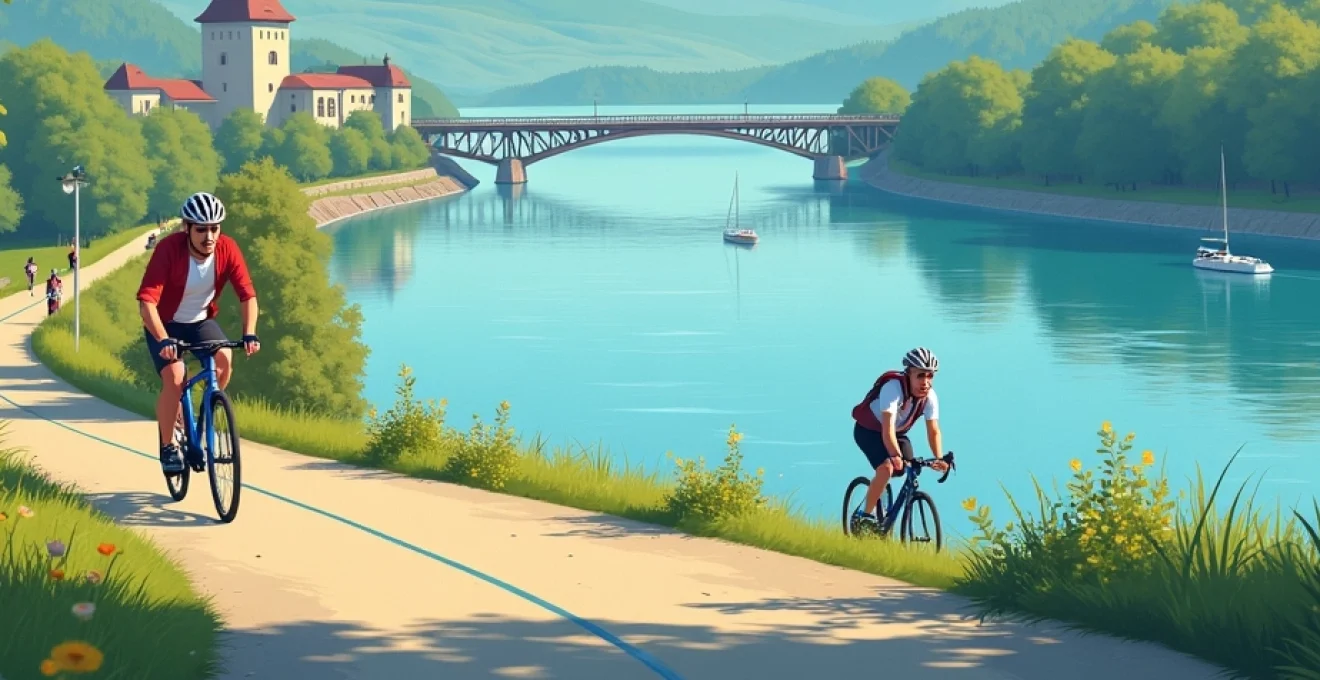
The Danube Cycle Path stands as Europe’s most celebrated long-distance cycling route, stretching approximately 2,850 kilometres from Germany’s Black Forest to Romania’s delta on the Black Sea. This magnificent waterway has guided cyclists through ten countries for decades, offering an unparalleled combination of cultural heritage, stunning landscapes, and exceptional cycling infrastructure. The route’s popularity stems from its predominantly flat terrain, well-maintained paths, and the seamless blend of historic cities with charming riverside villages.
What makes the Danube truly exceptional for leisure cyclists is its accessibility to riders of all skill levels. From families seeking gentle adventures to seasoned touring cyclists pursuing multi-week expeditions, the Donauradweg accommodates diverse cycling ambitions. The infrastructure quality varies significantly between sections, with the German-Austrian stretch offering premium conditions whilst eastern portions present more challenging terrain and logistics.
Premium danube cycle path infrastructure: from donaueschingen to sulina delta
The Danube cycling network represents one of Europe’s most sophisticated cycle tourism infrastructures, with significant investments in path quality, signage, and supporting facilities. Understanding the varying standards across different sections helps cyclists plan appropriately for their journey and set realistic expectations for daily distances and terrain challenges.
Eurovelo 6 route specifications and technical standards
The Danube forms a crucial component of EuroVelo 6, the Atlantic-Black Sea route that spans 4,450 kilometres across Europe. This designation brings specific technical standards including minimum path widths of 2.5 metres for shared use, maximum gradients of 6% except in mountainous terrain, and standardised signage systems. The route classification system ensures consistent quality markers, with Grade 1 sections featuring dedicated cycle paths separated from motor traffic, whilst Grade 3 sections may include quiet rural roads.
Signage follows the European Cycling Federation’s protocols, featuring distinctive blue EuroVelo 6 markers complemented by national route indicators such as Germany’s green Donauradweg signs. Digital integration includes GPS coordinates at major junctions and QR codes linking to real-time route conditions in modern sections. The infrastructure investment varies dramatically, with German and Austrian sections receiving approximately €50 million in upgrades between 2015-2020, whilst eastern European portions rely more heavily on existing road networks.
Passau to vienna cycle path: surface quality and gradient analysis
The Passau to Vienna section epitomises premium cycle path engineering , featuring predominantly asphalt surfaces with strategic gravel sections through sensitive environmental areas. This 330-kilometre stretch maintains an average gradient of less than 0.5%, making it ideal for heavily loaded touring bikes and family groups. The path alternates between river-level routes and elevated embankments, with the famous Schlögen Loop requiring a brief 50-metre climb offering spectacular panoramic views.
Surface quality assessment reveals 85% sealed surfaces, 12% compacted gravel suitable for road bikes, and 3% loose surfaces requiring mountain bike capabilities. Key infrastructure features include dedicated cyclist ferry crossings at Obernzell and Au an der Donau, with crossings operating every 30 minutes during peak season. Rest facilities appear every 15-20 kilometres, including weather shelters, repair stations, and bicycle-friendly restaurants displaying the official Donauradweg certification.
Budapest to belgrade section: infrastructure challenges and solutions
The middle Danube section presents significant infrastructure variations, reflecting different national investment priorities and geographical constraints. Hungarian portions maintain excellent standards through the Danube Bend, utilising purpose-built cycle paths and converted towpaths. However, the Serbian section requires careful navigation through mixed-use rural roads and occasional main highway shoulders, particularly around Novi Sad and approaching Belgrade.
Critical infrastructure gaps include limited lighting systems, requiring self-sufficient navigation capabilities during shorter daylight periods. Bridge crossings become more complex, with cyclists sometimes requiring detours of several kilometres to reach appropriate crossing points. The terrain also becomes more challenging, with rolling hills between Baja and Mohács presenting gradients up to 8% over short sections.
Local governments have implemented innovative solutions including mobile repair services during peak season and partnerships with regional hotels offering secure bicycle storage and basic maintenance facilities. Emergency support systems include riverside emergency posts every 25 kilometres equipped with direct communication to local emergency services and basic first aid supplies.
Romanian danube delta cycling network: ecotourism route development
Romania’s Danube Delta region represents the route’s most environmentally sensitive section, where cycling infrastructure must balance accessibility with ecosystem protection. Recent developments include elevated boardwalk sections through wetland areas and seasonal route variations accommodating wildlife migration patterns. The Tulcea to Sulina coastal route offers spectacular bird-watching opportunities whilst maintaining minimal environmental impact through carefully planned path routing.
Unique infrastructure features include floating pontoon bridges adapting to seasonal water level variations and specialised wildlife observation hides accessible only to cyclists and pedestrians. The region’s cycling network integrates with boat transport systems, allowing cyclists to combine pedalling with traditional delta navigation methods. This hybrid approach proves essential given the delta’s constantly changing waterways and seasonal accessibility constraints.
Multi-country cycling logistics: border crossings and documentation requirements
International cycling along the Danube involves navigating complex administrative requirements that vary significantly between European Union member states and non-EU countries. Understanding these requirements prevents delays and ensures smooth passage through multiple jurisdictions during extended touring periods.
Schengen area transit protocols for cyclists
Within the Schengen Area, cyclists benefit from streamlined border procedures, though some practical considerations remain important. While passport checks are typically minimal between Germany, Austria, Slovakia, and Hungary, cyclists should carry valid identification documents as random checks occasionally occur, particularly near major cities or during heightened security periods. The absence of formal border controls doesn’t eliminate the need for proper documentation , especially when claiming emergency services or dealing with insurance matters.
Schengen regulations allow unlimited movement for EU citizens within the zone, but non-EU visitors face the standard 90-day limit within any 180-day period. For extended tours exceeding this timeframe, cyclists must plan exits from the Schengen Area or obtain appropriate long-stay visas. Digital border management systems track entries and exits automatically at airports, but land border crossings along cycling routes may lack this technology, making personal record-keeping advisable.
Serbian and romanian entry requirements for EU citizens
Crossing into Serbia marks the first major administrative transition for most Danube cyclists, as Serbia remains outside both the EU and Schengen Area. EU citizens can enter visa-free for up to 90 days within a six-month period, but formal border procedures apply. Border guards typically process cyclist groups efficiently, though waiting times can extend during peak summer periods when tour groups converge.
Romania, despite EU membership, maintains border controls as it’s not part of the Schengen Area. This creates additional administrative steps, though processing remains straightforward for EU citizens. Cyclists should prepare for potential luggage inspections and ensure any equipment purchases comply with duty-free allowances. Both countries require valid passports rather than national ID cards, unlike Schengen travel protocols.
Bike transport regulations on danube river ferries
Ferry crossings provide essential links across the Danube where bridge infrastructure proves inadequate or non-existent. Regulations vary significantly between operators and countries, with some ferries accommodating bicycles free of charge whilst others impose modest fees. Austrian and German ferry services typically include bicycle transport in standard passenger fares, reflecting these countries’ commitment to cycling tourism development.
Loading procedures require attention to safety protocols, particularly on smaller vessels where space constraints may limit simultaneous boarding. Professional touring cyclists recommend securing loose equipment and removing front wheels for compact storage when space limitations arise. Ferry schedules often reduce during winter months, making seasonal planning crucial for tour timing.
During peak season, some ferry crossings operate every 15 minutes, but off-season services may run only every two hours, requiring careful schedule coordination for tour planning.
International cycling insurance coverage across danube countries
Insurance requirements become complex when crossing multiple international boundaries, particularly regarding medical coverage, bicycle theft protection, and third-party liability. European Health Insurance Cards provide basic medical coverage within EU countries for EU citizens, but additional travel insurance proves essential for comprehensive protection and non-EU territories like Serbia.
Bicycle-specific insurance should cover theft, damage, and potential repatriation costs, as standard travel policies often exclude sporting equipment or impose severe limitations. Some specialist cycling insurers offer Danube-specific policies recognising the route’s unique challenges and cross-border complexities. These policies typically include coverage for emergency accommodation if bicycles become unusable and transport assistance if tours must be curtailed.
Seasonal route planning: weather patterns and optimal cycling windows
The Danube’s 2,850-kilometre length spans diverse climate zones, from continental European conditions in Germany and Austria to increasingly continental and southeastern European patterns approaching the Black Sea. Understanding seasonal variations proves crucial for route planning, equipment selection, and daily scheduling strategies.
Spring cycling (April-May) offers excellent conditions with mild temperatures averaging 15-20°C, abundant wildflower displays, and manageable tourist numbers. However, spring weather patterns can be unpredictable, with sudden temperature drops and occasional heavy rainfall requiring flexible scheduling. River levels remain elevated from snowmelt, sometimes affecting low-lying path sections and ferry operations.
Summer months (June-August) provide the most reliable weather but bring significant challenges including extreme heat exceeding 35°C in Hungarian and Serbian sections, intense ultraviolet exposure with minimal shade along many river stretches, and peak tourist congestion in popular destinations. Early morning departures become essential during summer months to avoid midday heat and secure accommodation in heavily booked areas.
Autumn cycling (September-October) represents the optimal balance for many cyclists, offering comfortable temperatures, harvest season celebrations in wine regions, and dramatically reduced crowding. However, daylight hours decrease rapidly, and weather conditions become increasingly unpredictable toward November. Winter cycling remains possible but requires specialist equipment and careful route selection, as many facilities close and ferry services reduce significantly.
Regional weather patterns show notable variations, with Alpine influences affecting upper reaches and continental patterns dominating central sections. The Danube Delta experiences maritime influences creating milder winter temperatures but increased humidity and potential fog conditions year-round.
Cultural heritage cycling stops: UNESCO sites along the danube corridor
The Danube corridor encompasses numerous UNESCO World Heritage sites, creating unparalleled opportunities for combining cycling adventures with deep cultural exploration. These destinations require strategic planning to maximise both cycling enjoyment and cultural appreciation.
Wachau valley vineyard cycling routes and wine tourism integration
The Wachau Valley presents Austria’s premier wine region integrated seamlessly with cycling infrastructure, creating a 30-kilometre stretch of terraced vineyards, historic monasteries, and traditional wine villages. The valley’s UNESCO designation recognises both its cultural landscape and exceptional wine-making traditions dating back over 1,000 years. Cycling routes follow ancient traders’ paths and modern dedicated cycle ways, offering multiple elevation options from river-level paths to hillside routes providing panoramic valley views.
Melk Abbey anchors the valley’s western entrance, its baroque towers visible from kilometres away and housing remarkable manuscript collections and artistic treasures. The abbey’s strategic position overlooking the Danube reflects centuries of religious and political significance. Dürnstein, with its iconic blue church tower, provides the perfect mid-valley stopping point for wine tastings at traditional Heuriger establishments.
Wine tourism integration reaches sophisticated levels , with designated “Rad & Wein” (Cycling & Wine) routes connecting premium vineyards and offering structured tasting experiences. Many establishments provide secure bicycle storage, cycle-friendly menus, and even bicycle maintenance services. The autumn harvest period (September-October) offers spectacular cycling conditions combined with traditional festival celebrations.
Medieval danube fortresses: golubac, smederevo, and petrovaradin access points
Serbia’s Danube fortresses represent some of Europe’s most impressive medieval military architecture, strategically positioned to control river commerce and defend against various historical invasions. Golubac Fortress, dramatically situated on rocky outcrops above the Danube, presents challenging access requiring a 3-kilometre detour from the main cycling route. However, the spectacular views and remarkably preserved 14th-century architecture justify the additional effort.
Smederevo Fortress, Europe’s largest lowland medieval fortress, sits directly adjacent to the cycling route, allowing easy exploration during regular touring schedules. The fortress complex covers 11 hectares and includes remarkably preserved walls, towers, and internal structures offering insights into medieval Serbian political power. Modern interpretation facilities provide context for understanding the fortress’s role in regional history.
Petrovaradin Fortress overlooks Novi Sad from its commanding position, earning the nickname “Gibraltar of the Danube” for its strategic importance and impressive fortifications. The fortress complex houses museums, art galleries, and restaurants, creating a full-day cultural experience. Cycling access involves steep approaches but well-maintained paths suitable for touring bikes .
Danube bend historical circuit: szentendre to esztergom cycling path
Hungary’s Danube Bend region concentrates exceptional historical significance within a manageable 40-kilometre cycling circuit, making it ideal for day trips or short tours focused on cultural exploration. Szentendre offers perfectly preserved baroque architecture, Orthodox churches reflecting Serbian immigration history, and traditional craft workshops maintaining centuries-old techniques. The town’s artistic heritage attracts visitors year-round, with numerous galleries and open-air museums showcasing regional cultural development.
Visegrád presents impressive medieval royal palace ruins and the imposing Visegrád Citadel, both reflecting Hungary’s medieval golden age when the town served as a royal residence. Archaeological excavations continue revealing palace complexes rivalling those of contemporary Western European courts. The cycling route includes challenging climbs to reach castle viewpoints, but alternative river-level paths accommodate less ambitious cyclists.
Esztergom’s massive basilica dominates the landscape for kilometres around, symbolising Hungary’s religious significance as the seat of Catholic Christianity in the region. The basilica houses important artistic treasures including works by Italian masters, whilst the castle complex explores Hungarian royal history. Cross-border cycling into Slovakia provides additional perspective on regional cultural connections and historical developments.
Accommodation networks: Cyclist-Friendly hotels and camping facilities
The Danube cycling route benefits from extensive accommodation networks specifically designed for touring cyclists’ unique requirements. These facilities understand cyclists’ needs for secure bicycle storage, early breakfast options, laundry services, and basic maintenance capabilities. The quality and availability of such accommodation varies significantly along the route, requiring strategic planning for longer tours.
German and Austrian sections offer the most comprehensive cyclist-friendly accommodation networks, with official “Bett+Bike” certification guaranteeing specific services including covered bicycle storage, tool lending, route information, and accommodation for single-night stays without advance booking during peak season. Many establishments provide additional services such as packed lunch preparation, emergency repair assistance, and direct booking services for subsequent accommodation.
Certified cyclist accommodation facilities along the Danube typically charge between €25-€45 per person per night, offering excellent value considering the specialised services provided.
Eastern European sections present more varied accommodation standards but often deliver exceptional value and authentic cultural experiences. Family-run guesthouses frequently provide memorable personal service and local knowledge that larger establishments cannot match. Many properties offer basic camping facilities for budget-conscious cyclists or those preferring outdoor accommodation options.
Camping infrastructure along the Danube ranges from fully-equipped commercial campgrounds to basic municipal facilities and designated wild camping areas. German and Austrian camping facilities typically provide comprehensive amenities including heated toilet blocks, laundry facilities, and small shops. Eastern European camping may offer more basic facilities but often in spectacular natural settings with minimal environmental impact.
Booking strategies vary by season and region, with advance reservations essential during peak summer months in popular destinations whilst shoulder seasons often allow spontaneous accommodation choices. Digital booking platforms increasingly integrate cyclist-specific requirements , allowing filtering for bicycle storage, early breakfast, and other essential services.
Technical equipment recommendations for Long-Distance danube cycling
Long-distance Danube cycling demands carefully considered equipment choices balancing durability, functionality, and weight constraints. The route’s varied terrain, changing weather conditions, and multi-week duration requirements influence every equipment decision from bicycle selection to emergency repair capabilities.
Touring bike specifications for mixed terrain navigation
The Danube’s predominantly flat terrain with occasional challenging sections requires versatile bicycle specifications. Steel frame touring bikes remain popular for their durability, repairability, and comfortable ride quality over long distances. However, modern aluminum and titanium alternatives offer weight savings whilst maintaining necessary strength for fully-loaded touring. Key specifications include relaxed geometry for comfortable long-distance riding, clearance for 35-40mm tyres providing versatility across varied surfaces, and robust wheel builds capable of handling loaded touring st
resses without wheel failure.Gear ratios should accommodate both flat terrain cruising and occasional steep climbs, with triple chainrings or wide-range cassettes providing necessary versatility. Disc brakes offer superior stopping power and all-weather performance compared to rim brakes, particularly important when carrying heavy loads or navigating steep descents in wet conditions. Low rider front pannier mounts distribute weight effectively whilst maintaining stable handling characteristics essential for loaded touring.
Panniers and bikepacking gear for multi-week danube expeditions
Pannier selection significantly impacts touring comfort and bicycle handling characteristics over extended distances. Waterproof construction proves essential given the Danube’s proximity to water and potential weather exposure. Ortlieb panniers remain the gold standard, offering completely waterproof construction, robust attachment systems, and proven durability across thousands of touring kilometres. Their roll-top closure systems ensure reliable weather protection whilst maintaining easy access to essential items.
Front and rear pannier combinations provide optimal weight distribution, with recommended loading patterns placing heavy items low and towards the bicycle’s centre line. Typical loading arrangements include camping gear and clothing in rear panniers, with tools, spare parts, and frequently accessed items in front panniers. Modern bikepacking alternatives using frame bags and seat packs offer aerodynamic advantages and better handling on technical terrain but sacrifice some storage capacity and weather protection.
Additional storage solutions include handlebar bags for maps, electronics, and snacks requiring frequent access during riding. Many touring cyclists rely on Carradice or similar traditional canvas construction offering exceptional durability and classic aesthetic appeal. Modern alternatives incorporate integrated electrical systems for charging devices whilst riding, addressing contemporary touring requirements.
GPS navigation systems and offline mapping solutions
Modern GPS navigation transforms long-distance cycle touring by providing real-time positioning, route guidance, and essential backup navigation capabilities when signage proves inadequate. Garmin Edge touring-specific units offer comprehensive mapping, long battery life, and robust construction suitable for demanding outdoor conditions. Their preloaded European mapping includes cycling-specific routing and points of interest relevant to touring cyclists.
Smartphone applications provide cost-effective alternatives with superior mapping quality and regular updates. Komoot specialises in cycling route planning and offers detailed offline mapping capabilities essential when crossing areas with limited cellular coverage. The application’s community-generated content includes valuable insights about route conditions, accommodation options, and local attractions specific to cycle touring.
Offline mapping becomes crucial along remote Danube sections where cellular coverage remains sporadic, particularly in rural Romanian and Serbian areas where data connectivity cannot be guaranteed.
Backup navigation methods remain essential despite modern technology reliability. Traditional paper maps provide independence from battery power and electronic failure, whilst basic compass skills enable route-finding when all electronic systems fail. Many experienced cycle tourists carry laminated map sections covering their planned route as insurance against technology problems.
Emergency repair kits and spare parts availability along route
Emergency repair capabilities prove essential for self-sufficient touring, particularly along remote sections where professional bicycle shops operate hundreds of kilometres apart. Comprehensive repair kits include multiple spare inner tubes, tire levers, patch kits, and portable pumps capable of achieving adequate tire pressures. Chain repair tools, spare chain links, and derailleur hanger alignment tools address common mechanical failures that could otherwise end tours prematurely.
Spare parts availability varies dramatically along the Danube corridor. German and Austrian sections offer excellent bicycle shop networks with comprehensive parts inventory and professional repair services. Many shops stock touring-specific components and understand long-distance cyclist requirements. However, eastern European sections present significant challenges, with bicycle shops concentrated in major cities and often lacking touring-specific expertise or parts inventory.
Critical spare parts for extended tours include brake pads, gear cables, brake cables, and spare spokes cut to appropriate lengths. Many touring cyclists ship spare parts to accommodation along their planned route, ensuring availability without carrying excessive weight. This strategy proves particularly valuable for unusual bicycle specifications or high-quality components that may not be readily available in smaller towns.
Emergency communication devices enhance safety margins significantly during solo touring or when cycling through remote areas. Satellite communicators provide emergency messaging capabilities independent of cellular networks, whilst GPS beacons enable emergency location services when standard communication methods fail. These devices offer peace of mind for both cyclists and their families during extended independent touring adventures.
Professional touring cyclists often establish support networks including emergency contact protocols, regular check-in schedules, and predetermined assistance arrangements. Many bicycle touring organizations provide emergency assistance services including mechanical support, accommodation booking, and emergency transportation when tours must be curtailed due to equipment failure or medical issues.