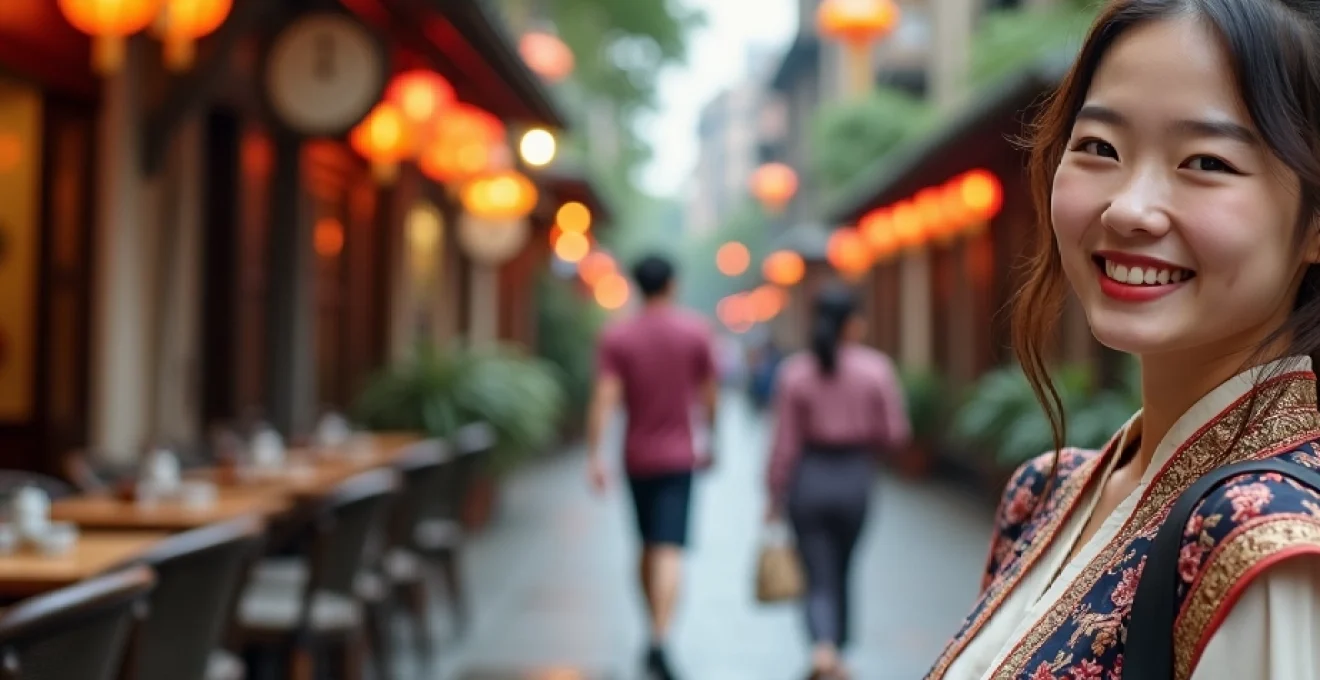
Hanoi stands as Vietnam’s cultural heartbeat, where ancient traditions seamlessly blend with modern urban life to create an extraordinary tapestry of experiences. This captivating capital city offers visitors an unparalleled journey through centuries of Vietnamese heritage, from the aromatic street food markets of the Old Quarter to the serene temples that have witnessed over a millennium of history. The city’s cultural landscape encompasses everything from traditional water puppet performances and Confucian educational sites to French colonial architecture and authentic culinary workshops. Whether you’re seeking to understand Vietnam’s complex history, immerse yourself in local customs, or participate in time-honoured artistic traditions, Hanoi provides an authentic cultural immersion that few destinations can match.
Traditional vietnamese culinary immersion experiences in hanoi’s old quarter
The culinary landscape of Hanoi represents one of the most authentic ways to experience Vietnamese culture, with food serving as both sustenance and cultural expression. The Old Quarter’s narrow streets have been home to specialised food vendors for centuries, each alley traditionally dedicated to specific trades and culinary specialities.
Street food walking tours through dong xuan market and ta hien junction
Dong Xuan Market stands as Hanoi’s largest covered market, where the sensory experience begins before you even enter the building. The market’s three floors house everything from fresh produce to traditional handicrafts, but the ground floor food section offers the most authentic glimpse into daily Vietnamese culinary culture. Local vendors serve bun bo nam bo , a dry beef noodle dish that originated in southern Vietnam but has been embraced by northern palates.
Ta Hien Junction, affectionately known as “Beer Corner,” transforms into a vibrant street food hub each evening. The intersection becomes a living theatre where locals and visitors sit on tiny plastic stools, sharing tables while sampling grilled seafood, nem nuong (grilled pork skewers), and the omnipresent bia hoi fresh beer. This corner represents the democratic nature of Vietnamese dining culture, where social hierarchies dissolve over shared meals.
Authentic pho bo preparation classes at madame hiên restaurant
Learning to prepare authentic pho bo requires understanding the delicate balance of spices that create the signature broth. Traditional preparation begins before dawn, with beef bones slowly simmered for 12-24 hours alongside star anise, cinnamon, cloves, and cardamom. The cooking process reflects Vietnamese culinary philosophy, where patience and precise timing create depth of flavour.
Professional cooking classes reveal the secrets behind achieving the perfect clarity in pho broth, a technique that involves careful temperature control and regular skimming. Participants learn to distinguish between different cuts of beef, from rare tai to well-done chin , and understand how each component contributes to the final harmonious bowl. The art extends to proper noodle preparation and the arrangement of herbs that accompany each serving.
Bia hoi corner cultural dining rituals and local etiquette
Bia hoi culture embodies Vietnamese social customs around communal dining and respect for shared spaces. The ritual begins with the selection of the freshest beer, delivered daily to establishments throughout the city. Understanding proper etiquette involves knowing when to pour for others, how to toast appropriately, and recognising the unspoken rules of table sharing during peak hours.
The practice of can bia (cheers) follows specific protocols, with younger people expected to use both hands when clinking glasses with elders. Observing these customs provides insight into Vietnamese hierarchical social structures while participating in one of the country’s most beloved traditions. The accompanying snacks, from roasted peanuts to grilled squid, each carry their own cultural significance and proper consumption methods.
Traditional vietnamese coffee culture at café giang and café dinh
Vietnamese coffee culture emerged during French colonial rule but evolved into something uniquely Vietnamese through the innovation of egg coffee and condensed milk preparation methods. Café Giang, the birthplace of ca phe trung (egg coffee), maintains the original recipe created in the 1940s when fresh milk was scarce. The preparation involves whipping raw egg yolks with condensed milk and sugar until achieving a creamy consistency that floats atop strong Vietnamese coffee.
Understanding traditional coffee preparation requires appreciation for the phin filter system, a metal dripping device that allows for slow extraction and optimal flavour development. Café Dinh continues family traditions spanning three generations, demonstrating how coffee preparation becomes a meditative practice that reflects broader Vietnamese values of patience and attention to detail.
Banh mi heritage trail through french colonial quarter
The evolution of banh mi represents Vietnam’s ability to adapt foreign influences while maintaining cultural identity. French baguettes were transformed through Vietnamese culinary innovation, incorporating indigenous ingredients like cilantro, pickled vegetables, and various protein preparations. Each neighbourhood developed its own banh mi variations, reflecting local preferences and available ingredients.
Following the heritage trail through the French Colonial Quarter reveals how architectural influences paralleled culinary development. Traditional banh mi vendors operate from the same family recipes passed down through generations, with each vendor maintaining specific ratios of pâté, mayonnaise, and fresh herbs that define their unique interpretation of this iconic sandwich.
Historical architecture and heritage site exploration in hanoi
Hanoi’s architectural landscape tells the story of Vietnam’s complex history through buildings that have witnessed dynastic changes, colonial occupation, and national independence. Each structure represents different periods of cultural influence while maintaining distinctly Vietnamese characteristics.
Temple of literature confucian educational system discovery
The Temple of Literature, established in 1070, serves as Vietnam’s first university and represents the country’s commitment to Confucian educational principles. The complex’s five courtyards follow traditional Chinese architectural patterns while incorporating Vietnamese design elements. The stelae of doctors, stone tablets honouring graduates from 1442 to 1779, provide tangible evidence of Vietnam’s scholarly traditions.
Understanding the temple’s educational significance requires examination of the examination system that produced Vietnam’s intellectual elite for centuries. The Imperial Academy attracted students from across the region, creating a scholarly community that influenced Vietnamese literature, philosophy, and governance. The architectural layout reflects Confucian hierarchy, with each courtyard representing different levels of educational achievement and spiritual development.
Hoa lo prison museum french colonial history exhibition
Hoa Lo Prison represents the complex legacy of French colonial rule in Vietnam, originally constructed in 1896 to house Vietnamese political prisoners fighting for independence. The prison’s architecture reflects French penal design principles adapted for tropical conditions, with thick walls and limited ventilation creating harsh living conditions for inmates.
The museum’s exhibitions chronicle the evolution of Vietnamese resistance movements while preserving artifacts from different periods of the prison’s operation. During the Vietnam War, American prisoners of war nicknamed the facility the “Hanoi Hilton,” adding another layer to its historical significance. The preserved guillotine and solitary confinement cells provide sobering reminders of colonial oppression and its lasting impact on Vietnamese society.
One pillar pagoda buddhist architectural significance
The One Pillar Pagoda’s unique design represents Vietnamese adaptation of Buddhist architectural principles to local conditions and beliefs. Built in 1049 during the reign of Emperor Ly Thai To, the structure’s lotus flower design symbolises purity rising from muddy waters, a central concept in Buddhist philosophy.
The pagoda’s reconstruction after its destruction in 1954 demonstrates Vietnam’s commitment to preserving cultural heritage despite political upheavals. The engineering challenge of supporting a temple structure on a single pillar reflects ancient Vietnamese building techniques that prioritised spiritual symbolism over conventional architectural stability. The surrounding pond enhances the lotus flower metaphor while providing the reflection that completes the visual design.
Imperial citadel of thang long archaeological excavations
Archaeological excavations at the Imperial Citadel have revealed continuous occupation spanning over 1,300 years, making it one of Southeast Asia’s most significant historical sites. Recent discoveries include palace foundations from the Ly Dynasty (11th century) and artifacts demonstrating trade relationships extending across Asia.
The citadel’s strategic location controlled access to the Red River delta, explaining its importance to successive dynasties. Excavation layers reveal Chinese, French, and Vietnamese architectural influences, creating a physical timeline of Hanoi’s political evolution. Underground bunkers from the Vietnam War period add contemporary historical significance to the ancient site.
Traditional vietnamese performing arts and cultural workshops
Vietnamese performing arts preserve cultural narratives that have been transmitted through generations, combining entertainment with education and spiritual practice. These art forms maintain their relevance by adapting to contemporary audiences while preserving traditional techniques and stories.
Water puppet theatre performances at thang long theatre
Water puppetry originated in the Red River delta’s rice paddies, where farmers created entertainment during flooding seasons. The art form requires exceptional skill, as puppeteers stand waist-deep in water behind a bamboo screen, manipulating wooden figures through a complex system of underwater rods and strings. Traditional performances include legends about Vietnam’s founding, agricultural cycles, and moral teachings.
The Thang Long Water Puppet Theatre maintains authentic performance traditions while providing modern audiences with cultural education. Each puppet requires individual craftsmanship, carved from sung wood and painted with traditional lacquers that resist water damage. The accompanying music uses traditional instruments including drums, wooden bells, and bamboo flutes that provide atmospheric enhancement to the visual spectacle.
Traditional quan ho folk singing lessons in bac ninh province
Quan Ho folk singing represents one of Vietnam’s most sophisticated musical traditions, recognised by UNESCO as an Intangible Cultural Heritage. The alternating male and female vocal exchanges require precise tonal control and deep understanding of traditional poetry. Learning sessions introduce participants to the complex harmonies and improvisation skills that define this art form.
The singing tradition connects to agricultural festivals and courtship customs, with specific songs designated for different seasonal celebrations. Professional instruction covers proper breathing techniques, regional dialects, and the cultural contexts that inform song selection. Participants learn to accompany themselves with traditional instruments while mastering the call-and-response patterns that characterise authentic Quan Ho performances.
Vietnamese calligraphy workshops using traditional brushes and ink
Vietnamese calligraphy evolved from Chinese character systems while developing distinctive national characteristics through the integration of Nom script and later, romanised Vietnamese. Traditional workshops teach brush handling techniques, ink preparation, and the meditative aspects of character formation. Students learn to balance artistic expression with readable communication.
The practice connects participants to scholarly traditions that dominated Vietnamese education for centuries. Understanding proper stroke order, character proportions, and spacing requirements provides insight into the patience and precision valued in Vietnamese culture. Contemporary workshops often include the creation of decorative pieces suitable for home display, connecting ancient practices with modern aesthetic preferences.
Ao dai silk garment tailoring experience in hang gai street
The ao dai represents Vietnam’s national dress, evolved from Chinese-influenced court clothing into a distinctly Vietnamese garment that balances modesty with elegant silhouette. Traditional tailoring requires precise measurements and understanding of how the garment should move with the wearer’s body. Hang Gai Street’s silk merchants maintain family businesses spanning multiple generations, preserving traditional techniques while adapting to contemporary fashion preferences.
Learning the tailoring process reveals the garment’s cultural significance and the skill required to achieve its characteristic fit. The ao dai’s panels must align perfectly, creating seamless lines that enhance rather than conceal the wearer’s figure. Fabric selection involves understanding how different silk weights and weaves affect drape and durability, knowledge traditionally passed between family members within the tailoring community.
Lake hoàn kiếm cultural district and surrounding temples
Lake Hoàn Kiếm serves as Hanoi’s spiritual and cultural centre, surrounded by temples, pagodas, and cultural institutions that reflect the city’s religious diversity and historical development. The lake’s name, meaning “returned sword,” derives from a legend involving Emperor Le Loi and a magical sword borrowed from the Dragon King, illustrating how Vietnamese culture blends historical events with mythological narratives.
The Ngoc Son Temple, accessible via the iconic Huc Bridge, demonstrates traditional Vietnamese temple architecture adapted to urban constraints. The temple complex honours multiple deities and historical figures, including the 13th-century military leader Tran Hung Dao, reflecting Vietnam’s syncretic religious traditions that combine Confucian, Taoist, and Buddhist elements with ancestor worship.
Weekend cultural activities around the lake transform the area into an outdoor cultural centre where traditional games, musical performances, and dance demonstrations provide entertainment for locals and visitors. The pedestrian-only policy during weekend evenings creates a community space that showcases contemporary Vietnamese urban culture while maintaining connections to traditional practices.
St. Joseph’s Cathedral represents the Catholic influence in Vietnamese culture, its Neo-Gothic architecture creating a striking contrast with surrounding Buddhist and Confucian structures. The cathedral’s construction in the 1880s marked the establishment of Catholic educational and social institutions that continue to play important roles in Vietnamese society, demonstrating the country’s religious tolerance and cultural adaptability.
French colonial heritage trail through hanoi’s european quarter
The French Colonial Quarter showcases architectural styles imported during the colonial period (1883-1954) while revealing how these influences were adapted to Vietnamese climate and cultural preferences. The wide boulevards lined with plane trees create a distinctly European atmosphere that contrasts sharply with the narrow alleys of the Old Quarter, illustrating the urban planning philosophy imposed by colonial administrators.
The Hanoi Opera House, modelled after the Paris Opéra, represents the pinnacle of French colonial cultural ambition in Southeast Asia. Its construction required importing European materials and craftsmen while employing Vietnamese labour, creating a building that symbolises both cultural exchange and colonial exploitation. Contemporary performances blend Western classical music with traditional Vietnamese arts, demonstrating ongoing cultural synthesis.
Government buildings throughout the quarter maintain their colonial architectural features while housing Vietnamese administrative offices, creating visual continuity with functional transformation. The Presidential Palace, originally built for French governors, now serves Vietnam’s leadership while maintaining its original architectural integrity. This adaptive reuse demonstrates Vietnam’s approach to colonial heritage: preservation without nostalgia.
Tree-lined avenues like Ly Thai To and Hai Ba Trung create green corridors that provide relief from urban density while showcasing French urban planning principles adapted to tropical conditions. The cafe culture that developed along these streets combines French dining traditions with Vietnamese culinary innovations, creating hybrid spaces that reflect contemporary Vietnamese cosmopolitan identity. These boulevards serve as venues for cultural events and parades that celebrate both Vietnamese independence and international cultural exchange.
Local artisan craft villages and traditional manufacturing techniques
Hanoi’s surrounding craft villages maintain traditional manufacturing techniques that have supplied the capital city for centuries, each village specialising in specific crafts passed down through generations. These communities preserve knowledge systems that connect contemporary Vietnamese culture to its artisanal roots while adapting traditional techniques to modern market demands.
Bat Trang ceramic village, located 13 kilometres southeast of Hanoi, has produced pottery for over 700 years using local clay and traditional glazing techniques. Visitors can observe the entire production process, from clay preparation through firing, while learning to shape basic forms on potter’s wheels. The village’s output includes both utilitarian household items and decorative pieces that incorporate ancient motifs with contemporary designs.
Van Phuc silk village demonstrates the complete silk production process, from silkworm cultivation through weaving and dyeing. Traditional looms operated by skilled artisans create textiles with patterns that reflect both ancient Vietnamese designs and contemporary fashion trends. The village maintains quality standards that have made Vietnamese silk internationally recognised while preserving traditional techniques that require years to master.
Dong Ho folk painting village specialises in woodblock printing techniques used to create traditional Vietnamese art. The process involves carving intricate designs into wooden blocks, then applying natural pigments derived from local plants and minerals. Each print requires multiple colour applications, with precise registration ensuring crisp final images. These paintings traditionally decorated Vietnamese homes during Tet celebrations, depicting auspicious symbols and moral lessons that reflect traditional Vietnamese values.
The preservation of traditional crafts in villages around Hanoi ensures that ancient techniques continue to evolve while maintaining their cultural authenticity, creating products that serve both functional and symbolic purposes in contemporary Vietnamese society.
Paper making in Buoi village utilizes techniques developed during Chinese rule but adapted to local materials and climate conditions. Artisans create various paper types, from everyday writing materials to specialised papers used for calligraphy and religious ceremonies. The process begins with bark collection and continues through multiple stages of preparation, pressing, and drying that require precise timing and environmental conditions.