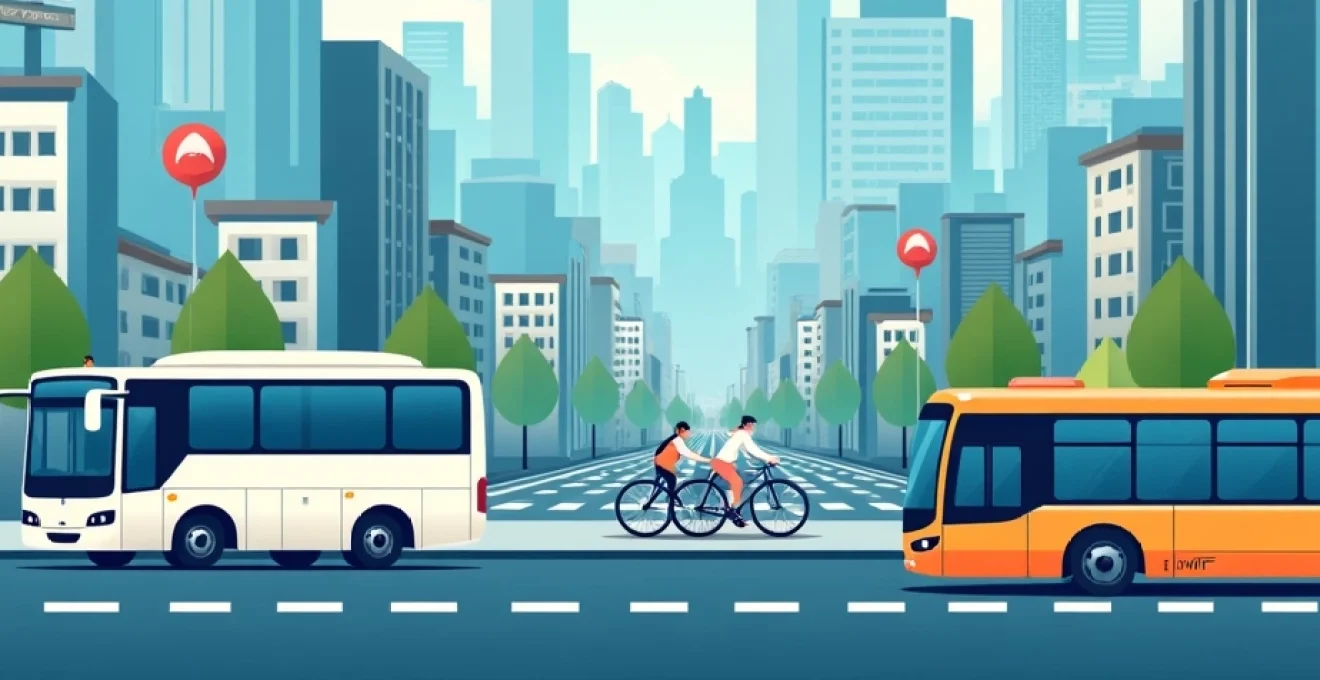
Modern travel has transformed dramatically in recent years, with technology revolutionising how we navigate cities and countries while keeping costs manageable. The rise of integrated transport systems, dynamic pricing models, and innovative mobility solutions has created unprecedented opportunities for budget-conscious travellers to explore destinations efficiently. From seamless contactless payments across multiple transport modes to algorithm-driven pricing that rewards strategic booking, today’s transport landscape offers sophisticated yet accessible options for every type of journey.
Understanding these evolving transport ecosystems becomes crucial as urban areas worldwide implement smart mobility solutions designed to reduce congestion while improving affordability. Whether you’re navigating the underground networks of major metropolitan areas or seeking the most economical flight routes between continents, mastering these systems can significantly impact your travel budget. The convergence of traditional transport methods with cutting-edge technology platforms has created a complex but navigable web of options that savvy travellers can leverage to their advantage.
Public transport networks and Multi-Modal journey planning
The backbone of affordable urban travel lies in sophisticated public transport networks that have evolved far beyond simple bus and rail systems. Modern cities now offer integrated networks where multiple transport modes work in harmony, creating seamless journey experiences that optimise both time and cost. These networks typically combine underground rail systems, surface buses, trams, and even ferry services into cohesive ecosystems managed through centralised planning platforms.
Multi-modal journey planning has become the cornerstone of efficient urban navigation, allowing travellers to combine different transport types within a single trip while maintaining cost-effectiveness. Advanced algorithms now calculate not just the fastest routes, but also the most economical combinations of transport modes, taking into account real-time pricing, delays, and capacity constraints. This integrated approach often reveals journey options that individual transport mode planning would miss, such as combining a short bus ride with a longer rail journey to avoid premium pricing zones.
Contactless payment systems: oyster cards, suica, and metro pass integration
Contactless payment technology has fundamentally transformed how travellers interact with public transport systems, eliminating the friction of ticket purchasing while often providing automatic fare optimisation. Systems like London’s Oyster Card, Tokyo’s Suica, and various metro pass integrations worldwide represent sophisticated payment platforms that calculate the most cost-effective fare structure automatically. These cards typically offer daily and weekly caps, ensuring that frequent users never pay more than the equivalent period pass, regardless of how many individual journeys they take.
The technology behind these systems extends beyond simple payment processing to include dynamic pricing calculations that consider journey patterns, peak times, and transfer requirements. Many modern contactless systems now integrate with mobile wallets and smartphone applications, allowing travellers to top up credit, check journey history, and receive personalised recommendations for cost savings. The convenience factor alone makes these systems invaluable , but their ability to automatically apply the most favourable pricing structure often results in savings that travellers might not achieve through manual ticket purchasing.
Real-time transit apps: citymapper, moovit, and local transport authority platforms
Real-time transit applications have revolutionised journey planning by providing up-to-the-minute information about delays, capacity, and alternative routing options. Platforms like Citymapper and Moovit aggregate data from multiple transport operators, creating comprehensive views of urban mobility that include walking times, cycling options, and ride-sharing alternatives alongside traditional public transport. These applications often reveal cost-saving opportunities by suggesting slightly longer routes that use less expensive transport modes or highlighting times when cheaper off-peak pricing applies.
Local transport authority platforms frequently offer the most accurate real-time data for their specific networks, often including features like live capacity monitoring and predictive delay information. Many of these official applications also provide exclusive features such as advance booking for certain services, group travel discounts, and integration with local events that might affect transport availability. The key advantage of using multiple apps simultaneously lies in cross-referencing information to find the optimal balance between speed, cost, and reliability for each specific journey.
Off-peak pricing strategies and Zone-Based fare calculations
Understanding off-peak pricing structures can dramatically reduce transport costs, particularly in cities with sophisticated time-based fare systems. These pricing models typically divide the day into peak, off-peak, and sometimes super off-peak periods, with significant fare reductions available outside busy commuting hours. The savings can be substantial – often 30-50% less than peak fares – making flexible travel timing one of the most effective cost-reduction strategies available to budget-conscious travellers.
Zone-based fare calculations add another layer of complexity and opportunity for cost optimisation. Many urban transport systems divide their coverage areas into concentric zones, with fares calculated based on the zones traversed during a journey. Understanding these zone boundaries allows travellers to make strategic decisions about routing and can sometimes reveal opportunities to reduce costs by walking short distances to start journeys from different zones. Some systems also offer zone-specific passes that provide unlimited travel within certain areas, which can be more economical than individual journey tickets for intensive exploration of particular districts.
Intermodal connectivity: Bus-to-Rail transfers and integrated ticketing systems
Intermodal connectivity represents the pinnacle of efficient public transport design, where seamless transfers between different transport modes are facilitated through integrated ticketing and coordinated scheduling. These systems recognise that the most cost-effective journeys often involve combining multiple transport types, such as using buses for first-and-last-mile connectivity with rail networks for longer distances. Integrated ticketing ensures that these transfers don’t incur additional booking fees or require separate payment processes, maintaining the cost advantages of public transport usage.
Modern intermodal systems often include real-time coordination between different transport modes, with algorithms adjusting schedules to minimise connection times and reduce the risk of missed transfers. Some advanced systems even hold connecting services for delayed feeder routes, though this is typically reserved for critical connections. The financial benefits of well-designed intermodal systems extend beyond simple fare integration to include reduced journey times and improved reliability, both of which contribute to overall travel cost efficiency by reducing the need for expensive backup transport options.
Budget airlines and flight aggregation platforms
The budget airline industry has fundamentally reshaped long-distance travel accessibility, creating opportunities for affordable international and domestic travel that were previously impossible. These airlines operate on completely different business models compared to traditional carriers, stripping base fares to absolute minimums while monetising additional services separately. Understanding these models becomes crucial for travellers seeking to maximise value while avoiding unexpected costs that can quickly inflate initially attractive ticket prices.
Flight aggregation platforms have emerged as essential tools for navigating the complex pricing landscape created by multiple airlines operating different fare structures and route networks. These platforms employ sophisticated algorithms to compare not just ticket prices, but total journey costs including baggage fees, seat selection charges, and ground transport requirements. The most effective aggregation platforms now incorporate real-time pricing data and predictive analytics to suggest optimal booking timing and alternative routing strategies.
Low-cost carrier revenue models: ryanair, easyjet, and ancillary service pricing
Low-cost carriers like Ryanair and easyJet have perfected unbundled pricing models that allow them to advertise extremely low base fares while generating substantial revenue through ancillary services. These airlines typically charge separately for checked baggage, seat selection, priority boarding, in-flight refreshments, and even printing boarding passes at the airport. Understanding these fee structures becomes essential for accurate cost comparison, as a seemingly expensive traditional airline ticket might actually be more economical when all required services are included.
The ancillary pricing strategies employed by budget airlines often follow demand-based models, with fees fluctuating based on route popularity, seasonal demand, and booking timing. Savvy travellers learn to navigate these systems by booking ancillary services at optimal times, packing strategically to avoid baggage fees, and using mobile check-in to avoid additional charges. Some budget airlines also offer subscription-style services or annual passes that can provide significant savings for frequent travellers on specific routes.
Dynamic pricing algorithms and optimal booking windows
Airline pricing algorithms have become incredibly sophisticated, adjusting fares in real-time based on demand patterns, competitor pricing, historical booking data, and even external factors like weather forecasts and local events. These systems can change prices multiple times per day, creating both opportunities and challenges for cost-conscious travellers. Understanding the general patterns of these algorithms – such as the tendency for prices to increase as departure dates approach – helps travellers time their bookings strategically.
Research suggests that optimal booking windows vary significantly by route and season, but generally fall between 6-8 weeks before departure for domestic flights and 8-12 weeks for international travel. However, these algorithms also create opportunities for last-minute deals when airlines need to fill remaining seats, particularly on less popular routes or during off-peak seasons. The key to leveraging dynamic pricing lies in flexibility and monitoring, using fare alert services and being prepared to book immediately when prices drop to acceptable levels.
Alternative airport strategies: secondary hubs and ground transport calculations
Alternative airport strategies can provide significant cost savings, particularly when combined with efficient ground transport to final destinations. Secondary airports often offer substantially lower landing fees, which airlines pass on to consumers through reduced fares. However, these savings must be weighed against additional ground transport costs and time requirements to reach city centres or final destinations.
Calculating total journey costs requires factoring in ground transport expenses, which can vary dramatically between primary and secondary airports. Some budget airlines operate from airports that require expensive taxi rides or limited public transport options, potentially negating fare savings. Conversely, well-connected secondary airports with efficient rail links can offer both lower airfares and reasonable ground transport costs. Strategic airport selection becomes particularly valuable for travellers with flexible schedules who can optimise their entire journey rather than focusing solely on flight costs.
Cabin baggage restrictions and fee avoidance techniques
Mastering cabin baggage restrictions represents one of the most effective strategies for maintaining low travel costs with budget airlines. These restrictions have become increasingly strict, with many airlines implementing stringent size and weight limits for cabin baggage while charging substantial fees for non-compliance. Understanding these restrictions and packing accordingly can save significant amounts, as excess baggage fees often exceed the original ticket price.
Effective fee avoidance techniques include strategic packing using compression techniques, wearing heavy items rather than packing them, and understanding airline-specific policies about personal items versus cabin baggage. Some travellers develop sophisticated packing systems using lightweight, compressible clothing and multi-purpose items to maximise utility while staying within restrictions. The investment in appropriate lightweight luggage typically pays for itself within a few trips through avoided excess baggage fees, making it a worthwhile consideration for frequent budget travellers.
Ride-sharing and Micro-Mobility solutions
The emergence of ride-sharing and micro-mobility solutions has created entirely new categories of transport options that fill gaps in traditional public transport networks while often providing cost-effective alternatives to private vehicle ownership. These platforms leverage technology to optimise vehicle utilisation and route efficiency, creating economies of scale that can make individual trips surprisingly affordable. The key to maximising value from these services lies in understanding their pricing algorithms and using them strategically as part of broader journey planning.
Micro-mobility solutions, including electric scooters and bike-sharing systems, have proven particularly effective for first-and-last-mile connectivity, solving one of the most persistent challenges in urban transport planning. These services often provide the optimal balance between cost, speed, and convenience for short urban journeys, particularly when public transport routes don’t align perfectly with desired destinations. The integration of these services with traditional transport planning creates opportunities for cost-effective multi-modal journeys that would be impossible using any single transport mode.
Algorithm-based surge pricing: uber, lyft, and regional platform variations
Surge pricing algorithms employed by platforms like Uber and Lyft represent sophisticated demand-response systems designed to balance supply and demand in real-time. These algorithms consider factors including current demand levels, driver availability, historical patterns, weather conditions, and local events to adjust pricing dynamically. Understanding these patterns allows strategic users to avoid peak pricing periods and identify times when rides are most cost-effective.
Regional platforms often implement variations of surge pricing that reflect local transport patterns and competitive landscapes. Some platforms use more transparent pricing structures, while others employ more aggressive surge multipliers during peak demand periods. Monitoring multiple platforms simultaneously often reveals price differences, as each platform’s algorithm responds differently to the same market conditions. Many experienced users develop strategies for timing their requests to avoid surge pricing, such as waiting a few minutes during peak periods or walking short distances to areas with better supply-demand balance.
Electric scooter networks: lime, bird, and municipal licensing schemes
Electric scooter networks have rapidly expanded globally, with operators like Lime and Bird creating dense networks of shared micro-mobility devices in urban areas. These services typically use per-minute pricing models with initial unlocking fees, making them cost-effective for short trips but potentially expensive for longer journeys. The key to cost-effective scooter usage lies in understanding the pricing structure and using these devices strategically for trips where they offer clear advantages over alternatives.
Municipal licensing schemes increasingly regulate scooter operations, often influencing pricing structures and service availability. Some cities implement caps on fleet sizes or require operators to serve less profitable areas, affecting overall system economics and pricing. Understanding local regulations can help users anticipate service availability and pricing changes. The most cost-effective scooter strategies typically involve using these devices for specific journey segments where they provide clear time or convenience advantages, rather than as primary transport modes for longer trips.
Bike-sharing systems: boris bikes, vélib’, and dockless technology integration
Bike-sharing systems have evolved significantly from early dock-based models like London’s Boris Bikes and Paris’s Vélib’ to sophisticated hybrid systems that combine docked and dockless technologies. These systems typically offer excellent value for short and medium-distance urban journeys, with pricing structures designed to encourage turnover rather than long-term usage. Understanding the pricing models becomes crucial, as many systems impose escalating charges for longer trips to ensure bicycle availability for other users.
Dockless technology integration has improved system flexibility while creating new operational challenges that affect user costs and experience. These systems use GPS tracking and smartphone applications to locate and unlock bicycles, eliminating the constraint of fixed docking stations but sometimes creating issues with bicycle availability and maintenance quality. Successful bike-sharing usage requires understanding local system characteristics, including bicycle quality standards, maintenance schedules, and area coverage limitations that might affect journey planning and total costs.
Carpooling platforms: BlaBlaCar and Peer-to-Peer journey matching
Carpooling platforms like BlaBlaCar have created new markets for shared long-distance travel, offering significant cost savings compared to traditional transport modes while providing social interaction opportunities. These platforms work by matching drivers with passengers travelling similar routes, typically for intercity or regional journeys where public transport might be limited or expensive. The cost savings can be substantial, often providing travel options at 50-70% less than equivalent train or bus fares.
Peer-to-peer journey matching requires careful consideration of timing flexibility, as carpooling typically involves fixed departure times and limited schedule flexibility compared to public transport options. However, the cost advantages often justify this constraint, particularly for longer journeys where the absolute savings become significant. Platform-specific features like driver ratings, route flexibility, and payment security vary considerably, making platform selection an important consideration for regular users. The social aspect of carpooling can enhance the travel experience beyond simple cost considerations, providing opportunities for local insights and cultural exchange that other transport modes cannot offer.
Overland coach services and Long-Distance bus networks
Long-distance coach services represent one of the most cost-effective transport options for intercity and international travel, often providing fares significantly below equivalent rail or air transport. Modern coach services have evolved far beyond basic transportation to offer comfortable, connected travel experiences with amenities like Wi-Fi, power outlets, and sometimes even entertainment systems. The key advantages of coach travel extend beyond simple cost savings to include city-centre to city-centre routes that eliminate airport transfer costs and downtown accessibility that rail services sometimes cannot match.
The economics of coach travel work particularly well for routes where air travel involves significant additional costs for airport access or where rail infrastructure is limited or premium-priced. Coach networks often serve destinations that other transport modes reach infrequently or not at all, creating opportunities for affordable access to smaller cities and rural areas. Understanding coach network structures and booking strategies can unlock travel opportunities that would be prohibitively expensive using other transport modes, particularly for flexible travellers who can take advantage of advance booking discounts and off-peak scheduling.
European coach networks like FlixBus and National Express demonstrate how modern coach services can compete effectively with other transport modes through dynamic pricing, extensive route networks, and integrated booking systems. These services often provide better value than budget airlines when total journey costs including airport transfers are considered. Strategic coach travel planning involves understanding route frequencies, advance booking discounts, and seasonal pricing variations that can significantly impact total travel costs.
The most successful budget travellers view coach services not as a compromise but as a strategic choice that often provides superior value and convenience for specific types of journeys, particularly when time flexibility allows for advance planning
Digital nomad transport subscriptions and regional pass systems
The rise of digital nomadism has created demand for flexible transport solutions that accommodate extended stays and multi-destination itineraries without the premium pricing typically associated with tourist travel. Regional pass systems have evolved to meet this need, offering monthly or quarterly subscriptions that provide unlimited or heavily discounted travel within specific geographic areas. These systems recognise that modern remote workers often establish temporary bases in cities for weeks or months, requiring transport solutions that bridge the gap between tourist passes and local resident pricing.
Digital nomad transport subscriptions typically combine multiple transport modes into unified pricing structures, recognising that remote workers need reliable, cost-effective access to urban transport networks for both work and exploration purposes. Many European cities now offer special visa categories for remote workers, often accompanied by transport packages that provide significant savings compared to individual journey pricing. The economics of these subscriptions become particularly attractive for stays exceeding two weeks, where daily transport costs would otherwise accumulate to substantial amounts.
Regional pass systems have expanded beyond traditional rail networks to encompass integrated transport ecosystems that include buses, trams, bike-sharing, and sometimes even discounted ride-sharing services. Countries like Germany offer regional passes that provide unlimited travel within federal states, while Switzerland’s various pass options cater to different journey patterns and duration requirements. Understanding these systems requires analysing coverage areas, validity periods, and included services to determine optimal value for specific travel patterns and base location strategies.
The flexibility offered by modern regional pass systems often extends to modification and pause options that accommodate the unpredictable nature of remote work travel. Some systems allow subscribers to pause their passes during travel periods outside the coverage area, while others offer graduated pricing based on anticipated usage patterns. Strategic pass selection involves projecting travel patterns over subscription periods and understanding how seasonal variations might affect both transport availability and pricing structures throughout the validity period.
The most sophisticated digital nomads treat transport subscriptions as infrastructure investments, carefully analysing coverage areas, seasonal variations, and included services to create cost-effective mobility foundations that support both productive work routines and comprehensive destination exploration
Advanced regional pass systems now incorporate technology platforms that provide real-time optimisation recommendations, suggesting alternative routes during peak times and highlighting included services that subscribers might not fully utilise. These platforms often include integration with co-working space networks, accommodation booking systems, and local event information that helps remote workers maximise the value of their transport investments. The convergence of transport, accommodation, and workspace planning creates opportunities for comprehensive cost optimisation that extends far beyond simple journey pricing considerations.