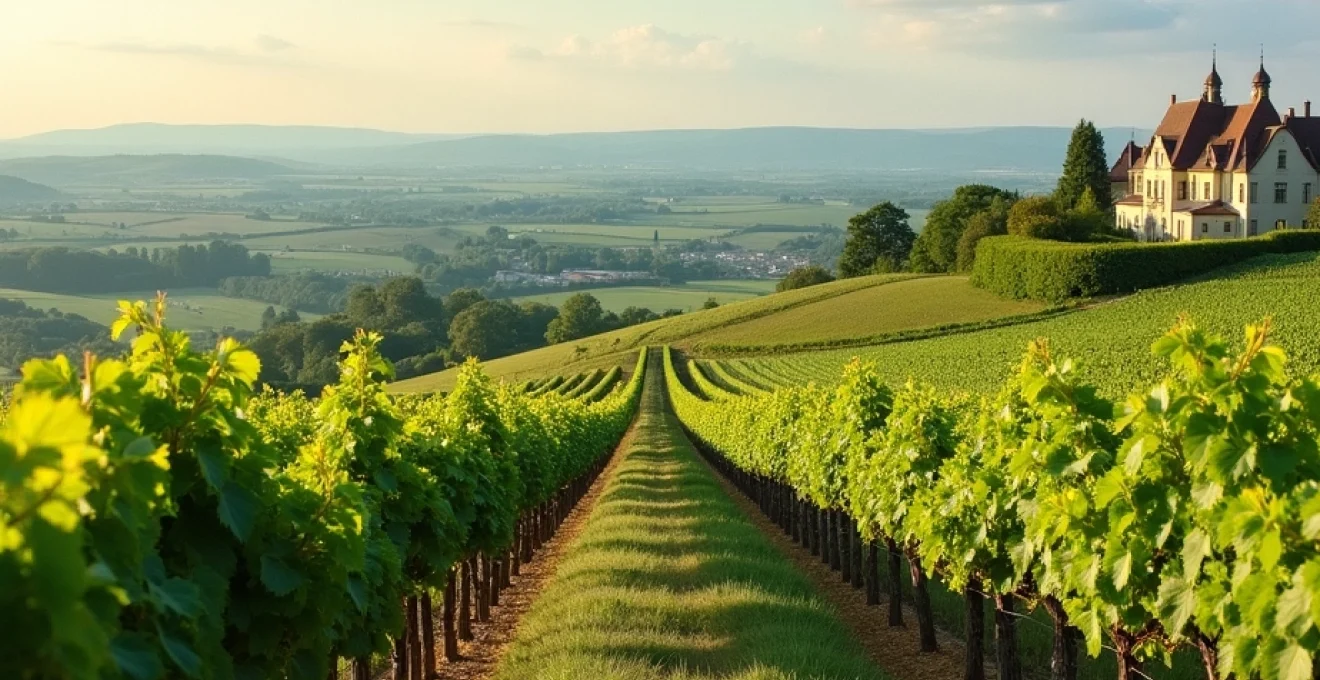
Burgundy stands as France’s most prestigious wine region, where centuries of meticulous viticulture have created a mosaic of vineyards that produce some of the world’s most coveted bottles. This ancient wine territory stretches across eastern France, encompassing rolling hills dotted with limestone-rich soils that have given birth to legendary appellations like Romanée-Conti and Montrachet. The region’s unique terroir, characterised by its complex geological formations and microclimate variations, creates wines of extraordinary finesse and complexity that command global respect.
For wine enthusiasts, Burgundy offers an unparalleled journey through viticultural history, where every village tells a story through its distinctive climats and winemaking traditions. The region’s classification system, from regional appellations to the exalted Grand Cru status, provides a framework for understanding how soil, slope, and exposure combine to create wines that express their precise geographical origins. Whether you’re seeking the powerful Pinot Noirs of the Côte de Nuits or the elegant Chardonnays of the Côte de Beaune, Burgundy rewards those who approach it with patience and curiosity.
Understanding burgundy’s appellations and terroir classifications
The Burgundy appellation system represents one of wine’s most sophisticated classification frameworks, built upon centuries of observation and refinement. This hierarchical structure divides the region’s production into four distinct quality levels, each reflecting the specific characteristics of their geographical origins. At the foundation lie Regional appellations, which account for approximately 52% of production and include wines labelled as Bourgogne Rouge or Bourgogne Blanc . These entry-level wines provide an accessible introduction to Burgundy’s house style whilst maintaining the region’s commitment to terroir expression.
Village-level appellations represent the next tier, comprising 37% of total production and bearing the names of their commune origins such as Gevrey-Chambertin or Meursault. These wines demonstrate increased complexity and character, reflecting the specific soil compositions and microclimates of their respective villages. Premier Cru designations account for 10% of production, sourced from exceptional vineyard plots within village boundaries that possess superior exposure, drainage, or soil composition. The apex of this system, Grand Cru appellations, represents merely 1% of Burgundy’s output yet commands global attention for wines that epitomise perfection in their respective terroirs.
The classification system functions as a geographical GPS for wine quality, where each level reflects increasing precision in terroir expression and winemaking excellence.
Grand cru vineyards: chambertin, Romanée-Conti, and montrachet
Burgundy’s 33 Grand Cru vineyards represent the pinnacle of viticultural achievement, where exceptional terroir meets generations of refined winemaking expertise. Chambertin, Napoleon’s favoured wine, exemplifies the power and elegance possible when Pinot Noir finds its ideal expression in Gevrey-Chambertin’s limestone-rich soils. This 13-hectare vineyard produces wines of remarkable concentration and longevity, displaying complex aromatics that evolve from youthful red fruit to mature earth and game characteristics over decades of cellaring.
Romanée-Conti stands as perhaps the most famous vineyard in the wine world, occupying just 1.8 hectares of prime slope in Vosne-Romanée. The vineyard’s unique combination of clay-limestone soils and perfect southeastern exposure creates wines of extraordinary finesse and complexity. Recent soil analysis reveals high levels of active limestone and iron oxide, contributing to the wine’s distinctive mineral backbone and exceptional aging potential. Production rarely exceeds 6,000 bottles annually, making each vintage a collector’s treasure.
Montrachet, shared between Puligny-Montrachet and Chassagne-Montrachet, produces what many consider the world’s greatest Chardonnay. This 8-hectare vineyard benefits from a unique microclimate created by its mid-slope position and optimal sun exposure throughout the growing season. The soil composition, featuring white marl over hard limestone bedrock, provides excellent drainage whilst retaining sufficient moisture for consistent grape development. Montrachet wines display remarkable complexity, combining mineral precision with rich texture and extraordinary aging potential that can span several decades.
Premier cru designations across côte d’or communes
The Côte d’Or houses 640 Premier Cru vineyard plots, each recognised for specific terroir advantages that elevate them above village-level status. These climats demonstrate how subtle differences in elevation, exposure, or soil composition can dramatically influence wine character. In Beaune alone, 42 Premier Cru vineyards showcase the diversity possible within a single commune, from the clay-rich soils of Les Grèves that produce structured reds to the limestone-heavy Les Cent Vignes known for elegant whites.
Nuits-Saint-Georges Premier Cru vineyards illustrate the importance of geological diversity in Premier Cru classification. Les Saint-Georges, arguably the commune’s finest Premier Cru, occupies a steep southeast-facing slope with Bajocian limestone soils that provide excellent drainage and mineral complexity. Meanwhile, Les Vaucrains benefits from deeper clay content that produces more powerful, structured wines requiring extended cellaring. These geological variations create distinct wine personalities within the same appellation framework.
The Premier Cru system recognises that exceptional terroir exists beyond Grand Cru boundaries, often producing wines of comparable quality at more accessible prices. Many Premier Cru vineyards neighbour Grand Cru sites, sharing similar geological features whilst maintaining their own distinctive characteristics. This proximity allows wine enthusiasts to explore Grand Cru-level complexity without the associated premium pricing, making Premier Cru wines essential for understanding Burgundy’s terroir diversity.
Village-level appellations from Gevrey-Chambertin to Puligny-Montrachet
Village appellations form Burgundy’s qualitative backbone, representing wines that express their commune’s general character whilst offering excellent value for exploring regional diversity. Gevrey-Chambertin village wines demonstrate the commune’s reputation for producing powerful, age-worthy Pinot Noirs with characteristic earthy undertones and robust tannin structure. The village’s limestone-clay soils, combined with favorable southeastern exposure, create wines that bridge the gap between approachable Regional appellations and prestigious Premier Cru bottlings.
Puligny-Montrachet village wines showcase the commune’s mastery of Chardonnay, displaying the mineral precision and elegant structure that characterise the appellation. These wines benefit from the same limestone-rich soils that nurture the famous Montrachet Grand Cru, albeit from vineyard plots with slightly different exposures or elevations. The result is Chardonnay of remarkable purity and complexity that reveals the terroir characteristics that make this commune legendary among white wine producers worldwide.
Each village appellation maintains distinct personality traits shaped by local geology, climate, and winemaking traditions. Chassagne-Montrachet produces both exceptional whites and underrated reds, whilst Volnay specialises in elegant, perfumed Pinot Noirs that exemplify finesse over power. Understanding these village characteristics enables wine enthusiasts to navigate Burgundy’s complexity whilst discovering exceptional values that capture each commune’s essential character.
Climats system and UNESCO world heritage recognition
The climats system represents Burgundy’s unique contribution to viticultural science, recognising that even small vineyard plots possess distinctive characteristics worthy of individual recognition. This concept, formally acknowledged by UNESCO World Heritage status in 2015, encompasses 1,247 precisely delineated vineyard plots across the Côte d’Or. Each climat reflects centuries of observation regarding how specific combinations of soil, exposure, and microclimate influence wine character, creating a living map of terroir expression unmatched anywhere in the wine world.
UNESCO recognition validates the climats system as an outstanding example of cultural landscape shaped by human interaction with natural environment over nearly two millennia. The designation acknowledges how Burgundian vignerons have developed an intricate understanding of their land, passing knowledge through generations whilst continuously refining their techniques. This recognition also highlights the importance of preserving traditional viticultural practices that maintain the region’s distinctive character against modern homogenisation pressures.
The climats concept extends beyond mere geographical designation to encompass a philosophy of wine production that prioritises site-specific expression over brand consistency. This approach encourages diversity and experimentation within traditional frameworks, allowing individual producers to interpret their specific climat whilst respecting established quality standards. For visitors, understanding the climats system provides deeper appreciation for why Burgundy wines command such respect and why even neighbouring vineyards can produce dramatically different expressions.
Navigating the côte de nuits wine route
The Côte de Nuits represents Pinot Noir’s spiritual homeland, stretching 20 kilometres from Dijon southward to Corgoloin along a narrow band of perfectly positioned vineyards. This golden slope captures optimal sun exposure throughout the growing season whilst benefiting from limestone-rich soils that provide excellent drainage and mineral complexity. The route encompasses 24 of Burgundy’s 33 Grand Cru appellations, creating an unparalleled concentration of viticultural excellence within a remarkably compact geographical area.
Modern wine tourism infrastructure along the Côte de Nuits has evolved to accommodate increasing international interest whilst preserving the region’s authentic character. Purpose-built tasting facilities complement traditional cellars, offering controlled environments for experiencing these precious wines at their optimal serving conditions. Many producers now offer educational experiences that combine vineyard walks with detailed explanations of terroir characteristics, winemaking techniques, and vintage variation factors that influence final wine quality.
The Route des Grands Crus provides a scenic framework for exploring the Côte de Nuits, with clear signage directing visitors through each commune whilst highlighting significant vineyard sites and historical landmarks. Strategic timing becomes crucial , as harvest season (typically September-October) offers unique opportunities to witness winemaking in action, though advance booking becomes essential during peak periods. Spring visits reveal the vineyards’ awakening beauty, whilst winter provides intimate tasting experiences without tourist crowds.
Gevrey-chambertin to vougeot: pinot noir powerhouses
Gevrey-Chambertin anchors the northern Côte de Nuits with nine Grand Cru appellations, more than any other commune in Burgundy. The village’s reputation rests upon Chambertin and Chambertin-Clos de Bèze, vineyards that have produced legendary wines for over a millennium. The commune’s success stems from exceptional terroir combining Bajocian and Bathonian limestone substrates with perfectly angled slopes that capture maximum sunlight whilst maintaining excellent drainage. These geological advantages create ideal conditions for producing Pinot Noir of exceptional power, complexity, and longevity.
Morey-Saint-Denis offers a more intimate exploration experience, housing four Grand Cru vineyards within compact village boundaries. Clos de la Roche, the commune’s largest Grand Cru, demonstrates how soil depth and composition influence wine style, producing robust yet elegant Pinot Noirs with distinctive mineral undertones. The village maintains strong family winemaking traditions, with many domaines offering personalised tastings that reveal how individual interpretations of shared terroir create diverse wine personalities.
Vougeot culminates this northern section with the famous Clos de Vougeot, Burgundy’s largest Grand Cru at 50 hectares. Originally cultivated by Cistercian monks from nearby Cîteaux Abbey, this vineyard demonstrates how historical winemaking practices continue influencing modern production. The Clos encompasses varying soil compositions and elevations, creating diverse wine styles from over 80 different proprietors. This diversity within unity exemplifies Burgundy’s complexity whilst showcasing how shared terroir can produce multiple valid interpretations.
Vosne-romanée and Flagey-Échézeaux tasting experiences
Vosne-Romanée commands reverence as the epicentre of Burgundy’s most prestigious vineyard holdings, housing six Grand Cru appellations including the legendary Romanée-Conti. The commune benefits from exceptional geological diversity, with each Grand Cru vineyard occupying distinct soil compositions that create unique wine personalities. La Tâche’s monopole status under Domaine de la Romanée-Conti demonstrates how single-producer interpretation of exceptional terroir can achieve transcendent results, whilst neighbouring Richebourg shows similar potential under multiple ownership structures.
Flagey-Échézeaux, though geographically separate from the main Côte de Nuits, contributes two Grand Cru appellations that showcase different expressions of limestone terroir. Échézeaux, the larger of the two, encompasses diverse soil types that produce wines ranging from elegant and perfumed to powerful and structured, depending on specific vineyard location. Grands-Échézeaux occupies superior positioning with more homogeneous soils that consistently produce wines of greater concentration and aging potential.
Visiting these communes requires careful planning, as many prestigious domaines operate by appointment only and maintain limited production quantities. Building relationships with local wine merchants often provides access to rare bottlings and expert guidance through tasting experiences. The concentration of excellence within these villages creates unique opportunities to compare different interpretations of similar terroir, revealing how winemaking philosophy influences final wine character whilst respecting underlying geological foundations.
Nuits-saint-georges négociant houses and cellars
Nuits-Saint-Georges functions as the Côte de Nuits’ commercial hub, housing major négociant houses that have shaped Burgundy’s global reputation for centuries. These businesses combine grape sourcing across multiple appellations with extensive cellaring facilities, creating wines that showcase regional diversity whilst maintaining consistent quality standards. Maison Louis Jadot and Bouchard Père & Fils represent prominent examples, offering comprehensive tasting experiences that span the entire Burgundy hierarchy from Regional appellations to Grand Cru bottlings.
The town’s négociant tradition developed from practical necessity, as small vineyard holdings made individual marketing impractical for most producers. Modern négociant houses maintain this historical role whilst adapting to contemporary quality expectations, investing heavily in vineyard acquisition and state-of-the-art winemaking facilities. These operations provide excellent educational opportunities for understanding how large-scale production maintains Burgundy’s quality standards whilst exploring economies of scale that make fine Burgundy more accessible to global markets.
Underground cellars throughout Nuits-Saint-Georges showcase remarkable engineering achievements, with some facilities extending several levels beneath the town’s streets. These temperature-controlled environments maintain optimal aging conditions year-round, allowing visitors to experience wines at various maturation stages whilst learning how extended cellaring develops complexity and character. Many houses offer comparative tastings that demonstrate vintage variation effects and provide insights into optimal drinking windows for different wine styles.
Clos de vougeot château and confrérie des chevaliers du tastevin
The Château du Clos de Vougeot stands as Burgundy’s most iconic landmark, representing nine centuries of continuous winemaking tradition within its ancient stone walls. Originally constructed by Cistercian monks in the 12th century, the château houses historic wine presses, fermentation vessels, and cellars that demonstrate medieval winemaking techniques still influencing modern practices. The building’s preservation allows visitors to experience authentic historical winemaking environments whilst understanding how monastic dedication to quality established Burgundy’s reputation for excellence.
The Confrérie des Chevaliers du Tastevin, founded in 1934, uses the château as headquarters for promoting Burgundy wines worldwide through ceremonial tastings and educational programs. This brotherhood maintains traditional tasting protocols that emphasise terroir appreciation and quality assessment, offering visitors opportunities to participate in formal wine evaluation sessions. The confrérie’s influence extends beyond ceremony, as their Tastevinage quality certification helps consumers identify exceptional bottles whilst supporting producers who maintain traditional standards.
Regular events at the château provide immersive experiences combining historical education with practical wine knowledge, from harvest celebrations that demonstrate traditional picking techniques to winter tastings focusing on cellar aging processes. The venue’s unique atmosphere, enhanced by candlelit medieval cellars and period costumes, creates memorable experiences that deepen appreciation for Burgundy’s cultural significance. These events often feature wines unavailable elsewhere, providing access to rare bottlings whilst supporting ongoing château preservation efforts.
Exploring côte de beaune’s chardonnay and pinot noir estates
The Côte de Beaune encompasses Burgundy’s most diverse wine production, spanning from the historic town of Beaune southward to Santenay across 25 kilometres of gently rolling vineyard slopes. This southern section of the Côte d’Or demonstrates remarkable versatility, producing both exceptional Chardonnays that rank among the world’s finest white wines and elegant Pinot Noirs that
showcase remarkable finesse and complexity. Unlike the power-focused wines of the Côte de Nuits, Côte de Beaune expressions emphasise elegance and balance, reflecting the region’s slightly warmer climate and diverse soil compositions that range from pure limestone to clay-rich marl formations.
The region’s geological complexity creates distinct microclimates that allow both grape varieties to thrive, often within the same commune boundaries. This diversity enables producers to craft wines that express specific terroir characteristics whilst maintaining varietal authenticity. Modern viticultural practices have enhanced this natural potential, with many estates adopting organic and biodynamic farming methods that preserve soil health and promote sustainable wine production for future generations.
Wine tourism infrastructure throughout the Côte de Beaune reflects the region’s dual focus on tradition and accessibility, with many estates offering educational experiences that combine technical knowledge with cultural immersion. From intimate cellar tastings to comprehensive vineyard tours, these experiences provide deep insights into how geographical factors influence wine character whilst showcasing the passionate dedication that defines Burgundian winemaking philosophy.
Meursault and Puligny-Montrachet white wine domaines
Meursault represents Chardonnay excellence through its distinctive approach to white wine production, emphasising richness and texture over pure minerality. The commune’s Premier Cru vineyards, including Les Perrières and Les Genevrières, occupy mid-slope positions with limestone-clay soils that provide optimal conditions for producing structured, age-worthy Chardonnays. These wines demonstrate remarkable evolution potential, developing complex honeyed characteristics and nutty undertones through careful cellaring that can span decades.
Puligny-Montrachet commands global recognition as Chardonnay’s most prestigious address, housing four Grand Cru appellations that represent the pinnacle of white wine achievement. The commune’s limestone-rich soils, combined with precise elevation gradients, create ideal conditions for producing wines of exceptional mineral purity and structural integrity. Domaines like Leflaive and Sauzet have perfected techniques that capture terroir essence whilst preserving the grape’s natural elegance, creating wines that serve as benchmarks for premium Chardonnay production worldwide.
Visiting these communes reveals the meticulous attention to detail that defines world-class Chardonnay production, from precise harvest timing to temperature-controlled fermentation processes. Many producers offer comparative tastings that demonstrate how subtle differences in vineyard location translate into distinct wine personalities, providing educational experiences that deepen understanding of terroir influence on final wine character. The concentration of excellence within these villages creates unique opportunities to explore the full spectrum of Chardonnay expression within a compact geographical area.
Chassagne-montrachet dual-variety producers
Chassagne-Montrachet uniquely produces exceptional wines from both Chardonnay and Pinot Noir, demonstrating remarkable terroir versatility within a single commune. The village’s southern exposure and diverse soil compositions create distinct zones favouring each variety, with limestone-rich upper slopes producing mineral-driven whites whilst clay-heavy lower elevations yield structured, complex reds. This geological diversity allows producers to craft comprehensive portfolios that showcase the full range of Burgundian wine styles.
The commune shares the prestigious Montrachet Grand Cru with neighbouring Puligny-Montrachet, whilst claiming exclusive ownership of Bâtard-Montrachet and Criots-Bâtard-Montrachet. These white wine appellations produce Chardonnays of extraordinary complexity and aging potential, combining mineral precision with rich texture that epitomises luxury white wine production. Meanwhile, Chassagne’s red wines, often overlooked by international markets, offer exceptional value whilst demonstrating elegant Pinot Noir expressions that complement the commune’s white wine reputation.
Leading producers like Domaine Ramonet and Château de la Maltroye exemplify the dual-variety approach, maintaining separate winemaking protocols optimised for each grape variety whilst applying consistent quality standards across their entire production. These estates offer comprehensive tasting experiences that reveal how shared terroir influences both white and red wine styles, providing insights into the complex relationships between soil composition, grape variety, and winemaking technique that define Burgundian excellence.
Pommard and volnay red wine tastings
Pommard produces some of Burgundy’s most robust and age-worthy Pinot Noirs, benefiting from iron-rich clay soils that contribute power and structure to the finished wines. The commune’s Premier Cru vineyards, particularly Les Rugiens and Les Epenots, occupy prime hillside positions with excellent drainage and optimal sun exposure throughout the growing season. These wines require extended cellaring to reach their full potential, developing complex earth and spice characteristics that complement their substantial tannin structure and concentrated fruit flavours.
Volnay presents a contrasting expression of Côte de Beaune Pinot Noir, emphasising elegance and perfume over power and extraction. The commune’s limestone-dominant soils produce wines of remarkable finesse, displaying delicate red fruit aromatics and silky tannin structure that makes them approachable in youth whilst maintaining excellent aging potential. Premier Cru vineyards like Les Caillerets and Champans demonstrate how subtle terroir variations can create distinct wine personalities within the commune’s overarching style framework.
Comparative tastings between Pommard and Volnay reveal fundamental differences in how soil composition influences Pinot Noir expression, providing essential education for understanding Burgundian terroir concepts. Many producers in both communes offer guided vineyard walks that highlight geological differences whilst explaining how winemaking decisions complement natural terroir advantages. These experiences demonstrate why Burgundy commands such respect among wine professionals whilst providing practical knowledge for selecting wines that match personal taste preferences and cellaring capabilities.
Corton hill: Aloxe-Corton’s grand cru vineyards
Corton Hill rises majestically above the Côte de Beaune, hosting the region’s only red wine Grand Cru alongside the prestigious Corton-Charlemagne white wine appellation. This distinctive geographical formation creates unique microclimates across its various exposures, with southeastern slopes favouring Pinot Noir production whilst higher elevations with morning sun exposure prove optimal for Chardonnay cultivation. The hill’s complex geology, featuring layers of limestone, marl, and iron-rich clay, provides diverse growing conditions that support both grape varieties at Grand Cru quality levels.
Corton Grand Cru encompasses multiple climats with varying soil compositions and exposures, creating wines of remarkable diversity within the single appellation framework. Le Corton, Les Bressandes, and Les Renardes represent prime vineyard sites that produce powerful, structured Pinot Noirs capable of decades of cellar evolution. These wines display characteristic iron minerality derived from the hill’s geological composition, combined with concentrated fruit flavours and firm tannin structure that requires patience to fully appreciate their complexity.
Corton-Charlemagne produces Chardonnays that rank among Burgundy’s most prestigious white wines, combining mineral intensity with remarkable richness and aging potential. The vineyard’s elevated position and limestone-rich soils create ideal conditions for slow grape ripening that preserves natural acidity whilst developing complex flavour compounds. Leading producers like Bonneau du Martray and Louis Latour maintain extensive holdings across the hill, offering comprehensive tasting experiences that demonstrate how exposition and soil variation influence wine character within these exceptional Grand Cru appellations.
Chablis region viticulture and kimmeridgian soil analysis
Chablis occupies a unique position within Burgundy, geographically separated from the Côte d’Or by approximately 100 kilometres yet sharing the region’s commitment to terroir-driven Chardonnay production. The area’s continental climate creates challenging growing conditions with late spring frosts and short growing seasons that require precise viticultural management to achieve optimal grape ripening. These climatic constraints contribute to Chablis wines’ distinctive character, emphasising mineral purity and crisp acidity over the richer, more textured styles found in warmer Burgundian appellations.
The region’s geological foundation centres on Kimmeridgian limestone, a specific formation dating from the Jurassic period that contains fossilised oyster shells and marine sediments. This soil type, shared with Champagne and Sancerre, provides excellent drainage whilst retaining sufficient moisture for consistent grape development throughout challenging vintages. Scientific analysis reveals high calcium carbonate content that contributes directly to the wines’ characteristic mineral backbone and aging potential that allows proper Chablis to evolve gracefully for decades.
Modern Chablis production balances traditional winemaking methods with contemporary understanding of terroir expression and climate adaptation. Many producers have invested in frost protection systems and precise canopy management techniques that maximise grape quality whilst preserving the region’s authentic character. This evolution demonstrates how traditional wine regions can adapt to changing conditions whilst maintaining their distinctive identity and quality standards that define their global reputation.
Seasonal vineyard visiting strategies and harvest participation
Spring vineyard visits reveal Burgundy’s awakening beauty as vines emerge from winter dormancy, with bud break typically occurring in early April depending on climatic conditions. This season offers optimal opportunities for understanding pruning techniques and canopy management practices that influence final grape quality, whilst avoiding the crowds that characterise peak tourism periods. Many estates offer educational programs during spring that focus on sustainable viticulture and organic farming practices that increasingly define modern Burgundian wine production.
Summer visits provide ideal conditions for comprehensive vineyard tours and extensive tasting experiences, though advance booking becomes essential as international tourism peaks during July and August. The season’s long daylight hours allow for multiple estate visits within single days, whilst warm weather creates perfect conditions for outdoor tastings and picnic experiences among the vines. However, visitors should prepare for higher accommodation costs and limited availability at prestigious domaines during peak summer months.
Harvest season, typically spanning September through early October, offers the most authentic vineyard experiences as entire communities mobilise for the annual grape harvest. Many estates welcome visitors to participate in traditional picking activities, providing hands-on understanding of grape selection processes and harvest timing decisions that significantly influence final wine quality. These experiences often conclude with harvest celebration meals that showcase regional cuisine paired with estate wines, creating memorable cultural immersion opportunities that extend far beyond simple wine tasting.
Winter visits provide intimate access to cellars and winemaking facilities typically unavailable during busy periods, with many producers offering detailed technical discussions about fermentation processes and aging techniques. The season’s reduced tourist activity enables personalised experiences with winemakers themselves, often resulting in access to rare library wines and detailed explanations of vintage variation factors. Cold weather creates ideal conditions for appreciating mature wines at optimal serving temperatures whilst exploring heated tasting rooms and historic cellars.
Burgundy wine investment and vintage assessment techniques
Burgundy wine investment requires sophisticated understanding of producer reputation, vineyard location, and vintage quality factors that influence long-term value appreciation. Unlike Bordeaux’s château-based system, Burgundy’s fragmented ownership structure means individual producer expertise often matters more than appellation prestige alone. Successful investors focus on established domaines with consistent quality records, limited production quantities, and strong international distribution networks that ensure market liquidity for future sales.
Vintage assessment in Burgundy demands comprehensive knowledge of climatic influences and their impact on different appellations across the region’s diverse geographical areas. Professional wine critics and auction house specialists analyse factors including growing season weather patterns, harvest conditions, and early tasting notes to predict aging potential and market performance. The region’s sensitivity to vintage variation creates significant price differentials between exceptional and average years, making vintage selection crucial for investment success.
Storage and provenance considerations become paramount when investing in premium Burgundy, as the wines’ delicate nature requires optimal cellaring conditions to preserve quality and value. Professional storage facilities with temperature and humidity control, combined with detailed provenance documentation, protect investment value whilst ensuring wines develop properly over extended aging periods. Many collectors work with specialised wine merchants who provide authentication services and market expertise that maximise investment potential whilst minimising risks associated with counterfeit wines or poor storage conditions.
Market trends indicate increasing global demand for authentic Burgundy wines, particularly from prestigious appellations and renowned producers, driving substantial price appreciation for well-chosen bottles. Emerging markets in Asia and continued European demand create strong fundamentals for long-term investment, though investors should maintain realistic expectations about holding periods and market volatility.
Successful Burgundy investment combines passion for the wines themselves with disciplined analysis of market conditions and producer quality standards.
The most rewarding investments often involve building relationships with producers and understanding their winemaking philosophy, creating opportunities for direct purchases and access to rare bottlings that never reach general market circulation.