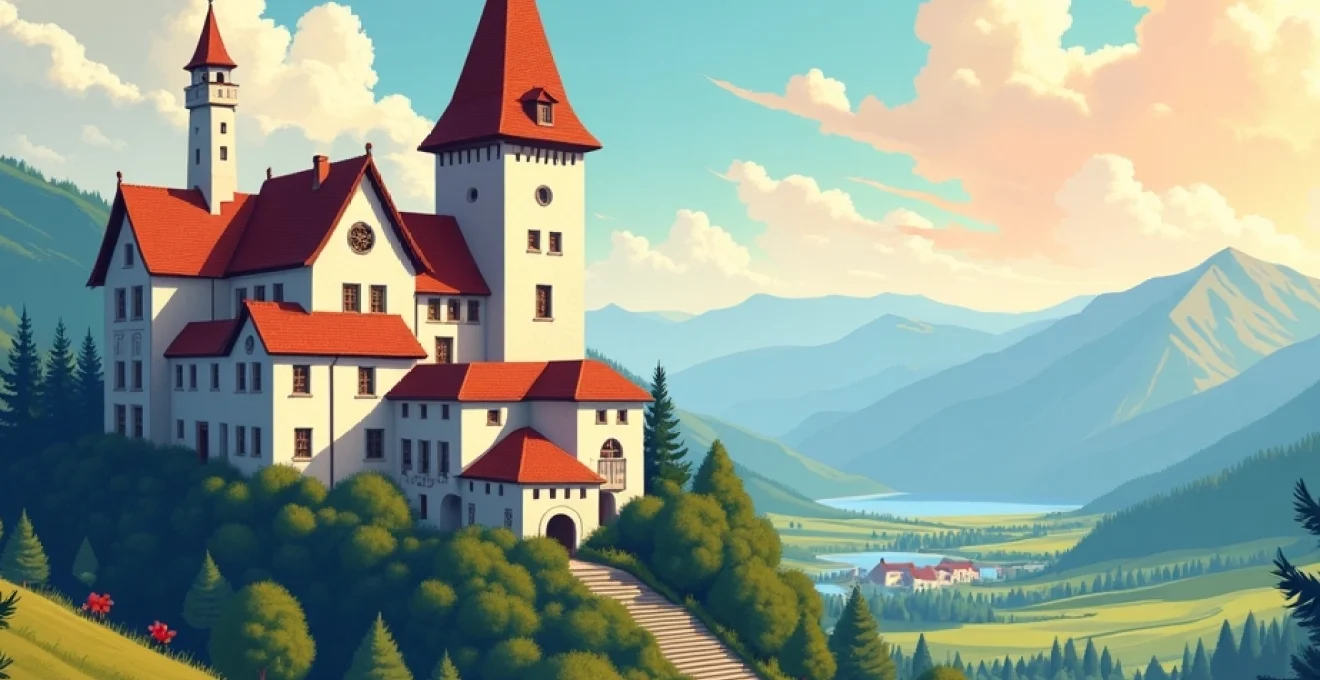
Transylvania stands as one of Europe’s most captivating destinations, offering an extraordinary blend of medieval heritage, natural wilderness, and cultural diversity that continues to enchant travellers from around the globe. This remarkable region of Romania transcends its popular association with vampire legends to reveal a landscape dotted with UNESCO World Heritage sites, pristine mountain ranges, and centuries-old Saxon villages that preserve traditional ways of life. From the imposing Gothic spires of fortified churches to the sweeping vistas of the Carpathian Mountains, Transylvania presents an authentic European experience where history and nature converge in spectacular fashion.
Medieval fortifications and gothic architecture across transylvanian citadels
The architectural legacy of Transylvania reflects centuries of strategic importance as a frontier region between empires. Medieval fortifications throughout the area showcase sophisticated defensive systems developed by Saxon colonists, Hungarian nobility, and Wallachian princes. These structures represent some of Europe’s finest examples of Gothic and Renaissance military architecture, each telling unique stories of conquest, defence, and cultural exchange.
Bran castle’s defensive systems and dracula tourism infrastructure
Perched dramatically on a rocky outcrop near Brașov, Bran Castle exemplifies 14th-century defensive architecture whilst serving as Transylvania’s most visited tourist attraction. The castle’s strategic positioning at the entrance to a mountain pass demonstrates medieval military planning at its finest. Its towering walls, narrow staircases, and hidden passages created an effective barrier against Ottoman incursions, whilst today accommodating over 600,000 annual visitors drawn by the Dracula mystique .
The castle’s tourism infrastructure has evolved significantly since the 1990s, incorporating modern visitor facilities whilst preserving historical authenticity. Interactive exhibitions showcase medieval weaponry, royal artifacts, and architectural evolution spanning six centuries. The surrounding village of Bran has developed complementary services including traditional craft workshops, local restaurants serving authentic Romanian cuisine, and accommodation options ranging from rural guesthouses to boutique hotels.
Râșnov citadel’s strategic positioning and restoration methodologies
The peasant fortress of Râșnov represents a unique example of communal defensive architecture, constructed by local villagers under Saxon guidance during the 13th century. Positioned on a limestone promontory overlooking the Burzenland depression, the citadel protected agricultural communities from repeated invasions. Recent restoration efforts have employed cutting-edge archaeological techniques to preserve original stonework whilst ensuring structural stability for modern visitors.
Archaeological investigations have revealed sophisticated water management systems, including a 146-metre deep well that ensured survival during extended sieges. The restoration project, completed in phases between 2009 and 2015, incorporated traditional building materials and techniques wherever possible. Modern additions include discreet lighting systems, accessible pathways, and interpretive centres that explain the fortress’s role in regional defence networks without compromising its medieval atmosphere .
Sighișoara’s UNESCO world heritage saxon architectural elements
Sighișoara stands as Europe’s last inhabited medieval citadel, earning UNESCO recognition for its exceptional preservation of Saxon urban planning and architectural traditions. The citadel’s defensive walls incorporate nine towers, each representing different craft guilds responsible for specific sections of fortifications. The Clock Tower, rising 64 metres above the central square, serves as both a defensive strongpoint and a symbol of civic authority, housing the History Museum and offering panoramic views across the medieval settlement.
The Saxon architectural elements include distinctive steep-roofed houses painted in vibrant colours, cobblestone streets following medieval layouts, and the Church on the Hill with its Gothic spires. These structures demonstrate sophisticated building techniques adapted to local climate conditions and available materials. The preservation of original architectural features, including hand-carved wooden galleries, wrought-iron decorations, and painted facades, provides visitors with an authentic glimpse into medieval urban life .
Corvin castle’s renaissance modifications and archaeological discoveries
Corvin Castle in Hunedoara represents the pinnacle of Gothic-Renaissance architecture in Southeastern Europe, showcasing the architectural ambitions of the powerful Hunyadi family. Recent archaeological investigations have revealed multiple construction phases spanning the 14th to 17th centuries, demonstrating how defensive priorities evolved alongside architectural styles. The castle’s distinctive features include soaring towers, elegant galleries, and elaborate stone carvings that blend Gothic structural elements with Renaissance decorative motifs.
Archaeological discoveries within the castle complex have yielded insights into medieval court life, military technology, and artistic patronage. Excavations in the courtyard have uncovered original foundations, revealing how the structure expanded over time. The castle’s restoration incorporates findings from these investigations, ensuring that modifications respect historical accuracy whilst providing modern safety standards for the approximately 300,000 annual visitors who explore its halls and chambers.
Carpathian mountain range navigation and ecological tourism patterns
The Carpathian Mountains form Transylvania’s natural backbone, creating diverse ecosystems that support exceptional biodiversity whilst offering countless opportunities for nature-based tourism. These ancient mountains harbour Europe’s largest populations of brown bears, wolves, and lynx, alongside pristine forests that have remained largely unchanged for millennia. Understanding the ecological significance and tourism infrastructure of different mountain ranges enables visitors to choose experiences matching their interests and fitness levels.
Piatra craiului national park’s limestone formations and endemic species
Piatra Craiului National Park protects a dramatic limestone ridge rising abruptly from surrounding valleys, creating spectacular cliff faces that reach heights of 2,238 metres. The park’s unique geological structure has fostered endemic plant communities adapted to harsh alpine conditions and limestone soils. Over 1,100 plant species thrive within the park boundaries, including rare orchids, mountain pinks, and the endemic Piatra Craiului pink (Dianthus callizonus).
The park’s tourism infrastructure accommodates various visitor preferences whilst minimising environmental impact. Marked hiking trails range from gentle valley walks suitable for families to challenging multi-day traverses requiring technical climbing skills. Wildlife observation hides provide opportunities to spot chamois, golden eagles, and occasionally brown bears in their natural habitat. The park administration operates visitor centres in Zărnești and Bran, offering detailed trail maps, weather updates, and guided tour arrangements with certified mountain guides.
Bucegi mountains’ alpine flora distribution and hiking circuit classifications
The Bucegi Mountains present some of Romania’s most accessible high-altitude hiking, with cable car systems providing rapid access to alpine zones above 2,000 metres elevation. The unique geological composition, featuring hard limestone overlying sedimentary rocks, has created distinctive landforms including the famous Sphinx and Babele rock formations. Alpine flora distribution varies dramatically with elevation, from dense spruce forests in valley bottoms to specialised cushion plants surviving in exposed summit areas.
Hiking circuits throughout the Bucegi range follow internationally recognised difficulty classifications, enabling visitors to select appropriate challenges. The Omu Peak trail offers moderate difficulty access to Romania’s second-highest summit, whilst the Via Ferrata routes provide secure passage across exposed cliff faces. Seasonal variations significantly affect trail accessibility, with summer months offering optimal conditions for high-altitude exploration. Mountain refuges positioned along major routes provide overnight accommodation and emergency shelter, supporting multi-day trekking adventures across this spectacular landscape.
Retezat national park’s glacial lake systems and wildlife conservation programs
Retezat National Park encompasses Romania’s oldest protected area, established in 1935 to preserve exceptional glacial landscapes and endemic species populations. The park contains over 80 glacial lakes, including Bucura Lake, the largest natural lake in Romania, surrounded by peaks exceeding 2,500 metres elevation. These pristine aquatic ecosystems support unique assemblages of alpine fish species and provide critical habitat for migrating birds following ancient flyways across the Carpathian arc.
Conservation programs within Retezat focus on protecting large carnivore populations whilst managing increasing tourism pressures. Brown bear monitoring employs GPS collar technology and genetic sampling to track population dynamics and movement patterns. Wolf packs receive similar attention, with researchers documenting territorial behaviour and prey selection across diverse habitats. The park’s research station collaborates with international universities on climate change studies, examining how shifting temperature and precipitation patterns affect high-altitude ecosystems .
Apuseni mountains’ speleological networks and cave tourism infrastructure
The Apuseni Mountains contain Romania’s most extensive cave systems, carved by underground rivers flowing through soluble limestone formations over millions of years. Scarisoara Ice Cave preserves a massive underground glacier estimated at 3,400 years old, whilst Bear Cave (Pestera Ursilor) showcases spectacular stalactite and stalagmite formations alongside evidence of prehistoric cave bear habitation. These subterranean environments maintain constant temperatures year-round, creating unique ecosystems supporting specialised fauna adapted to perpetual darkness.
Cave tourism infrastructure balances accessibility with conservation requirements through carefully designed visitor routes and environmental controls. Lighting systems utilise LED technology to minimise heat generation and energy consumption whilst highlighting geological features and formations. Visitor numbers are regulated through advance booking systems that prevent overcrowding and protect sensitive cave environments. Professional guides undergo extensive training in both geological interpretation and safety procedures, ensuring visitors gain comprehensive understanding of speleological processes whilst maintaining appropriate environmental stewardship .
Traditional saxon villages and rural heritage preservation strategies
Saxon colonisation of Transylvania during the 12th and 13th centuries established distinctive settlement patterns that persist today, creating some of Europe’s best-preserved medieval rural landscapes. These villages represent unique cultural syntheses combining Germanic building traditions with local materials and techniques, resulting in architectural styles found nowhere else in Europe. Contemporary preservation efforts focus on maintaining traditional crafts, sustainable agriculture, and cultural practices whilst supporting viable rural economies through heritage tourism.
Viscri’s fortified church complex and sustainable tourism models
Viscri exemplifies successful heritage preservation through sustainable tourism development, attracting international attention following King Charles III’s investment in village restoration projects. The village’s fortified church, dating to the 12th century, represents one of Transylvania’s finest examples of Saxon defensive architecture. High walls surround the central church structure, creating a refuge that protected villagers during Ottoman raids and other conflicts throughout the medieval period.
Sustainable tourism models in Viscri emphasise authentic cultural experiences whilst generating income for local residents. Traditional crafts workshops allow visitors to learn blacksmithing, weaving, and pottery techniques passed down through generations. Local families offer accommodation in restored Saxon houses, providing insights into traditional rural lifestyles whilst maintaining historic building techniques. The village association coordinates tourism activities to prevent overcrowding and ensures that visitor revenues support ongoing conservation efforts and community development initiatives.
Biertan’s medieval defensive architecture and craft workshop traditions
Biertan’s imposing fortified church complex demonstrates sophisticated medieval defensive planning through its three concentric walls and strategically positioned towers. The central church, rebuilt in Gothic style during the 15th century, contains remarkable period furnishings including a carved wooden altarpiece and historic pipe organ. The fortification system enabled the entire village population to shelter within the church grounds during attacks, with storage facilities, wells, and workshops supporting extended sieges.
Craft workshop traditions continue through local artisans who maintain skills essential for historic building preservation. Stonemasons specialising in Gothic techniques work alongside traditional carpenters using hand tools and period-appropriate joinery methods. These craftspeople contribute to ongoing restoration projects whilst training apprentices in heritage skills. The village’s cultural centre organises workshops where visitors can learn traditional techniques, creating additional income streams whilst ensuring knowledge transfer to future generations. Annual craft fairs showcase local production alongside similar artisans from other Saxon villages, strengthening regional cultural networks.
Prejmer’s peasant fortress design and agricultural heritage landscapes
Prejmer presents Europe’s largest peasant fortress, encompassing an entire village within massive defensive walls punctuated by towers and gates. The fortress design reflects communal defensive strategies developed by Saxon colonists, with individual family chambers built into the perimeter walls alongside shared facilities including mills, workshops, and storage areas. This arrangement enabled entire communities to survive extended sieges whilst maintaining essential economic activities within protected spaces.
Agricultural heritage landscapes surrounding Prejmer preserve traditional farming systems adapted to local environmental conditions and historical constraints. Strip field systems, managed meadows, and orchards demonstrate sustainable land use practices developed over centuries. Local farmers continue cultivating heritage crop varieties using traditional methods, supported by agritourism initiatives that connect visitors with working agricultural landscapes. Educational programs explain relationships between defensive architecture and agricultural organisation, showing how Saxon communities balanced security needs with productive land use in this historically contested region.
The preservation of Transylvanian Saxon heritage represents a unique opportunity to maintain living cultural landscapes that demonstrate successful adaptation to challenging historical circumstances whilst providing sustainable livelihoods for contemporary rural communities.
Brașov metropolitan area cultural attractions and urban tourism planning
Brașov serves as Transylvania’s primary urban tourism hub, combining medieval charm with modern amenities and serving as the gateway to numerous regional attractions. The city’s strategic location at the foot of the Carpathian Mountains provides easy access to mountain recreation whilst maintaining urban cultural offerings including museums, galleries, and performance venues. Recent urban planning initiatives focus on balancing heritage preservation with contemporary development needs, creating sustainable tourism infrastructure that supports both resident quality of life and visitor experiences.
The historic city centre, dominated by the imposing Black Church (Biserica Neagră), showcases Gothic architecture alongside Renaissance and Baroque influences reflecting centuries of cultural exchange. The church itself, one of Eastern Europe’s largest Gothic structures, contains remarkable period furnishings including antique carpets, carved wooden pews, and a massive pipe organ. Surrounding streets follow medieval layouts, creating intimate pedestrian spaces lined with cafés, restaurants, and boutique shops housed in carefully restored historic buildings.
Contemporary cultural attractions include the Brașov Art Museum, featuring Romanian and international contemporary works, and the Transilvania University campus, which hosts regular cultural events and academic conferences. The city’s position as a regional transportation hub facilitates day trips to major attractions including Bran Castle, Peleș Palace, and numerous hiking areas in the surrounding mountains. Local tourism authorities coordinate seasonal events including medieval festivals, Christmas markets, and outdoor concerts that animate public spaces whilst celebrating regional cultural traditions.
Urban planning strategies emphasise sustainable tourism development through improved public transportation, pedestrian-friendly infrastructure, and environmental protection measures. The cable car system connecting the city centre with Tampa Mountain provides spectacular views whilst reducing vehicle traffic in sensitive areas. Park and ride facilities encourage visitors to use public transport within the city, whilst dedicated cycling routes connect major attractions and accommodation areas. These initiatives support Brașov’s growing reputation as an environmentally conscious destination that balances tourism growth with livability for permanent residents.
Regional gastronomy and traditional culinary heritage documentation
Transylvanian cuisine reflects the region’s multicultural heritage through distinctive dishes combining Romanian, Hungarian, Saxon, and Ottoman influences. Traditional cooking methods, seasonal ingredients, and time-honoured recipes create a distinctive culinary identity that attracts food enthusiasts from across Europe. Contemporary chefs increasingly focus on documenting and reviving traditional techniques whilst adapting historical recipes for modern palates and dietary requirements.
Signature dishes include sarmale (cabbage rolls filled with meat and rice), ciorbă de burtă (tripe soup), and various preparations featuring locally-sourced ingredients such as wild game, forest mushrooms, and Alpine cheese varieties. Saxon culinary traditions contribute hearty stews, preserved meats, and distinctive breads baked in traditional wood-fired ovens. Hungarian influences appear in paprika-spiced dishes, whilst Ottoman elements include honey-based desserts and spiced meat preparations that entered regional cuisine during centuries of cultural contact.
Local producers maintain traditional food production methods including artisanal cheese-making in mountain villages, small-batch brewing using heritage grain varieties, and seasonal preservation techniques that ensure year-round availability of regional specialties. Wine production in areas such as Târnave and Lechința follows both traditional and modern techniques, producing distinctive varieties adapted to local climate and soil conditions. These products increasingly find markets beyond Romania through heritage tourism and online sales, supporting rural economies whilst preserving traditional knowledge.
Restaurant scenes in major cities showcase regional cuisine alongside international offerings, with many establishments sourcing ingredients directly from local producers. Food festivals throughout the year celebrate specific products or culinary traditions, providing platforms for traditional producers whilst educating visitors about regional food culture. Cooking classes and culinary tours connect tourists with local food traditions, creating additional income opportunities for rural communities whilst promoting understanding of cultural heritage through cuisine . Documentation projects supported by cultural institutions work to preserve traditional recipes and techniques for future generations, ensuring continuity of culinary knowledge despite changing social and economic conditions.
Transportation networks and Cross-Regional itinerary development frameworks
Efficient transportation planning enables visitors to maximise their Transylvanian experience whilst minimising environmental impact and travel stress. The region’s diverse attractions require careful itinerary development that considers seasonal accessibility, accommodation availability, and optimal routing between destinations. Understanding transportation options helps visitors choose approaches that match their preferences, budget constraints, and time limitations.
Railway connections link major cities including Brașov, Sibiu, Cluj-Napoca, and Sighișoara, providing comfortable travel whilst reducing road traffic
in peak summer months. Regional bus services connect smaller towns and villages, though schedules can be limited outside tourist seasons. Modern coaches operate between major destinations with air conditioning, WiFi connectivity, and comfortable seating that makes longer journeys pleasant experiences.
Car rental provides maximum flexibility for exploring remote areas and following personalised itineraries at individual paces. Major international rental companies operate from airports in Cluj-Napoca, Sibiu, and Brașov, offering vehicles ranging from compact cars suitable for city exploration to SUVs capable of handling mountain roads. GPS navigation systems include offline maps essential for areas with limited mobile connectivity, whilst comprehensive insurance coverage addresses concerns about rural road conditions and parking security in smaller settlements.
Self-drive itineraries enable access to remote villages, mountain trails, and scenic routes impossible to reach via public transport. The Transfăgărășan and Transalpina highways offer spectacular mountain driving experiences, though seasonal closures require careful trip planning. Secondary roads connecting Saxon villages provide opportunities for spontaneous discoveries whilst maintaining reasonable travel times between major attractions. Accommodation booking flexibility becomes crucial for self-drive tours, as rural guesthouses often operate seasonally and may require advance arrangements during peak periods.
Organised tour operators provide structured alternatives that eliminate transportation logistics whilst ensuring access to expert local knowledge. Multi-day packages typically combine major attractions with cultural experiences, accommodation, and meals in comprehensive arrangements suitable for visitors with limited planning time. Small group tours offer more personalised experiences than large coach groups, enabling access to locations unsuitable for larger vehicles whilst maintaining social interaction with fellow travellers sharing similar interests.
Digital planning tools assist with itinerary optimisation through real-time traffic information, weather updates, and attraction opening hours. Mobile applications developed specifically for Romanian tourism provide offline maps, cultural information, and emergency contact details essential for rural travel. GPS coordinates for remote attractions help navigate areas where traditional address systems may be unclear, whilst translation applications facilitate communication in villages where English proficiency might be limited.
Seasonal considerations significantly impact transportation choices and route planning throughout Transylvania. Winter conditions require appropriate vehicle equipment and clothing for mountain areas, whilst spring weather can affect secondary road accessibility due to snowmelt and seasonal flooding. Summer brings optimal road conditions but increased traffic around popular attractions, making early morning departures advantageous for avoiding crowds and securing preferred accommodation. Autumn offers excellent driving conditions with spectacular foliage, though daylight hours become progressively shorter for outdoor activities.
Regional transportation hubs in Brașov, Sibiu, and Cluj-Napoca provide logical starting points for different exploration strategies. Brașov offers immediate access to famous castles and mountain recreation, whilst Sibiu serves as an ideal base for Saxon village exploration and southern Carpathian adventures. Cluj-Napoca provides convenient access to northern attractions including Maramureș cultural regions and Apuseni cave systems. Understanding each hub’s advantages helps visitors optimise their base selection according to primary interests and available time.
Effective transportation planning transforms Transylvanian exploration from a logistical challenge into an opportunity for spontaneous discovery, enabling visitors to uncover hidden gems whilst efficiently experiencing the region’s diverse cultural and natural attractions.
Cross-border connectivity facilitates integration of Transylvanian visits into broader Central European itineraries. Direct flights from major European cities reduce travel time, whilst overland routes from Hungary, Serbia, and Bulgaria provide scenic alternatives for visitors exploring multiple countries. Border formalities remain minimal for EU citizens, though documentation requirements should be verified for non-EU visitors planning extended stays or multiple entries.
Accommodation networks along major routes support various travel styles from luxury hotels in historic city centres to traditional guesthouses in remote villages. Booking platforms increasingly feature detailed descriptions of accessibility, amenities, and local attractions, enabling informed decisions about accommodation location relative to planned activities. Rural guesthouses often provide the most authentic experiences but may require advance booking and confirmation of availability, particularly during festival periods and peak hiking seasons.
Transportation costs vary significantly depending on chosen methods and luxury levels, with budget-conscious travellers finding excellent value through public transport combinations and rural accommodation. Premium options including private drivers, luxury hotels, and exclusive tour arrangements cater to visitors seeking comprehensive services and maximum comfort. Understanding cost structures helps visitors allocate budgets effectively whilst ensuring their chosen transportation methods support their overall travel objectives and expected experience quality.