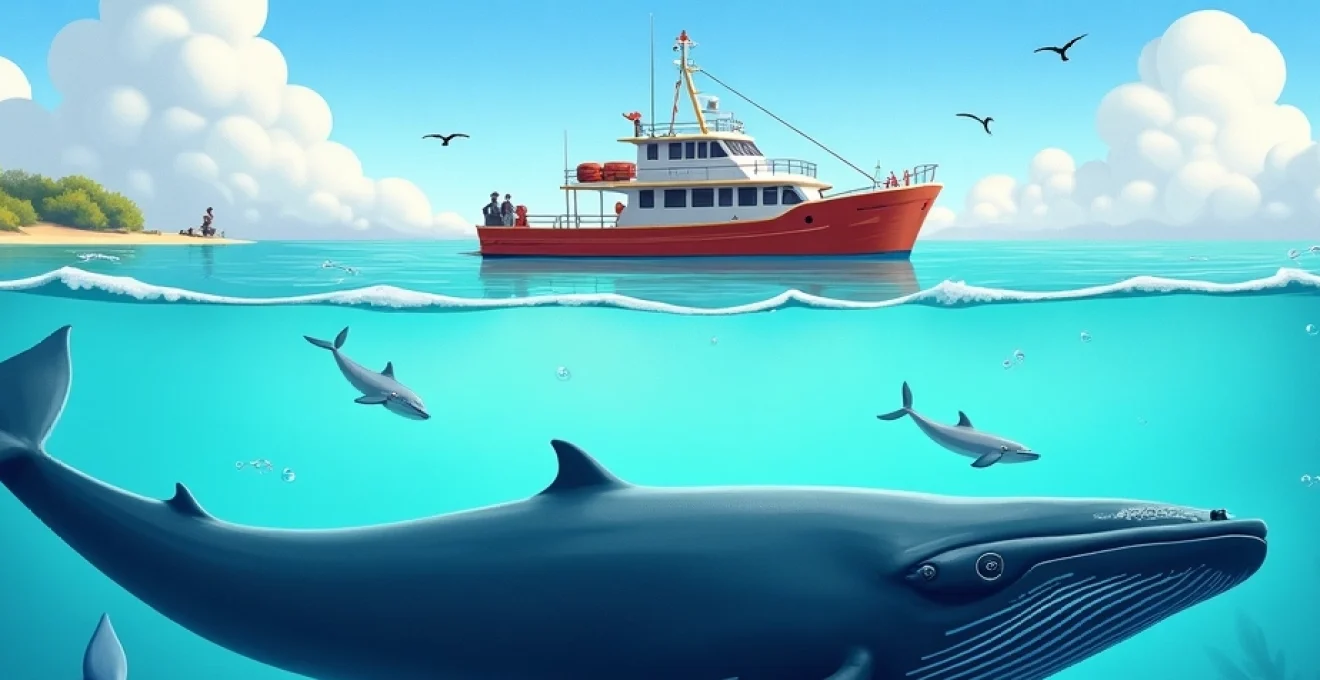
The Azores archipelago stands as one of Europe’s premier whale watching destinations, where the Atlantic Ocean’s deep waters create a unique marine ecosystem teeming with cetacean life. This Portuguese island chain, positioned strategically along major migration routes in the mid-Atlantic, offers visitors unparalleled opportunities to encounter more than 20 species of whales and dolphins throughout the year. The volcanic topography beneath these waters creates dramatic underwater canyons and nutrient-rich upwelling zones that attract marine mammals in extraordinary numbers. With success rates exceeding 98% for whale and dolphin sightings, the Azores have transformed from a historical whaling region into a world-renowned centre for marine conservation and sustainable wildlife tourism.
Cetacean species distribution in azorean waters
The waters surrounding the nine Azorean islands support an extraordinary diversity of marine mammals, with species distribution patterns influenced by ocean depth, temperature gradients, and seasonal food availability. The archipelago’s position on the Mid-Atlantic Ridge creates a complex underwater topography that serves as both a permanent habitat for resident species and a crucial waypoint for migratory cetaceans. Research conducted over the past three decades has documented consistent population trends and behavioural patterns that make the Azores a living laboratory for marine mammal science.
Sperm whale population dynamics around pico and faial islands
The waters between Pico and Faial islands host the most concentrated sperm whale population in European waters, with approximately 200 individuals forming the core of this resident community. These deep-diving cetaceans exploit the submarine canyons that plunge to depths exceeding 1,000 metres, hunting giant squid in prolonged dives lasting up to 90 minutes. Photo-identification studies reveal complex social structures, with mature females forming stable family units whilst males adopt a more solitary existence, visiting female groups during breeding seasons.
The Pico-Faial channel’s unique oceanographic conditions create an ideal hunting ground for sperm whales. The steep underwater topography generates upwelling currents that support abundant cephalopod populations, particularly the giant squid that comprises the primary diet of these magnificent predators. Sperm whale encounters occur on approximately 80% of whale watching excursions in this region, making it the most reliable location for observing these charismatic giants.
Blue whale migration patterns through the Mid-Atlantic ridge
Blue whales, the largest animals ever to have existed on Earth, utilise Azorean waters as a critical stopover during their Atlantic migrations. These magnificent creatures, reaching lengths of up to 30 metres, follow predictable seasonal patterns that bring them through the archipelago’s waters primarily between March and June, with occasional sightings extending into early autumn. The timing of their appearance correlates directly with krill abundance and oceanographic conditions along the Mid-Atlantic Ridge.
Migration tracking data reveals that blue whales approaching the Azores originate from feeding grounds off the Iberian Peninsula and continue northward towards Arctic waters. The deep channels between islands provide optimal feeding conditions, where these filter-feeding giants can exploit dense concentrations of euphausiid shrimp. Peak blue whale sighting opportunities occur during April and May , when calm weather conditions combine with increased marine productivity to create ideal viewing circumstances.
Resident bottlenose dolphin pods in vila franca do campo
The sheltered waters around Vila Franca do Campo support a thriving population of bottlenose dolphins that demonstrate remarkable site fidelity and complex social behaviours. These intelligent cetaceans form stable pods of 15-30 individuals, with some groups showing multi-generational associations spanning decades. The protected nature of this coastal environment provides ideal conditions for calf-rearing and social learning, making it an exceptional location for observing dolphin behaviour.
Recent behavioural studies have documented tool use among Vila Franca do Campo bottlenose dolphins, including the use of marine sponges for foraging protection and cooperative hunting strategies. The resident pods exhibit strong territorial behaviour, defending preferred feeding areas whilst maintaining complex relationships with neighbouring groups. Bottlenose dolphin encounters in this region achieve success rates exceeding 95% , with sightings possible throughout the year due to the population’s residential nature.
Seasonal baleen whale occurrence: fin and sei whale temporal distribution
Fin whales and sei whales follow distinct seasonal patterns in Azorean waters, with their appearances closely linked to North Atlantic migration cycles and prey distribution. Fin whales, known as the “greyhounds of the sea,” typically arrive in Azorean waters during late spring and early summer, with peak sightings occurring between May and July. These streamlined cetaceans, reaching speeds of up to 40 km/h, utilise the nutrient-rich waters around the islands as feeding grounds during their northward migration.
Sei whales present a more unpredictable pattern, with sightings varying significantly between years depending on oceanographic conditions and prey availability. Historical data suggests that sei whale encounters peak during years with elevated sea surface temperatures and increased copepod abundance . Both species demonstrate preference for the deeper waters on the southern and western sides of the archipelago, where oceanic currents create optimal feeding conditions for these filter-feeding specialists.
Optimal whale watching departure points across the archipelago
The strategic selection of departure points significantly influences whale watching success rates and encounter quality throughout the Azores. Each major harbour offers distinct advantages based on proximity to key habitats, shelter from prevailing weather conditions, and accessibility to different cetacean populations. Understanding the characteristics of each departure location enables visitors to maximise their chances of memorable marine encounters whilst minimising travel time to prime whale watching areas.
Marina da horta: deep water access and sperm whale encounters
Marina da Horta on Faial Island provides the most direct access to deep Atlantic waters, positioned just minutes from submarine canyons where sperm whales conduct their deep foraging dives. The harbour’s strategic location offers immediate access to waters exceeding 500 metres in depth, eliminating lengthy transit times that characterise many other whale watching destinations. This proximity advantage translates into extended observation periods and higher probability of witnessing complete dive sequences from these remarkable deep-diving specialists.
The marina’s modern facilities accommodate various vessel types, from traditional zodiac boats to larger catamarans, ensuring suitable options for different weather conditions and group preferences. Departure times from Horta can be adjusted based on real-time spotter reports , maximising the likelihood of successful encounters. The harbour’s protection from Atlantic swells provides comfortable boarding conditions even during periods of elevated sea state.
Vila franca do campo harbor: protected bay launch conditions
Vila Franca do Campo offers the most sheltered departure conditions in the archipelago, with its protected bay providing calm launch environments even when oceanic conditions prove challenging elsewhere. This natural harbour’s configuration creates ideal conditions for zodiac operations and ensures comfortable embarkation for passengers of all experience levels. The location serves as the primary departure point for encounters with resident bottlenose dolphins and seasonal visits from pilot whale pods.
The harbour’s position on São Miguel’s southern coast provides strategic access to the island’s most productive whale watching areas whilst maintaining protection from north Atlantic weather systems. Vila Franca do Campo’s microclimate often provides favourable conditions when other locations face weather restrictions . The presence of the nearby Vila Franca Islet creates additional sheltered waters that serve as nursery areas for various marine species, enhancing the diversity of potential encounters.
Lajes do pico whaling station: historical context and modern operations
The former whaling station at Lajes do Pico represents the powerful transformation from whale hunting to whale conservation that characterises modern Azorean marine tourism. This historic harbour, once the centre of the archipelago’s sperm whale fishery, now serves as a departure point for sustainable whale watching operations that celebrate and protect the very species once hunted from these shores. The location provides direct access to the productive waters of the Pico-Faial channel, renowned for consistent sperm whale encounters.
Modern whale watching operations from Lajes do Pico incorporate educational elements that highlight the region’s whaling heritage whilst emphasising current conservation efforts. The proximity to the Whaling Museum allows visitors to gain historical context before embarking on contemporary wildlife encounters . The harbour’s infrastructure, originally designed for whaling vessels, proves ideally suited for modern tour boats, providing secure mooring and efficient passenger handling capabilities.
Terceira’s angra do heroísmo: Weather-Protected alternative routes
Angra do Heroísmo offers the most weather-protected whale watching operations in the archipelago, with multiple route options that provide flexibility during challenging oceanic conditions. The harbour’s position on Terceira’s southern coast, combined with the island’s central location within the archipelago, creates opportunities for encounters with species that utilise the inter-island channels as travel corridors. This strategic positioning proves particularly valuable during winter months when Atlantic storms limit operations from more exposed locations.
The port’s UNESCO World Heritage status reflects its historical significance whilst its modern marina facilities ensure contemporary operational standards for whale watching vessels. Angra’s sheltered waters often permit operations when other harbours remain closed due to weather restrictions . The location provides access to Terceira’s resident dolphin populations whilst offering opportunities for encounters with transient species utilising the deep waters between the central group of islands.
Hydrophone technology and passive acoustic monitoring systems
Advanced hydrophone technology has revolutionised whale watching operations throughout the Azores, enabling operators to detect and locate cetaceans through their vocalisations long before visual contact occurs. These sophisticated underwater microphones can detect sperm whale clicks from distances exceeding 10 kilometres, whilst pilot whale calls and dolphin whistles provide additional acoustic signatures that guide vessel positioning. Modern whale watching boats equipped with hydrophone arrays achieve significantly higher success rates compared to those relying solely on visual searching methods.
The implementation of real-time acoustic monitoring systems creates a three-dimensional understanding of cetacean distribution beneath the surface. Sperm whales produce distinctive clicking patterns during deep foraging dives, with click rates and intensities providing information about hunting success and dive phases. Experienced hydrophone operators can distinguish between individual sperm whales based on their unique click signatures , enabling precise tracking of specific animals and family groups. This acoustic capability proves particularly valuable during periods of poor visibility or rough sea conditions when visual detection becomes challenging.
Passive acoustic monitoring represents the future of sustainable whale watching, allowing operators to locate and observe cetaceans without disturbance whilst contributing valuable data to ongoing research programmes.
Integration of GPS technology with hydrophone systems enables precise mapping of acoustic detections, creating detailed databases of cetacean occurrence patterns and habitat preferences. This information contributes to both commercial whale watching success and scientific understanding of marine mammal ecology. Advanced systems can differentiate between species based on acoustic characteristics, providing immediate identification of detected animals and allowing operators to adjust approach strategies accordingly.
Weather pattern analysis and sea state conditions
Understanding weather patterns and sea state conditions proves essential for successful whale watching operations in the North Atlantic environment surrounding the Azores. The archipelago’s position in the Atlantic creates a complex meteorological environment influenced by the Azores High pressure system, North Atlantic storm tracks, and local topographic effects. Optimal whale watching conditions typically occur during periods of light winds and minimal Atlantic swell, though experienced operators can successfully conduct tours in moderate sea states with appropriate vessel selection and route planning.
The Azores High, a semi-permanent anticyclonic system centred near the islands, creates the most favourable conditions for marine wildlife observation. During periods when this high-pressure system dominates regional weather, wind speeds remain low, sea states stay calm, and visibility extends to maximum ranges. Statistical analysis reveals that 70% of exceptional whale watching conditions occur during high-pressure periods , making weather pattern monitoring crucial for trip planning and expectation management.
Seasonal weather variations significantly influence both cetacean behaviour and observation conditions throughout the year. Summer months typically provide the calmest seas and most predictable weather patterns, though thermal heating can create afternoon cloud formation that reduces visibility. Spring and autumn present optimal balances of moderate weather conditions and increased marine mammal activity, whilst winter operations require careful weather window selection to ensure both safety and enjoyment. Local microclimate variations between islands create opportunities for successful operations even when regional conditions appear challenging, with experienced operators utilising sheltered channels and protected waters to maintain service levels.
| Season | Average Wind Speed (knots) | Typical Sea State | Visibility (km) | Success Rate (%) |
|---|---|---|---|---|
| Spring (Mar-May) | 12-18 | 2-3 | 15-25 | 94 |
| Summer (Jun-Aug) | 8-15 | 1-2 | 20-30 | 97 |
| Autumn (Sep-Nov) | 15-22 | 2-4 | 12-20 | 92 |
| Winter (Dec-Feb) | 18-28 | 3-5 | 8-15 | 85 |
Marine mammal behaviour identification techniques
Accurate identification of marine mammal behaviours enhances both the educational value and conservation impact of whale watching experiences whilst ensuring appropriate vessel positioning and approach protocols. Understanding the subtle differences between feeding, socialising, resting, and travelling behaviours enables guides to provide meaningful interpretation whilst maintaining respectful distances that minimise disturbance. Professional whale watching operations in the Azores train their guides in comprehensive behavioural recognition techniques that transform casual observations into meaningful wildlife encounters.
Sperm whale behaviour patterns provide particularly clear examples of how behavioural recognition enhances whale watching experiences. Surface breathing sequences follow predictable patterns, with short, shallow dives preparing for extended deep foraging expeditions that can last 90 minutes. Experienced guides can predict dive duration and surfacing locations based on breathing patterns and body positioning , enabling strategic vessel positioning that maximises observation opportunities whilst maintaining appropriate distances. Pre-dive arching behaviour, where whales lift their flukes high above the surface, provides spectacular photographic opportunities and signals the beginning of deep foraging dives.
Dolphin behaviour identification requires recognition of complex social interactions and activity patterns that vary throughout daily cycles. Feeding aggregations often involve coordinated hunting strategies, with individual dolphins taking specific roles in herding and capturing prey. Bow-riding behaviour indicates playful social interaction , whilst rapid direction changes and synchronised diving suggest active hunting. Resting behaviour, characterised by slow, coordinated swimming in tight formations, requires minimal vessel interaction to avoid disruption of essential physiological processes.
The ability to read and interpret cetacean body language transforms passive observation into active conservation education, creating meaningful connections between humans and marine wildlife.
Breeding and calf-rearing behaviours demand particular sensitivity and modified approach protocols to prevent interference with critical life cycle events. Mother-calf pairs exhibit distinctive swimming patterns, with young animals maintaining close proximity to adults and displaying less coordinated movements. Adult protective behaviours, including positioning between vessels and calves, indicate the need for increased observation distances and reduced vessel speeds. Recognition of these behaviours ensures that whale watching activities contribute positively to cetacean welfare whilst providing visitors with insights into marine mammal social structures and life cycles.
Conservation protocols and ACCOBAMS compliance standards
The Azores whale watching industry operates under strict conservation protocols aligned with ACCOBAMS (Agreement on the Conservation of Cetaceans of the Black Sea, Mediterranean Sea and Contiguous Atlantic Area) standards and regional marine protection regulations. These comprehensive guidelines establish approach distances, vessel behaviour requirements, and interaction protocols designed to minimise human impact on cetacean populations whilst maintaining high-quality wildlife viewing experiences. Compliance with these international standards positions Azorean whale watching as a model for sustainable marine tourism globally.
Approach distance regulations vary by species and behavioural context, with minimum distances of 50 metres for most cetacean encounters and 100 metres when calves are present. Sperm whale encounters require particular sensitivity due to their extended dive sequences and surface recovery periods , with vessels maintaining increased distances during pre-dive breathing sequences. Engine noise reduction protocols mandate reduced speeds within detection ranges, whilst complete engine shutdown occurs during close-proximity observations to minimise acoustic disturbance.
Vessel traffic management prevents overcrowding at individual whale sightings through coordination between operators and adherence to maximum vessel limits per encounter. No more than three boats may observe a single whale or whale group simultaneously, with additional vessels maintaining observation distances until
positions become available. Real-time communication systems enable coordinated operations that prevent habitat disruption whilst maximising observation opportunities for all participants.
Training and certification requirements for whale watching guides ensure comprehensive understanding of marine mammal biology, conservation principles, and emergency response protocols. All certified guides must complete annual refresher courses covering updated research findings and modified conservation protocols. This ongoing education requirement maintains industry standards whilst incorporating evolving scientific understanding of cetacean behaviour and habitat requirements. Certification programmes include practical assessments of species identification skills, behavioural interpretation abilities, and emergency response capabilities.
Data collection and reporting obligations transform commercial whale watching operations into valuable research platforms that contribute to long-term conservation monitoring. Tour operators must maintain detailed logbooks recording species encounters, group compositions, behavioural observations, and environmental conditions. This standardised data collection creates comprehensive databases that inform conservation policy and habitat protection decisions. Annual reporting requirements provide scientific institutions with over 10,000 whale watching encounters annually, creating one of the most extensive cetacean monitoring datasets in the Atlantic region.
Sustainable whale watching in the Azores demonstrates that commercial tourism and marine conservation can achieve mutually beneficial outcomes when operated under rigorous scientific and ethical standards.
Equipment standards mandate the use of four-stroke engines or electric propulsion systems to reduce underwater noise pollution, whilst hull design requirements minimise wake production and surface disturbance. Hydrophone systems must meet technical specifications that prevent acoustic interference with natural cetacean communications. Vessel capacity limitations ensure adequate space for safe passenger movement and emergency evacuation whilst maintaining comfortable observation platforms. These technical requirements create operational standards that prioritise both human safety and cetacean welfare throughout all whale watching activities.
Enforcement mechanisms include regular inspections by marine protection authorities, passenger feedback systems, and peer review processes among certified operators. Violations of conservation protocols result in graduated penalties ranging from additional training requirements to licence suspension or revocation. The self-regulating nature of the Azorean whale watching industry maintains compliance rates exceeding 95%, demonstrating the effectiveness of comprehensive conservation frameworks when supported by committed industry participation. Regular stakeholder meetings ensure continuous improvement of conservation protocols based on emerging research and operational experience.